
Articoli correlati a Model Identification and Adaptive Control: From Windsurfing...
Sinossi
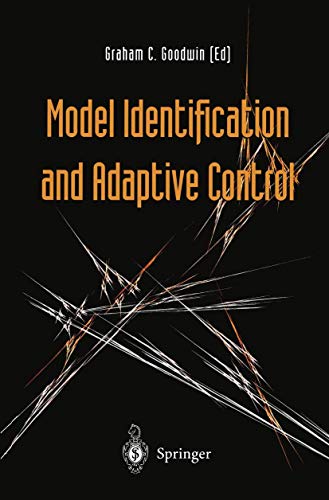
This book is based on a workshop entitled.: Model " Identification and Adap tive Control: From Windsurfing to Telecommunications" held in Sydney, Aus tralia, on December 16, 2000. The workshop was organized in honour of Pro fessor Brian (BDO) Anderson in recognition of his seminal contributions to systems science over the past 4 decades. . The chapters in the book have been written by colleagues, friends and stu dents of Brian Anderson. A central theme of the book is the inter relationship between identification and the use of models in real world applications. This theme has underpinned much of Brian Anderson's own contributions. The book reflects on these contributions as well as makirig important statements about possible future research directions. The subtitle of the book (From Windsurfing to Telecommunications) rec ognizes the fact that many common life experiences, such as those we en counter when learning to ride a windsurfer are models for design methods that can be used on real world advanced technological control problems. In deed, Brian Anderson extensively explored this link in his research work.
Le informazioni nella sezione "Riassunto" possono far riferimento a edizioni diverse di questo titolo.
Contenuti
I. General Aspects of Model Identification.- 1 System Identification - General Aspects and Structure.- 1.1 Introduction.- 1.2 Structure Theory.- 1.3 Estimation for a given subclass.- 1.4 Model selection.- 1.5 Linear non-mainstream cases.- 1.6 Non-linear systems.- 1.7 Past, present state and perspectives of system identification.- References.- 2 Singularity Issues Associated with Closed Loop Identification.- 2.1 Introduction.- 2.2 Frequency Domain Estimation of Complimentary Sensitivity.- 2.3 Plant Identification via Parametric Modelling of the Complementary Sensitivity.- 2.4 Simulation Example.- 2.5 Modelling of Plant via Nonparametric Methods.- 2.6 Modified Indirect Estimation of G.- 2.7 Heuristic Analysis of Finite Sample Properties.- 2.8 Rigorous Analysis of Bias and Variance.- 2.9 Simulation.- 2.10 Conclusion.- References.- 3 Mapping Parametric Confidence Ellipsoids to Nyquist Plane for Linearly Parametrized Transfer Functions.- 3.1 Introduction.- 3.2 Problem statement.- 3.3 Linear algebra preliminaries.- 3.4 Image of D in the Nyquist plane.- 3.5 Inverse image of L.- 3.6 Probability level linked to the confidence region L.- 3.7 Case of not linearly parametrized model structures.- 3.8 Simulation example.- 3.9 Conclusions.- References.- II. Interactions Between Model Identification and Intended Model Use.- 4 On the Use of Real Data for Controller Reduction.- 4.1 Introduction.- 4.2 Notations.- 4.3 The algorithms.- 4.4 Plant model identification in closed loop.- 4.5 Properties of the estimated reduced order controllers.- 4.6 A simulation example.- 4.7 Experimental results on an active suspension.- 4.8 Conclusion.- References.- 5 Making a Nonlinear Observer Adaptive.- 5.1 Introduction.- 5.2 Arcak observer.- 5.3 Van der Pol oscillator with a parameter.- 5.4 Adaptation: a MRAC scheme.- 5.5 Adaptation: a gradient scheme.- 5.6 Simulations and discussion.- References.- 6 Sensor Adaptive Target Tracking over Variable Bandwidth Networks.- 6.1 Introduction.- 6.2 Problem Formulation.- 6.3 Illustrative Applications.- 6.4 Optimal Algorithms.- 6.5 Sub-optimal Algorithms.- 6.6 Numerical Examples.- 6.7 Extensions.- III. Illustrative Applications of Identification and Control.- 7 Adaptive Servo Control of Large Antenna Structures.- 7.1 Introduction.- 7.2 System description.- 7.3 Servo controller design objectives.- 7.4 Classical cascaded feedback.- 7.5 Adaptive position control.- 7.6 Conclusion.- References.- 8 Quantizer Optimization: Application of Passivity in Telecommunications.- 8.1 Introduction.- 8.2 Problem Formulation.- 8.3 Passivity Concepts and Definitions.- 8.4 Stability and Error Propagation.- 8.5 Main Stability Results.- 8.6 Conclusions.- References.- 9 Connecting Steiglitz-McBride Identification, Active Noise Control, and Coefficient Filtering to a Common Framework.- 9.1 Introduction.- 9.2 Technical Background.- 9.3 Steiglitz-McBride Algorithms.- 9.4 Active Noise Control and the Filtered-u Algorithms.- 9.5 Coefficient Filtering and Update Smoothing.- 9.6 Conclusion.- References.- IV. Fundamental Design Issues in Adaptive Control.- 10 Iterative Adaptive Control: Windsurfing with Confidence.- 10.1 Introduction.- 10.2 Iterative Adaptive Control.- 10.3 Parametrization and Performance.- 10.4 Uncertainty Model Unfalsification.- 10.5 Controller Unfalsification.- 10.6 Iterative Controller Unfalsification.- 10.7 Concluding Remarks.- References.- 11 Model Quality for the Windsurfer Scheme of Adaptive Control.- 11.1 Introduction.- 11.2 Internal Model Control for Stable Systems.- 11.3 Models for Robust Stability and Performance.- 11.4 Conclusions.- 11.5 Coda.- References.- 12 Cheap Control Fundamental Limitations: The Linear Time-Varying Case.- 12.1 Introduction.- 12.2 Linear Time-Varying Systems.- 12.3 Cheap LQR Problem.- 12.4 Main Result.- 12.5 Example.- 12.6 Conclusion.- References.- V. Appendix.
Product Description
Book by None
Le informazioni nella sezione "Su questo libro" possono far riferimento a edizioni diverse di questo titolo.
Risultati della ricerca per Model Identification and Adaptive Control: From Windsurfing...

Foto dell'editore
Model Identification and Adaptive Control (eng)
Print on DemandDa: Brook Bookstore On Demand, Napoli, NA, Italia
Valutazione del venditore 5 su 5 stelle

Condizione: new. Questo è un articolo print on demand. Codice articolo O7TU5BIL6D
Compra nuovo
EUR 86,24
Spedizione EUR 5,50
Spedito da Italia a U.S.A.
Spedito da Italia a U.S.A.
Quantità: Più di 20 disponibili
Immagini fornite dal venditore
Model Identification and Adaptive Control
Editore:
Springer London, Springer London Sep 2011, 2011
ISBN 10: 1447111850
ISBN 13: 9781447111856
Nuovo
Taschenbuch
Da: BuchWeltWeit Ludwig Meier e.K., Bergisch Gladbach, Germania
Valutazione del venditore 5 su 5 stelle
Taschenbuch. Condizione: Neu. This item is printed on demand - it takes 3-4 days longer - Neuware -This book is based on a workshop entitled.: Model ' Identification and Adap tive Control: From Windsurfing to Telecommunications' held in Sydney, Aus tralia, on December 16, 2000. The workshop was organized in honour of Pro fessor Brian (BDO) Anderson in recognition of his seminal contributions to systems science over the past 4 decades. . The chapters in the book have been written by colleagues, friends and stu dents of Brian Anderson. A central theme of the book is the inter relationship between identification and the use of models in real world applications. This theme has underpinned much of Brian Anderson's own contributions. The book reflects on these contributions as well as makirig important statements about possible future research directions. The subtitle of the book (From Windsurfing to Telecommunications) rec ognizes the fact that many common life experiences, such as those we en counter when learning to ride a windsurfer are models for design methods that can be used on real world advanced technological control problems. In deed, Brian Anderson extensively explored this link in his research work. 320 pp. Englisch. Codice articolo 9781447111856
Compra nuovo
EUR 106,99
Spedizione EUR 23,00
Spedito da Germania a U.S.A.
Spedito da Germania a U.S.A.
Quantità: 2 disponibili
Foto dell'editore
Model Identification and Adaptive Control : From Windsurfing to Telecommunications
Da: GreatBookPrices, Columbia, MD, U.S.A.
Valutazione del venditore 5 su 5 stelle
Condizione: New. Codice articolo 18677563-n
Compra nuovo
EUR 134,96
Spedizione EUR 2,36
Spedito in U.S.A.
Spedito in U.S.A.
Quantità: 15 disponibili
Immagini fornite dal venditore
Model Identification and Adaptive Control
Da: moluna, Greven, Germania
Valutazione del venditore 5 su 5 stelle
Condizione: New. Codice articolo 4184064
Compra nuovo
EUR 92,27
Spedizione EUR 48,99
Spedito da Germania a U.S.A.
Spedito da Germania a U.S.A.
Quantità: Più di 20 disponibili
Foto dell'editore
Model Identification and Adaptive Control: From Windsurfing to Telecommunications
Da: Ria Christie Collections, Uxbridge, Regno Unito
Valutazione del venditore 5 su 5 stelle
Condizione: New. In English. Codice articolo ria9781447111856_new
Compra nuovo
EUR 129,67
Spedizione EUR 13,32
Spedito da Regno Unito a U.S.A.
Spedito da Regno Unito a U.S.A.
Quantità: Più di 20 disponibili
Immagini fornite dal venditore
Model Identification and Adaptive Control : From Windsurfing to Telecommunications
Da: AHA-BUCH GmbH, Einbeck, Germania
Valutazione del venditore 5 su 5 stelle
Taschenbuch. Condizione: Neu. Druck auf Anfrage Neuware - Printed after ordering - This book is based on a workshop entitled.: Model ' Identification and Adap tive Control: From Windsurfing to Telecommunications' held in Sydney, Aus tralia, on December 16, 2000. The workshop was organized in honour of Pro fessor Brian (BDO) Anderson in recognition of his seminal contributions to systems science over the past 4 decades. . The chapters in the book have been written by colleagues, friends and stu dents of Brian Anderson. A central theme of the book is the inter relationship between identification and the use of models in real world applications. This theme has underpinned much of Brian Anderson's own contributions. The book reflects on these contributions as well as makirig important statements about possible future research directions. The subtitle of the book (From Windsurfing to Telecommunications) rec ognizes the fact that many common life experiences, such as those we en counter when learning to ride a windsurfer are models for design methods that can be used on real world advanced technological control problems. In deed, Brian Anderson extensively explored this link in his research work. Codice articolo 9781447111856
Compra nuovo
EUR 114,00
Spedizione EUR 35,00
Spedito da Germania a U.S.A.
Spedito da Germania a U.S.A.
Quantità: 1 disponibili
Foto dell'editore
Model Identification and Adaptive Control
Da: Books Puddle, Woodside, NY, U.S.A.
Valutazione del venditore 4 su 5 stelle

Condizione: New. pp. 320. Codice articolo 2648023673
Compra nuovo
EUR 157,68
Spedizione EUR 3,56
Spedito in U.S.A.
Spedito in U.S.A.
Quantità: 4 disponibili
Immagini fornite dal venditore
Model Identification and Adaptive Control
Editore:
Springer London, Springer Sep 2011, 2011
ISBN 10: 1447111850
ISBN 13: 9781447111856
Nuovo
Taschenbuch
Da: buchversandmimpf2000, Emtmannsberg, BAYE, Germania
Valutazione del venditore 5 su 5 stelle
Taschenbuch. Condizione: Neu. This item is printed on demand - Print on Demand Titel. Neuware -This book is based on a workshop entitled.: Model ' Identification and Adap tive Control: From Windsurfing to Telecommunications' held in Sydney, Aus tralia, on December 16, 2000. The workshop was organized in honour of Pro fessor Brian (BDO) Anderson in recognition of his seminal contributions to systems science over the past 4 decades. . The chapters in the book have been written by colleagues, friends and stu dents of Brian Anderson. A central theme of the book is the inter relationship between identification and the use of models in real world applications. This theme has underpinned much of Brian Anderson's own contributions. The book reflects on these contributions as well as makirig important statements about possible future research directions. The subtitle of the book (From Windsurfing to Telecommunications) rec ognizes the fact that many common life experiences, such as those we en counter when learning to ride a windsurfer are models for design methods that can be used on real world advanced technological control problems. In deed, Brian Anderson extensively explored this link in his research work.Springer-Verlag GmbH, Tiergartenstr. 17, 69121 Heidelberg 320 pp. Englisch. Codice articolo 9781447111856
Compra nuovo
EUR 106,99
Spedizione EUR 60,00
Spedito da Germania a U.S.A.
Spedito da Germania a U.S.A.
Quantità: 1 disponibili
Foto dell'editore
Model Identification and Adaptive Control
Print on DemandDa: Majestic Books, Hounslow, Regno Unito
Valutazione del venditore 4 su 5 stelle
Condizione: New. Print on Demand pp. 320 70 Figures, 49:B&W 6.14 x 9.21 in or 234 x 156 mm (Royal 8vo) Perfect Bound on White w/Gloss Lam. Codice articolo 44791718
Compra nuovo
EUR 164,47
Spedizione EUR 7,67
Spedito da Regno Unito a U.S.A.
Spedito da Regno Unito a U.S.A.
Quantità: 4 disponibili
Foto dell'editore
Model Identification and Adaptive Control
Print on DemandDa: Biblios, Frankfurt am main, HESSE, Germania
Valutazione del venditore 4 su 5 stelle
Condizione: New. PRINT ON DEMAND pp. 320. Codice articolo 1848023667
Compra nuovo
EUR 162,40
Spedizione EUR 9,95
Spedito da Germania a U.S.A.
Spedito da Germania a U.S.A.
Quantità: 4 disponibili