
Articoli correlati a Understanding The Gift Of Salvation: And a Concise...
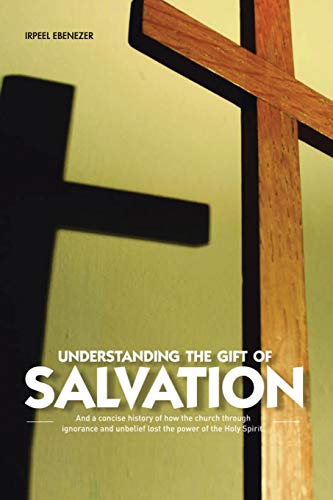
Understanding The Gift Of Salvation: And a Concise History of how the Church through ignorance and unbelief lost the power of the Holy Spirit - Brossura
Sinossi
What exactly did Jesus Christ save us from other than hell fire? That was the question a somewhat frustrated friend asked while going through a difficult period in his life. Many Christians have asked similar questions or wondered why the Christian life in reality is so different from what is usually professed. This book is a true seeker's manual on the Gift of Salvation. It is for those who are not satisfied with only doctrines and creeds handed down by parents or pastors. It is for those willing to build on what they've learnt, dig deeper and find out the fullness of what God in His mercy gave to mankind in Jesus Christ. It not a book to rush or breeze through, like the Berean Christians, readers are encouraged to carefully study the Scripture references and dig out the truth for themselves. The promise of God is: "You will seek Me and find Me, when you seek Me with all your heart.
Le informazioni nella sezione "Riassunto" possono far riferimento a edizioni diverse di questo titolo.
Estratto. © Ristampato con autorizzazione. Tutti i diritti riservati.
UNDERSTANDING THE GIFT OF SALVATION
And a concise history of how the church through ignorance and unbelief lost the power of the Holy SpiritBy IRPEEL EBENEZERAuthorHouse
Copyright © 2012 Irpeel EbenezerAll right reserved.
ISBN: 978-1-4685-4166-3
Contents
Introduction................................................................................................xiChapter 1 What is Salvation?................................................................................1Chapter 2 Receiving the Gift of Salvation...................................................................10Chapter 3 Salvation—A Covenant Relationship...........................................................27Chapter 4 The Early Church and the Ante-Nicene Church Fathers...............................................52Chapter 5 The Imperial Church and the Post Nicene Church Fathers............................................85Chapter 6 'Heresies' and Schisms of the Early Church........................................................105Chapter 7 The Church During the Dark Ages—(c500-1100 AD)..............................................115Chapter 8 The Byzantine Empire and the Greek Orthodox Church—(450-1055 AD)............................131Chapter 9 The Church in the Middle Ages (c1000-1500)........................................................144Chapter 10 Theologians, Philosophers and Reformers of the Middle Ages.......................................168Chapter 11 Controversies, 'Heresies' and Schisms of the Middle Ages.........................................193Chapter 12 Monastic Movements of the Middle Ages............................................................205Chapter 13 Renaissance and Renaissance Humanism.............................................................210Chapter 14 The Reformation and the Reformers—1450-1750 AD.............................................223Chapter 15 European Wars of Religion........................................................................252Chapter 16 The Roman Catholic Counter-Reformation...........................................................261Chapter 17 The Enlightenment and Enlightenment Philosophers—17th & 18th Centuries.....................267Chapter 18 Global Evangelization and Re-Evangelization......................................................278Chapter 19 Three Revolutions and the Impact on Christianity—1760-1850.................................294Chapter 20 The Great Awakenings and Protestant Missions and Missionaries....................................302Chapter 21 Theologians and Philosophers of the 19th and 20th Centuries......................................318Chapter 22 Global Trends in Christianity in the 19th and 20th Centuries.....................................332Chapter 23 The Christian and Christianity Today.............................................................381Chapter 24 Evolutionary Trends from the Early Church to the 21st Century....................................391References..................................................................................................419
Chapter One
What is Salvation?"For god so loved the world, that He gave His only begotten Son, that whoever believes in Him, should not perish but have everlasting life."—John 3:16
Salvation means: "the act of rescuing, keeping or preserving the soul from sin or the punishment for sin.
It also means: "the act of being rescued, kept or preserved from destruction, ruin, calamity or loss."
Why does Man need Salvation?
To address this question fully, it is necessary to go to the very beginning, to creation and the Garden of Eden.
In the beginning, God created the heavens and the earth; He made Man the crown of His creation, made Him the keeper of it and gave him dominion over it, God even made Adam a partner in His creative work by giving him the honor of christening every living creature—Genesis 1:27-28; Genesis 2:15-23.
God made man for fellowship with Himself; Adam and Eve frolicked in Eden and communed with God "in the coolness of the day" until the fellowship was broken by Satan. By deception, Satan convinced Eve to desire "to be like God." She disbelieved God and disobeyed by eating the forbidding fruit and so did her companion, Adam. Rather than becoming like God, they died spiritually, the glory of God departed and they became naked.
The idyllic life which Adam and Eve enjoyed in Eden was destroyed and the fellowship they had with God was broken. The disintegration of their bodies set in and physical death was just a matter of time—Genesis 3. By choosing to believe and obey Satan rather than God, Adam and Eve unwittingly, but voluntarily, changed the power equation. Man lost the authority and dominion that God gave them over His creation to Satan because, as the Scriptures say: "you are the slave of the one you choose to obey"—John 8:34; Romans 6:16.
Man fell to the same Sin that got Satan kicked out of heaven—"the desire to be like God"—Genesis 3:1-6; isaiah 14:12-14.
Therefore, at the heart of every Sin is the rebellion springing from the desire to be like God. Adam and Eve were kicked out of Eden with the natural consequences of their actions—curses instead of blessings.
Children born to slaves in the house of their masters are also slaves, therefore all the descendants of Adam and Eve remain slaves to Satan and Sin unless they are "Redeemed", that is, "bought back". That is why the entire human race needs Redemption or Salvation.
What is Sin?
As stated earlier, at the core of every Sin is rebellion arising from the desire to be like God. However according to the Scriptures, it manifests in many ways:
a) Sin is breaking the law—(also characterized as lawlessness)—1John 3:4.
b) Sin is wrongdoing; or unrighteousness—1John 5:17
c) Sin is Failing to do what is known to be right—James 4:17
d) Sin is doing anything, the rightness of which is doubtful—Romans 14:23.
Sin is not only wrongdoing or breaking the law; it is also failing to do what is right. In other words, sin can be by commission or omission.
Sin can also be intentional or unintentional.
According to the Bible, guilt is imputed even for unintentional sins and these also require propitiation—Leviticus 4:13, 27; Leviticus 5:17.
The Bible talked about Trespass, Transgression, and iniquity—Leviticus 5:15; Leviticus 6:2; Psalm 51:2-3; Isaiah 59:12. Trespass and Transgression imply violating a lawful boundary, in essence, breaking a law or command, by commission or omission and whether intentional or unintentional. Iniquity is acts of wickedness or injustice, more likely intentionally by commission or omission.
The Consequences of Sin
The main consequence of Sin is separation from God—isaiah 59:1-2.
Because God is Holy, He cannot tolerate Sin nor can sinful man behold a holy God without disintegrating—(Exodus 33:20; Isaiah 6:1-5); therefore, man in sin cannot fellowship with God.
The separation from God resulted in devastating derivatives for mankind, namely—Disasters, Diseases, Defeat, Despair, Desperation, Desolation, Destitution, Diminution, Destruction, Disillusionment and finally Death—Leviticus 26:14-39; Deuteronomy 28:15-68. These derivatives operate at individual, family, community, national and global levels.
Without Salvation, the inexorable end result of Sin is Death—Romans 6:23.
The Sin Problem
The Scriptures say—"For all have sinned and come short of the glory of God"—Romans 3:23.
As the human race inherited slavery to Satan, Sin was also inherited because, with the departure of the glory of God as covering from Adam and Eve, their nature changed to that which is corruptible. Therefore, every human being is conceived and born in Sin—Psalm 51:5.
In other words, the entire human race was under a death sentence because, "the wages of Sin is death ..."—Romans 6:23a.
The Solution
According to Scriptures, the forgiveness or remission of Sin can only be accomplished through the 'Shedding of blood':
"For the life of the flesh is in the blood, and I have given it to you upon the altar to make atonement for your souls; for it is the blood that makes atonement for the soul."—Leviticus 17:11.
And, "Without the shedding of blood, there is no remission for sin"—Hebrews 9:22.
Therefore, for Sin to be forgiven, the shedding of blood is vital.
In the Old Testament, there were specific stringent guidelines for the animals used for sacrifices but even then those were not effective as the sacrifice had to be repeated time and time again. The blood of calves, bulls and goats could not take away sins—Hebrews 10:3-4.
In addition, not just anyone can offer sacrifices for sin, but only the High Priest who alone can enter the Holy of Hollies once a year. In making atonement for the people, the High Priest, under the Levitical order, first had to offer sacrifices for his own sins before he could offer the same for the people.—Hebrews 9:1-9.
Under this arrangement, neither the priests nor the blood of the animals used in the sacrifices were perfect and therefore the process did not provide the perfect solution for the Sin problem. Man could only approach but not really reach God. There was still a veil.
No man can atone for his own sins by shedding his own blood or shed his blood for the redemption of another because, as already stated, there is the heredity of Sin from Adam in every human being. Even the blood of the holiest martyrs cry out for justice and vengeance, as the blood of Abel, and not for mercy—Genesis 4:10; Psalm 49:7-8; Revelations 6:9-10.
What then is the Remedy for the situation? How can man return to fellowship with his Creator?
The Remedy:
Jesus Christ, the perfect Sacrifice and High Priest.
The solution, as already stated, is "the shedding of blood"; but the snag is that the blood of animals are inadequate and ineffective and the blood of Man is unacceptable.
Thankfully, God never gave up on human beings, the crown of His creation. The omniscient God knew that Man may fall even before the world began and He had made plans for man's restoration and reconciliation with Himself.
The Scriptures say that, before the world began, God ordained Jesus Christ as the "Lamb without blemish and without spot"—1peter 1:18-21—the perfect sacrificial Lamb.
What made Jesus Christ suitable as the Sacrificial lamb?
- He was conceived of the Holy Spirit and therefore was untainted by the "Adamic 'gene' of Sin"—Luke 1:26-35.
- He lived as man and was tempted in every way but did not sin—Hebrew 2:14-18; Hebrews 4:14-15.
Therefore, the Blood of Jesus is UNIQUE.
It is the only Blood that speaks better things than that of Abel. His blood speaks MERCY and GRACE before the throne of God—Hebrews 12:24.
It is only the Blood of Jesus Christ that has the power to wash away sins and propitiate or make atonement for sins.
He was also foreordained to be the Perfect High Priest.
What made Him the Perfect High Priest?
- As the Son of Man, He knows the nature of Man, sympathizes with human weaknesses but he was able to transcend and live a sinless life—Hebrews 2:14-18; Hebrews 4:14-15.
- He never sinned and therefore he does not need to atone for His own sins before He can make atonement for others as the Levitical priests had to do—Hebrews 7:26-28
- His priesthood is Eternal, in the order of Melchizedek, King of Salem. Therefore, the need for yearly sacrifices for Sin is obviated—Hebrews 7:23-25; Hebrews 10:11-14.
- He did not offer the blood of animals but offered His own Blood—Hebrews 9:24-26, 28.
- His perfect Sacrifice is once and for all, not repeated as under the Levitical order—Hebrews 7:26-27; Hebrews 10:11-12.
Comment
Theologians often talk of the substitutionary or vicarious death of Jesus Christ for sinners on the Cross.
However, the use of such terms can be misleading as it suggests that we could have gone on the Cross or die to atone for our own sins. This is not the case at all. No human being as already explained can die for his sins or the sins of others. Without Jesus Christ Man is doomed and without any hope in regard to the atonement for sin and salvation.
Jesus Christ is God's remedy for Man's sins and the means to reconcile Man to God; a plan God had made even before the foundations of the world—1 Peter 1:18-21
What did the Blood of Jesus Christ accomplish for Sinners?
According to Scriptures, the Blood of Jesus accomplished the following for sinners: Forgiveness, Redemption, Justification, Sanctification, Reconciliation, Healing, Victory and eternal life.
1) Forgiveness
To forgive means to remit, to release from punishment, to pardon
Because God is Just, The Sin of the human race cannot be simply overlooked. The penalty had to be paid, the requirement of the law fulfilled and atonement made for sin.
The problem, as earlier noted is that no human being can pay the price or atone for his own sin or that of anyone else.
God Himself made forgiveness possible by giving His only begotten Son, Jesus Christ who carried the sins of the whole world on the Cross and shed His Blood for the propitiation of the Sin of all mankind—2Corinthians 5:21; Mathew 26:28; Ephesians 1:7.
* "This is my blood of the New Covenant, which is shed for many for the forgiveness of sins".
2) Redemption
Redemption means to buy back, to free from bondage by paying a price.
• Believers are redeemed from Satan.
Adam and Eve sold out to Satan and became, with the whole of Mankind, slaves of Satan. But God in His mercy, at the appointed time, stepped in and re-purchased Man. The bible says, not with silver or gold, "but with the Precious Blood of Jesus Christ ..."—1Peter 1:18-19; Revelations 5:9.
• Believers are redeemed from Sins and Iniquity.
Jesus said: "... Everyone who sins is a slave of sin"—John 8:34. Thankfully, He went on to say: "If the Son sets you free, you will be free indeed"—John 8:35.
Jesus redeemed Mankind "from every kind of sin"—titus 2:14 (NLT)
• Believers are redeemed from the curse of the law.
Apart from becoming slaves of Sin and Satan, Man came under a curse because, breaking faith with God by breaking His Covenant and Law automatically places Man under a curse. Jesus Christ, by His death on the Cross, "redeemed man from the curse of the law"—Galatians 3:13; and "wiped out the records that were against us"—Colossians 2:14.
• Believers are also redeemed from Self or the Flesh.
Paul, in Romans 7:24 (NIV), detailed man's struggle with sin and his anguished cry was: "What a wretched man I am! Who will rescue me from this body of death"? He answered: "Thank God, the answer is in Jesus Christ our Lord ..."—Romans 7:25 (NLT).
* "For you know that you were not redeemed with corruptible things like silver and gold ... but with the precious blood of Christ as a Lamb without blemish"—1Peter 1:18-19
3) Justification
To be justified means to be acquitted, declared not guilty and free from blame.
Again, because God is Just, He acquits anyone who trusts in Jesus Christ because Jesus had fulfilled the requirements of the Law by His death on the Cross and paid the penalty for Sin—Romans 3: 24—26; Romans 5:1,9; Romans 8:1-4—things that Man was simply unable to do.
* "Since we have now been justified by His blood, how much more shall we be saved from God's wrath through Him!"—Romans 5:9
4) Sanctification
Sanctification means to be made holy, consecrated and free from sin.
God, who is Holy, demands that man be holy—1Peter 1:15-16; Leviticus 11:44 & 45; Leviticus 19:2 and without holiness, Man cannot see God—Hebrews 12:14.
Jesus Christ frees from Sin by washing/cleansing with His Blood—1John 1:7; Hebrews 13:12; Revelations 1:5.
* "Therefore, Jesus also, that He might sanctify the people with His own blood, suffered outside the gate"—Hebrews 13:12.
5) Reconciliation
Reconciliation means to make peace, settle differences or quarrel, become friends again and bring into harmony.
Fellowship between God and Man was broken after Adam and Eve sinned in Eden. The bible says the unrepentant Man is God's enemy—Colossians 1:21-23.
Through the shedding of His Blood, Jesus Christ made peace and reconciled Man with God. He mediated a New Covenant between God and Man with His Blood and restored Man's fellowship with God—2Corinthians 5:18-19; 1Peter 3:18; Colossians 1:19-23;
* "For God was pleased to have all His fullness dwell in Him and through Him to reconcile to Himself all things, whether things on earth or things in heaven, by making peace through His blood shed on the Cross"—Colossians 1:19-20
6) Healing
To heal means to make whole, to cure or return to health.
Sin damaged everything and diseases/sicknesses are part of the consequences of Man's Sin.
The Scriptures say that we are healed by the stripes of Jesus Christ—1Peter 2:24; Isaiah 53:4-5. Jesus Christ fulfilled God's promise in Exodus 15:26 for all who believe and obey.
Psalm 107:20 says: "He sent His Word and healed them and saved them from their destructions ..." Jesus is the Word of God—John1:1-3.
Again, Malachi prophesied: "But for you who fear My Name, the Sun of Righteousness will arise with healing in His wings"—Malachi 4:2.
Jesus is the 'Sun of Righteousness' and he has come with healing in His wings for all who fear the Name of God.
* "But He was wounded for our transgressions, He was bruised for our iniquities; the chastisement for our peace was upon Him, and by His stripes we are healed"—Isaiah 53:5
7) Victory
Through Jesus Christ, and His shed Blood, we have victory over:
- The Accuser, Satan—Revelations 12:10-11
- Principalities and Powers—Colossians 2:13-15
- The World—1John 4:4; 1John 5:4-5.
Believers are overcomers in Jesus Christ.
* "And they overcame him by the blood of the Lamb and by the Word of their testimony, and they did not love their lives to the death"—Revelations 12:11.
8) Eternal Life
Eternal Life means life without end, everlasting life.
According to Scriptures, there are two eternal destinations, life and death or heaven and hell.
All who put their faith in Jesus Christ will have eternal life while all who reject Him will have eternal death in hell, forever separated from God—(John 3:16)
• Eternal Life is for only those who are victorious, the overcomers—Revelations 21:7-8
(Continues...)
Excerpted from UNDERSTANDING THE GIFT OF SALVATIONby IRPEEL EBENEZER Copyright © 2012 by Irpeel Ebenezer. Excerpted by permission of AuthorHouse. All rights reserved. No part of this excerpt may be reproduced or reprinted without permission in writing from the publisher.
Excerpts are provided by Dial-A-Book Inc. solely for the personal use of visitors to this web site.
Le informazioni nella sezione "Su questo libro" possono far riferimento a edizioni diverse di questo titolo.
Risultati della ricerca per Understanding The Gift Of Salvation: And a Concise...

Foto dell'editore
Understanding The Gift Of Salvation: And a Concise History of how the Church through ignorance and unbelief lost the power of the Holy Spirit
Da: Book Dispensary, Concord, ON, Canada
Valutazione del venditore 5 su 5 stelle

Soft cover. Condizione: As New. BRAND NEW softcover. Book. Codice articolo 104992
Compra usato
EUR 10,60
Spedizione EUR 6,00
Spedito da Canada a U.S.A.
Spedito da Canada a U.S.A.
Quantità: 1 disponibili
Foto dell'editore
Understanding The Gift Of Salvation: And a Concise History of how the Church through ignorance and unbelief lost the power of the Holy Spirit
Da: California Books, Miami, FL, U.S.A.
Valutazione del venditore 4 su 5 stelle

Condizione: New. Codice articolo I-9781468541663
Compra nuovo
EUR 23,86
Spedizione gratuita
Spedito in U.S.A.
Spedito in U.S.A.
Quantità: Più di 20 disponibili
Foto dell'editore
Understanding the Gift of Salvation
Print on DemandDa: PBShop.store US, Wood Dale, IL, U.S.A.
Valutazione del venditore 5 su 5 stelle
PAP. Condizione: New. New Book. Shipped from UK. THIS BOOK IS PRINTED ON DEMAND. Established seller since 2000. Codice articolo L0-9781468541663
Compra nuovo
EUR 28,03
Spedizione gratuita
Spedito in U.S.A.
Spedito in U.S.A.
Quantità: Più di 20 disponibili
Foto dell'editore
Understanding the Gift of Salvation
Print on DemandDa: PBShop.store UK, Fairford, GLOS, Regno Unito
Valutazione del venditore 5 su 5 stelle
PAP. Condizione: New. New Book. Delivered from our UK warehouse in 4 to 14 business days. THIS BOOK IS PRINTED ON DEMAND. Established seller since 2000. Codice articolo L0-9781468541663
Compra nuovo
EUR 23,88
Spedizione EUR 6,85
Spedito da Regno Unito a U.S.A.
Spedito da Regno Unito a U.S.A.
Quantità: Più di 20 disponibili
Foto dell'editore
Understanding The Gift Of Salvation: And a Concise History of how the Church through ignorance and unbelief lost the power of the Holy Spirit
Da: Chiron Media, Wallingford, Regno Unito
Valutazione del venditore 5 su 5 stelle
Paperback. Condizione: New. Codice articolo 6666-IUK-9781468541663
Compra nuovo
EUR 19,29
Spedizione EUR 18,07
Spedito da Regno Unito a U.S.A.
Spedito da Regno Unito a U.S.A.
Quantità: 10 disponibili
Foto dell'editore
Understanding the Gift of Salvation
Print on DemandDa: Majestic Books, Hounslow, Regno Unito
Valutazione del venditore 4 su 5 stelle
Condizione: New. Print on Demand pp. 484 2:B&W 6 x 9 in or 229 x 152 mm Perfect Bound on Creme w/Gloss Lam. Codice articolo 128959599
Compra nuovo
EUR 30,02
Spedizione EUR 7,58
Spedito da Regno Unito a U.S.A.
Spedito da Regno Unito a U.S.A.
Quantità: 4 disponibili
Foto dell'editore
Understanding The Gift Of Salvation: And a Concise History of how the Church through ignorance and unbelief lost the power of the Holy Spirit
Da: Ria Christie Collections, Uxbridge, Regno Unito
Valutazione del venditore 5 su 5 stelle
Condizione: New. In. Codice articolo ria9781468541663_new
Compra nuovo
EUR 23,94
Spedizione EUR 13,98
Spedito da Regno Unito a U.S.A.
Spedito da Regno Unito a U.S.A.
Quantità: Più di 20 disponibili
Foto dell'editore
Understanding the Gift of Salvation
Print on DemandDa: Books Puddle, New York, NY, U.S.A.
Valutazione del venditore 4 su 5 stelle
Condizione: New. Print on Demand pp. 484. Codice articolo 26131627952
Compra nuovo
EUR 36,03
Spedizione EUR 3,42
Spedito in U.S.A.
Spedito in U.S.A.
Quantità: 4 disponibili
Foto dell'editore
Understanding the Gift of Salvation
Print on DemandDa: Biblios, Frankfurt am main, HESSE, Germania
Valutazione del venditore 4 su 5 stelle
Condizione: New. PRINT ON DEMAND pp. 484. Codice articolo 18131627962
Compra nuovo
EUR 29,66
Spedizione EUR 9,95
Spedito da Germania a U.S.A.
Spedito da Germania a U.S.A.
Quantità: 4 disponibili
Foto dell'editore
Understanding the Gift of Salvation: And a Concise History of How the Church Through Ignorance and Unbelief Lost the Power of the Holy Spirit
Print on DemandDa: THE SAINT BOOKSTORE, Southport, Regno Unito
Valutazione del venditore 5 su 5 stelle
Paperback / softback. Condizione: New. This item is printed on demand. New copy - Usually dispatched within 5-9 working days. Codice articolo C9781468541663
Compra nuovo
EUR 26,87
Spedizione EUR 21,11
Spedito da Regno Unito a U.S.A.
Spedito da Regno Unito a U.S.A.
Quantità: Più di 20 disponibili