
Sinossi
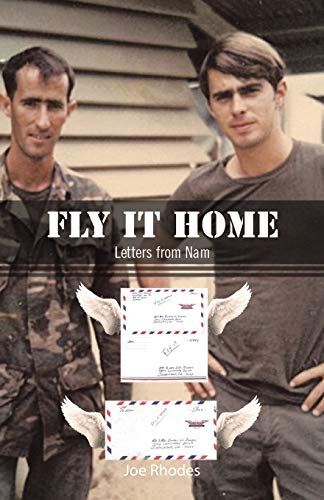
This book, Fly It Home, is a biographical compilation about the year that I spent in the war in Viet Nam. It is drawn from many letters that I wrote home to my family. My mother always saved the letters that her sons wrote home from their duty stations and when I was reading some of them a while back, I decided to put them in monthly order and write my thoughts about the letters. The letters that I wrote home usually were specific about what was happening at my duty station. Some were about visiting with my brother, some were about working in the hanger and some were about the weather or the South China Sea. Some were even about the food that we had or about the sorties that our helicopters flew. Many were written about what I was looking forward to when my tour was over. Then there was one that I wrote about the day that my brother left Viet Nam and the lonely feeling that I had upon his departure. I believe that was the day of my transformation from boy to man. I remain thankful that both my brother and I were able to serve our country for a year each in a war zone and returned back home unimpaired. Many served and came back home. Many served and came back home in a box. Fifty eight thousand of them. Please remember their family's sacrifice. Thank you.
Le informazioni nella sezione "Riassunto" possono far riferimento a edizioni diverse di questo titolo.
Estratto. © Ristampato con autorizzazione. Tutti i diritti riservati.
FLY IT HOME
Letters From Nam
By Joe RhodesTrafford Publishing
Copyright © 2014 Joe Rhodes
All rights reserved.
ISBN: 978-1-4907-3371-5All rights reserved.
CHAPTER 1
So How Did I Wind Up Here?
I was born in the Deep South. I had spent my entire life in North Louisiana, living sometimes in the city and sometimes in the country. I probably enjoyed the country more than the city because there are creeks to wade across, snakes to kill, cows to feed, and even oil well derricks to climb. There is, however, a lot to be said about indoor plumbing, like everybody had in the city. In the area of North Louisiana, strong Christian values are taught to children. The Golden Rule is to be adhered to at all times: help those who need help, give to those who are in need, just do the right thing. It's the way we were raised, and we were expected to stay that way. But then, the mid-sixties came, and things started changing. Big change! So there I was ... the youngest of seven sons, the baby brother, about to go away to college. This would be the first time that I was ever away from home for more than a week.
Then things started happening pretty fast; I moved seventy miles east of home to Ruston, Louisiana, enrolled in the Louisiana Polytechnic Institute, got a job at the Piggly Wiggly Grocery Store, secured a student loan from Ruston State Bank, pledged Kappa Sigma Fraternity (founded by General Robert E. Lee), learned how to fly small airplanes, and learned the operative definition of the phrase "party hearty." To borrow the title of one of Chuck Berry's songs, I was "Almost Grown." Or at least I tried to convince myself that I was almost grown.
I majored in Professional Aviation, which I keenly enjoyed, especially on the days that we got to fly. Ground School consisted of learning the principles of flight, FAA Rules and Regulations, meteorology, call signs, aviation terminology, rate of climb, angle of attack, carburetor heat, wing ice, stall speed, take-off speeds, landing speeds, short-field landing, downwind leg, final approach, as well as how to enter notes in the airplane logbook. Some of the things that the aviation student was required to know were quite interesting, while others were not quite so intriguing. Wing ice—what's that? Carburetor heat—why? Well, if one is flying at fifteen thousand feet, one's carburetor could freeze, and the wings could actually develop ice on the leading edge because it's a lot colder at fifteen thousand feet than at ground level. Meteorology was interesting. I was not aware that thunderstorms were so violent inside. There is absolutely no reason for one to fly directly into a cumulonimbus (thunderstorm) cloud. Those who have penetrated these types of clouds and lived to tell about it had stories of losing engines from the wings or even losing the wings from the fuselage of the aircraft. This turned out to be pretty deep stuff but very interesting to the student who desired to learn how to fly an airplane.
Flight school is another realm altogether. The student goes to the airport and gets a literal hands-on class about the airplane that he is about to learn to fly. In this class, you get to learn how to complete a preflight inspection of the aircraft. You get to do things like checking the propeller for any nicks or dings on the leading edge of the prop and checking the gas in the tank for any water accumulation by draining a small amount of gas from the wing tank and inspecting for any separation of gas and water. Sometimes, water vapor can accumulate in a sealed gas tank, and if so, the water will "pool" in the lowest part of the tank, which is where the check drain is located. The leading edges of the wings need to be checked for any dents. The flaps, ailerons, elevators, and rudders are moved by hand to be sure they are attached. The pitot tube, which powers the airspeed indicator in the cockpit, must be clear of debris because it operates on ram air. Then, if all is up to standard, unlock the chain that holds the plane in its parking spot, climb aboard with the instructor, and start her up! Next, radio the control tower, identify yourself and your airplane, ask for permission to take off and go to the end of the runway, rev your engine to check some gauges (while applying the brakes), and if everything checks out, put the throttle to the wall, release the brakes, and when the airspeed indicator is at takeoff speed, pull the yoke back gently, and you will become airborne. What a feeling! What a thrill! After you fly around for a couple of hours and get the "feel" of flight, the time comes to return to the airport and land your airplane on its shadow. Safely. Gently and safely. There is absolutely no need to stress the landing gear. After all, stressing the landing gear greatly stresses the instructor. And after eight to ten hours of learning how to handle the airplane with takeoff and landing and maneuvering, you get to perform your first solo flight. This is a milestone. This is a tremendous builder of confidence ... to know that you can board the machine, start it, take off, fly to "who knows where," and bring it back down safely to its shadow. Up until the point of my first solo flight, there was no greater thrill and confidence builder in my young life than that first solo.
So there I was, away from home, having a little spending money and access to one of my brothers' cars, in a fraternity, watching Terry Bradshaw quarterback our Bulldogs—yes, that Terry Bradshaw—learned how to drink beer, and, in short, discovered exactly how to, as some of my Cajun friends would say, "pass a good time." So started my college education, one that would be interrupted by a trip that would take me much further than seventy miles from home.
The world, however, kept spinning, and things other than what I primarily had an interest in kept spinning with it. Music of the sixties changed the ideas many people had and also the manner in which they expressed themselves. Politics also changed the outlook that people proclaimed. There was Woodstock, Janis Joplin, Jimi Hendrix, and many other artists who gave people ideas about how the world was changing. And it changed. Rowan and Martin's "Laugh In," was a stretch to watch in many of the homes in the Bible Belt. There were go-go dancers who were good at go-going. There was something called "free love." Being a son of the Heart of Dixie, I am not sure that I ever really learned exactly what that meant. And of course, "Make love, not war" was a popular proclamation. So within a year of my first solo flight of an airplane, the U.S. Army convinced me that in all actuality, we, in fact, needed to make more war and apparently less love. Thus came my introduction to the Army of the United States of America and my duty to serve the country that affords us the freedoms that I had grown up knowing were the best freedoms that the world had to offer. So after the Department of Defense reactivated the Draft Lottery, I took it upon myself to chat it up with an Armed Forces Recruiter. I talked to the Navy Recruiter first, but enlistments in the Navy were for four years, and I just didn't want to be away from my roots for that long. Then I met with the Army Recruiter, and he actually painted quite a nice picture that I considered to be beneficial to me and my country. Since my draft lottery number, which was based on birthdates, was forty-seven, I felt that I would be drafted within just a few months.
The expectations that my recruiter said were pretty standardized were: 1) I was eighteen years old, 2) I had some college time, and 3) I could fly an airplane. If I were to wait and probably be drafted, I would very likely wind up in the infantry. On the other hand, if I volunteered to join the Army for a three-year enlistment, I would very likely wind up in Army Aviation, possibly even going through Army Flight School and becoming a helicopter pilot. Even though flying a rotory—wing aircraft wasn't my desire, compared to carrying a forty-five pound M60 Machine Gun with ammo draped over my shoulder, on the ground, helicopters started singing a real nice song to me. A short time later, after a swearing-in ceremony, I was bussed off to Fort Polk, Louisiana, to begin my duty payment for being an American. It has been said that whenever an individual takes the oath of enlistment into the Armed Forces of the United States, that person, by taking the oath, signs a "blank check payable to the United States in the amount up to and including his or her life." This is not just a cliché. There have been recorded 641,800 combat-related deaths involving our military machines since the Revolutionary War. When the Civil War mortal casualties are included, that number rises to 1,264,826 deaths of Armed Forces personnel. So the threat of paying the ultimate price for defending freedom within our borders and around the world plays a very real part in the life of our Armed Forces personnel.
Boot camp ... here I come!
CHAPTER 2Fort Polk, Louisiana Fort Eustis, Virginia
United States Army Training Center Infantry, First Training Brigade, First Battalion, Company C. That's the "drawn out" name of our training outfit at Fort Polk. We came to be known simply as "C-1-1" when identifying ourselves to any observing trainers. "You've seen the rest, now see the best! C-1-1, Drill Sergeant!" This was much easier to say or even remember when describing to someone the company to which you belonged.
Boot Camp, surprisingly, was not as bad as some might describe. The primary thing to remember in boot camp is that you are the student, and the drill sergeants are the teachers. It seems that drill sergeants are aptly named. They "drill" into the recruits the things that can save a soldier's life on the battlefield. It isn't feasible that they could teach lifesaving or life-sustaining tactics through suggestive ideas or reading. Consequently, they are called "drill sergeants" instead of "suggestive sergeants." I believe that I speak for literally millions of Armed Forces personnel when I proclaim that the training that is received in boot camp is better learned from a drill sergeant than from a suggestive sergeant. The term of the decade, "politically correct," has absolutely no place in the Armed Forces training facilities known as boot camp. The drill sergeants, also known as drill instructors, or DIs, do not ask much of the recruits under their charge. In fact, I don't think they ask anything of the recruits; they demand from the recruits. They demand and expect the complete best from the recruits whom they teach because the DIs know that the very recruits that are under their charge will likely be in a life-threatening situation before their enlistment time is over. Consequently, the DIs grow to know their recruits quite well because they know that the things the recruits take away from boot camp are the things that could ultimately save the soldiers' lives and concurrently the life of our country. When I served, the U.S. Army Boot Camp was only eight weeks in duration. There is a tremendous amount of learning in that short eight weeks. Recruits become soldiers in that time. They learn what infantry is all about. The infantry part of our Army is comprised of the soldiers on the ground, leading the fight, looking the enemy in the eye, and carrying out the orders of their commanders to win the battles of engagement, usually with arms, i.e., rifles, grenades, and mortars. The commanders may be the one's calling the shots, but the infantrymen are the ones who pull the triggers and the grenade pins. I will not go into detail about all that is taught in Boot Camp, but some of the "blocks" of training are Rifle Training, Bayonet Training, Grenade Training, Quick Kill Training, Confidence Course Training, Close Combat Training, CBR (gas chamber) Training, Infiltration Training, just to name a few. In each of the blocks of training, the trainee either passes or fails and has to repeat the failed parts. There's no such thing as grades; it's just pass or fail. My class began on February 9, 1970, and Graduation Day was April 3, 1970. Speaking only for myself, Boot Camp was not a "cakewalk," but it could have been much worse. As long as the recruit does what he is ordered and to the expectations of the DI, usually, there is a feeling of accomplishment and growth. Boot camp, in general, starts the recruit on the road to becoming a true soldier, a servant of the United States, and a very welcome sight to those who need help in keeping their way of life that they desire.
Upon graduation from Boot Camp, the next training that the soldier encounters is called "Advanced Individual Training" or, as the Army calls it, "AIT." AIT provides the training that the soldier will specialize in while being in the service. As one can imagine, the Army must have specialists in just about any occupational field known to mankind. The Army is self-sustaining in everything from the cradle to the grave. Literally. The United States Army can stand on its own as a nationality or group of populace. To be self- sustaining, however, soldiers must be trained in the specialties that are much like links in a chain. Each specialty, or job, represents a link in the chain. That is why AIT is such an important a part of each soldier's training. After a week-long furlough at home upon graduation from boot camp, I was sent to Fort Eustis, Virginia, for my advanced training. My Military Occupational Specialty, or as the Army calls it, MOS, was coded as "68G20," which is defined as airframe repair. I believe that it was probably someone from the Department of Defense who, somehow, determined that the code name for Airframe Repair School should be 68G20. I have been unable to connect the dots that would explain the reasoning behind the code. Fortunately, it was not required that I be able to crack that code.
In Airframe Repair School, the trainee learns how to repair aircraft skin and supporting frames that have been damaged due to natural wear and tear as well as damage from unnatural sources such as bullet holes from the enemy trying to shoot down the aircraft. Most of the world's aircrafts are built of aluminum. Aluminum is the metal of choice for framing, bulkheads, and skin because the physical properties of aluminum are conducive for flying machines. Aluminum is strong, rigid, pliable, easy to bend and drill, and is inexpensive compared to other metals. Aluminum is also the metal of choice for most flying machines because it is very light in weight compared to other metals. The 68G20 trainee learns how to repair any damage to an aircraft that is repairable. For example, if a helicopter is on a combat mission and takes on small-arms fire from the enemy but is still airworthy, the 68G20 graduate knows how to assess the damage and repair the aircraft with the proper equipment, parts, and tools. Conversely, if a helicopter is shot down and completely demolished in the crash, the 68G20 graduate would not be able to repair such a calamity. In such a situation, the lives of the crewmembers are what count. Replacement helicopters can be requested from the DOD, but if a crewmember or an entire crew is lost, that becomes the most important casualty of a conflict. Being a veteran of an Assault Helicopter Company which was engaged in combat, I have witnessed both of the aforementioned situations.
(Continues...)
Excerpted from FLY IT HOME by Joe Rhodes. Copyright © 2014 Joe Rhodes. Excerpted by permission of Trafford Publishing.
All rights reserved. No part of this excerpt may be reproduced or reprinted without permission in writing from the publisher.
Excerpts are provided by Dial-A-Book Inc. solely for the personal use of visitors to this web site.
Le informazioni nella sezione "Su questo libro" possono far riferimento a edizioni diverse di questo titolo.
Altre edizioni note dello stesso titolo

Risultati della ricerca per Fly It Home: Letters from Nam

Immagini fornite dal venditore
Fly It Home
Da: Rarewaves.com USA, London, LONDO, Regno Unito
Valutazione del venditore 5 su 5 stelle

Paperback. Condizione: New. Codice articolo LU-9781490733715
Compra nuovo
EUR 13,58
Spedizione gratuita
Spedito da Regno Unito a U.S.A.
Spedito da Regno Unito a U.S.A.
Quantità: Più di 20 disponibili
Foto dell'editore
Fly It Home
Print on DemandDa: PBShop.store US, Wood Dale, IL, U.S.A.
Valutazione del venditore 5 su 5 stelle
PAP. Condizione: New. New Book. Shipped from UK. THIS BOOK IS PRINTED ON DEMAND. Established seller since 2000. Codice articolo L0-9781490733715
Compra nuovo
EUR 13,59
Spedizione gratuita
Spedito in U.S.A.
Spedito in U.S.A.
Quantità: Più di 20 disponibili
Foto dell'editore
Fly It Home Letters from Nam
Print on DemandDa: PBShop.store UK, Fairford, GLOS, Regno Unito
Valutazione del venditore 5 su 5 stelle
PAP. Condizione: New. New Book. Delivered from our UK warehouse in 4 to 14 business days. THIS BOOK IS PRINTED ON DEMAND. Established seller since 2000. Codice articolo L0-9781490733715
Compra nuovo
EUR 12,97
Spedizione EUR 3,85
Spedito da Regno Unito a U.S.A.
Spedito da Regno Unito a U.S.A.
Quantità: Più di 20 disponibili
Foto dell'editore
Fly It Home: Letters from Nam
Da: Ria Christie Collections, Uxbridge, Regno Unito
Valutazione del venditore 5 su 5 stelle
Condizione: New. In. Codice articolo ria9781490733715_new
Compra nuovo
EUR 11,50
Spedizione EUR 14,03
Spedito da Regno Unito a U.S.A.
Spedito da Regno Unito a U.S.A.
Quantità: Più di 20 disponibili
Foto dell'editore
Fly It Home: Letters from Nam
Da: Chiron Media, Wallingford, Regno Unito
Valutazione del venditore 5 su 5 stelle
PF. Condizione: New. Codice articolo 6666-IUK-9781490733715
Compra nuovo
EUR 8,68
Spedizione EUR 18,14
Spedito da Regno Unito a U.S.A.
Spedito da Regno Unito a U.S.A.
Quantità: 10 disponibili
Foto dell'editore
Fly It Home: Letters from Nam
Print on DemandDa: THE SAINT BOOKSTORE, Southport, Regno Unito
Valutazione del venditore 5 su 5 stelle
Paperback. Condizione: New. This item is printed on demand. New copy - Usually dispatched within 5-9 working days. Codice articolo C9781490733715
Compra nuovo
EUR 13,89
Spedizione EUR 14,43
Spedito da Regno Unito a U.S.A.
Spedito da Regno Unito a U.S.A.
Quantità: Più di 20 disponibili
Immagini fornite dal venditore
Fly It Home
Editore:
Trafford Publishing, 2014
ISBN 10: 149073371X
ISBN 13: 9781490733715
Nuovo
Kartoniert / Broschiert
Da: moluna, Greven, Germania
Valutazione del venditore 5 su 5 stelle
Kartoniert / Broschiert. Condizione: New. Dieser Artikel ist ein Print on Demand Artikel und wird nach Ihrer Bestellung fuer Sie gedruckt. KlappentextrnrnThis book, Fly It Home, is a biographical compilation about the year that I spent in the war in Viet Nam. It is drawn from many letters that I wrote home to my family. My mother always saved the letters that her sons wrote home . Codice articolo 447932388
Compra nuovo
EUR 16,54
Spedizione EUR 48,99
Spedito da Germania a U.S.A.
Spedito da Germania a U.S.A.
Quantità: Più di 20 disponibili
Immagini fornite dal venditore
Fly It Home | Letters from Nam
Print on DemandDa: preigu, Osnabrück, Germania
Valutazione del venditore 5 su 5 stelle
Taschenbuch. Condizione: Neu. Fly It Home | Letters from Nam | Joe Rhodes | Taschenbuch | Kartoniert / Broschiert | Englisch | 2014 | Trafford Publishing | EAN 9781490733715 | Verantwortliche Person für die EU: Libri GmbH, Europaallee 1, 36244 Bad Hersfeld, gpsr[at]libri[dot]de | Anbieter: preigu Print on Demand. Codice articolo 108802421
Compra nuovo
EUR 15,45
Spedizione EUR 70,00
Spedito da Germania a U.S.A.
Spedito da Germania a U.S.A.
Quantità: 5 disponibili
Immagini fornite dal venditore
Fly It Home
Da: Rarewaves.com UK, London, Regno Unito
Valutazione del venditore 5 su 5 stelle
Paperback. Condizione: New. Codice articolo LU-9781490733715
Compra nuovo
EUR 11,49
Spedizione EUR 76,11
Spedito da Regno Unito a U.S.A.
Spedito da Regno Unito a U.S.A.
Quantità: Più di 20 disponibili