
Articoli correlati a LEARNING THE KORN SHELL
Sinossi
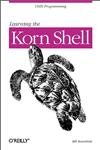
This nutshell handbook is an introduction to the Korn shell, both as a user interface and as a programming language. It provides an explanation of the Korn shell's features, including KSH string operations, co-processes, signals and signal handling, and command-line interpretation. Learning the Korn shell also includes real life programming examples and a Korn shell debugger.
Le informazioni nella sezione "Riassunto" possono far riferimento a edizioni diverse di questo titolo.
L'autore
Bill Rosenblatt is president of GiantSteps/Media Technology Strategies, a consulting firm in New York City. Before founding GiantSteps, Bill was CTO of Fathom, an online content and education company associated with Columbia University and other scholarly institutions. He has been a technology executive at McGraw-Hill and Times Mirror, and head of strategic marketing for media and publishing at Sun Microsystems. Bill was also one of the architects of the Digital Object Identifier (DOI), a standard for online content identification and DRM.
Contenuti
Preface; Korn Shell Versions; Summary of Korn Shell Features; Intended Audience; Code Examples; Chapter Summary; Conventions Used in This Handbook; Acknowledgments; We’d Like to Hear From You; Chapter 1: Korn Shell Basics; 1.1 What Is a Shell?; 1.2 Scope of This Book; 1.3 History of UNIX Shells; 1.4 Getting the Korn Shell; 1.5 Interactive Shell Use; 1.6 Files; 1.7 Input and Output; 1.8 Background Jobs; 1.9 Special Characters and Quoting; Chapter 2: Command-line Editing; 2.1 Enabling Command-line Editing; 2.2 The History File; 2.3 Emacs Editing Mode; 2.4 Vi Editing Mode; 2.5 The fc Command; 2.6 Finger Habits; Chapter 3: Customizing Your Environment; 3.1 The .profile File; 3.2 Aliases; 3.3 Options; 3.4 Shell Variables; 3.5 Customization and Subprocesses; 3.6 Customization Hints; Chapter 4: Basic Shell Programming; 4.1 Shell Scripts and Functions; 4.2 Shell Variables; 4.3 String Operators; 4.4 Command Substitution; 4.5 Advanced Examples: pushd and popd; Chapter 5: Flow Control; 5.1 if/else; 5.2 for; 5.3 case; 5.4 select; 5.5 while and until; Chapter 6: Command-line Options and Typed Variables; 6.1 Command-line Options; 6.2 Integer Variables and Arithmetic; 6.3 Arrays; Chapter 7: Input/Output and Command-line Processing; 7.1 I/O Redirectors; 7.2 String I/O; 7.3 Command-line Processing; Chapter 8: Process Handling; 8.1 Process IDs and Job Numbers; 8.2 Job Control; 8.3 Signals; 8.4 trap; 8.5 Coroutines; 8.6 Subshells; Chapter 9: Debugging Shell Programs; 9.1 Basic Debugging Aids; 9.2 A Korn Shell Debugger; Chapter 10: Korn Shell Administration; 10.1 Installing the Korn Shell as the Standard Shell; 10.2 Environment Customization; 10.3 System Security Features; Related Shells; The Bourne Shell; The IEEE 1003.2 POSIX Shell Standard; wksh; pdksh; bash; Workalikes on PC Platforms; The Future of the Korn Shell; Reference Lists; Invocation Options; Built-in Commands and Keywords; Built-in Shell Variables; Test Operators; Options; Typeset Options; Emacs Mode Commands; Vi Control Mode Commands; Obtaining Sample Programs; FTP; FTPMAIL; BITFTP; UUCP; Colophon;
Le informazioni nella sezione "Su questo libro" possono far riferimento a edizioni diverse di questo titolo.
Risultati della ricerca per LEARNING THE KORN SHELL

Foto dell'editore
Learning the Korn Shell
Da: World of Books (was SecondSale), Montgomery, IL, U.S.A.
Valutazione del venditore 5 su 5 stelle

Condizione: Good. This nutshell handbook is an introduction to the Korn shell, both as a user interface and as a programming language. It provides an explanation of the Korn shell's features, including KSH string operations, co-processes, signals and signal handling, and command-line interpretation. Learning the Korn shell also includes real life programming examples and a Korn shell debugger. Codice articolo CIN1565920546G
Compra usato
EUR 3,83
Spedizione gratuita
Spedito in U.S.A.
Spedito in U.S.A.
Quantità: 1 disponibili
Foto dell'editore
Learning the Korn Shell
Da: World of Books (was SecondSale), Montgomery, IL, U.S.A.
Valutazione del venditore 5 su 5 stelle
Condizione: Very Good. This nutshell handbook is an introduction to the Korn shell, both as a user interface and as a programming language. It provides an explanation of the Korn shell's features, including KSH string operations, co-processes, signals and signal handling, and command-line interpretation. Learning the Korn shell also includes real life programming examples and a Korn shell debugger. Codice articolo 00099018240
Compra usato
EUR 3,83
Spedizione gratuita
Spedito in U.S.A.
Spedito in U.S.A.
Quantità: 1 disponibili
Foto dell'editore
Learning the Korn Shell (Nutshell Handbooks)
Da: Gulf Coast Books, Cypress, TX, U.S.A.
Valutazione del venditore 5 su 5 stelle
Paperback. Condizione: Very Good. Codice articolo 1565920546-2-22478153
Compra usato
EUR 3,84
Spedizione gratuita
Spedito in U.S.A.
Spedito in U.S.A.
Quantità: 1 disponibili
Foto dell'editore
Learning the Korn Shell (Nutshell Handbooks)
Da: Orion Tech, Kingwood, TX, U.S.A.
Valutazione del venditore 5 su 5 stelle
paperback. Condizione: Fair. Codice articolo 1565920546-4-37942135
Compra usato
EUR 3,84
Spedizione gratuita
Spedito in U.S.A.
Spedito in U.S.A.
Quantità: 1 disponibili
Foto dell'editore
Learning the Korn Shell (Nutshell Handbooks)
Da: Your Online Bookstore, Houston, TX, U.S.A.
Valutazione del venditore 5 su 5 stelle
paperback. Condizione: Fair. Codice articolo 1565920546-4-37742593
Compra usato
EUR 3,84
Spedizione gratuita
Spedito in U.S.A.
Spedito in U.S.A.
Quantità: 1 disponibili
Immagini fornite dal venditore
Learning the Korn Shell (Nutshell Handbooks)
Da: Greenworld Books, Arlington, TX, U.S.A.
Valutazione del venditore 5 su 5 stelle
Condizione: good. Fast Free Shipping â" Good condition. It may show normal signs of use, such as light writing, highlighting, or library markings, but all pages are intact and the book is fully readable. A solid, complete copy that's ready to enjoy. Codice articolo GWV.1565920546.G
Compra usato
EUR 4,81
Spedizione gratuita
Spedito in U.S.A.
Spedito in U.S.A.
Quantità: 1 disponibili
Foto dell'editore
Learning the Korn Shell (Nutshell Handbooks)
Editore:
O'Reilly Media (edition 1), 1993
ISBN 10: 1565920546
ISBN 13: 9781565920545
Antico o usato
Paperback
Da: BooksRun, Philadelphia, PA, U.S.A.
Valutazione del venditore 5 su 5 stelle
Paperback. Condizione: Very Good. 1. It's a well-cared-for item that has seen limited use. The item may show minor signs of wear. All the text is legible, with all pages included. It may have slight markings and/or highlighting. Codice articolo 1565920546-11-1
Compra usato
EUR 5,48
Spedizione gratuita
Spedito in U.S.A.
Spedito in U.S.A.
Quantità: 1 disponibili
Foto dell'editore
Learning the Korn Shell
Da: World of Books Inc, Montgomery, IL, U.S.A.
Valutazione del venditore 4 su 5 stelle

Condizione: Very Good. This nutshell handbook is an introduction to the Korn shell, both as a user interface and as a programming language. It provides an explanation of the Korn shell's features, including KSH string operations, co-processes, signals and signal handling, and command-line interpretation. Learning the Korn shell also includes real life programming examples and a Korn shell debugger. Codice articolo CIN1565920546VG
Compra usato
EUR 5,67
Spedizione gratuita
Spedito in U.S.A.
Spedito in U.S.A.
Quantità: 1 disponibili
Foto dell'editore
Learning the Korn Shell
Da: World of Books Inc, Montgomery, IL, U.S.A.
Valutazione del venditore 4 su 5 stelle
Condizione: Good. This nutshell handbook is an introduction to the Korn shell, both as a user interface and as a programming language. It provides an explanation of the Korn shell's features, including KSH string operations, co-processes, signals and signal handling, and command-line interpretation. Learning the Korn shell also includes real life programming examples and a Korn shell debugger. Codice articolo CIN1565920546G
Compra usato
EUR 5,67
Spedizione gratuita
Spedito in U.S.A.
Spedito in U.S.A.
Quantità: 1 disponibili
Foto dell'editore
Learning the Korn Shell
Da: Duru Media, Tallahassee, FL, U.S.A.
Valutazione del venditore 5 su 5 stelle
paperback. Condizione: Good. Codice articolo 01M02YT43A2NTHW
Compra usato
EUR 3,12
Spedizione EUR 2,67
Spedito in U.S.A.
Spedito in U.S.A.
Quantità: 1 disponibili