
Articoli correlati a Transit
Sinossi
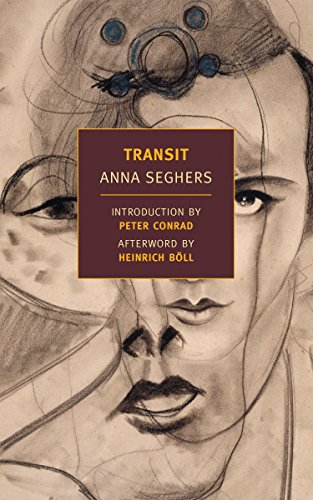
Anna Seghers’s Transit is an existential, political, literary thriller that explores the agonies of boredom, the vitality of storytelling, and the plight of the exile with extraordinary compassion and insight.
Having escaped from a Nazi concentration camp in Germany in 1937, and later a camp in Rouen, the nameless twenty-seven-year-old German narrator of Seghers’s multilayered masterpiece ends up in the dusty seaport of Marseille. Along the way he is asked to deliver a letter to a man named Weidel in Paris and discovers Weidel has committed suicide, leaving behind a suitcase containing letters and the manuscript of a novel. As he makes his way to Marseille to find Weidel’s widow, the narrator assumes the identity of a refugee named Seidler, though the authorities think he is really Weidel. There in the giant waiting room of Marseille, the narrator converses with the refugees, listening to their stories over pizza and wine, while also gradually piecing together the story of Weidel, whose manuscript has shattered the narrator’s “deathly boredom,” bringing him to a deeper awareness of the transitory world the refugees inhabit as they wait and wait for that most precious of possessions: transit papers.
Le informazioni nella sezione "Riassunto" possono far riferimento a edizioni diverse di questo titolo.
Informazioni sull'autore
Anna Seghers (née Netty Reiling; 1900–1983) was born in Mainz, Germany, into an upper-middle-class Jewish family. She was a sickly and introverted child by her own account, but became an intellectually curious student, eventually earning a doctorate in art history at the University of Heidelberg in 1924; her first story, written under the name Antje Seghers, was published in the same year. In 1925 she married a Hungarian immigrant economist and began her writing career in earnest. By 1929 Seghers had joined the Communist Party, given birth to her first child, and received the Kleist Prize for her first novel, The Revolt of the Fisherman. Having settled in France in 1933, Seghers was forced to flee again after the 1940 Nazi invasion. With the aid of Varian Fry, Seghers, her husband, and two children sailed from Marseille to Mexico on a ship that included among its passengers Victor Serge, André Breton, and Claude Lévi-Strauss. After the war she moved to East Berlin, where she became an emblematic figure of East German letters, actively championing the work of younger writers from her position as president of the Writers Union and publishing at a steady pace. Among Seghers’s internationally regarded works are The Seventh Cross (1939; adapted for film in 1944 by MGM), one of the only World War II–era depictions of Nazi concentration camps; the novella Excursion of the Dead Girls (1945); The Dead Stay Young (1949); and the story collection Benito’s Blue (1973).
Margot Bettauer Dembo (1928-2019) was the translator of works by Judith Hermann, Robert Gernhardt, Joachim Fest, Ödön von Horváth, and Feridun Zaimoglu, among others. She was awarded the Goethe-Institut/Berlin Translator’s Prize in 1994 and the Helen and Kurt Wolff Translator’s Prize in 2003. Dembo also worked as a translator for two feature documentary films: The Restless Conscience, which was nominated for an Academy Award, and The Burning Wall. For NYRB Classics she translated Transit and The Seventh Cross by Anna Seghers and Grand Hotel by Vicki Baum.
Peter Conrad was born in Australia, and since 1973 has taught English literature at Christ Church, Oxford. He has published nineteen books on a variety of subjects; among the best known are Modern Times, Modern Places; A Song of Love and Death; The Everyman History of English Literature; and studies of Alfred Hitchcock and Orson Welles. His most recent book is Creation: Artists, Gods and Origins. He has contributed features and reviews to many magazines and newspapers, including The New York Times, The New Yorker, The Observer, the New Statesman, The Guardian, and The Monthly.
Heinrich Böll (1917–1985) was one of Germany’s foremost post–World War II writers. He wrote short stories, essays, plays, and novels, the most famous of which are Billiards at Half-Past Nine, The Clown, Group Portrait with Lady, and The Lost Honor of Katharina Blum. Böll was awarded the Georg Büchner Prize in 1967 and the Nobel Prize in Literature in 1972.
Le informazioni nella sezione "Su questo libro" possono far riferimento a edizioni diverse di questo titolo.
Risultati della ricerca per Transit

Foto dell'editore
Transit (New York Review Books Classics)
Da: HPB-Movies, Dallas, TX, U.S.A.
Valutazione del venditore 4 su 5 stelle

Paperback. Condizione: Very Good. Connecting readers with great books since 1972! Used books may not include companion materials, and may have some shelf wear or limited writing. We ship orders daily and Customer Service is our top priority! Codice articolo S_485532091
Compra usato
EUR 6,36
Spedizione EUR 3,34
Spedito in U.S.A.
Spedito in U.S.A.
Quantità: 1 disponibili
Foto dell'editore
TRANSIT
Da: Magers and Quinn Booksellers, Minneapolis, MN, U.S.A.
Valutazione del venditore 5 su 5 stelle

paperback. Condizione: Like New. May have light shelf wear and/or a remainder mark. Complete. Clean pages. Codice articolo 832239
Compra usato
EUR 6,81
Spedizione EUR 3,56
Spedito in U.S.A.
Spedito in U.S.A.
Quantità: 1 disponibili
Immagini fornite dal venditore
Transit (New York Review Books (Paperback))
Da: EdmondDantes Bookseller, Minneapolis, MN, U.S.A.
Valutazione del venditore 5 su 5 stelle
Soft cover. Condizione: Very Good. Trade Paperback with only minor reading wear; book is clean, unmarked. In stock. Ships from MN, USA. Codice articolo 026629
Compra usato
EUR 8,25
Spedizione EUR 4,00
Spedito in U.S.A.
Spedito in U.S.A.
Quantità: 1 disponibili
Foto dell'editore
Transit (New York Review Books (Paperback))
Da: Textbook Bookie, Little Rock, AR, U.S.A.
Valutazione del venditore 5 su 5 stelle
Paperback. Condizione: Good. Book in Good condition. Codice articolo 9781590176252-good
Compra usato
EUR 9,18
Spedizione EUR 3,79
Spedito in U.S.A.
Spedito in U.S.A.
Quantità: 9 disponibili
Foto dell'editore
Transit (New York Review Books (Paperback))
Da: Textbook Bookie, Little Rock, AR, U.S.A.
Valutazione del venditore 5 su 5 stelle
Paperback. Condizione: Very Good. Book in Very Good condition. Codice articolo 9781590176252-very_good
Compra usato
EUR 9,63
Spedizione EUR 3,79
Spedito in U.S.A.
Spedito in U.S.A.
Quantità: 1 disponibili
Foto dell'editore
Transit Format: Paperback
Editore:
Penguin Random House, 2013
ISBN 10: 1590176251
ISBN 13: 9781590176252
Antico o usato
Brossura
Da: INDOO, Avenel, NJ, U.S.A.
Valutazione del venditore 5 su 5 stelle
Condizione: As New. Unread copy in mint condition. Codice articolo RH9781590176252
Compra usato
EUR 16,27
Spedizione gratuita
Spedito in U.S.A.
Spedito in U.S.A.
Quantità: Più di 20 disponibili
Foto dell'editore
Transit (Paperback)
Editore:
New York Review Books, New York, 2013
ISBN 10: 1590176251
ISBN 13: 9781590176252
Nuovo
Paperback
Da: Grand Eagle Retail, Bensenville, IL, U.S.A.
Valutazione del venditore 5 su 5 stelle
Paperback. Condizione: new. Paperback. Several years before Waiting for Godot, Seghers wrote this existential, political, literary thriller that explores the significance of literature and the agonies of boredom and waiting with extraordinary compassion and insight.Anna Seghers's Transit is an existential, political, literary thriller that explores the agonies of boredom, the vitality of storytelling, and the plight of the exile with extraordinary compassion and insight.Having escaped from a Nazi concentration camp in Germany in 1937, and later a camp in Rouen, the nameless twenty-seven-year-old German narrator of Seghers's multilayered masterpiece ends up in the dusty seaport of Marseille. Along the way he is asked to deliver a letter to a man named Weidel in Paris and discovers Weidel has committed suicide, leaving behind a suitcase containing letters and the manuscript of a novel. As he makes his way to Marseille to find Weidel's widow, the narrator assumes the identity of a refugee named Seidler, though the authorities think he is really Weidel. There in the giant waiting room of Marseille, the narrator converses with the refugees, listening to their stories over pizza and wine, while also gradually piecing together the story of Weidel, whose manuscript has shattered the narrator's "deathly boredom," bringing him to a deeper awareness of the transitory world the refugees inhabit as they wait and wait for that most precious of possessions- transit papers. Several years before Waiting for Godot, Seghers wrote this existential, political, literary thriller that explores the significance of literature and the agonies of boredom and waiting with extraordinary compassion and insight. Shipping may be from multiple locations in the US or from the UK, depending on stock availability. Codice articolo 9781590176252
Compra nuovo
EUR 16,34
Spedizione gratuita
Spedito in U.S.A.
Spedito in U.S.A.
Quantità: 1 disponibili
Foto dell'editore
Transit Format: Paperback
Da: INDOO, Avenel, NJ, U.S.A.
Valutazione del venditore 5 su 5 stelle
Condizione: New. Brand New. Codice articolo 9781590176252
Compra nuovo
EUR 16,35
Spedizione gratuita
Spedito in U.S.A.
Spedito in U.S.A.
Quantità: Più di 20 disponibili
Foto dell'editore
Transit (New York Review Books (Paperback))
Da: Textbooks_Source, Columbia, MO, U.S.A.
Valutazione del venditore 5 su 5 stelle
paperback. Condizione: Good. Main. Ships in a BOX from Central Missouri! May not include working access code. Will not include dust jacket. Has used sticker(s) and some writing or highlighting. UPS shipping for most packages, (Priority Mail for AK/HI/APO/PO Boxes). Codice articolo 001544297U
Compra usato
EUR 13,79
Spedizione EUR 3,56
Spedito in U.S.A.
Spedito in U.S.A.
Quantità: 16 disponibili
Foto dell'editore
Transit
Da: Massive Bookshop, Erving, MA, U.S.A.
Valutazione del venditore 4 su 5 stelle
Paperback. Condizione: New. Codice articolo 9781590176252
Compra nuovo
EUR 15,57
Spedizione EUR 4,24
Spedito in U.S.A.
Spedito in U.S.A.
Quantità: 10 disponibili