
Articoli correlati a What Has Government Done to Our Money?
Sinossi
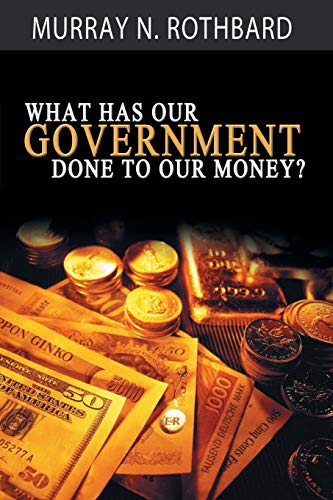
What Has Government Done to Our Money? details the history of money, from early barter systems, to the gold standard, to present-day systems of paper money. Rothbard explains how money was originally developed, and why gold was chosen as the preferred commodity to use as money. The author also explains how the gold standard makes money a commodity, and how market forces create a stable economy. Rothbard shows that many European governments went bankrupt due to World War I and left the gold standard in order to try to solve their financial issues, which was not the right solution. He also argues that this strategy was partially responsible for World War II and led to economic problems throughout the world.
Le informazioni nella sezione "Riassunto" possono far riferimento a edizioni diverse di questo titolo.
Risultati della ricerca per What Has Government Done to Our Money?

Immagini fornite dal venditore
What Has Government Done to Our Money?
Da: GreatBookPrices, Columbia, MD, U.S.A.
Valutazione del venditore 5 su 5 stelle

Condizione: New. Codice articolo 22065414-n
Compra nuovo
EUR 7,57
Spedizione EUR 2,37
Spedito in U.S.A.
Spedito in U.S.A.
Quantità: Più di 20 disponibili
Immagini fornite dal venditore
What Has Government Done to Our Money?
Da: Rarewaves USA, HEBRON, KY, U.S.A.
Valutazione del venditore 5 su 5 stelle
Paperback. Condizione: New. Codice articolo LU-9781607967750
Compra nuovo
EUR 10,01
Spedizione gratuita
Spedito in U.S.A.
Spedito in U.S.A.
Quantità: Più di 20 disponibili
Immagini fornite dal venditore
What Has Government Done to Our Money? (Paperback or Softback)
Editore:
www.bnpublishing.com 10/8/2014, 2014
ISBN 10: 1607967758
ISBN 13: 9781607967750
Nuovo
Paperback or Softback
Da: BargainBookStores, Grand Rapids, MI, U.S.A.
Valutazione del venditore 5 su 5 stelle
Paperback or Softback. Condizione: New. What Has Government Done to Our Money? Book. Codice articolo BBS-9781607967750
Compra nuovo
EUR 10,82
Spedizione gratuita
Spedito in U.S.A.
Spedito in U.S.A.
Quantità: 5 disponibili
Immagini fornite dal venditore
What Has Government Done to Our Money?
Editore:
www.bnpublishing.com, 2014
ISBN 10: 1607967758
ISBN 13: 9781607967750
Antico o usato
Brossura
Da: GreatBookPrices, Columbia, MD, U.S.A.
Valutazione del venditore 5 su 5 stelle
Condizione: As New. Unread book in perfect condition. Codice articolo 22065414
Compra usato
EUR 8,48
Spedizione EUR 2,37
Spedito in U.S.A.
Spedito in U.S.A.
Quantità: Più di 20 disponibili
Foto dell'editore
What Has Government Done to Our Money? (Paperback)
Da: Grand Eagle Retail, Bensenville, IL, U.S.A.
Valutazione del venditore 5 su 5 stelle
Paperback. Condizione: new. Paperback. What Has Government Done to Our Money? details the history of money, from early barter systems, to the gold standard, to present-day systems of paper money. Rothbard explains how money was originally developed, and why gold was chosen as the preferred commodity to use as money. The author also explains how the gold standard makes money a commodity, and how market forces create a stable economy. Rothbard shows that many European governments went bankrupt due to World War I and left the gold standard in order to try to solve their financial issues, which was not the right solution. He also argues that this strategy was partially responsible for World War II and led to economic problems throughout the world. What Has Government Done to Our Money? details the history of money, from early barter systems, to the gold standard, to present-day systems of paper money. Rothbard explains how money was originally developed, and why gold was chosen as the preferred commodity to use as money. The author also explains how the gold standard makes money a commodity, and how market forces create a stable economy. Rothbard shows that many European governments went bankrupt due to World War I and left the gold standard in order to try to solve their financial issues, which was not the right solution. He also argues that this strategy was partially responsible for World War II and led to economic problems throughout the world. Shipping may be from multiple locations in the US or from the UK, depending on stock availability. Codice articolo 9781607967750
Compra nuovo
EUR 12,65
Spedizione gratuita
Spedito in U.S.A.
Spedito in U.S.A.
Quantità: 1 disponibili
Immagini fornite dal venditore
What Has Government Done to Our Money?
Da: Rarewaves.com USA, London, LONDO, Regno Unito
Valutazione del venditore 5 su 5 stelle
Paperback. Condizione: New. Codice articolo LU-9781607967750
Compra nuovo
EUR 13,09
Spedizione gratuita
Spedito da Regno Unito a U.S.A.
Spedito da Regno Unito a U.S.A.
Quantità: Più di 20 disponibili
Foto dell'editore
What Has Government Done to Our Money?
Print on DemandDa: PBShop.store US, Wood Dale, IL, U.S.A.
Valutazione del venditore 5 su 5 stelle
PAP. Condizione: New. New Book. Shipped from UK. THIS BOOK IS PRINTED ON DEMAND. Established seller since 2000. Codice articolo L0-9781607967750
Compra nuovo
EUR 14,34
Spedizione gratuita
Spedito in U.S.A.
Spedito in U.S.A.
Quantità: Più di 20 disponibili
Foto dell'editore
What Has Government Done to Our Money?
Print on DemandDa: Chiron Media, Wallingford, Regno Unito
Valutazione del venditore 5 su 5 stelle
PF. Condizione: New. This item is printed on demand. Brand new book, sourced directly from publisher. Dispatch time is 6-7 days from our warehouse. Book will be sent in robust, secure packaging to ensure it reaches you securely. Codice articolo 6666-IUK-9781607967750
Compra nuovo
EUR 9,26
Spedizione EUR 5,38
Spedito da Regno Unito a U.S.A.
Spedito da Regno Unito a U.S.A.
Quantità: 20 disponibili
Foto dell'editore
What Has Government Done to Our Money?
Da: California Books, Miami, FL, U.S.A.
Valutazione del venditore 5 su 5 stelle
Condizione: New. Codice articolo I-9781607967750
Compra nuovo
EUR 12,94
Spedizione EUR 2,69
Spedito in U.S.A.
Spedito in U.S.A.
Quantità: Più di 20 disponibili
Foto dell'editore
What Has Government Done to Our Money?
Print on DemandDa: PBShop.store UK, Fairford, GLOS, Regno Unito
Valutazione del venditore 5 su 5 stelle
PAP. Condizione: New. New Book. Delivered from our UK warehouse in 4 to 14 business days. THIS BOOK IS PRINTED ON DEMAND. Established seller since 2000. Codice articolo L0-9781607967750
Compra nuovo
EUR 13,65
Spedizione EUR 3,94
Spedito da Regno Unito a U.S.A.
Spedito da Regno Unito a U.S.A.
Quantità: Più di 20 disponibili