
Articoli correlati a Practical Data Science With R
Sinossi
Summary
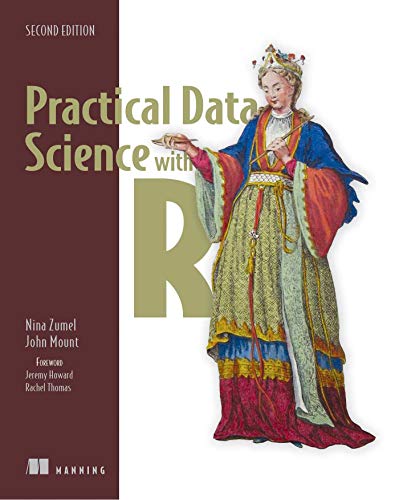
Practical Data Science with R, Second Edition takes a practice-oriented approach to explaining basic principles in the ever expanding field of data science. You'll jump right to real-world use cases as you apply the R programming language and statistical analysis techniques to carefully explained examples based in marketing, business intelligence, and decision support. Foreword by Jeremy Howard and Rachel Thomas
Purchase of the print book includes a free eBook in PDF, Kindle, and ePub formats from Manning Publications.
About the Technology
Evidence-based decisions are crucial to success. Applying the right data analysis techniques to your carefully curated business data helps you make accurate predictions, identify trends, and spot trouble in advance. The R data analysis platform provides the tools you need to tackle day-to-day data analysis and machine learning tasks efficiently and effectively.
About the Book
Practical Data Science with R, Second Edition is a task-based tutorial that leads readers through dozens of useful, data analysis practices using the R language. By concentrating on the most important tasks you'll face on the job, this friendly guide is comfortable both for business analysts and data scientists. Because data is only useful if it can be understood, you'll also find fantastic tips for organizing and presenting data in tables, as well as snappy visualizations.
What's inside
- Statistical analysis for business pros
- Effective data presentation
- The most useful R tools
- Interpreting complicated predictive models
About the Reader
You'll need to be comfortable with basic statistics and have an introductory knowledge of R or another high-level programming language.
About the Author
Nina Zumel and John Mount founded a San Francisco-based data science consulting firm. Both hold PhDs from Carnegie Mellon University and blog on statistics, probability, and computer science.
Table of Contents
- The data science process
- Starting with R and data
- Exploring data
- Managing data
- Data engineering and data shaping
- Choosing and evaluating models
- Linear and logistic regression
- Advanced data preparation
- Unsupervised methods
- Exploring advanced methods
- Documentation and deployment
- Producing effective presentations
PART 1 - INTRODUCTION TO DATA SCIENCE
PART 2 - MODELING METHODS
PART 3 - WORKING IN THE REAL WORLD
Le informazioni nella sezione "Riassunto" possono far riferimento a edizioni diverse di questo titolo.
Informazioni sugli autori
Nina Zumel co-founded Win-Vector, a data science consulting firm in San Francisco. She holds a PH.D. in robotics from Carnegie Mellon and was a content developer for EMC's Data Science and Big Data Analytics Training Course. Nina also contributes to the Win-Vector Blog, which covers topics in statistics, probability, computer science, mathematics and optimization.
John Mount co-founded Win-Vector, a data science consulting firm in San Francisco. He has a Ph.D. in computer science from Carnegie Mellon and over 15 years of applied experience in biotech research, online advertising, price optimization and finance. He contributes to the Win-Vector Blog, which covers topics in statistics, probability, computer science, mathematics and optimization.
Nina Zumel co-founded Win-Vector, a data science consulting firm in San Francisco. She holds a PH.D. in robotics from Carnegie Mellon and was a content developer for EMC's Data Science and Big Data Analytics Training Course. Nina also contributes to the Win-Vector Blog, which covers topics in statistics, probability, computer science, mathematics and optimization.
John Mount co-founded Win-Vector, a data science consulting firm in San Francisco. He has a Ph.D. in computer science from Carnegie Mellon and over 15 years of applied experience in biotech research, online advertising, price optimization and finance. He contributes to the Win-Vector Blog, which covers topics in statistics, probability, computer science, mathematics and optimization.
Le informazioni nella sezione "Su questo libro" possono far riferimento a edizioni diverse di questo titolo.
Risultati della ricerca per Practical Data Science With R

Foto dell'editore
Practical Data Science with R
Editore:
Manning Publications, 2019
ISBN 10: 1617295876
ISBN 13: 9781617295874
Antico o usato
Brossura
Da: World of Books (was SecondSale), Montgomery, IL, U.S.A.
Valutazione del venditore 5 su 5 stelle

Condizione: Good. Item in good condition. Textbooks may not include supplemental items i.e. CDs, access codes etc. Codice articolo 00108927531
Compra usato
EUR 4,48
Spedizione gratuita
Spedito in U.S.A.
Spedito in U.S.A.
Quantità: 3 disponibili
Foto dell'editore
Practical Data Science with R, Second Edition
Editore:
Manning Publications, 2019
ISBN 10: 1617295876
ISBN 13: 9781617295874
Antico o usato
paperback
Da: New Legacy Books, Annandale, NJ, U.S.A.
Valutazione del venditore 5 su 5 stelle
paperback. Condizione: Very Good. Fast shipping and order satisfaction guaranteed. A portion of your purchase benefits Non-Profit Organizations, First Aid and Fire Stations! Codice articolo mon0000184648
Compra usato
EUR 4,28
Spedizione EUR 2,17
Spedito in U.S.A.
Spedito in U.S.A.
Quantità: 1 disponibili
Foto dell'editore
Practical Data Science with R, Second Edition
Da: HPB-Red, Dallas, TX, U.S.A.
Valutazione del venditore 5 su 5 stelle
paperback. Condizione: Good. Connecting readers with great books since 1972! Used textbooks may not include companion materials such as access codes, etc. May have some wear or writing/highlighting. We ship orders daily and Customer Service is our top priority! Codice articolo S_474636882
Compra usato
EUR 5,38
Spedizione EUR 3,27
Spedito in U.S.A.
Spedito in U.S.A.
Quantità: 1 disponibili
Foto dell'editore
Practical Data Science with R, Second Edition
Editore:
Manning (edition 2nd), 2019
ISBN 10: 1617295876
ISBN 13: 9781617295874
Antico o usato
Paperback
Da: BooksRun, Philadelphia, PA, U.S.A.
Valutazione del venditore 5 su 5 stelle
Paperback. Condizione: Fair. 2nd. The item might be beaten up but readable. May contain markings or highlighting, as well as stains, bent corners, or any other major defect, but the text is not obscured in any way. Codice articolo 1617295876-7-1
Compra usato
EUR 15,87
Spedizione gratuita
Spedito in U.S.A.
Spedito in U.S.A.
Quantità: 2 disponibili
Foto dell'editore
Practical Data Science with R, Second Edition
Da: Textbooks_Source, Columbia, MO, U.S.A.
Valutazione del venditore 5 su 5 stelle
paperback. Condizione: Good. 2nd. Ships in a BOX from Central Missouri! May not include working access code. Will not include dust jacket. Has used sticker(s) and some writing or highlighting. UPS shipping for most packages, (Priority Mail for AK/HI/APO/PO Boxes). Codice articolo 005106564U
Compra usato
EUR 20,94
Spedizione EUR 3,48
Spedito in U.S.A.
Spedito in U.S.A.
Quantità: 3 disponibili
Foto dell'editore
Practical Data Science with R, Second Edition
Da: GoldBooks, Denver, CO, U.S.A.
Valutazione del venditore 5 su 5 stelle
Paperback. Condizione: new. New Copy. Customer Service Guaranteed. Codice articolo 63I31_44_1617295876
Compra nuovo
EUR 33,11
Spedizione EUR 4,80
Spedito in U.S.A.
Spedito in U.S.A.
Quantità: 1 disponibili
Foto dell'editore
Practical Data Science with R, Second Edition
Da: Textbooks_Source, Columbia, MO, U.S.A.
Valutazione del venditore 5 su 5 stelle
paperback. Condizione: New. 2nd. Ships in a BOX from Central Missouri! UPS shipping for most packages, (Priority Mail for AK/HI/APO/PO Boxes). Codice articolo 005106564N
Compra nuovo
EUR 41,33
Spedizione EUR 3,48
Spedito in U.S.A.
Spedito in U.S.A.
Quantità: 15 disponibili
Foto dell'editore
Practical Data Science with R
Editore:
Manning Publications, 2019
ISBN 10: 1617295876
ISBN 13: 9781617295874
Antico o usato
Paperback
Da: Greener Books, London, Regno Unito
Valutazione del venditore 4 su 5 stelle

Paperback. Condizione: Used; Very Good. **SHIPPED FROM UK** We believe you will be completely satisfied with our quick and reliable service. All orders are dispatched as swiftly as possible! Buy with confidence! Greener Books. Codice articolo 5182258
Compra usato
EUR 28,28
Spedizione EUR 23,32
Spedito da Regno Unito a U.S.A.
Spedito da Regno Unito a U.S.A.
Quantità: 1 disponibili
Foto dell'editore
Practical Data Science with R (Book)
Da: Basi6 International, Irving, TX, U.S.A.
Valutazione del venditore 5 su 5 stelle
Condizione: Brand New. New. US edition. Expediting shipping for all USA and Europe orders excluding PO Box. Excellent Customer Service. Codice articolo ABEOCT25-12483
Compra nuovo
EUR 62,55
Spedizione gratuita
Spedito in U.S.A.
Spedito in U.S.A.
Quantità: 1 disponibili
Foto dell'editore
Practical Data Science with R (Book)
Da: Basi6 International, Irving, TX, U.S.A.
Valutazione del venditore 5 su 5 stelle
Condizione: Brand New. New. US edition. Expediting shipping for all USA and Europe orders excluding PO Box. Excellent Customer Service. Codice articolo ABEOCT25-275266
Compra nuovo
EUR 62,55
Spedizione gratuita
Spedito in U.S.A.
Spedito in U.S.A.
Quantità: 20 disponibili