Sinossi
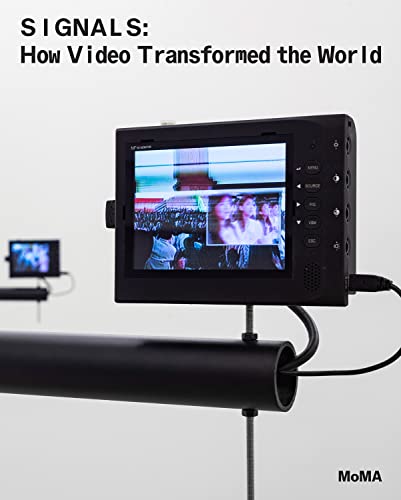
Signals: How Video Transformed the World aims to renew and revise our understanding of art and video, posing video not as a traditional medium but as a pervasive and fluid media network that is thoroughly global, social, and interactive: a means of politics.
Le informazioni nella sezione "Riassunto" possono far riferimento a edizioni diverse di questo titolo.
Informazioni sull?autore
Stuart Comer is the Lonti Ebers Chief Curator of Media and Performance at The Museum of Modern Art.
Michelle Kuo is the Marlene Hess Curator of Painting and Sculpture at The Museum of Modern Art.
Erika Balsom is a senior lecturer in Film Studies and Liberal Arts at King’s College London.
Aria Dean is an artist, writer, and curator living and working in Los Angeles and New York.
David Joselit is Professor of Art, Film and Visual Studies at Harvard University.
Tiffany Sia is an artist, filmmaker and independent film producer.
Ravi Sundaram is Senior Fellow, Centre for the Study of Developing Societies, Delhi.
Dalla quarta di copertina
Having become widely accessible as a consumer technology in the 1960s, video is ever-present today―on our phones and our screens, defining new spaces and experiences, shaping our ideas and politics, and spreading disinformation, documentation, evidence, fervor. Signals: The Politics of Video charts the ways in which artists have both championed and questioned the promise of video, revealing a history that has been planetary, critical, and activist from its very beginnings. The Museum of Modern Art has been at the forefront of bringing video into museums―pioneering the collection, conservation, and definition of a new artistic medium. Signals aims to renew and revise our understanding of art and video, both within and outside the museum.
A companion to the exhibition, this catalogue―the Museum’s first major publication on the subject in twenty-five years―includes an introductory essay by the curators and six thematic texts by leading scholars and artists that investigate the range of artistic engagements with video, media, and the public sphere. Here, video is posed not as a traditional medium but as a pervasive and fluid media network that is thoroughly global, social, and interactive: a means of politics.
Le informazioni nella sezione "Su questo libro" possono far riferimento a edizioni diverse di questo titolo.
Risultati della ricerca per Signals: How Video Transformed the World

Foto dell'editore
Signals: How Video Transformed the World
Editore:
The Museum of Modern Art, New Yo, 2023
ISBN 10: 1633451232
ISBN 13: 9781633451230
Antico o usato
paperback
Da: Midtown Scholar Bookstore, Harrisburg, PA, U.S.A.
Valutazione del venditore 5 su 5 stelle

paperback. Condizione: Very Good. Very Good - Crisp, clean, unread book with some shelfwear/edgewear, may have a remainder mark - NICE PAPERBACK Standard-sized. Codice articolo M1633451232Z2
Compra usato
EUR 13,54
Spedizione EUR 5,08
Spedito in U.S.A.
Spedito in U.S.A.
Quantità: 2 disponibili
Foto dell'editore
Signals: How Video Transformed the World
Editore:
The Museum of Modern Art, New Yo, 2023
ISBN 10: 1633451232
ISBN 13: 9781633451230
Antico o usato
paperback
Da: Midtown Scholar Bookstore, Harrisburg, PA, U.S.A.
Valutazione del venditore 5 su 5 stelle
paperback. Condizione: Acceptable. Acceptable - This is a significantly damaged book. It should be considered a reading copy only. Please order this book only if you are interested in the content and not the condition. May be ex-library. Oversized. PAPERBACK. Codice articolo M1633451232Z4
Compra usato
EUR 15,07
Spedizione EUR 5,08
Spedito in U.S.A.
Spedito in U.S.A.
Quantità: 1 disponibili
Foto dell'editore
Signals: How Video Transformed the World
Editore:
The Museum of Modern Art, New York, 2023
ISBN 10: 1633451232
ISBN 13: 9781633451230
Nuovo
Soft cover
Prima edizione
Da: Riverside Books and Prints, Cold Spring, NY, U.S.A.
Valutazione del venditore 5 su 5 stelle
Soft cover. Condizione: New. 1st Edition. paperback. Condition: New. 1st printing.Still in publisher's shrink wrap. Codice articolo 007551
Compra nuovo
EUR 24,35
Spedizione EUR 4,19
Spedito in U.S.A.
Spedito in U.S.A.
Quantità: 1 disponibili
Foto dell'editore
Signals: How Video Transformed the World
Editore:
The Museum of Modern Art, New York, 2023
ISBN 10: 1633451232
ISBN 13: 9781633451230
Nuovo
paperback
Da: Powell's Bookstores Chicago, ABAA, Chicago, IL, U.S.A.
Valutazione del venditore 5 su 5 stelle
paperback. Condizione: New. Pap. In shrinkwrap. Codice articolo 1958960
Compra nuovo
EUR 27,06
Spedizione EUR 3,81
Spedito in U.S.A.
Spedito in U.S.A.
Quantità: 1 disponibili
Foto dell'editore
Signals: How Video Transformed the World
Editore:
The Museum of Modern Art, New Yo, 2023
ISBN 10: 1633451232
ISBN 13: 9781633451230
Nuovo
paperback
Da: ACJBooks, Staten Island, NY, U.S.A.
Valutazione del venditore 5 su 5 stelle
paperback. Condizione: New. This is a trade paperback. Codice articolo mon0000027742
Compra nuovo
EUR 29,68
Spedizione EUR 5,08
Spedito in U.S.A.
Spedito in U.S.A.
Quantità: 1 disponibili
Foto dell'editore
Signals
Da: PBShop.store UK, Fairford, GLOS, Regno Unito
Valutazione del venditore 4 su 5 stelle

PAP. Condizione: New. New Book. Shipped from UK. Established seller since 2000. Codice articolo GO-9781633451230
Compra nuovo
EUR 35,32
Spedizione EUR 6,79
Spedito da Regno Unito a U.S.A.
Spedito da Regno Unito a U.S.A.
Quantità: 2 disponibili
Immagini fornite dal venditore
Signals (Paperback)
Editore:
Museum of Modern Art, New York, 2023
ISBN 10: 1633451232
ISBN 13: 9781633451230
Nuovo
Paperback
Da: Grand Eagle Retail, Bensenville, IL, U.S.A.
Valutazione del venditore 5 su 5 stelle
Paperback. Condizione: new. Paperback. Having become widely accessible as a consumer technology in the 1960s, video is ever-present today-on our phones and our screens, defining new spaces and experiences, shaping our ideas and politics, and spreading disinformation, documentation, evidence, fervor. Signals: The Politics of Video charts the ways in which artists have both championed and questioned the promise of video, revealing a history that has been planetary, critical, and activist from its very beginnings. The Museum of Modern Art has been at the forefront of bringing video into museums-pioneering the collection, conservation, and definition of a new artistic medium. Signals aims to renew and revise our understanding of art and video, both within and outside the museum.A companion to the exhibition, this catalogue-the Museum's first major publication on the subject in twenty-five years-includes an introductory essay by the curators and six thematic texts by leading scholars and artists that investigate the range of artistic engagements with video, media, and the public sphere. Here, video is posed not as a traditional medium but as a pervasive and fluid media network that is thoroughly global, social, and interactive: a means of politics. Shipping may be from multiple locations in the US or from the UK, depending on stock availability. Codice articolo 9781633451230
Compra nuovo
EUR 43,01
Spedizione gratuita
Spedito in U.S.A.
Spedito in U.S.A.
Quantità: 1 disponibili
Foto dell'editore
Signals: How Video Transformed the World
Editore:
The Museum of Modern Art, New York, 2023
ISBN 10: 1633451232
ISBN 13: 9781633451230
Nuovo
Brossura
Da: Ria Christie Collections, Uxbridge, Regno Unito
Valutazione del venditore 5 su 5 stelle
Condizione: New. In. Codice articolo ria9781633451230_new
Compra nuovo
EUR 36,25
Spedizione EUR 13,85
Spedito da Regno Unito a U.S.A.
Spedito da Regno Unito a U.S.A.
Quantità: 2 disponibili
Foto dell'editore
Signals: How Video Transformed the World
Editore:
Museum of Modern Art, 2023
ISBN 10: 1633451232
ISBN 13: 9781633451230
Nuovo
Brossura
Prima edizione
Da: Kennys Bookshop and Art Galleries Ltd., Galway, GY, Irlanda
Valutazione del venditore 5 su 5 stelle
Condizione: New. 2023. 1st Edition. Paperback. . . . . . Codice articolo V9781633451230
Compra nuovo
EUR 39,76
Spedizione EUR 10,50
Spedito da Irlanda a U.S.A.
Spedito da Irlanda a U.S.A.
Quantità: 2 disponibili
Foto dell'editore
Signals: The Politics of Video
Editore:
The Museum of Modern Art, New York 2021-06-24, 2021
ISBN 10: 1633451232
ISBN 13: 9781633451230
Nuovo
Paperback
Da: Chiron Media, Wallingford, Regno Unito
Valutazione del venditore 4 su 5 stelle
Paperback. Condizione: New. Codice articolo 6666-GRD-9781633451230
Compra nuovo
EUR 33,67
Spedizione EUR 17,91
Spedito da Regno Unito a U.S.A.
Spedito da Regno Unito a U.S.A.
Quantità: 2 disponibili