
Articoli correlati a Principles of Virology
Sinossi
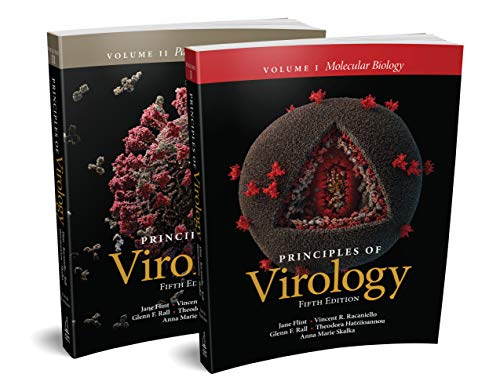
<i>Principles of Virology</i>, the leading virology textbook in use, is an extremely valuable and highly informative presentation of virology at the interface of modern cell biology and immunology. This text utilizes a uniquely rational approach by highlighting common principles and processes across all viruses. Using a set of representative viruses to illustrate the breadth of viral complexity, students are able to understand viral reproduction and pathogenesis and are equipped with the necessary tools for future encounters with new or understudied viruses.<br /><br />This fifth edition was updated to keep pace with the ever-changing field of virology. In addition to the beloved full-color illustrations, video interviews with leading scientists, movies, and links to exciting blogposts on relevant topics, this edition includes study questions and active learning puzzles in each chapter, as well as short descriptions regarding the key messages of references of special interest. <br /><br /><i>Volume I: Molecular Biology</i> focuses on the molecular processes of viral reproduction, from entry through release. <i>Volume II: Pathogenesis and Control</i> addresses the interplay between viruses and their host organisms, on both the micro- and macroscale, including chapters on public health, the immune response, vaccines and other antiviral strategies, viral evolution, and a brand new chapter on the therapeutic uses of viruses. These two volumes can be used for separate courses or together in a single course. Each includes a unique appendix, glossary, and links to internet resources.<br /><br /><i>Principles of Virology, Fifth Edition</i>, is ideal for teaching the strategies by which all viruses reproduce, spread within a host, and are maintained within populations. This edition carefully reflects the results of extensive vetting and feedback received from course instructors and students, making this renowned textbook even more appropriate for undergraduate and graduate courses in virology, microbiology, and infectious diseases.
Le informazioni nella sezione "Riassunto" possono far riferimento a edizioni diverse di questo titolo.
Informazioni sull'autore
<p><b>Jane Flint</b> is Professor Emerita of Molecular Biology at Princeton University. Dr. Flint’s research focused on investigation of the mechanisms by which viral gene products modulate host pathways and antiviral defenses to allow efficient reproduction in normal human cells of adenoviruses, viruses that are used in such therapeutic applications as gene transfer and cancer treatment. </p> <p><b>Vincent R. Racaniello</b> is Higgins Professor of Microbiology & Immunology at Columbia University Vagelos College of Physicians & Surgeons. Dr. Racaniello has been studying viruses for over 40 years, including polio- virus, rhinovirus, enteroviruses, hepatitis C virus, and Zika virus. He blogs about virus-es at virology.ws and is host of This Week in Virology. </p> <p><b>Glenn F. Rall</b> is a Professor and the Chief Academic Officer at the Fox Chase Cancer Center, and is an Adjunct Professor in the Microbiology and Immunology departments at the University of Pennsylvania, as well as Thomas Jefferson, Drexel, and Temple Universities. Dr. Rall studies viral infections of the brain and the immune responses to those infections, with the goal of defining how viruses contribute to disease. </p> <p><b>Theodora Hatziioannou</b> is a Research Associate Professor at Rockefeller University and is actively involved in teaching programs at Albert Einstein College of Medicine. Dr. Hatziioannou has worked on multiple viruses with a focus on retroviruses and the molecular mechanisms that govern virus tropism and on the improvement of animal models for human disease. </p> <p><b>Anna Marie Skalka</b> is a Professor Emerita and former Senior Vice President for Basic Research at the Fox Chase Cancer Center. Dr. Skalka is internationally recognized for her contributions to the understanding of the biochemical mechanisms by which retroviruses replicate and insert their genetic material into the host genome, as well as her research into other molecular aspects of retrovirus biology.</p>
Dalla quarta di copertina
<p><i>Principles of Virology</i>, the leading virology textbook in use, is an extremely valuable and highly informative presentation of virology at the interface of modern cell biology and immunology. This text utilizes a uniquely rational approach by highlighting common principles and processes across all viruses. Using a set of representative viruses to illustrate the breadth of viral complexity, students are able to under-stand viral reproduction and pathogenesis and are equipped with the necessary tools for future encounters with new or understudied viruses.<br /> <br /> This fifth edition was updated to keep pace with the ever-changing field of virology. In addition to the beloved full-color illustrations, video interviews with leading scientists, movies, and links to exciting blogposts on relevant topics, this edition includes study questions and active learning puzzles in each chapter, as well as short descriptions regarding the key messages of references of special interest. <br /> <br /> <i>Volume I: Molecular Biology</i> focuses on the molecular processes of viral reproduction, from entry through release. <i>Volume II: Pathogenesis and Control</i> addresses the interplay between viruses and their host organisms, on both the micro- and macroscale, including chapters on public health, the immune response, vaccines and other antiviral strategies, viral evolution, and a brand new chapter on the therapeutic uses of viruses. These two volumes can be used for separate courses or together in a single course. Each includes a unique appendix, glossary, and links to internet resources.<br /> <br /> <i>Principles of Virology, Fifth Edition</i>, is ideal for teaching the strategies by which all viruses reproduce, spread within a host, and are maintained within populations. This edition carefully reflects the results of extensive vetting and feedback received from course instructors and students, making this renowned textbook even more appropriate for undergraduate and graduate courses in virology, microbiology, and infectious diseases.</p>
Le informazioni nella sezione "Su questo libro" possono far riferimento a edizioni diverse di questo titolo.
Risultati della ricerca per Principles of Virology

Foto dell'editore
Principles of Virology
Da: Textbook Bookie, Little Rock, AR, U.S.A.
Valutazione del venditore 5 su 5 stelle

Paperback. Condizione: Good. Book in Good condition. Codice articolo 9781683670322-good
Compra usato
EUR 54,52
Spedizione EUR 3,78
Spedito in U.S.A.
Spedito in U.S.A.
Quantità: 1 disponibili
Foto dell'editore
Principles of Virology
Da: Textbook Bookie, Little Rock, AR, U.S.A.
Valutazione del venditore 5 su 5 stelle
Paperback. Condizione: New. Book in New condition. Codice articolo 9781683670322-new
Compra nuovo
EUR 57,27
Spedizione EUR 3,78
Spedito in U.S.A.
Spedito in U.S.A.
Quantità: 4 disponibili
Foto dell'editore
Principles of Virology, Multi-Volume (ASM Books)
Da: Textbooks_Source, Columbia, MO, U.S.A.
Valutazione del venditore 5 su 5 stelle
paperback. Condizione: New. 5th Edition. Ships in a BOX from Central Missouri! UPS shipping for most packages, (Priority Mail for AK/HI/APO/PO Boxes). Codice articolo 005439993N
Compra nuovo
EUR 100,69
Spedizione EUR 3,55
Spedito in U.S.A.
Spedito in U.S.A.
Quantità: 12 disponibili
Foto dell'editore
PRINCIPLES OF VIROLOGY,VOL.1+2
Da: CollegeBooksDirect, Grandview Heights, OH, U.S.A.
Valutazione del venditore 4 su 5 stelle

Condizione: New. Book. Codice articolo 978168367032New
Compra nuovo
EUR 112,27
Spedizione EUR 3,56
Spedito in U.S.A.
Spedito in U.S.A.
Quantità: 5 disponibili
Foto dell'editore
PRINCIPLES OF VIROLOGY MULTI VOLUME 2 VOL SET 5ED (PB 2020)
Da: Basi6 International, Irving, TX, U.S.A.
Valutazione del venditore 5 su 5 stelle
Condizione: Brand New. New. US edition. Expediting shipping for all USA and Europe orders excluding PO Box. Excellent Customer Service. Codice articolo ABEOCT25-201447
Compra nuovo
EUR 160,76
Spedizione gratuita
Spedito in U.S.A.
Spedito in U.S.A.
Quantità: 5 disponibili
Immagini fornite dal venditore
Principles of Virology
Da: GreatBookPrices, Columbia, MD, U.S.A.
Valutazione del venditore 5 su 5 stelle
Condizione: New. Codice articolo 40985153-n
Compra nuovo
EUR 159,64
Spedizione EUR 2,35
Spedito in U.S.A.
Spedito in U.S.A.
Quantità: Più di 20 disponibili
Foto dell'editore
Principles of Virology, Multi-Volume
Da: PBShop.store UK, Fairford, GLOS, Regno Unito
Valutazione del venditore 5 su 5 stelle
PAP. Condizione: New. New Book. Shipped from UK. Established seller since 2000. Codice articolo FW-9781683670322
Compra nuovo
EUR 148,35
Spedizione EUR 17,27
Spedito da Regno Unito a U.S.A.
Spedito da Regno Unito a U.S.A.
Quantità: 1 disponibili
Immagini fornite dal venditore
Principles of Virology
Da: GreatBookPricesUK, Woodford Green, Regno Unito
Valutazione del venditore 5 su 5 stelle
Condizione: New. Codice articolo 40985153-n
Compra nuovo
EUR 148,34
Spedizione EUR 17,79
Spedito da Regno Unito a U.S.A.
Spedito da Regno Unito a U.S.A.
Quantità: 1 disponibili
Immagini fornite dal venditore
Principles of Virology
Da: GreatBookPrices, Columbia, MD, U.S.A.
Valutazione del venditore 5 su 5 stelle
Condizione: As New. Unread book in perfect condition. Codice articolo 40985153
Compra usato
EUR 172,72
Spedizione EUR 2,35
Spedito in U.S.A.
Spedito in U.S.A.
Quantità: Più di 20 disponibili
Immagini fornite dal venditore
Principles of Virology, Multi-Volume (Paperback)
Editore:
American Society for Microbiology, Washington DC, 2020
ISBN 10: 1683670329
ISBN 13: 9781683670322
Nuovo
Paperback
Da: Grand Eagle Retail, Bensenville, IL, U.S.A.
Valutazione del venditore 5 su 5 stelle
Paperback. Condizione: new. Paperback. Principles of Virology, the leading virology textbook in use, is an extremely valuable and highly informative presentation of virology at the interface of modern cell biology and immunology. This text utilizes a uniquely rational approach by highlighting common principles and processes across all viruses. Using a set of representative viruses to illustrate the breadth of viral complexity, students are able to understand viral reproduction and pathogenesis and are equipped with the necessary tools for future encounters with new or understudied viruses.This fifth edition was updated to keep pace with the ever-changing field of virology. In addition to the beloved full-color illustrations, video interviews with leading scientists, movies, and links to exciting blogposts on relevant topics, this edition includes study questions and active learning puzzles in each chapter, as well as short descriptions regarding the key messages of references of special interest. Volume I: Molecular Biology focuses on the molecular processes of viral reproduction, from entry through release. Volume II: Pathogenesis and Control addresses the interplay between viruses and their host organisms, on both the micro- and macroscale, including chapters on public health, the immune response, vaccines and other antiviral strategies, viral evolution, and a brand new chapter on the therapeutic uses of viruses. These two volumes can be used for separate courses or together in a single course. Each includes a unique appendix, glossary, and links to internet resources.Principles of Virology, Fifth Edition, is ideal for teaching the strategies by which all viruses reproduce, spread within a host, and are maintained within populations. This edition carefully reflects the results of extensive vetting and feedback received from course instructors and students, making this renowned textbook even more appropriate for undergraduate and graduate courses in virology, microbiology, and infectious diseases. Shipping may be from multiple locations in the US or from the UK, depending on stock availability. Codice articolo 9781683670322
Compra nuovo
EUR 175,37
Spedizione gratuita
Spedito in U.S.A.
Spedito in U.S.A.
Quantità: 1 disponibili