
Reasserting America in the 1970s: U.S. Public Diplomacy and the Rebuilding of America's Image Abroad - Brossura
Libro 10 di 22: Key Studies in Diplomacy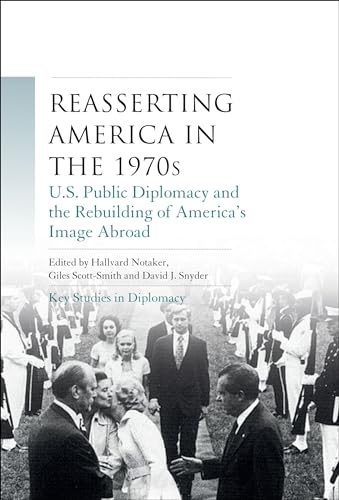
Sinossi
Reasserting America in the 1970s brings together two areas of burgeoning scholarly interest. On the one hand, scholars are investigating the many ways in which the 1970s constituted a profound era of transition in the international order. The American defeat in Vietnam, the breakdown of the Bretton Woods exchange system, and a string of domestic setbacks including Watergate, Three-Mile Island, and reversals during the Carter years all contributed to a grand reappraisal of the power and prestige of the United States in the world. In addition, the rise of new global competitors such as Germany and Japan, the pursuit of détente with the Soviet Union, and the emergence of new private sources of global power also contributed to uncertainty.
At the same time, within diplomatic history proper, the study of 'public diplomacy' has generated searching reappraisals of many of the field’s certitudes. This scholarship has now begun to move into a new conceptual maturity with a developing theoretical base underwriting its institutional narratives, borrowing to a great degree from the literature on 'Americanization' and the role of American culture abroad in various national and regional settings.
Reasserting America in the 1970s brings together these two areas of topical scholarly interest, to study how American public diplomats at home and abroad struggled to maintain American cultural preeminence in a world of shifting challenges to American power
Le informazioni nella sezione "Riassunto" possono far riferimento a edizioni diverse di questo titolo.
Informazioni sugli autori
Hallvard Notaker is Adjunct Associate Professor at the University of Oslo, Norway
Giles Scott-Smith holds the Ernst van der Beugel Chair in the Diplomatic History of Transatlantic Relations since WWII at Leiden University, the Netherlands
David J. Snyder is Senior Instructor of History and Faculty Principal of the Carolina International House at the University of South Carolina, USA
Hallvard Notaker is Adjunct Associate Professor at the University of Oslo, Norway
Giles Scott-Smith holds the Ernst van der Beugel Chair in the Diplomatic History of Transatlantic Relations since WWII at Leiden University, the Netherlands
David J. Snyder is Senior Instructor of History and Faculty Principal of the Carolina International House at the University of South Carolina, USA
Dalla quarta di copertina
Reasserting America in the 1970s brings together two areas of burgeoning scholarly interest. On the one hand, scholars are investigating the many ways in which the 1970s constituted a profound era of transition in the international order. The American defeat in Vietnam, the breakdown of the Bretton Woods exchange system, and a string of domestic setbacks including Watergate, Three-Mile Island, and reversals during the Carter years all contributed to a grand reappraisal of the power and prestige of the United States in the world. In addition, the rise of new global competitors such as Germany and Japan, the pursuit of détente with the Soviet Union, and the emergence of new private sources of global power also contributed to uncertainty.
At the same time, within diplomatic history proper, the study of 'public diplomacy' has generated searching reappraisals of many of the field’s certitudes. This scholarship has now begun to move into a new conceptual maturity with a developing theoretical base underwriting its institutional narratives, borrowing to a great degree from the literature on 'Americanization' and the role of American culture abroad in various national and regional settings.
Reasserting America in the 1970s brings together these two areas of topical scholarly interest, to study how American public diplomats at home and abroad struggled to maintain American cultural preeminence in a world of shifting challenges to American power.
Dal risvolto di copertina interno
Reasserting America in the 1970s brings together two areas of burgeoning scholarly interest. On the one hand, scholars are investigating the many ways in which the 1970s constituted a profound era of transition in the international order. The American defeat in Vietnam, the breakdown of the Bretton Woods exchange system, and a string of domestic setbacks including Watergate, Three-Mile Island, and reversals during the Carter years all contributed to a grand reappraisal of the power and prestige of the United States in the world. In addition, the rise of new global competitors such as Germany and Japan, the pursuit of détente with the Soviet Union, and the emergence of new private sources of global power also contributed to uncertainty.At the same time, within diplomatic history proper, the study of 'public diplomacy' has generated searching reappraisals of many of the field s certitudes. This scholarship has now begun to move into a new conceptual maturity with a developing theoretical base underwriting its institutional narratives, borrowing to a great degree from the literature on 'Americanization' and the role of American culture abroad in various national and regional settings.Reasserting America in the 1970s brings together these two areas of topical scholarly interest, to study how American public diplomats at home and abroad struggled to maintain American cultural preeminence in a world of shifting challenges to American power.
Le informazioni nella sezione "Su questo libro" possono far riferimento a edizioni diverse di questo titolo.
Altre edizioni note dello stesso titolo

Risultati della ricerca per Reasserting America in the 1970s: U.S. Public Diplomacy...

Foto dell'editore
Reasserting America in the 1970s: U.S. public diplomacy and the rebuilding of America?s image abroad (Key Studies in Diplomacy)
Editore:
Manchester University Press, 2016
ISBN 10: 178499331X
ISBN 13: 9781784993313
Antico o usato
Soft cover
Da: Jackson Street Booksellers, Omaha, NE, U.S.A.
Valutazione del venditore 5 su 5 stelle

Soft cover. Condizione: Very Good. Very good copy in softcover. One dog-eared page. White and grey spine with black and green titles. Codice articolo 045978
Compra usato
EUR 18,00
Spedizione EUR 5,68
Spedito in U.S.A.
Spedito in U.S.A.
Quantità: 1 disponibili
Immagini fornite dal venditore
Reasserting America in the 1970s : U.S. Public Diplomacy and the Rebuilding of America's Image Abroad
Editore:
Manchester University Press, 2016
ISBN 10: 178499331X
ISBN 13: 9781784993313
Antico o usato
Brossura
Da: GreatBookPrices, Columbia, MD, U.S.A.
Valutazione del venditore 5 su 5 stelle
Condizione: As New. Unread book in perfect condition. Codice articolo 24314807
Compra usato
EUR 27,71
Spedizione EUR 2,31
Spedito in U.S.A.
Spedito in U.S.A.
Quantità: 7 disponibili
Foto dell'editore
Reasserting America in the 1970s : U.S. Public Diplomacy and the Rebuilding of America's Image Abroad
Editore:
Manchester University Press, 2016
ISBN 10: 178499331X
ISBN 13: 9781784993313
Nuovo
Brossura
Da: GreatBookPrices, Columbia, MD, U.S.A.
Valutazione del venditore 5 su 5 stelle
Condizione: New. Codice articolo 24314807-n
Compra nuovo
EUR 30,32
Spedizione EUR 2,31
Spedito in U.S.A.
Spedito in U.S.A.
Quantità: 7 disponibili
Immagini fornite dal venditore
Reasserting America in the 1970s
Editore:
Manchester University Press, GB, 2016
ISBN 10: 178499331X
ISBN 13: 9781784993313
Nuovo
Paperback
Da: Rarewaves.com USA, London, LONDO, Regno Unito
Valutazione del venditore 5 su 5 stelle
Paperback. Condizione: New. Reasserting America in the 1970s brings together two areas of burgeoning scholarly interest. On the one hand, scholars are investigating the many ways in which the 1970s constituted a profound era of transition in the international order. The American defeat in Vietnam, the breakdown of the Bretton Woods exchange system and a string of domestic setbacks including Watergate, Three-Mile Island and reversals during the Carter years all contributed to a grand reappraisal of the power and prestige of the United States in the world. In addition, the rise of new global competitors such as Germany and Japan, the pursuit of détente with the Soviet Union and the emergence of new private sources of global power contributed to uncertainty. Codice articolo LU-9781784993313
Compra nuovo
EUR 32,70
Spedizione gratuita
Spedito da Regno Unito a U.S.A.
Spedito da Regno Unito a U.S.A.
Quantità: 1 disponibili
Foto dell'editore
Reasserting America in the 1970s: U.s. Public Diplomacy and the Rebuilding of America's Image Abroad
Da: Revaluation Books, Exeter, Regno Unito
Valutazione del venditore 5 su 5 stelle
Paperback. Condizione: Brand New. 1st edition. 256 pages. 8.98x5.91x0.94 inches. In Stock. Codice articolo __178499331X
Compra nuovo
EUR 28,15
Spedizione EUR 11,71
Spedito da Regno Unito a U.S.A.
Spedito da Regno Unito a U.S.A.
Quantità: 2 disponibili
Foto dell'editore
Reasserting America in the 1970s: U.S. Public Diplomacy and the Rebuilding of America's Image Abroad (Key Studies in Diplomacy)
Editore:
Manchester University Press 2016-01-01, 2016
ISBN 10: 178499331X
ISBN 13: 9781784993313
Nuovo
Paperback
Da: Chiron Media, Wallingford, Regno Unito
Valutazione del venditore 5 su 5 stelle
Paperback. Condizione: New. Codice articolo 6666-NBN-9781784993313
Compra nuovo
EUR 26,37
Spedizione EUR 18,13
Spedito da Regno Unito a U.S.A.
Spedito da Regno Unito a U.S.A.
Quantità: 2 disponibili
Foto dell'editore
Reasserting America in the 1970s: U.S. public diplomacy and the rebuilding of America's image abroad (Key Studies in Diplomacy)
Editore:
Manchester University Press, 2016
ISBN 10: 178499331X
ISBN 13: 9781784993313
Nuovo
Brossura
Da: Ria Christie Collections, Uxbridge, Regno Unito
Valutazione del venditore 5 su 5 stelle
Condizione: New. In. Codice articolo ria9781784993313_new
Compra nuovo
EUR 30,79
Spedizione EUR 14,02
Spedito da Regno Unito a U.S.A.
Spedito da Regno Unito a U.S.A.
Quantità: 4 disponibili
Foto dell'editore
Reasserting America in the 1970s : U.S. Public Diplomacy and the Rebuilding of America's Image Abroad
Editore:
Manchester University Press, 2016
ISBN 10: 178499331X
ISBN 13: 9781784993313
Nuovo
Brossura
Da: GreatBookPricesUK, Woodford Green, Regno Unito
Valutazione del venditore 5 su 5 stelle
Condizione: New. Codice articolo 24314807-n
Compra nuovo
EUR 27,77
Spedizione EUR 17,56
Spedito da Regno Unito a U.S.A.
Spedito da Regno Unito a U.S.A.
Quantità: 7 disponibili
Immagini fornite dal venditore
Reasserting America in the 1970s
Editore:
Manchester University Press, GB, 2016
ISBN 10: 178499331X
ISBN 13: 9781784993313
Nuovo
Paperback
Da: Rarewaves USA, OSWEGO, IL, U.S.A.
Valutazione del venditore 5 su 5 stelle
Paperback. Condizione: New. Reasserting America in the 1970s brings together two areas of burgeoning scholarly interest. On the one hand, scholars are investigating the many ways in which the 1970s constituted a profound era of transition in the international order. The American defeat in Vietnam, the breakdown of the Bretton Woods exchange system and a string of domestic setbacks including Watergate, Three-Mile Island and reversals during the Carter years all contributed to a grand reappraisal of the power and prestige of the United States in the world. In addition, the rise of new global competitors such as Germany and Japan, the pursuit of détente with the Soviet Union and the emergence of new private sources of global power contributed to uncertainty. Codice articolo LU-9781784993313
Compra nuovo
EUR 45,39
Spedizione gratuita
Spedito in U.S.A.
Spedito in U.S.A.
Quantità: 9 disponibili
Foto dell'editore
Reasserting America in the 1970s: U.S. Public Diplomacy and the Rebuilding of America's Image Abroad
Editore:
Manchester University Press, 2016
ISBN 10: 178499331X
ISBN 13: 9781784993313
Nuovo
Paperback / softback
Da: THE SAINT BOOKSTORE, Southport, Regno Unito
Valutazione del venditore 5 su 5 stelle
Paperback / softback. Condizione: New. New copy - Usually dispatched within 4 working days. Codice articolo B9781784993313
Compra nuovo
EUR 27,78
Spedizione EUR 18,07
Spedito da Regno Unito a U.S.A.
Spedito da Regno Unito a U.S.A.
Quantità: 2 disponibili