
Articoli correlati a Using Natural Finishes: A Step-by-Step Guide : Lime-...
Using Natural Finishes: A Step-by-Step Guide : Lime- & Earth-Based Plasters, Renders & Paints: 3 - Brossura
Sinossi
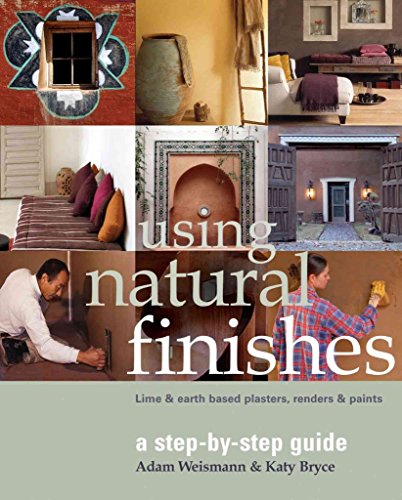
An in-depth guide to the selection, mixing, and application of lime- and clay-based plasters, renders, paints, and washes.
With the increasing awareness of eco-building techniques alongside the desire to make our homes healthier, the historical benefits of using natural renders and paints are being rediscovered. Using Natural Finishes is an in-depth guide to the selection, mixing, and application of lime- and clay-based plasters, renders, paints, and washes. Providing step-by-step instructions with detailed illustrations to show the practical elements of working with lime- and clay-based finishes, the authors demonstrate how these natural “breathable” plasters and paints can be used on a wide variety of wall surfaces, including traditional and eco-build materials like cob, strawbale, and stone, as well as modern plasterboard and concrete surfaces, with stunning results. Easy-to-follow DIY projects guide the reader through all aspects of using these natural finishes, with beautiful photographs of techniques and examples from around the world.
Le informazioni nella sezione "Riassunto" possono far riferimento a edizioni diverse di questo titolo.
Informazioni sugli autori
Adam Weismann and Katy Bryce work with lime and clay on a daily basis through their company, Cob in Cornwall. They learned these skills through restoring ancient vernacular buildings in Cornwall, and then began to apply the traditional techniques and materials to contemporary eco builds. They are the authors ofBuilding with Cob.
Adam Weismann and Katy Bryce run their own building company in Cornwall. They have built and restored many cob buildings, including two-story houses, small studios, and garden rooms, outside courtyards, fireplaces, and earth ovens. In 2003 they won a Pioneers to the Nation award from Queen Elizabeth II. They live in Manaccan, Cornwall, England.
Estratto. © Ristampato con autorizzazione. Tutti i diritti riservati.
Using Natural Finishes
Lime- & Earth-Based Plasters, Renders & Paints
By Adam Weismann, Katy Bryce, Christian TopfGreen Books Ltd
Copyright © 2008 Adam Weismann and Katy Bryce
All rights reserved.
ISBN: 978-1-900322-16-4All rights reserved.
Contents
Introduction,
Chapter 1: Buildings and natural finishes,
Chapter 2: Preparations,
Chapter 3: Lime-based plasters & renders,
Chapter 4: Earth-based plasters & renders,
Chapter 5: Lime- and earth-based paints & washes,
Chapter 6: Finishes from around the world,
Resources and suppliers,
Bibliography,
Index,
CHAPTER 1
Buildings and natural finishes
Wall systems
Moisture issues
Building design
Lime- and earth-based plasters, renders and paints are highly suitable, if not essential, for use in conjunction with sustainable and traditional wall-building materials. Examples include earth (clay), timber, hemp, reed, straw-bale, low-energy bricks and stone. Many of these traditional walling materials have been used successfully for thousands of years and are now enjoying a renaissance, as the foundation for many of the contemporary 'eco-building' methods. A unifying characteristic between these walling materials is that they are all, to a degree, porous. They allow the free passage of moisture into and out of them, and therefore need to 'breathe' to remain healthy. Because of this, they are highly responsive to changes in relative humidity and temperature in the atmosphere. This means that structures made out of these materials will naturally move in response to these differences. All finishes applied to these materials must therefore match the hardness and porosity of the walling substrate below. They must be flexible enough to accommodate natural movements in the building without cracking, and need to have a high degree of vapour permeability to eliminate the potential for trapping moisture within the wall. A case can also be argued for the use of lime- and earth-based plasters, renders and paints (with certain preparatory measures in place) on some of the modern, conventional building materials, such as concrete block and plasterboard. Though their qualities of softness, breathability and flexibility are not essential when used with these conventional materials, lime- and earth-based finishes can bring benefits in the areas of decreased impact on the environment (their production, toxicity and ease of disposal), improved internal air quality, and by improving the look and general 'feel' of the building and the spaces inside.
This section introduces different walling systems that are compatible with lime and earth-based finishes. It also outlines the suitability of applying the various finishes to different substrates.
Earth walls
Earth walls can be constructed in many different ways. Building with earth (clay-rich subsoils) is the most ancient of all building methods. Many variations of earth building have been used throughout the world since man began building shelters. Most earth building methods consist of mixing together a clay-rich subsoil with other ingredients. These are most commonly some form of fibre (straw) to provide tensile strength, and aggregates to provide strength and stability to the mix. Most buildings made out of earth must be raised off the ground at least 450 mm (18"), and should have large roof overhangs to protect the walls from rain.
Many of the earth building methods are currently enjoying a revival because they provide a sustainable way of building. This is because most forms of building with earth have an incredibly
Le informazioni nella sezione "Su questo libro" possono far riferimento a edizioni diverse di questo titolo.
Risultati della ricerca per Using Natural Finishes: A Step-by-Step Guide : Lime-...

Immagini fornite dal venditore
Using Natural Finishes: Lime and Clay Based Plasters, Renders and Paints - A Step-by-step Guide (Sustainable Building)
Da: -OnTimeBooks-, Phoenix, AZ, U.S.A.
Valutazione del venditore 5 su 5 stelle

Condizione: good. A copy that has been read, remains in good condition. All pages are intact, and the cover is intact. The spine and cover show signs of wear. Pages can include notes and highlighting and show signs of wear, and the copy can include "From the library of" labels or previous owner inscriptions. 100% GUARANTEE! Shipped with delivery confirmation, if you're not satisfied with purchase please return item! Ships via media mail. Codice articolo OTV.1900322161.G
Compra usato
EUR 24,99
Spedizione gratuita
Spedito in U.S.A.
Spedito in U.S.A.
Quantità: 1 disponibili
Foto dell'editore
Using Natural Finishes: Lime and Clay Based Plasters, Renders and Paints - A Step-by-step Guide (Sustainable Building)
Da: HPB-Emerald, Dallas, TX, U.S.A.
Valutazione del venditore 5 su 5 stelle
paperback. Condizione: Very Good. Connecting readers with great books since 1972! Used books may not include companion materials, and may have some shelf wear or limited writing. We ship orders daily and Customer Service is our top priority! Codice articolo S_479928864
Compra usato
EUR 22,47
Spedizione EUR 3,35
Spedito in U.S.A.
Spedito in U.S.A.
Quantità: 1 disponibili
Foto dell'editore
Using Natural Finishes: Lime and Clay Based Plasters, Renders and Paints - A Step-by-step Guide (Sustainable Building)
Da: ThriftBooks-Dallas, Dallas, TX, U.S.A.
Valutazione del venditore 5 su 5 stelle
Paperback. Condizione: Good. No Jacket. Pages can have notes/highlighting. Spine may show signs of wear. ~ ThriftBooks: Read More, Spend Less. Codice articolo G1900322161I3N00
Compra usato
EUR 25,95
Spedizione gratuita
Spedito in U.S.A.
Spedito in U.S.A.
Quantità: 1 disponibili
Foto dell'editore
Using Natural Finishes : A Step-by-Step Guide : Lime- & Earth-Based Plasters, Renders & Paints
Da: GreatBookPrices, Columbia, MD, U.S.A.
Valutazione del venditore 5 su 5 stelle
Condizione: As New. Unread book in perfect condition. Codice articolo 5387793
Compra usato
EUR 29,01
Spedizione EUR 2,36
Spedito in U.S.A.
Spedito in U.S.A.
Quantità: 7 disponibili
Foto dell'editore
Using Natural Finishes: Lime and Clay Based Plasters, Renders and Paints - A Step-by-step Guide (Sustainable Building)
Da: HPB-Diamond, Dallas, TX, U.S.A.
Valutazione del venditore 5 su 5 stelle
paperback. Condizione: Very Good. Connecting readers with great books since 1972! Used books may not include companion materials, and may have some shelf wear or limited writing. We ship orders daily and Customer Service is our top priority! Codice articolo S_484917218
Compra usato
EUR 29,30
Spedizione EUR 3,35
Spedito in U.S.A.
Spedito in U.S.A.
Quantità: 1 disponibili
Foto dell'editore
Using Natural Finishes : A Step-by-Step Guide : Lime- & Earth-Based Plasters, Renders & Paints
Da: GreatBookPrices, Columbia, MD, U.S.A.
Valutazione del venditore 5 su 5 stelle
Condizione: New. Codice articolo 5387793-n
Compra nuovo
EUR 32,57
Spedizione EUR 2,36
Spedito in U.S.A.
Spedito in U.S.A.
Quantità: 7 disponibili
Foto dell'editore
Using Natural Finishes: Lime and Earth Based Plasters, Renders & Paints (Paperback)
Editore:
Uit Cambridge Ltd., Totnes, 2008
ISBN 10: 1900322161
ISBN 13: 9781900322164
Nuovo
Paperback
Prima edizione
Da: Grand Eagle Retail, Bensenville, IL, U.S.A.
Valutazione del venditore 5 su 5 stelle
Paperback. Condizione: new. Paperback. Using Natural Finishes is now available under the new title Clay and lime renders, plasters and paints. With the increasing awareness of eco-building techniques alongside the desire to make our homes healthier, the historical benefits of using natural renders and paints are being rediscovered. Using Natural Finishes is an in-depth guide to the selection, mixing and application of lime and clay based plasters, renders, paints and washes. Providing step-by-step instructions with detailed illustrations to show the practical elements of working with lime and clay-based finishes, the authors demonstrate how these natural breathable plasters and paints can be used on a wide variety of wall surfaces, including traditional and eco-build materials like cob, strawbale and stone, as well as modern plasterboard and concrete surfaces, with stunning results. Easy to follow DIY projects guide the reader through all aspects of using these natural finishes, with beautiful photographs of techniques and examples from the UK and abroad. Key words: cob, eco-building, natural building, strawbale, earthen plasters, earth plasters, clay plasters, natural paints, sustainable building, lime plasters, lime paints, lime wash, alis, casein, clay paints, eco paints, green paints. With the increasing awareness of eco-building techniques alongside the desire to make our homes healthier, the historical benefits of using natural renders and paints are being rediscovered. "Using Natural Finishes" is an in-depth guide to the selection, mixing and application of lime- and clay-based plasters, renders, paints and washes. Providing step-by-step instructions with detailed illustrations to show the practical elements of working with lime- and clay-based finishes, the authors demonstrate how these natural "breathable" plasters and paints can be used on a wide variety of wall surfaces, including traditional and eco-build materials like cob, strawbale and stone, as well as modern plasterboard and concrete surfaces, with stunning results. Easy to follow DIY projects guide the reader through all aspects of using these natural finishes, with beautiful photographs of techniques and examples from around the world. Shipping may be from multiple locations in the US or from the UK, depending on stock availability. Codice articolo 9781900322164
Compra nuovo
EUR 34,99
Spedizione gratuita
Spedito in U.S.A.
Spedito in U.S.A.
Quantità: 1 disponibili
Foto dell'editore
Using Natural Finishes
Da: PBShop.store UK, Fairford, GLOS, Regno Unito
Valutazione del venditore 5 su 5 stelle
PAP. Condizione: New. New Book. Shipped from UK. Established seller since 2000. Codice articolo C3-9781900322164
Compra nuovo
EUR 27,09
Spedizione EUR 8,07
Spedito da Regno Unito a U.S.A.
Spedito da Regno Unito a U.S.A.
Quantità: 8 disponibili
Foto dell'editore
Using Natural Finishes
Da: Majestic Books, Hounslow, Regno Unito
Valutazione del venditore 4 su 5 stelle

Condizione: New. pp. 264 Illus. (Col.). Codice articolo 6539124
Compra nuovo
EUR 30,62
Spedizione EUR 7,76
Spedito da Regno Unito a U.S.A.
Spedito da Regno Unito a U.S.A.
Quantità: 3 disponibili
Foto dell'editore
Using Natural Finishes: Lime and Clay Based Plasters, Renders and Paints - A Step-by-step Guide (Sustainable Building)
Da: 4everBAM, Parker, CO, U.S.A.
Valutazione del venditore 5 su 5 stelle
paperback. Condizione: Very Good. Codice articolo VB2950314685
Compra usato
EUR 31,54
Spedizione EUR 8,69
Spedito in U.S.A.
Spedito in U.S.A.
Quantità: 1 disponibili