
Sinossi
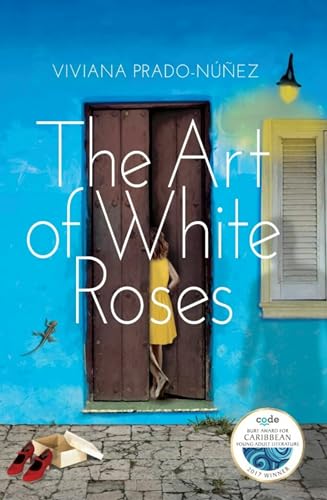
A breathtaking first novel set in 1957, in a quiet Havana suburb. Adela Santiago is thirteen and lives in a small blue house with her family. But something is amiss. Students on her street are disappearing, her parents’ marriage seems to be disintegrating and a cousin is caught up in a bombing at a luxury hotel. Welcome to the revolution. Welcome to Cuba.
Le informazioni nella sezione "Riassunto" possono far riferimento a edizioni diverse di questo titolo.
Informazioni sull?autore
Viviana Prado-Núñez is the winner of the 2017 Burt Award for Caribbean Young Adult Literature for The Art of White Roses. She was born in 1998 in San Juan, Puerto Rico and lives in the United States where she is a student at Columbia University in the City of New York. This is her first novel which she wrote when she was still in high school.
Estratto. © Ristampato con autorizzazione. Tutti i diritti riservati.
The Art of White Roses
By Viviana Prado-NúñezPapillote Press
Copyright © 2018 Viviana Prado-Núñez
All rights reserved.
ISBN: 978-1-9997768-2-4All rights reserved.
CHAPTER 1
Miguel and the Hotel Nacional
The air must have been quiet, light and fresh the way it never was in the daytime. No gunshots that night. The clouds blocking the sky like a screen door. In the Hotel, a few curtains were open and laughter dribbled out as people held drinks in the windows. They were oblivious. The men in the casino wore tuxedos and the women wore glittery gold dresses that gleamed in the rawness of the light. The others watched television in hotel rooms and their children took baths in rooms lined with tile. Outside, the red roofs were dim in the dark and the trees were twisted as if loving each other. There were cement walkways between them and, though it didn't seem that way, the grass was green and alive.
On one of the walkways was Miguel. It was the end of his shift, and out he came by the staff entrance as the luminescence of the pool shone up to the palm trees. I'd seen pools before in the rich parts of town like Miramar, but this one I pictured special — a hole in the ground five cars wide filled with deep turquoise water. I imagined Miguel with his backpack slung over his shoulder, his good black shoes tied and dangling around his neck as he cut across the court-yard. His feet squelched in the mud and he was having trouble walking.
Then, from behind the brick wall a harsh glow. Headlights. Tyres screeching. A small black shadow against the gloom, lobbed quickly. It landed in the squelch and — BOOM!
His ears, they must've hurt so much. The air probably sucked from his lungs, his head pining for oxygen, his vision shaking. I could imagine the slowness of it. Him raising his head, the mud warm and gooey on his cheek. And, suddenly, all of it going backwards. Rolling, my cousin Miguel rolling, the mud on his elbows like playing baseball in the rain. But slow, so slow, you could see the bits of Hotel grass getting mushed beneath his fingernails.
When he got up, his whole body buzzing with the pounding, the shrapnel must have been scattered all around: a piece in his backpack, the trunk and leaves of a palm tree so decimated he felt like crying. And he did cry, I'm sure of it, though he would always deny it. Right then and there, he cried like a kid and I knew because I saw the tracks on his cheeks when he came back, tracing through the mud.
Tía Carmen was in hysterics.
She'd been that way all evening, and even though she lived a few houses down, she still sat on the couch in our living room, praying under her breath the way nuns at Catholic school did if we used God's name in vain. On most days, Miguel came home by six, and even though he'd said he was going to have a late shift, she'd started panicking at eight. And so, she'd come over from her house with her mascara running and her Bible, making the sign of the cross so many times I thought her arms would fall off.
Tía Carmen was small, with mousy brown hair and creases on her forehead like wrinkled paper. As she sat on our couch and cried, her wrinkles etched themselves deep into her forehead. In the kitchen, Mami stood barefoot by the stove, which was mint-green and smelled of gas. Her hair was dark and she had on a nightgown that needed ironing. She didn't even turn on the radio as she sat cooking, watching a slice of ham sizzle in the saucepan.
Tía Carmen sobbed. "He's dead, disappeared! Gone like Rafi Consuelo. In the dead of night they took him. No note, no explanations — just vanished."
"Carmen, stop it," Mami said. "Don't say things like that. It's bad luck."
"But you know it's true, you know it. When someone goes missing, never seen again! All of them gone! It's already nine o'clock and Miguel's not back yet! Mi pobre Miguel, mi ángel."
From his big green armchair, Abuelo rolled his eyes. "Lo juro por Dios, every time a pin drops, that woman cries."
"Ay, cállate, Papá," Mami said.
I stood at the doorway, watching. I wasn't sure whether to be scared or not. Abuelo must have seen an odd expression on my face because he patted the arm of his armchair.
"Come here, Delita."
I sat where he told me like I usually did, leaning into him. I was getting too big for this.
"Don't be scared, Dela," Abuelo told me, "Your Tía is just having another nervous breakdown."
"How do you know?"
"I just do, Dela," Abuelo said. "Trust your abuelo, eh? Everything's going to be fine."
Mami pressed down on the ham with a spatula. She lifted it and folded it onto a piece of bread. The spatula wavered in her hand. She didn't look like she thought everything was going to be fine.
"Mami," I said, "where's Papi?"
"¿Qué?"
"Papi. Shouldn't he be home by now?"
"Yes, well ... I'm sure he had some things to tie up at the shop." She sighed as she wet a dishcloth and began wiping down the crumbs from the counter, "Adela, it's getting late. Why don't you go to your room and check on Pingüino?"
Abuelo went back to watching the black-and-white TV. It was a western, but the volume was so low we could still hear Tía Carmen's whimpers. She was rocking back and forth now, murmuring prayers louder than before. I wished he would turn it up.
"Buenas noches, Abuelo."
"Buenas noches, Adela."
I gave him a kiss on the cheek before leaving.
In my room, time trickled by too slowly. The skinny hand on the clock quivered each time it ticked. Hours passed. I switched on the lamp. There was still no Papi or Miguel. I could hear Tía Carmen's sobs through the walls and it was making me nervous.
It had been one week since the Presidential Palace had been attacked, one week since Tío Rodrigo had come home from his job as a policeman with his hand wrapped up from punching a man in the face, blood bleeding in speckles through the bandage. Papi had been working downtown in the shoe shop when it happened and he'd said the biggest miracle was that the windows hadn't shattered, that he'd gotten a bunch of strangers running in to cower behind the counters, and that it was a miracle too none of them had tried to rob him. One woman said she'd almost been shot in the head, that the bullet had rebounded off the wall behind her and she'd seen a whole group of people gunned down by police at the corner of Colón and Prado. Meanwhile President Batista had been on the third floor with a gun in one hand and a telephone in the other as people in the streets were getting shot, a man on the radio screaming that Batista was dead even though he wasn't. Afterwards, the tanks had been called in, and even now they crawled over the city like giant green bugs.
I didn't see anything when it happened because I was in school. We'd been pulled out and everything, although I'm not sure why. We didn't live anywhere near the Presidential Palace. We lived in Marianao, a suburb six miles away from Old Havana. By the time we'd gotten home, news of the attack had spread all over the radio. Inside our house, it had been the same then as it was now, except Miguel had been there too. All of us gathered in the living room. Hours passing. Carmen crying, and Mami and Abuelo impassive. Pingüino and I hovering nearby, unsure of what to do, of what calamity to picture. I couldn't remember how Miguel had reacted when he'd heard. He was a blank in my memory. And now he was gone too. And so was Papi.
But this time was different. We'd turned on the radio and the television, we'd checked, and there was nothing. Maybe there was an accident downtown and they were all stuck in traffic. That was what I told myself. But that wouldn't have affected Miguel because Miguel walked home every day, and ... I didn't know what to think anymore.
I picked up my journal and started doodling flowers on one of the pages. Pingüino was sprawled out on the bed across from me, asking stupid questions like "Do you think he's dead?" and "Do you think if he's dead, Tío Rodrigo would let me have his baseball bat?"
"Shut up," I told him. "What if he's really dead?"
For a moment, Pingüino was serious. Then he chuckled. "Please. Knowing Miguel, he probably got held back drooling after some chica way out of his league."
"You're disgusting, you know that?"
"So are you."
I set the journal aside. "So did you do it?"
"What?"
"The lizards."
"Yes."
"What happened?"
Pingüino laughed. "Lots of screaming. The usual."
I rolled my eyes. Everyone knew Pingüino didn't like school, and everyone also knew that he didn't like his new teacher, a young nun named Sister Juana who Pingüino claimed was a know-it-all because she'd gone to some fancy school in America and knew English. So he had taken to playing dumb pranks on her, pranks that weren't even that original. Like putting thumbtacks on her chair, leaving mean graffiti on the chalkboards, and — this time — putting two live lizards in her desk.
"What happens when Mami finds out?" I asked.
"She won't."
I sat up in bed and leaned against the wall. It was humid tonight and the ceiling fan wasn't on yet, so my skin stuck to my shirt and the wall was moist. I squinted at Pingüino's school uniform he hadn't changed out of because he was too lazy. I sighed.
"Where's the letter?"
Pingüino observed the ceiling. "What letter?"
"I'm not stupid, Pingüino. This is the third time, and there's always a letter home the third time around. Where is it?"
"I ripped it."
"What?"
"And threw it in a bush. At Rafi Consuelo's house."
"Are you insane? You know not to go there. What if someone had seen you?"
"They didn't. Calm down for God's sake."
I put my face in my hands and watched him through my fingers. "You are dead. When Mami finds out ..."
"She won't. Besides, everyone's worrying about Miguel, so no one would've cared anyway. Relax, Adela."
"You can't use Miguel as an excuse. You don't know what's happened to him. He could be dead or lying shot in an alleyway or something. And God knows where Papi is. For all we know they could both be —"
"Can we stop talking about them that way?" Pingüino snapped. "Miguel is fine. He's got to be. And Papi ... he probably got held up at work or something."
Fear pulsated in the air. If someone had stalked across the lawn and cracked the window open, they would have heard our hearts beating dull and muted, like the echo of someone tapping their fingers on the other side of a wall.
Midnight. The front door creaking open. A strangled cry from Tía Carmen.
When Pingüino and I got to the living room, Miguel was at the door. His eyes were shattered mirrors. Tío Rodrigo came in and his face sagged from tiredness. He sniffed the air.
"Do you have any food? I'm starving."
The scene could have belonged in a painting. In our living room with its flower print curtains my grandmother made, Tío Rodrigo stood large and hunkering in his blue police uniform, a steady mellow presence like a wall made of concrete. Abuelo sat shrivelled as a prune in his green chair, his glasses glinting in the lamplight. Mami had dragged in the stool from the kitchen and sat with her hands covering her mouth. Pingüino lingered by my side, his hair flat at the back from having lain in the bed staring at the ceiling. He gazed at Miguel as if he were a stranger. On the couch, Tía Carmen smoothed out Miguel's hair and the wrinkles in his clothes and fretted over the grass stains. She was, not surprisingly, in tears. "I'm fine, Mami," Miguel said, scooting away, but his hands shook. "I'm fine." He saw Pingüino and I and smiled, relieved almost.
"Hey, Pingüino. Hey, Adela ... The weather's shit, isn't it?"
"Hey, Miguel," Pingüino said, and there was a flicker of a smile. I laughed, but went straight-faced in case that wasn't the right thing to do. When Tío Rodrigo had come home from the attack last week with his hand wrapped up, I hadn't been sure how to react then either. I didn't know whether to say sorry or where to put my eyes or how not to stare, and even now I wasn't sure where to look as Tía Carmen babbled and Miguel dropped his eyes to the floor.
When Mami asked who had done it, Tío Rodrigo claimed it was a couple of rebel kids messing around as usual, but it wasn't anything serious like the Presidential Palace had been. And even though it wasn't much of an explanation, it was enough. Ever since I could remember, the newspapers had had pictures in them of dead bodies riddled with bullets. According to everyone, it was the rebels. It was Fidel Castro's men dying. I didn't pretend to understand much about the rebellion. All I knew was that Fidel was the rebel in Oriente who shot people and Batista was the president in Havana who tortured them. Every so often, there were stories of Batista's blue-helmeted police who plucked people off the streets and tortured them for days on end, or shot down an entire family and left a survivor to keep the fear going. They liked to march through the city in rows, guns aloft, blue uniforms crisp like their mothers had ironed them that morning. Then in the countryside there were rumours of rebel boys with guns hiding in trees and picking people off from afar. But it was hard knowing what the truth was because everyone knew the newspapers were lying. I couldn't tell who was right or wrong in this thing. I guess Batista was bad because everybody said so and Castro ... No one was sure about Castro.
Everyone said those boys in Oriente would fail. It was inevitable. Batista had been in power much too long for things to change. No matter how many pictures in the newspaper showed Batista walking through crowds of Cubans weeping at his feet, kissing babies in their mothers' arms, riding in the passenger side of an open-roofed car with his shining canine smile, everyone knew hell would freeze over before Batista gave up being president, before anything in Cuba changed. But no one said any of that in the open. People wore the fear on their faces when they walked on the street, when they went to the grocery store. They jumped when an engine backfired. No one would ever talk because it might mean being the next corpse in the newspaper.
"Everything is okay. Whoever did this, we'll catch them," Tío Rodrigo said. He gazed at Miguel and Tía Carmen on the couch. "I promise."
After Tío Rodrigo had eaten his fill and Tía Carmen had calmed herself down, they went home. From the window, I watched them walk towards their house. I stayed there a while, gazing at the empty street, the way the streetlights made everything mysterious, the way the humidity drifted in through the window. Straining my eyes, waiting for the glint of the hood on Papi's car, watching Tío Rodrigo's hunched back round the corner. And I wondered, I couldn't help wondering, about how many things Tío Rodrigo had lied about.
CHAPTER 2The Other Adela
That night, I woke up at three in the morning in a cold sweat. I had had a dream about a bearded rebel who shot Papi and Miguel at the Hotel Nacional. In the background, Tío Rodrigo watched from a police car parked underneath a palm tree, Batista smiling his canine smile in the back seat.
It was a gunshot night. I could hear them pop-pop-popping in the distance, long moments of silence in between, and then a sudden spurt of violence punctuating the air. I observed Pingüino's sleeping form, envious, and listened to his steady breathing. I jiggled my foot under the covers, waiting to fall back asleep, but every time I closed my eyes, another round would start up again and it would sound as if it were closer this time. I tried remembering what the rebel's face had looked like in the dream, but I couldn't. I could only remember a blob of colour with the mouth moving.
I didn't mean to, but I started imagining the gunshots as a horde of rebels with blurry faces coming closer and closer to our house in Marianao, flooding up the street past Miguel's house, barging through the front door with their guns drawn. I couldn't imagine the details of what would happen next. I knew somehow it would end with people dead on the floor, but I couldn't picture it, I didn't want to. I decided I didn't want to imagine anything any longer.
When I trudged into the living room, the light from the black-and-white TV was washing over everything, making it all gray and ghostly. Abuelo sat on the couch, his green armchair deserted in the corner. There was no one else, but he was smushed right up against the arm nearest to the television, leaving the rest of the couch vast and empty like he was waiting for more people to join him.
He raised his head.
"I had a bad dream."
Abuelo didn't speak. Instead, he patted the place next to him, and I curled up against his side. His clothes smelled of tobacco and coconut water the way they always did. There was another western on and I watched it with my eyelids drooping, pretending the gunshots in the distance were coming from the television. On the dresser were the family pictures: Mami when she was a little girl on a pink tricycle with streamers. Mami and Papi's wedding day, and them on the front stairs of our house in Marianao. Me as a toddler peering over at baby Pingüino in his crib. Papi's big plantation family lined up for a portrait in front of the sugarcane fields. The abuela I was named after, smiling next to the mango trees a few months before she died of cancer.
(Continues...)
Excerpted from The Art of White Roses by Viviana Prado-Núñez. Copyright © 2018 Viviana Prado-Núñez. Excerpted by permission of Papillote Press.
All rights reserved. No part of this excerpt may be reproduced or reprinted without permission in writing from the publisher.
Excerpts are provided by Dial-A-Book Inc. solely for the personal use of visitors to this web site.
Le informazioni nella sezione "Su questo libro" possono far riferimento a edizioni diverse di questo titolo.
Risultati della ricerca per The Art of White Roses

Foto dell'editore
The Art of White Roses
Da: World of Books (was SecondSale), Montgomery, IL, U.S.A.
Valutazione del venditore 5 su 5 stelle

Condizione: Good. Item in very good condition! Textbooks may not include supplemental items i.e. CDs, access codes etc. Codice articolo 00079328898
Compra usato
EUR 4,68
Spedizione gratuita
Spedito in U.S.A.
Spedito in U.S.A.
Quantità: 1 disponibili
Foto dell'editore
The Art of White Roses
Editore:
Papillote Press (edition 2nd New edition), 2018
ISBN 10: 1999776828
ISBN 13: 9781999776824
Antico o usato
Paperback
Da: BooksRun, Philadelphia, PA, U.S.A.
Valutazione del venditore 5 su 5 stelle
Paperback. Condizione: Very Good. 2nd New edition. It's a well-cared-for item that has seen limited use. The item may show minor signs of wear. All the text is legible, with all pages included. It may have slight markings and/or highlighting. Codice articolo 1999776828-8-1
Compra usato
EUR 4,69
Spedizione gratuita
Spedito in U.S.A.
Spedito in U.S.A.
Quantità: 1 disponibili
Foto dell'editore
The Art of White Roses
Da: ThriftBooks-Dallas, Dallas, TX, U.S.A.
Valutazione del venditore 5 su 5 stelle
Paperback. Condizione: Fair. No Jacket. Former library book; Readable copy. Pages may have considerable notes/highlighting. ~ ThriftBooks: Read More, Spend Less. Codice articolo G1999776828I5N10
Compra usato
EUR 5,72
Spedizione gratuita
Spedito in U.S.A.
Spedito in U.S.A.
Quantità: 1 disponibili
Foto dell'editore
The Art of White Roses
Da: Better World Books, Mishawaka, IN, U.S.A.
Valutazione del venditore 5 su 5 stelle
Condizione: Very Good. 2nd New edition. Former library copy. Pages intact with possible writing/highlighting. Binding strong with minor wear. Dust jackets/supplements may not be included. Includes library markings. Stock photo provided. Product includes identifying sticker. Better World Books: Buy Books. Do Good. Codice articolo 39306321-6
Compra usato
EUR 5,79
Spedizione gratuita
Spedito in U.S.A.
Spedito in U.S.A.
Quantità: 1 disponibili
Foto dell'editore
The Art of White Roses
Da: Better World Books, Mishawaka, IN, U.S.A.
Valutazione del venditore 5 su 5 stelle
Condizione: Good. 2nd New edition. Former library copy. Pages intact with minimal writing/highlighting. The binding may be loose and creased. Dust jackets/supplements are not included. Includes library markings. Stock photo provided. Product includes identifying sticker. Better World Books: Buy Books. Do Good. Codice articolo 39587194-6
Compra usato
EUR 5,79
Spedizione gratuita
Spedito in U.S.A.
Spedito in U.S.A.
Quantità: 1 disponibili
Foto dell'editore
The Art of White Roses
Da: Better World Books Ltd, Dunfermline, Regno Unito
Valutazione del venditore 5 su 5 stelle
Condizione: Very Good. 2nd New edition. Former library copy. Pages intact with possible writing/highlighting. Binding strong with minor wear. Dust jackets/supplements may not be included. Includes library markings. Stock photo provided. Product includes identifying sticker. Better World Books: Buy Books. Do Good. Codice articolo 39306321-6
Compra usato
EUR 5,99
Spedizione EUR 5,78
Spedito da Regno Unito a U.S.A.
Spedito da Regno Unito a U.S.A.
Quantità: 1 disponibili
Foto dell'editore
Art of White Roses
Da: GreatBookPrices, Columbia, MD, U.S.A.
Valutazione del venditore 5 su 5 stelle
Condizione: New. Codice articolo 30693975-n
Compra nuovo
EUR 11,50
Spedizione EUR 2,29
Spedito in U.S.A.
Spedito in U.S.A.
Quantità: Più di 20 disponibili
Immagini fornite dal venditore
The Art of White Roses
Da: Rarewaves.com USA, London, LONDO, Regno Unito
Valutazione del venditore 5 su 5 stelle
Paperback. Condizione: New. It is 1957 in Marianao, a suburb of Havana. Adela Santiago is 13 years old and lives in a small blue house with her mother, father, brother, and grandfather. And yet something is amiss. The students on her street are disappearing. Not only that but her parents' marriage seems to be disintegrating and her cousin is caught up in a bombing at the Hotel Nacional. Welcome to a world where a revolution is brewing. Welcome to Cuba. An insight into what it is like to be young when bad things happen and it is not your fault. Codice articolo LU-9781999776824
Compra nuovo
EUR 13,86
Spedizione gratuita
Spedito da Regno Unito a U.S.A.
Spedito da Regno Unito a U.S.A.
Quantità: 16 disponibili
Foto dell'editore
The Art of White Roses
Da: medimops, Berlin, Germania
Valutazione del venditore 5 su 5 stelle
Condizione: acceptable. Ausreichend/Acceptable: Exemplar mit vollständigem Text und sämtlichen Abbildungen oder Karten. Schmutztitel oder Vorsatz können fehlen. Einband bzw. Schutzumschlag weisen unter Umständen starke Gebrauchsspuren auf. / Describes a book or dust jacket that has the complete text pages (including those with maps or plates) but may lack endpapers, half-title, etc. (which must be noted). Binding, dust jacket (if any), etc may also be worn. Codice articolo M01999776828-B
Compra usato
EUR 4,27
Spedizione EUR 10,00
Spedito da Germania a U.S.A.
Spedito da Germania a U.S.A.
Quantità: 1 disponibili
Foto dell'editore
The Art of White Roses
Da: PBShop.store US, Wood Dale, IL, U.S.A.
Valutazione del venditore 5 su 5 stelle
PAP. Condizione: New. New Book. Shipped from UK. Established seller since 2000. Codice articolo BS-9781999776824
Compra nuovo
EUR 14,61
Spedizione gratuita
Spedito in U.S.A.
Spedito in U.S.A.
Quantità: 15 disponibili