
Articoli correlati a ACE Inhibitors
Sinossi
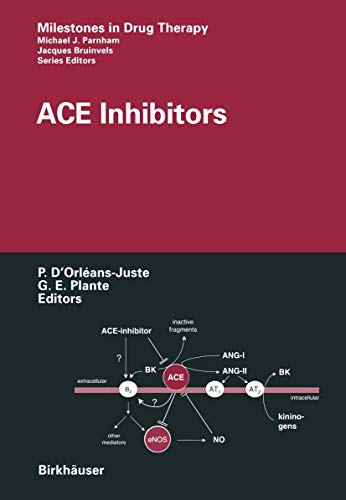
Angiotensin converting enzyme inhibitors (ACEI) represent the first class of antihypertensive agents that was designed and developed on the basis of a well-defined physiopathological axis of arterial hypertension, a vascular dis order that is now becoming one of the major causes of morbidity/mortality, not only in developed societies but also in the highly populated developing coun tries [1]. CAPTOPRIL, the prototype of the "PRIL" family, which now comprises more than 40 molecule-species, was quite hazardous and the clinical develop ment almost failed when serious side-effects were reported in an alarmist fash ion in reputable scientific journals, such as the New England Journal of Medicine and Lancet. Squibb & Sons came very close to withdrawing CAPTOPRIL from clinical investigation [2]. However, after re-examination of the data obtained from different categories of patients and appropriate dose-adjustments, the clinical use of CAPTOPRIL turned out to be revolutionary. The prototype, as well as other members of the "PRIL" family became the starting point for numerous basic and clinical research programs, focusing on the interactions of ACEI with the kinin, endothelin, and nitric oxide systems, and the contribution of the receptors for AT I, AT 2, bradykinin Bland B , ETA and ET B to the pharmacological actions 2 of the respective peptides. This research activity led to the development of new pharmacological agents, such as the angiotensin receptor antagonists and, more recently, the neutral endopeptidase inhibitors. In the near future, bradykinin receptor antagonists also will be available to modulate ACEI phar macological actions.
Le informazioni nella sezione "Riassunto" possono far riferimento a edizioni diverse di questo titolo.
Contenuti
The history of inhibitors of angiotensin converting enzyme.- Genetics of the renin-angiotensin-aldosterone system and risk of arterial disease.- Crosstalk between ACE inhibitors, B2 kinin receptor and nitric oxide in endothelial cells.- Interactions between the ACE and the endothelin pathway.- Evaluative and epidemiological approaches of ACE therapy.- The role of ACE inhibition in heart failure.- Angiotensin converting enzyme inhibition in the microcirculation.- Arterial structure and function and blockade of the reninangiotensin system in hypertension.- The contribution of angiotensin-converting enzyme (ACE) to the metabolism of kinins (bradykinin and des-Arg9-bradykinin) and effect of ACE inhibitors on their in vitro and in vivo metabolism.- Role of the renin-angiotensin system on the central and peripheral autonomic nervous system.- Dual inhibitors of angiotensin converting enzyme and neutral endopeptidase.- Pharmacodynamics, tissue-specificity of ACE inhibitors.- Effect of angiotensin converting enzyme inhibition on thirst and salt-appetite.- ACE and diabetes.
Le informazioni nella sezione "Su questo libro" possono far riferimento a edizioni diverse di questo titolo.
Risultati della ricerca per ACE Inhibitors

Foto dell'editore
ACE Inhibitors (eng)
Print on DemandDa: Brook Bookstore On Demand, Napoli, NA, Italia
Valutazione del venditore 5 su 5 stelle

Condizione: new. Questo è un articolo print on demand. Codice articolo 9WPIPHAKUK
Compra nuovo
EUR 46,22
Spedizione EUR 5,50
Spedito da Italia a U.S.A.
Spedito da Italia a U.S.A.
Quantità: Più di 20 disponibili
Immagini fornite dal venditore
ACE Inhibitors
Da: moluna, Greven, Germania
Valutazione del venditore 5 su 5 stelle
Condizione: New. Codice articolo 4319152
Compra nuovo
EUR 48,37
Spedizione EUR 48,99
Spedito da Germania a U.S.A.
Spedito da Germania a U.S.A.
Quantità: Più di 20 disponibili
Foto dell'editore
ACE Inhibitors (Milestones in Drug Therapy)
Da: Ria Christie Collections, Uxbridge, Regno Unito
Valutazione del venditore 5 su 5 stelle
Condizione: New. In English. Codice articolo ria9783034875813_new
Compra nuovo
EUR 94,48
Spedizione EUR 13,20
Spedito da Regno Unito a U.S.A.
Spedito da Regno Unito a U.S.A.
Quantità: Più di 20 disponibili
Immagini fornite dal venditore
ACE Inhibitors
Editore:
Springer, Basel, Birkhäuser Basel, Birkhäuser Sep 2012, 2012
ISBN 10: 3034875819
ISBN 13: 9783034875813
Nuovo
Taschenbuch
Da: BuchWeltWeit Ludwig Meier e.K., Bergisch Gladbach, Germania
Valutazione del venditore 5 su 5 stelle
Taschenbuch. Condizione: Neu. This item is printed on demand - it takes 3-4 days longer - Neuware -Angiotensin converting enzyme inhibitors (ACEI) represent the first class of antihypertensive agents that was designed and developed on the basis of a well-defined physiopathological axis of arterial hypertension, a vascular dis order that is now becoming one of the major causes of morbidity/mortality, not only in developed societies but also in the highly populated developing coun tries [1]. CAPTOPRIL, the prototype of the 'PRIL' family, which now comprises more than 40 molecule-species, was quite hazardous and the clinical develop ment almost failed when serious side-effects were reported in an alarmist fash ion in reputable scientific journals, such as the New England Journal of Medicine and Lancet. Squibb & Sons came very close to withdrawing CAPTOPRIL from clinical investigation [2]. However, after re-examination of the data obtained from different categories of patients and appropriate dose-adjustments, the clinical use of CAPTOPRIL turned out to be revolutionary. The prototype, as well as other members of the 'PRIL' family became the starting point for numerous basic and clinical research programs, focusing on the interactions of ACEI with the kinin, endothelin, and nitric oxide systems, and the contribution of the receptors for AT I, AT 2, bradykinin Bland B , ETA and ET B to the pharmacological actions 2 of the respective peptides. This research activity led to the development of new pharmacological agents, such as the angiotensin receptor antagonists and, more recently, the neutral endopeptidase inhibitors. In the near future, bradykinin receptor antagonists also will be available to modulate ACEI phar macological actions. 187 pp. Englisch. Codice articolo 9783034875813
Compra nuovo
EUR 85,59
Spedizione EUR 23,00
Spedito da Germania a U.S.A.
Spedito da Germania a U.S.A.
Quantità: 2 disponibili
Foto dell'editore
Ace Inhibitors (Milestones in Drug Therapy)
Da: Chiron Media, Wallingford, Regno Unito
Valutazione del venditore 5 su 5 stelle
Paperback. Condizione: New. Codice articolo 6666-IUK-9783034875813
Compra nuovo
EUR 91,40
Spedizione EUR 18,11
Spedito da Regno Unito a U.S.A.
Spedito da Regno Unito a U.S.A.
Quantità: 10 disponibili
Immagini fornite dal venditore
ACE Inhibitors
Editore:
Birkhäuser, Birkhäuser Sep 2012, 2012
ISBN 10: 3034875819
ISBN 13: 9783034875813
Nuovo
Taschenbuch
Da: buchversandmimpf2000, Emtmannsberg, BAYE, Germania
Valutazione del venditore 5 su 5 stelle
Taschenbuch. Condizione: Neu. This item is printed on demand - Print on Demand Titel. Neuware -Angiotensin converting enzyme inhibitors (ACEI) represent the first class of antihypertensive agents that was designed and developed on the basis of a well-defined physiopathological axis of arterial hypertension, a vascular dis order that is now becoming one of the major causes of morbidity/mortality, not only in developed societies but also in the highly populated developing coun tries [1]. CAPTOPRIL, the prototype of the 'PRIL' family, which now comprises more than 40 molecule-species, was quite hazardous and the clinical develop ment almost failed when serious side-effects were reported in an alarmist fash ion in reputable scientific journals, such as the New England Journal of Medicine and Lancet. Squibb & Sons came very close to withdrawing CAPTOPRIL from clinical investigation [2]. However, after re-examination of the data obtained from different categories of patients and appropriate dose-adjustments, the clinical use of CAPTOPRIL turned out to be revolutionary. The prototype, as well as other members of the 'PRIL' family became the starting point for numerous basic and clinical research programs, focusing on the interactions of ACEI with the kinin, endothelin, and nitric oxide systems, and the contribution of the receptors for AT I, AT 2, bradykinin Bland B , ETA and ET B to the pharmacological actions 2 of the respective peptides. This research activity led to the development of new pharmacological agents, such as the angiotensin receptor antagonists and, more recently, the neutral endopeptidase inhibitors. In the near future, bradykinin receptor antagonists also will be available to modulate ACEI phar macological actions.Springer Nature c/o IBS, Benzstrasse 21, 48619 Heek 200 pp. Englisch. Codice articolo 9783034875813
Compra nuovo
EUR 53,49
Spedizione EUR 60,00
Spedito da Germania a U.S.A.
Spedito da Germania a U.S.A.
Quantità: 1 disponibili
Immagini fornite dal venditore
ACE Inhibitors
Da: AHA-BUCH GmbH, Einbeck, Germania
Valutazione del venditore 5 su 5 stelle
Taschenbuch. Condizione: Neu. Druck auf Anfrage Neuware - Printed after ordering - Angiotensin converting enzyme inhibitors (ACEI) represent the first class of antihypertensive agents that was designed and developed on the basis of a well-defined physiopathological axis of arterial hypertension, a vascular dis order that is now becoming one of the major causes of morbidity/mortality, not only in developed societies but also in the highly populated developing coun tries [1]. CAPTOPRIL, the prototype of the 'PRIL' family, which now comprises more than 40 molecule-species, was quite hazardous and the clinical develop ment almost failed when serious side-effects were reported in an alarmist fash ion in reputable scientific journals, such as the New England Journal of Medicine and Lancet. Squibb & Sons came very close to withdrawing CAPTOPRIL from clinical investigation [2]. However, after re-examination of the data obtained from different categories of patients and appropriate dose-adjustments, the clinical use of CAPTOPRIL turned out to be revolutionary. The prototype, as well as other members of the 'PRIL' family became the starting point for numerous basic and clinical research programs, focusing on the interactions of ACEI with the kinin, endothelin, and nitric oxide systems, and the contribution of the receptors for AT I, AT 2, bradykinin Bland B , ETA and ET B to the pharmacological actions 2 of the respective peptides. This research activity led to the development of new pharmacological agents, such as the angiotensin receptor antagonists and, more recently, the neutral endopeptidase inhibitors. In the near future, bradykinin receptor antagonists also will be available to modulate ACEI phar macological actions. Codice articolo 9783034875813
Compra nuovo
EUR 53,49
Spedizione EUR 61,78
Spedito da Germania a U.S.A.
Spedito da Germania a U.S.A.
Quantità: 1 disponibili
Foto dell'editore
ACE Inhibitors (Milestones in Drug Therapy)
Da: Mispah books, Redhill, SURRE, Regno Unito
Valutazione del venditore 4 su 5 stelle

Paperback. Condizione: Like New. LIKE NEW. SHIPS FROM MULTIPLE LOCATIONS. book. Codice articolo ERICA80030348758196
Compra usato
EUR 127,64
Spedizione EUR 29,23
Spedito da Regno Unito a U.S.A.
Spedito da Regno Unito a U.S.A.
Quantità: 1 disponibili