
Articoli correlati a Operating Manual for Spaceship Earth
Sinossi
Buckminster Fuller (1895–1983) was an architect, engineer, geometrician, cartographer, philosopher, futurist, inventor of the famous geodesic dome, and one of the most brilliant thinkers of his time. For more than five decades, he set forth his comprehensive perspective on the world’s problems in numerous essays, which offer an illuminating insight into the intellectual universe of this renaissance man. These texts remain surprisingly topical even today, decades after their initial publication.
While Fuller wrote the works in the 1960’s and 1970’s, they could not be more timely: like desperately needed time-capsules of wisdom for the critical moment he foresaw, and in which we find ourselves. Long out of print, they are now being published again, together with commentary by Jaime Snyder, the grandson of Buckminster Fuller. Designed for a new generation of readers, Snyder prepared these editions with supplementary material providing background on the texts, factual updates, and interpretation of his visionary ideas.
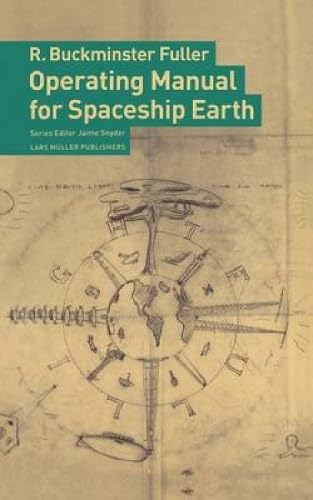
Initially published in 1969, and one of Fuller’s most popular works, Operating Manual for Spaceship Earth is a brilliant synthesis of his world view. In this very accessible volume, Fuller investigates the great challenges facing humanity, and the principles for avoiding extinction and "exercising our option to make it." How will humanity survive? How does automation influence individualization? How can we utilize our resources more effectively to realize our potential to end poverty in this generation? He questions the concept of specialization, calls for a design revolution of innovation, and offers advice on how to guide "spaceship earth" toward a sustainable future.
And it Came to Pass – Not to Stay brings together Buckminster Fuller’s lyrical and philosophical best, including seven "essays" in a form he called his "ventilated prose", and as always addressing the current global crisis and his predictions for the future. These essays, including "How Little I Know", "What I am Trying to Do", "Soft Revolution", and "Ethics", put the task of ushering in a new era of humanity in the context of "always starting with the universe." In rare form, Fuller elegantly weaves the personal, the playful, the simple, and the profound.
Le informazioni nella sezione "Riassunto" possono far riferimento a edizioni diverse di questo titolo.
Product Description
Book by Fuller R Buckminster
Le informazioni nella sezione "Su questo libro" possono far riferimento a edizioni diverse di questo titolo.
Risultati della ricerca per Operating Manual for Spaceship Earth

Foto dell'editore
Operating Manual for Spaceship
Editore:
Lars M?ller Publishers, 2008
ISBN 10: 3037781262
ISBN 13: 9783037781265
Antico o usato
Brossura
Da: World of Books (was SecondSale), Montgomery, IL, U.S.A.
Valutazione del venditore 5 su 5 stelle

Condizione: Good. Item in good condition. Textbooks may not include supplemental items i.e. CDs, access codes etc. Codice articolo 00110120992
Compra usato
EUR 10,45
Spedizione gratuita
Spedito in U.S.A.
Spedito in U.S.A.
Quantità: 1 disponibili
Foto dell'editore
Operating Manual for Spaceship Earth
Editore:
Lars Muller Publishers, 2008
ISBN 10: 3037781262
ISBN 13: 9783037781265
Antico o usato
Paperback
Da: World of Books Inc, Montgomery, IL, U.S.A.
Valutazione del venditore 4 su 5 stelle

Paperback. Condizione: Good. Buckminster Fuller (1895-1983) was an architect, engineer, geometrician, cartographer, philosopher, futurist, inventor of the famous geodesic dome, and one of the most brilliant thinkers of his time. For more than five decades, he set forth his comprehensive perspective on the world's problems in numerous essays, which offer an illuminating insight into the intellectual universe of this renaissance man. These texts remain surprisingly topical even today, decades after their initial publication.While Fuller wrote the works in the 1960's and 1970's, they could not be more timely: like desperately needed time-capsules of wisdom for the critical moment he foresaw, and in which we find ourselves. Long out of print, they are now being published again, together with commentary by Jaime Snyder, the grandson of Buckminster Fuller. Designed for a new generation of readers, Snyder prepared these editions with supplementary material providing background on the texts, factual updates, and interpretation of his visionary ideas.Initially published in 1969, and one of Fuller's most popular works, Operating Manual for Spaceship Earth is a brilliant synthesis of his world view. In this very accessible volume, Fuller investigates the great challenges facing humanity, and the principles for avoiding extinction and "exercising our option to make it." How will humanity survive? How does automation influence individualization? How can we utilize our resources more effectively to realize our potential to end poverty in this generation? He questions the concept of specialization, calls for a design revolution of innovation, and offers advice on how to guide "spaceship earth" toward a sustainable future.And it Came to Pass - Not to Stay brings together Buckminster Fuller's lyrical and philosophical best, including seven "essays" in a form he called his "ventilated prose," and as always addressing the current global crisis and his predictions for the future. These essays, including "How Little I Know," "What I am Trying to Do," "Soft Revolution," and "Ethics," put the task of ushering in a new era of humanity in the context of "always starting with the universe." In rare form, Fuller elegantly weaves the personal, the playful, the simple, and the profound. Codice articolo CIN3037781262G
Compra usato
EUR 12,25
Spedizione gratuita
Spedito in U.S.A.
Spedito in U.S.A.
Quantità: 1 disponibili
Foto dell'editore
Operating Manual for Spaceship
Editore:
Lars M?ller Publishers, 2008
ISBN 10: 3037781262
ISBN 13: 9783037781265
Antico o usato
Brossura
Da: World of Books (was SecondSale), Montgomery, IL, U.S.A.
Valutazione del venditore 5 su 5 stelle
Condizione: Very Good. Item in very good condition! Textbooks may not include supplemental items i.e. CDs, access codes etc. Codice articolo 00108456423
Compra usato
EUR 13,45
Spedizione gratuita
Spedito in U.S.A.
Spedito in U.S.A.
Quantità: 2 disponibili
Foto dell'editore
Operating Manual for Spaceship Earth
Da: HPB Inc., Dallas, TX, U.S.A.
Valutazione del venditore 5 su 5 stelle
Paperback. Condizione: Very Good. Connecting readers with great books since 1972! Used books may not include companion materials, and may have some shelf wear or limited writing. We ship orders daily and Customer Service is our top priority! Codice articolo S_485331661
Compra usato
EUR 12,56
Spedizione EUR 3,27
Spedito in U.S.A.
Spedito in U.S.A.
Quantità: 1 disponibili
Immagini fornite dal venditore
Operating Manual for Spaceship Earth
Editore:
Lars Müller Publishers, 2008
ISBN 10: 3037781262
ISBN 13: 9783037781265
Antico o usato
Brossura
Da: GreatBookPrices, Columbia, MD, U.S.A.
Valutazione del venditore 5 su 5 stelle
Condizione: As New. Unread book in perfect condition. Codice articolo 5970111
Compra usato
EUR 15,30
Spedizione EUR 2,30
Spedito in U.S.A.
Spedito in U.S.A.
Quantità: Più di 20 disponibili
Foto dell'editore
Operating Manual for Spaceship Earth
Editore:
Lars Müller Publishers (edition 1), 2008
ISBN 10: 3037781262
ISBN 13: 9783037781265
Antico o usato
Paperback
Da: BooksRun, Philadelphia, PA, U.S.A.
Valutazione del venditore 5 su 5 stelle
Paperback. Condizione: Very Good. 1. It's a well-cared-for item that has seen limited use. The item may show minor signs of wear. All the text is legible, with all pages included. It may have slight markings and/or highlighting. Codice articolo 3037781262-11-1
Compra usato
EUR 17,73
Spedizione gratuita
Spedito in U.S.A.
Spedito in U.S.A.
Quantità: 1 disponibili
Foto dell'editore
Operating Manual for Spaceship Earth
Editore:
Lars Müller Publishers, 2008
ISBN 10: 3037781262
ISBN 13: 9783037781265
Antico o usato
Paperback
Da: WorldofBooks, Goring-By-Sea, WS, Regno Unito
Valutazione del venditore 5 su 5 stelle
Paperback. Condizione: Very Good. The book has been read, but is in excellent condition. Pages are intact and not marred by notes or highlighting. The spine remains undamaged. Codice articolo GOR003293645
Compra usato
EUR 11,49
Spedizione EUR 6,53
Spedito da Regno Unito a U.S.A.
Spedito da Regno Unito a U.S.A.
Quantità: 7 disponibili
Immagini fornite dal venditore
Operating Manual for Spaceship Earth
Da: GreatBookPrices, Columbia, MD, U.S.A.
Valutazione del venditore 5 su 5 stelle
Condizione: New. Codice articolo 5970111-n
Compra nuovo
EUR 17,21
Spedizione EUR 2,30
Spedito in U.S.A.
Spedito in U.S.A.
Quantità: Più di 20 disponibili
Immagini fornite dal venditore
Operating Manual for Spaceship Earth
Editore:
Lars Muller Publishers, CH, 2008
ISBN 10: 3037781262
ISBN 13: 9783037781265
Nuovo
Paperback
Da: Rarewaves.com USA, London, LONDO, Regno Unito
Valutazione del venditore 5 su 5 stelle
Paperback. Condizione: New. Buckminster Fuller (1895-1983) was an architect, engineer, geometrician, cartographer, philosopher, futurist, inventor of the famous geodesic dome, and one of the most brilliant thinkers of his time. For more than five decades, he set forth his comprehensive perspective on the world's problems in numerous essays, which offer an illuminating insight into the intellectual universe of this renaissance man. These texts remain surprisingly topical even today, decades after their initial publication.While Fuller wrote the works in the 1960's and 1970's, they could not be more timely: like desperately needed time-capsules of wisdom for the critical moment he foresaw, and in which we find ourselves. Long out of print, they are now being published again, together with commentary by Jaime Snyder, the grandson of Buckminster Fuller. Designed for a new generation of readers, Snyder prepared these editions with supplementary material providing background on the texts, factual updates, and interpretation of his visionary ideas.Initially published in 1969, and one of Fuller's most popular works, Operating Manual for Spaceship Earth is a brilliant synthesis of his world view. In this very accessible volume, Fuller investigates the great challenges facing humanity, and the principles for avoiding extinction and "exercising our option to make it." How will humanity survive? How does automation influence individualization? How can we utilize our resources more effectively to realize our potential to end poverty in this generation? He questions the concept of specialization, calls for a design revolution of innovation, and offers advice on how to guide "spaceship earth" toward a sustainable future.And it Came to Pass - Not to Stay brings together Buckminster Fuller's lyrical and philosophical best, including seven "essays" in a form he called his "ventilated prose," and as always addressing the current global crisis and his predictions for the future. These essays, including "How Little I Know," "What I am Trying to Do," "Soft Revolution," and "Ethics," put the task of ushering in a new era of humanity in the context of "always starting with the universe." In rare form, Fuller elegantly weaves the personal, the playful, the simple, and the profound. Codice articolo LU-9783037781265
Compra nuovo
EUR 19,58
Spedizione gratuita
Spedito da Regno Unito a U.S.A.
Spedito da Regno Unito a U.S.A.
Quantità: Più di 20 disponibili
Immagini fornite dal venditore
Operating Manual for Spaceship Earth
Editore:
Lars Muller Publishers, CH, 2008
ISBN 10: 3037781262
ISBN 13: 9783037781265
Nuovo
Paperback
Da: Rarewaves USA, HEBRON, KY, U.S.A.
Valutazione del venditore 5 su 5 stelle
Paperback. Condizione: New. Buckminster Fuller (1895-1983) was an architect, engineer, geometrician, cartographer, philosopher, futurist, inventor of the famous geodesic dome, and one of the most brilliant thinkers of his time. For more than five decades, he set forth his comprehensive perspective on the world's problems in numerous essays, which offer an illuminating insight into the intellectual universe of this renaissance man. These texts remain surprisingly topical even today, decades after their initial publication.While Fuller wrote the works in the 1960's and 1970's, they could not be more timely: like desperately needed time-capsules of wisdom for the critical moment he foresaw, and in which we find ourselves. Long out of print, they are now being published again, together with commentary by Jaime Snyder, the grandson of Buckminster Fuller. Designed for a new generation of readers, Snyder prepared these editions with supplementary material providing background on the texts, factual updates, and interpretation of his visionary ideas.Initially published in 1969, and one of Fuller's most popular works, Operating Manual for Spaceship Earth is a brilliant synthesis of his world view. In this very accessible volume, Fuller investigates the great challenges facing humanity, and the principles for avoiding extinction and "exercising our option to make it." How will humanity survive? How does automation influence individualization? How can we utilize our resources more effectively to realize our potential to end poverty in this generation? He questions the concept of specialization, calls for a design revolution of innovation, and offers advice on how to guide "spaceship earth" toward a sustainable future.And it Came to Pass - Not to Stay brings together Buckminster Fuller's lyrical and philosophical best, including seven "essays" in a form he called his "ventilated prose," and as always addressing the current global crisis and his predictions for the future. These essays, including "How Little I Know," "What I am Trying to Do," "Soft Revolution," and "Ethics," put the task of ushering in a new era of humanity in the context of "always starting with the universe." In rare form, Fuller elegantly weaves the personal, the playful, the simple, and the profound. Codice articolo LU-9783037781265
Compra nuovo
EUR 20,81
Spedizione gratuita
Spedito in U.S.A.
Spedito in U.S.A.
Quantità: Più di 20 disponibili