
Articoli correlati a Design Science Methodology for Information Systems...
Sinossi
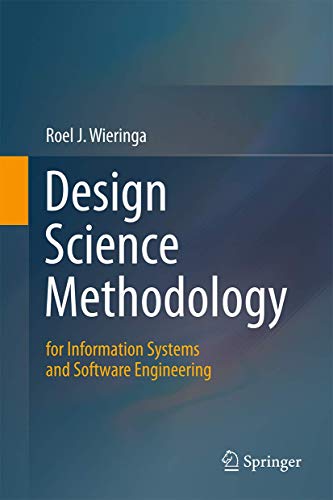
<p>This book provides guidelines for practicing design science in the fields of information systems and software engineering research. A design process usually iterates over two activities: first designing an artifact that improves something for stakeholders and subsequently empirically investigating the performance of that artifact in its context. This “validation in context” is a key feature of the book - since an artifact is designed for a context, it should also be validated in this context.</p><p>The book is divided into five parts. Part I discusses the fundamental nature of design science and its artifacts, as well as related design research questions and goals. Part II deals with the design cycle, i.e. the creation, design and validation of artifacts based on requirements and stakeholder goals. To elaborate this further, Part III presents the role of conceptual frameworks and theories in design science. Part IV continues with the empirical cycle to investigate artifacts in context, and presents the different elements of research problem analysis, research setup and data analysis. Finally, Part V deals with the practical application of the empirical cycle by presenting in detail various research methods, including observational case studies, case-based and sample-based experiments and technical action research. These main sections are complemented by two generic checklists, one for the design cycle and one for the empirical cycle.</p><p>The book is written for students as well as academic and industrial researchers in software engineering or information systems. It provides guidelines on how to effectively structure research goals, how to analyze research problems concerning design goals and knowledge questions, how to validate artifact designs and how to empirically investigate artifacts in context – and finally how to present the results of the design cycle as a whole.</p>
Le informazioni nella sezione "Riassunto" possono far riferimento a edizioni diverse di questo titolo.
Informazioni sull'autore
Roel Wieringa is Chair of Information Systems at the University of Twente, the Netherlands. His research interests include modelling and design of e-business networks, requirements engineering and research methodology for software engineering and information systems.
Dalla quarta di copertina
<p>This book provides guidelines for practicing design science in the fields of information systems and software engineering research. A design process usually iterates over two activities: first designing an artifact that improves something for stakeholders, and subsequently empirically investigating the performance of that artifact in its context. This “validation in context” is a key feature of the book - since an artifact is designed for a context, it should also be validated in this context. </p><p>The book is divided into five parts. Part I discusses the fundamental nature of design science and its artifacts, as well as related design research questions and goals. Part II deals with the design cycle, i.e. the creation, design and validation of artifacts based on requirements and stakeholder goals. To elaborate this further, Part III presents the role of conceptual frameworks and theories in design science. Part IV continues with the empirical cycle to investigate artifacts in context, and presents the different elements of research problem analysis, research setup, and data analysis. Finally, Part V deals with the practical application of the empirical cycle by presenting in detail various research methods, including observational case studies, case-based and sample-based experiments, and technical action research. These main sections are complemented by two generic checklists, one for the design cycle and one for the empirical cycle.</p><p>The book is written for students as well as academic and industrial researchers in software engineering or information systems. It provides guidelines on how to effectively structure research goals, how to analyze research problems concerning design goals and knowledge questions, how to validate artifact designs, and how to empirically investigate artifacts in context – and finally how to present the results of the design cycle as a whole.</p>
Le informazioni nella sezione "Su questo libro" possono far riferimento a edizioni diverse di questo titolo.
Risultati della ricerca per Design Science Methodology for Information Systems...

Foto dell'editore
Design Science Methodology for Information Systems and Software Engineering
Da: Textbooks_Source, Columbia, MO, U.S.A.
Valutazione del venditore 5 su 5 stelle

hardcover. Condizione: New. 2014 ed. Ships in a BOX from Central Missouri! UPS shipping for most packages, (Priority Mail for AK/HI/APO/PO Boxes). Codice articolo 001955348N
Compra nuovo
EUR 40,40
Spedizione EUR 3,55
Spedito in U.S.A.
Spedito in U.S.A.
Quantità: 2 disponibili
Foto dell'editore
Design Science Methodology for Information Systems and Software Engineering
Da: Basi6 International, Irving, TX, U.S.A.
Valutazione del venditore 5 su 5 stelle
Condizione: Brand New. New. US edition. Expediting shipping for all USA and Europe orders excluding PO Box. Excellent Customer Service. Codice articolo ABEOCT25-16125
Compra nuovo
EUR 78,85
Spedizione gratuita
Spedito in U.S.A.
Spedito in U.S.A.
Quantità: 1 disponibili
Immagini fornite dal venditore
Design Science Methodology for Information Systems and Software Engineering
Editore:
Springer Berlin Heidelberg Dez 2014, 2014
ISBN 10: 3662438380
ISBN 13: 9783662438381
Nuovo
Rilegato
Da: BuchWeltWeit Ludwig Meier e.K., Bergisch Gladbach, Germania
Valutazione del venditore 5 su 5 stelle
Buch. Condizione: Neu. This item is printed on demand - it takes 3-4 days longer - Neuware -This book provides guidelines for practicing design science in the fields of information systems and software engineering research. A design process usually iterates over two activities: first designing an artifact that improves something for stakeholders and subsequently empirically investigating the performance of that artifact in its context. This 'validation in context' is a key feature of the book - since an artifact is designed for a context, it should also be validated in this context.The book is divided into five parts. Part I discusses the fundamental nature of design science and its artifacts, as well as related design research questions and goals. Part II deals with the design cycle, i.e. the creation, design and validation of artifacts based on requirements and stakeholder goals. To elaborate this further, Part III presents the role of conceptual frameworks and theories in design science. Part IV continues with the empirical cycle to investigate artifacts in context, and presents the different elements of research problem analysis, research setup and data analysis. Finally, Part V deals with the practical application of the empirical cycle by presenting in detail various research methods, including observational case studies, case-based and sample-based experiments and technical action research. These main sections are complemented by two generic checklists, one for the design cycle and one for the empirical cycle.The book is written for students as well as academic and industrial researchers in software engineering or information systems. It provides guidelines on how to effectively structure research goals, how to analyze research problems concerning design goals and knowledge questions, how to validate artifact designs and how to empirically investigate artifacts in context - and finally how to present the results of the design cycle as a whole. 348 pp. Englisch. Codice articolo 9783662438381
Compra nuovo
EUR 90,94
Spedizione EUR 23,00
Spedito da Germania a U.S.A.
Spedito da Germania a U.S.A.
Quantità: 2 disponibili
Foto dell'editore
Design Science Methodology for Information Systems and Software Engineering
Da: Ria Christie Collections, Uxbridge, Regno Unito
Valutazione del venditore 5 su 5 stelle
Condizione: New. In English. Codice articolo ria9783662438381_new
Compra nuovo
EUR 102,79
Spedizione EUR 13,39
Spedito da Regno Unito a U.S.A.
Spedito da Regno Unito a U.S.A.
Quantità: Più di 20 disponibili
Foto dell'editore
Design Science Methodology for Information Systems and Software Engineering (eng)
Print on DemandDa: Brook Bookstore On Demand, Napoli, NA, Italia
Valutazione del venditore 5 su 5 stelle
Condizione: new. Questo è un articolo print on demand. Codice articolo 6b759d0b4b85afd795640b4b0d3addbe
Compra nuovo
EUR 74,24
Spedizione EUR 42,00
Spedito da Italia a U.S.A.
Spedito da Italia a U.S.A.
Quantità: Più di 20 disponibili
Immagini fornite dal venditore
Design Science Methodology for Information Systems and Software Engineering
Da: GreatBookPrices, Columbia, MD, U.S.A.
Valutazione del venditore 5 su 5 stelle
Condizione: New. Codice articolo 21652700-n
Compra nuovo
EUR 114,88
Spedizione EUR 2,35
Spedito in U.S.A.
Spedito in U.S.A.
Quantità: Più di 20 disponibili
Foto dell'editore
Design Science Methodology for Information Systems and Software Engineering
Da: California Books, Miami, FL, U.S.A.
Valutazione del venditore 5 su 5 stelle
Condizione: New. Codice articolo I-9783662438381
Compra nuovo
EUR 117,31
Spedizione gratuita
Spedito in U.S.A.
Spedito in U.S.A.
Quantità: Più di 20 disponibili
Foto dell'editore
Design Science Methodology for Information Systems and Software Engineering
Da: GreatBookPricesUK, Woodford Green, Regno Unito
Valutazione del venditore 5 su 5 stelle
Condizione: New. Codice articolo 21652700-n
Compra nuovo
EUR 102,78
Spedizione EUR 17,79
Spedito da Regno Unito a U.S.A.
Spedito da Regno Unito a U.S.A.
Quantità: Più di 20 disponibili
Immagini fornite dal venditore
Design Science Methodology for Information Systems and Software Engineering
Print on DemandDa: moluna, Greven, Germania
Valutazione del venditore 5 su 5 stelle
Gebunden. Condizione: New. Dieser Artikel ist ein Print on Demand Artikel und wird nach Ihrer Bestellung fuer Sie gedruckt. Describes research methodologies for design science research in information systems and software engineeringProvides guidelines for how to structure your research goals and analyse your research problem into design goals and knowledge questions. Codice articolo 5227521
Compra nuovo
EUR 77,17
Spedizione EUR 48,99
Spedito da Germania a U.S.A.
Spedito da Germania a U.S.A.
Quantità: Più di 20 disponibili
Immagini fornite dal venditore
Design Science Methodology for Information Systems and Software Engineering
Da: AHA-BUCH GmbH, Einbeck, Germania
Valutazione del venditore 5 su 5 stelle
Buch. Condizione: Neu. Druck auf Anfrage Neuware - Printed after ordering - This book provides guidelines for practicing design science in the fields of information systems and software engineering research. A design process usually iterates over two activities: first designing an artifact that improves something for stakeholders and subsequently empirically investigating the performance of that artifact in its context. This 'validation in context' is a key feature of the book - since an artifact is designed for a context, it should also be validated in this context.The book is divided into five parts. Part I discusses the fundamental nature of design science and its artifacts, as well as related design research questions and goals. Part II deals with the design cycle, i.e. the creation, design and validation of artifacts based on requirements and stakeholder goals. To elaborate this further, Part III presents the role of conceptual frameworks and theories in design science. Part IV continues with the empirical cycle to investigate artifacts in context, and presents the different elements of research problem analysis, research setup and data analysis. Finally, Part V deals with the practical application of the empirical cycle by presenting in detail various research methods, including observational case studies, case-based and sample-based experiments and technical action research. These main sections are complemented by two generic checklists, one for the design cycle and one for the empirical cycle.The book is written for students as well as academic and industrial researchers in software engineering or information systems. It provides guidelines on how to effectively structure research goals, how to analyze research problems concerning design goals and knowledge questions, how to validate artifact designs and how to empirically investigate artifacts in context - and finally how to present the results of the design cycle as a whole. Codice articolo 9783662438381
Compra nuovo
EUR 104,73
Spedizione EUR 35,00
Spedito da Germania a U.S.A.
Spedito da Germania a U.S.A.
Quantità: 1 disponibili