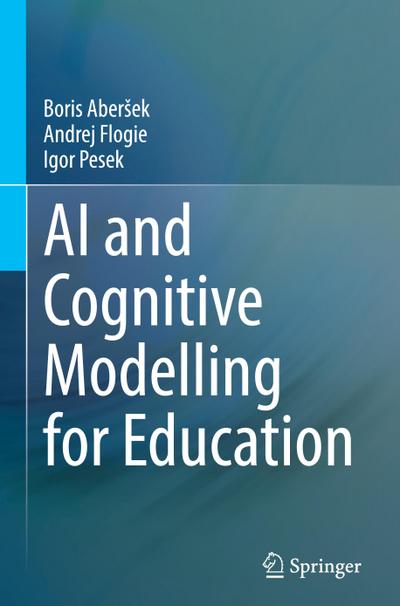
AI and Cognitive Modelling for Education
Boris Aber¿ek
Venduto da AHA-BUCH GmbH, Einbeck, Germania
Venditore AbeBooks dal 14 agosto 2006
Nuovi - Rilegato
Condizione: Nuovo
Spedito da Germania a U.S.A.
Quantità: 1 disponibili
Aggiungere al carrelloVenduto da AHA-BUCH GmbH, Einbeck, Germania
Venditore AbeBooks dal 14 agosto 2006
Condizione: Nuovo
Quantità: 1 disponibili
Aggiungere al carrelloDruck auf Anfrage Neuware - Printed after ordering - This book offers a groundbreaking approach to bridging the gap between various disciplines involved in cognitive modeling in education. By drawing on the fields of learning, neuro science, cognitive science, neurobiology, and computer science, it provides a new perspective on how we can integrate these disciplines with education to create more effective learning environments. The main objective of this book is to delve into the ethical, sociological, and technological questions surrounding the introduction of intelligent and smart learning environments in education. By analyzing these issues, this book aims to bridge the gap between the various disciplines involved in cognitive modeling and education, while highlighting the benefits and risks associated with these advancements. With the emergence of AI-based tutors, coaches, and learning environments, students now have access to a new type of self-learning and self-training that was previously unavailable. Distance learning has become increasingly popular in recent years, and the use of computer-assisted learning tools has revolutionized the way we think about education.The goal of education must be to instill in students a desire to learn for themselves, and this can only be achieved through active, self-directed, and reflective learning. With intelligent tutoring systems, students are empowered to take an active role in their own education, rather than simply being passive recipients of information. This book offers practical strategies for teachers to facilitate this transition, enabling them to act as facilitators and guides rather than one-way communicators. By embracing this new approach to education, we can help students become lifelong learners who are equipped with the skills they need to succeed in the 21st century.As we cannot predict the future with certainty, the true effects of education may only be revealed in the long run, making it critical to understand the potential consequencesof introducing these new learning tools. By exploring these complex topics, this book offers valuable insights for educators, policymakers, and anyone interested in the future of education.
Codice articolo 9783031353307
This book offers a groundbreaking approach to bridging the gap between various disciplines involved in cognitive modeling in education. By drawing on the fields of learning, neuro science, cognitive science, neurobiology, and computer science, it provides a new perspective on how we can integrate these disciplines with education to create more effective learning environments. The main objective of this book is to delve into the ethical, sociological, and technological questions surrounding the introduction of intelligent and smart learning environments in education. By analyzing these issues, this book aims to bridge the gap between the various disciplines involved in cognitive modeling and education, while highlighting the benefits and risks associated with these advancements. With the emergence of AI-based tutors, coaches, and learning environments, students now have access to a new type of self-learning and self-training that was previously unavailable. Distance learning has become increasingly popular in recent years, and the use of computer-assisted learning tools has revolutionized the way we think about education.
The goal of education must be to instill in students a desire to learn for themselves, and this can only be achieved through active, self-directed, and reflective learning. With intelligent tutoring systems, students are empowered to take an active role in their own education, rather than simply being passive recipients of information. This book offers practical strategies for teachers to facilitate this transition, enabling them to act as facilitators and guides rather than one-way communicators. By embracing this new approach to education, we can help students become lifelong learners who are equipped with the skills they need to succeed in the 21st century.
As we cannot predict the future with certainty, the true effects of education may only be revealed in the long run, making it critical to understand the potential consequences of introducing these new learning tools. By exploring these complex topics, this book offers valuable insights for educators, policymakers, and anyone interested in the future of education.Boris Aberšek graduated from the Faculty of Technical Sciences of the University of Maribor. He completed his M.Sc., and Ph.D., at the same faculty. He furthered his studies with a second Ph.D.: A Philosophical Analysis of the Mechanisms of Natural Thinking and Artificial Intelligence, which he obtained from the Faculty of Arts, University of Maribor.
In terms of research, he constantly oscillated between three fields, technology, humanities, and social sciences. He tried to establish an equal relationship between them because we can achieve new qualities only by starting from breadth. In recent years, his research interest has been focused primarily on the field of education and the study of the possibilities and limitations of learning and teaching, especially with the use of intelligent learning environments, the use of cognitive and neuroscience, and modern cognitive models with the use of artificial intelligence in the learning process. His work consistently highlights the need for cooperation, communication, and argumentation based on logical interpretation. A significant performance indicator of the success of scientific research work in both basic research and applied research is reflected in the numerous projects he has led or in which he has participated. This adds up to more than 90 projects, elaborations, and outputs. Over the years, he has developed many skills related to project management, large-scale project management, team management, crisis management, and communication. In terms of his work as an educator (pedagogue), he has developed a range of skills for encouraging critical thinking, promoting different approaches to research work, and motivating and guiding young people in the field of scientific research work. He is the author of numerous publications in various fields.Andrej Flogie holds a Ph.D. in Educational Science. He is an Associate Professor at the Faculty of Natural Sciences and Mathematics of the University of Maribor, Slovenia, and Director of Anton Martin Slomšek Institute, Slovenia. He is an expert in the digitalization of education, ICT application in business and educational processes, project management the introduction of innovative teaching skills, development of e-services, and e-content.
He gained his experience by participating in the role of a key expert in a large number of national and European projects, many years of work in educational institutions (teaching, teacher training, e-learning, and use of ICT in education…), design and development of complex IT solutions, the development of Slovenian and EU information society policy in the role of director for the information society in the Ministry of Higher Education, Science, and Technology, as minister adviser for the digitalization and EU funds and as a member of numerous professional institutions and working groups that promote innovative learning approaches.
He is the author of numerous publications in various fields, with most of his research in recent years focused on teaching and learning processes, cognitive science, and creating and developing intelligent learning environments.Igor Pesek holds a PhD in computer science and information technology. He is the Head of the Digitisation of Education Service at the Ministry of Education and an Assistant Professor of Digital Education at the Faculty of Natural Sciences and Mathematics, University of Maribor. His research interests include computer science pedagogy, digital education and artificial intelligence in education.
He has led major national projects in the field of E-textbooks for science subjects and pedagogical ICT at universities. He is actively involved in many other projects in Slovenia and Europe and is active in various international working groups in the area of digital education.He is the author of numerous papers in scientific journals and conferences. He has also co-authored chapters in scientific monographs in the field of digital education.

Le informazioni nella sezione "Su questo libro" possono far riferimento a edizioni diverse di questo titolo.
Visita la pagina della libreria
Termini e condizioni generali e informazioni sul cliente / Informativa sulla privacy
I. Condizioni generali di contratto
§ 1 Disposizioni di base
(1) I seguenti termini e condizioni si applicano a tutti i contratti che l'utente conclude con noi in qualità di fornitore (AHA-BUCH GmbH) tramite le piattaforme Internet AbeBooks e/o ZVAB. Se non diversamente concordato, l'inclusione di uno qualsiasi dei tuoi termini e condizioni da te utilizzati sarà contestata.
(2) Un consumatore ai sensi delle segu...
Se sei un consumatore puoi recedere dal contratto in conformità con quanto segue. Per Consumatore si intende qualsiasi persona fisica che agisce per scopi estranei alla propria attività commerciale, imprenditoriale, artigianale o professionale.
Informazioni sul diritto di recesso
Diritto legale di recesso
Hai il diritto di recedere dal presente contratto entro 14 giorni senza fornire alcuna motivazione.
Il periodo di recesso scade dopo 14 giorni dal giorno in cui tu o una terza parte, diversa dal vettore e da te indicata, acquisisce il possesso fisico dell'ultimo bene o dell'ultimo lotto o pezzo.
Per esercitare il diritto di recesso, compila e invia elettronicamente una dichiarazione esplicita sul nostro sito Web, alla voce “I miei acquisti” nella sezione “Mio account”. Ti comunicheremo senza indugio una conferma di ricezione di tale recesso su un supporto durevole (ad es. via e-mail).
Per rispettare il termine di recesso, è sufficiente inviare la comunicazione relativa all'esercizio del diritto di recesso prima della scadenza del periodo di recesso stesso.
Effetti del recesso
In caso di recesso dal presente contratto, ti rimborseremo tutti i pagamenti ricevuti, compresi i costi di spedizione (ad eccezione dei costi supplementari derivanti dalla tua eventuale scelta di un tipo di spedizione diverso dal tipo meno costoso di consegna standard da noi offerto).
Potremo effettuare una detrazione dal rimborso per la perdita di valore dei beni forniti, qualora tale perdita sia il risultato di una manipolazione non necessaria da parte tua.
Eseguiremo il rimborso senza indebito ritardo e non oltre 14 giorni dal giorno in cui saremo informati della tua decisione di recedere dal presente contratto.
Il rimborso sarà effettuato utilizzando lo stesso mezzo di pagamento da te usato per la transazione iniziale, salvo che tu non abbia espressamente concordato altrimenti; in ogni caso, non dovrai sostenere alcun costo quale conseguenza di tale rimborso.
Possiamo trattenere il rimborso finché non avremo ricevuto i beni oppure finché non avrai fornito la prova di averli rispediti, a seconda di quale condizione si verifichi per prima.
Dovrai rispedire i beni o consegnarli a AHA-BUCH GmbH, Einbeck, Germany, senza indebito ritardo e, in ogni caso, entro 14 giorni dal giorno in cui ci hai comunicato la tua volontà di recedere dal presente contratto. Il termine è rispettato se rispedisci i beni prima della scadenza del periodo di 14 giorni. I costi diretti della restituzione dei beni saranno a tuo carico. Sei responsabile solo della diminuzione del valore dei beni risultante da una manipolazione diversa da quella necessaria per stabilire la natura, le caratteristiche e il funzionamento dei beni stessi.
Eccezioni al diritto di recesso
Il diritto di recesso non si applica a:
Spediamo il tuo ordine dopo averlo ricevuto
per articoli a portata di mano entro 24 ore,
per articoli con fornitura notturna entro 48 ore.
Nel caso in cui abbiamo bisogno di ordinare un articolo dal nostro fornitore, il nostro tempo di spedizione dipende dalla data di ricezione degli articoli, ma gli articoli verranno spediti lo stesso giorno.
Il nostro obiettivo è quello di inviare gli articoli ordinati nel modo più veloce, ma anche più efficiente e sicuro ai nostri clienti.
| Quantità dell'ordine | Da 30 a 40 giorni lavorativi | Da 7 a 14 giorni lavorativi |
|---|---|---|
| Primo articolo | EUR 62.68 | EUR 72.68 |
I tempi di consegna sono stabiliti dai venditori e variano in base al corriere e al paese. Gli ordini che devono attraversare una dogana possono subire ritardi e spetta agli acquirenti pagare eventuali tariffe o dazi associati. I venditori possono contattarti in merito ad addebiti aggiuntivi dovuti a eventuali maggiorazioni dei costi di spedizione dei tuoi articoli.