
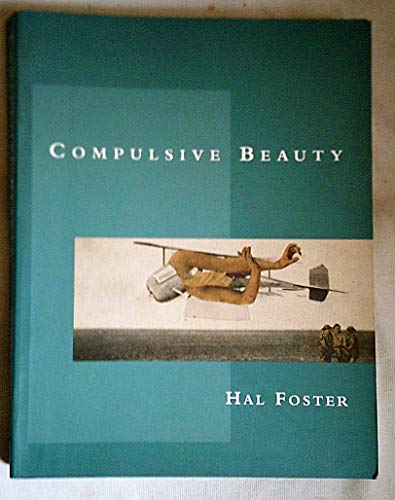
Compulsive Beauty
Foster, Hal
ISBN 10: 026256081X ISBN 13: 9780262560818
Editore: The MIT Press, 1995
Usato
Brossura
Da
Anybook.com, Lincoln, Regno Unito
Valutazione del venditore 5 su 5 stelle

Heritage Bookseller
Membro AbeBooks dal 1996
Questo articolo specifico non è più disponibile.
Riguardo questo articolo
Descrizione:
This is an ex-library book and may have the usual library/used-book markings inside.This book has soft covers. In good all round condition. Please note the Image in this listing is a stock photo and may not match the covers of the actual item,850grams, ISBN:9780262560818. Codice articolo 3987955
Riassunto:
In Compulsive Beauty, Foster reads surrealism from its other, darker side: as an art given over to the uncanny, to the compulsion to repeat and the drive toward death.
Surrealism has long been seen as its founder, André Breton, wanted it to be seen: as a movement of love and liberation. In Compulsive Beauty, Foster reads surrealism from its other, darker side: as an art given over to the uncanny, to the compulsion to repeat and the drive toward death. To this end Foster first restages the difficult encounter of surrealism with Freudian psychoanalysis, then redefines the crucial categories of surrealism—the marvelous, convulsive beauty, objective chance—in terms of the Freudian uncanny, or the return of familar things made strange by repression. Next, with the art of Giorgio de Chirico, Max Ernst, and Alberto Giacometti in mind, Foster develops a theory of the surrealist image as a working over of a primal fantasy. This leads him finally to propose as a summa of surrealism a body of work often shunted to its margins: the dolls of Hans Bellmer, so many traumatic tableaux that point to difficult connections not only between sadism and masochism butal so between surrealism and fascism. At this point Compulsive Beauty turns to the social dimension of the surrealist uncanny. First Foster reads the surrealist repertoire of automatons and mannequins as a reflection on the uncanny processes of mechanization and commodification. Then he considers the surrealist use of outmoded images as an attempt to work through the historical repression effected by these same processes. In a brief conclusion he discusses the fate of surrealism today in a world become surrealistic. Compulsive Beauty not only offers a deconstructive reading of surrealism, long neglected by Anglo-American art history, but also participates in a postmodern reconsideration of modernism, the dominant accounts of which have obscured its involvements in desire and trauma, capitalist shock and technological development.
Informazioni sull'autore:
Hal Foster is Associate Professor of Art History and Comparative Literature at Cornell University. He is an editor of the journal OCTOBER.
Le informazioni nella sezione "Su questo libro" possono far riferimento a edizioni diverse di questo titolo.
Dati bibliografici
Titolo: Compulsive Beauty
Casa editrice: The MIT Press
Data di pubblicazione: 1995
Legatura: Brossura
Condizione: Good