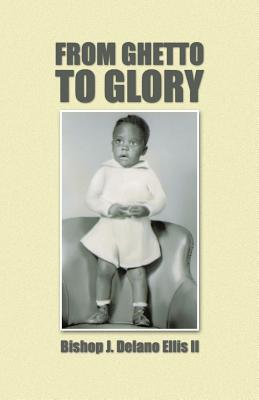
CHAPTER 1
Hear Voices in Water
This story begins on a cold winter night in 1943 in South Philadelphia, Pennsylvania, at 2204 Kimball Street. It was an address that will forever be stamped on the retina of my mind because ...
* * *
The snow was falling, and a fourteen-year-old girl staggered across the street from our house to the home of two sisters, at 2205, looking for help because of the pain that I was beginning to cause her. I heard her scream and beg for God's pardon as she entered the home of the two sisters. She fell on the floor, and the jolt seemed violent as the water sloshed across my little body.
I must have been struggling to get out of that dark, wet, rubberlike balloon, and the more I stretched, the more the girl screamed. There was so much movement and rolling about in the balloon. I couldn't see, but I could feel and I could hear. I don't remember most of her words, but I remember the excitement my little body felt when she kept calling one name. That name would follow me throughout my entire life. The young girl continued to call that name, intermingled with an uninterpreted language and a sudden jolt. Suddenly, I heard sounds, clearly, crisply, and with such clang. I saw flickers of light, and I cried as I faded away from the voice of the girl who had been screaming a name I had become accustomed to hearing.
* * *
As unbelievable as the foregoing may seem, there is biblical evidence of another little boy who overheard a conversation between his mother, Elizabeth, and her cousin, Mary. This conversation was about the baby that Mary was also going to deliver. The little boy, later to be named John, was also in an enclosed water chamber, and his mother was six months in expectancy with him. John, the record tells us, was in Elizabeth's womb and heard that the Messiah was coming through this family member, and the Scriptures say, "The baby (John) was filled with the Holy Spirit in his mother's womb." If Mary was like any other girl that had just been visited with the news of a pregnancy and impending delivery and if Mary just happened to tell her cousin what the name of the baby was going to be, I can only imagine that the little boy in Elizabeth's womb acted as I did when I heard that same name, two thousand years later, from within my teenage mother's womb. The name that John and I heard was Jesus.
I can't scientifically argue for this next series of conclusions, but my faith tells me that my exposure to Mama's experience on that cold winter night must have predisposed me to her faith. Years later, I would be introduced to the teachings of Elijah Muhammad, through the Nation of Islam, and although I will delve further into that part of my testimony in a subsequent chapter, I've concluded that fourteen years of Islamic teachings never took a hold of me because of that "Mighty Overshadowing of the Holy Ghost" on Mama on that cold night in December, at Philadelphia.
I learned later that the date was the 11th of December at one forty-five in the morning that I was born to a girl named Lucy Lottie-Mae (Harris) Ellis and a twenty-four-year-old man named Jesse Ellis. The place was known as Philadelphia General Hospital. The records of my birth were lost in a major fire some years later, so there was confusion about whether I was born in 1943 or 1944.
Let me explain the confusion. Lucy was a young genius, but she was also an epileptic who suffered, over the years, from her many falls and grand mal seizures that took their toll on her brain. One might say that a mother should know when she gave birth to her child, but Lucy's mental condition, medicines, electric shocks, and stints at the Philadelphia Mental Hospital (Byberry) could have scrambled some of her facts. I do know that the "lady across the street" and her sister repeatedly said that I was born in 1943. Mama always said I was born in 1944, so I had to adopt her date for military service records, but the Philadelphia public school system has me recorded as born in 1943. As a matter of fact, when I did go to school, I was moved from the first grade (1-A) to the latter half of the second grade (2-B) in 1948. Talk about confusion. You figure it out.
After I was born, I can't remember my father being in my very young life. There is some information that says that he was away in the United States Army for a stint. But in those baby years, I don't recall his presence. I do remember those ladies across the street, one of which was my father's mother and the other was his mother's sister. Both sisters were in their early forties and were preachers. Martha Ann Parker Ellis was a Disciples of Christ pastor. She was a minister at a little storefront church on the northeast corner of Nineteenth and Latona Street in South Philly, and Mama had been the young pianist for that church, known as Saint Paul Church of Christ. That's how she met Daddy, and that's how I got here. The other lady preacher was Lucy Parker Lucas. Aunt Lucy was a preacher and missionary in the United Holy Church of America. I saw Aunt Lucy in my formative years, but I was told that she travelled to the nation of Brazil to establish a mission and a school for a time. Recently I came across some old newspaper articles and pictures of the old United Holy Mission in a village of the nation of Brazil. Both women were pioneers in ministry for women who had a call of Christ to preach.
Something must be said about my mother's stepmother, back across the street, at 2204 Kimball Street. Her name was Geneva Harris. Grandma Geneva was a very scary lady. She was unkind to me and mean to Mama. The family stories say that she had been married to Mama's father, Professor James Benjamin Beverly Cary Harris. Grandpa was a professor of music who had been born in Richmond, Virginia. He taught music and piano in Richmond and became romantically involved with one of his young Caucasian students named Lottie. Lottie was Irish, and because of the race prohibitions in the nation, especially in the South, Grandpa's life was threatened when it was discovered that Lottie was on the family way. He was briskly encouraged to leave Richmond under one condition: that he take the little girl Lucy and leave the little Irish girl, Lottie, alone and never communicate with her again. So when Grandpa came to Philadelphia he met Miss Geneva and married her with the understanding that she would help him raise the little fair-skinned girl. Lottie returned to Richmond, never to be seen by little Lucy "Lottie" Mae Harris again. Grandma Geneva never bore children, and it is rumored that Grandpa never really loved Geneva, but he made a contract to stay with her if she would raise his little Lucy.
Mama said that Grandpa adored her and taught her everything he could about music. From a small child until she was ten years old, Grandpa taught Lucy to read music and play the piano. Epilepsy was not as understood in those days as it is now; and Lucy was always falling out in school, at church, or on the streets, and my grandfather would do everything possible to protect his baby girl. But suddenly, Grandpa died in his sleep, and little Lucy, age ten, was left alone with the unkind stepmother, Geneva. After the funeral, Lucy gravitated to the two sisters across the street, and it was during some of those times of absence from the house that Lucy would make herself available to Rev. Mrs. Martha Ellis's son, Jesse.
Mama said that Jesse was a real snazzy fellow in those days. He dressed well and was the desire of every girl in the neighborhood. He was a polite Southern gentleman, and his smile would make every girl melt, including her. By age twelve, little Lucy started pursuing Jesse. Since there were no statutory rape laws in Pennsylvania (especially for Black folk), Jesse became sexual with Lucy, and they played around in Reverend Martha's house until Lucy and Jesse conceived me. Here you have another case of a pastor's son appearing to be the eligible bachelor and little Lucy conducting herself as the fast little girl trying to play grown-up. The family story is that Grandma Martha silenced Lucy and Jesse in the little church choir and demanded that Jesse marry his responsibility. They were married on January 1, 1944.
Jesse disappeared after I arrived. I don't know where he went, but I do know that our family history shows that he went as far away from his mother's faith as he could get. He aligned himself with the Moorish Science faith. Jesse thought that he had to live out a new discovery of his Black Hebrew descendancy. Then he met some disciples of Elijah Muhammad, and soon he changed his conversation and traded his ephods and togas for dark suits and white bow ties. We'll explore that region later in this story.
* * *
Lucy was left to live with her new mother-in-law, Grandma Martha, who was caring and tender toward the teenaged mother. Lucy had given birth to Martha's first grandson, and Geneva had put Lucy out of the house that Grandpa Benjamin had purchased for them. Lucy was faithful to the church, and now that she had repented of her sins Grandma Martha allowed her to exercise her ministry as pianist for Saint Paul Church again. But amid the joy of playing and singing, she lived the plagued life of a chronic epileptic. Lucy was always sick, and Grandma Martha was always babysitting me. I remember going with Grandma to visit Mama in the hospital. The room was large, and there were so many beds in that one room. The nurses were starched (or maybe their dresses were starched), and their aprons were just as stiff. Their stockings and shoes were snow white. Their little caps covered nothing but probably served as an identifier. I remember the crisp sound of swish as they walked with such speed through the hospital corridors while they attended my little mother who was lying there, sleeping peacefully. Grandma Martha assured me that Mama would be back home soon, but I had to learn to get familiar with hospitals, needles, pills, the sterile orders, and a sick mother. Mama was discharged, and one day, while walking down the street, holding her hand, Mama suddenly fell (face-first) to the concrete. She began to tremble violently and make a horrible sound. Some few people began to gather around, but I remember sitting on my mother's stomach and shouting no. I didn't want those strange people touching my mother because, at the age of five, I took ownership of her and became her protection. When she calmed down, the police picked her up, and the ambulance attendants took her to Mount Sinai Hospital at Fifth and Reed Street.
I remember the lady in the white dress asking me my address, but all I could remember was my phone number, HOward 4-2030. The lady kept Mama and me there and called that number until Grandma answered. A little later, Grandma showed up at the hospital and took us home in a Yellow Cab. When we arrived back at Mercy Street, all the neighborhood kids were looking and pointing. I later learned that we were poor in a poor community and amid poor people. Nobody in that neighborhood rode in cabs; we caught the trolley car for a nickel. For me to come home in a cab, that made me a big deal to all my fellows.
The next years were pure hell. There were times of fun and times of extreme pain. Mama was my buddy. She even had another little brother for me to look after. She named him James Benjamin, after our Grandpa Harris. From nowhere, Daddy had come back home to live with us. Mama was so beautiful and Daddy was so handsome, but what confused me was Daddy's constant slapping Mama around. There were times when I could hear Mama screaming upstairs from their bedroom. She would scream "Murder, murder! God help me, he's going to kill me." All I could do was cry and hold my little brother James and cover his ears so that he wouldn't hear Mama's cries.
Something else happened to me. There brewed within me a hatred that could not be satisfied. I would grow up and go to school and excel in my work, but I hated the presence and smell of my father. This man that had been a gentleman was now a brute beast with crazy ideas about life and love. The next years were wild and confusing for any child, and I certainly was one of the most confused children in South Philadelphia. Life was unbearably strange on Mercy Street.
CHAPTER 2
It Happened on Mercy street
I went back to the old neighborhood in 2006, and one of my daughters was with me. I drove to Philadelphia for a preaching engagement, but having the car with me gave me opportunity to go wherever I wanted to while in the northeast. Jessica was so excited about seeing where her daddy grew up. As I turned the corners in the South Philly neighborhood, a sense of awe came over me like a thick blanket because I began to remember houses, addresses, names, and landmarks that had so impacted my young development.
* * *
I don't remember exactly when we moved from 2204 Kimball Street to 616 Mercy Street, but living on Mercy Street seemed like a lifetime. I didn't know that I was poor. I thought everybody lived like I did, except for the few neighbors who had televisions or a car or solid food every day. Eating bologna for supper off a tin plate was normal for me. As a matter of fact, I had never tasted pizza until I was grown, married, and had two children. The nearest I'd ever gotten to pizza was cheese toast. Recipe? "You take plain bread and slice a piece of—government-issued—cheese to put on it, lay it on a flat pan and put it in the bottom of the old stove—where the live flame burned. You'd better check on it in three or four minutes or you'd have a smoke-filled house that would require 'heisting' the windows of the old frame residence." That was my pizza.
You see, smoke was dangerous on its face, but a house filled with it might have caused my little brother James' death. James Benjamin had a lung disorder that we didn't understand and couldn't afford to get fixed. Everybody had to be careful. But the old house had a coal stove in the cellar that heated the entire house through one grate (radiator) in the center of the house. It's a wonder that the whole house didn't catch fire and burn to the ground, as hot as that grate would get, wrapped about by that old wooden floor. But every two weeks or so, the deliveryman would show up at the cellar window to drop a ton of coal through that window for five dollars. We would scramble to gather that five dollars because if he knocked and we didn't have his money, he'd drive off and not come back until his next delivery date on Mercy Street. That meant a cold house for two weeks, unless we hustled some money to go to a neighborhood hardware store to buy a bag of coal for twenty-five cents.
That coal was dirty, and it had the worse smell. It was a smell that lasted most of the day. We had to build the fire in the morning, before going to school, so that the house would be warm when we returned home for lunch. Sometimes, my hands would be so dirty from handling the coal, I'd have to get to school to wash with Colegate's Octagon soap that the janitor had in his broom closet. He didn't mind because I had made friends with him by helping him sweep the halls after school.
But there was another reason for joining his "broom brigade." It kept me from having to fight the boys after school. You see I was real apt in school. I always completed my homework and always knew the answers to quizzes and tests. My academic grades were always "Exceptional" while my behavioral grades were always "Unsatisfactory." I was always in trouble because I always said whatever came to mind. I would answer the teachers (back talk), and if the other children made fun of me, I would unleash a tirade of vocabulary that would make a sailor blush. Because I was so poor, I wore the same clothes to school all the time. I'd wash them, iron them, and put them back on, and the other students soon noticed that I never changed clothes. They assumed that I was nasty because they only saw one change in my haberdashery per week. The change was a necktie. On Monday, I wore a tie with my long-sleeve plaid shirt, dungarees, thick wool socks, and brogans (woodsmen's boots with metal taps on the toe and heel). It's all I had, but they thought I was the "funky one." But when they had something to say, I could unleash a tsunami of insults on their mamas and their whole family.