
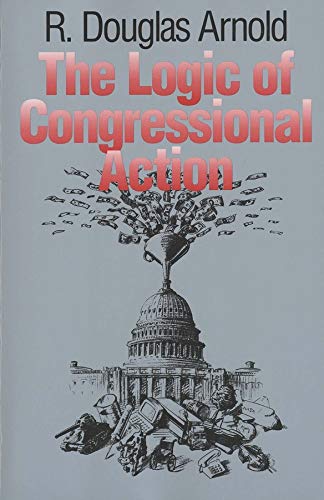
The Logic of Congressional Action
R. Douglas Arnold
ISBN 10: 0300056591 ISBN 13: 9780300056594
Editore: Yale University Press, 1992
Usato
paperback
Da
Gulf Coast Books, Cypress, TX, U.S.A.
Valutazione del venditore 5 su 5 stelle

Venditore AbeBooks dal 27 giugno 2017
Questo articolo specifico non è più disponibile.
Riguardo questo articolo
Descrizione:
Codice articolo 0300056591-4-29637124
Riassunto:
Congress regularly enacts laws that benefit particular groups or localities while imposing costs on everyone else. Sometimes, however, Congress breaks free of such parochial concerns and enacts bills that serve the general public, not just special interest groups. In this important and original book, R. Douglas Arnold offers a theory that explains not only why special interests frequently triumph but also why the general public sometimes wins. By showing how legislative leaders build coalitions for both types of programs, he illuminates recent legislative decisions in such areas as economic, tax, and energy policy.
Arnold's theory of policy making rests on a reinterpretation of the relationship between legislators' actions and their constituents' policy preferences. Most scholars explore the impact that citizens' existing policy preferences have on legislators' decisions. They ignore citizens who have no opinions because they assume that uninformed citizens cannot possibly affect legislators' choices. Arnold examines the influence of citizens' potential preferences, however, and argues that legislators also respond to these preferences in order to avoid future electoral problems. He shows how legislators estimate the political consequences of their voting decisions, taking into account both the existing preferences of attentive citizens and the potential preferences of inattentive citizens. He then analyzes how coalition leaders manipulate the legislative situation in order to make it attractive for legislators to support a general interest bill.
Product Description: Congress regularly enacts laws that benefit particular groups or localities while imposing costs on everyone else. Sometimes, however, Congress breaks free of such parochial concerns and enacts bills that serve the general public, not just special interest groups. In this book, the author offers a theory that explains not only why special interest frequently triumph but also why the general public sometimes wins. By showing how legislative leaders build coalitions for both types of programs, he illuminates recent legislative decisions in such areas as economic, tax, and energy policy. The author's theory of policy making rests on a reinterpretation of the relationship between legislators' actions and their constituents' policy preferences. Most scholars explore the impact that citizens' existing policy preferences have on legislators' decisions. They ignore citizens who have no opinions because they assume that uninformed citizens cannot possibly affect legislators' choices. Arnold examines the influence of citizens' potential preferences, however, and argues that legislators also respond to these preferences in order to avoid future electoral problems. He shows how legislators estimate the political consequences of their voting decisions, taking into account both the existing preferences of attentive citizens and the potential preferences of inattentive citizens. He then analyzes how coalition leaders manipulate the legislative situation in order to make it attractive for legislators to support a general interest bill
Le informazioni nella sezione "Su questo libro" possono far riferimento a edizioni diverse di questo titolo.
Dati bibliografici
Titolo: The Logic of Congressional Action
Casa editrice: Yale University Press
Data di pubblicazione: 1992
Legatura: paperback
Condizione: Fair