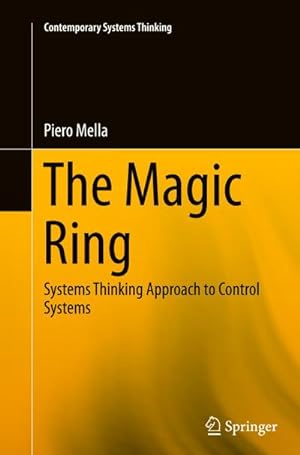
The Magic Ring
Piero Mella
Venduto da BuchWeltWeit Ludwig Meier e.K., Bergisch Gladbach, Germania
Venditore AbeBooks dal 11 gennaio 2012
Nuovi - Brossura
Condizione: Nuovo
Spedito da Germania a U.S.A.
Quantità: 2 disponibili
Aggiungere al carrelloVenduto da BuchWeltWeit Ludwig Meier e.K., Bergisch Gladbach, Germania
Venditore AbeBooks dal 11 gennaio 2012
Condizione: Nuovo
Quantità: 2 disponibili
Aggiungere al carrelloThis item is printed on demand - it takes 3-4 days longer - Neuware -This book presents a gradual path toward 'educating' readers in understanding how Control Systems truly operate and in recognizing, simulating and improving them in all fields of activity. Starting from the hypothesis that knowledge of Control Systems is not only a technical fact but also represents a discipline - that is, 'A discipline is a developmental path for acquiring certain skills or competencies. (.) To practice a discipline is to be a lifelong learner. You 'never arrive'; you spend your life mastering disciplines.' (Senge, 2006, p. 10) - Piero Mella has set the objective of making Control Systems a topic that is, in a certain sense, simple and attractive by turning to the effective symbolism typical of Systems Thinking models and avoiding too technical and formal a treatment of the subject. Thus readers should know that this is not an engineering, physics, biology or economics text, nor a mathematics one either. Technical or mathematical tools are not necessary to construct Control Systems; instead the book adopts a highly simple and universal logic behind the notion itself of control process and the simple and universal action of the Control Systems that produce this process.The Magic Ring: Systems Thinking Approach to Control Systems is divided into 10 chapters. Chapter 1 seeks to review the basic language of Systems Thinking and the models it allows us to create, while Chapter 2 introduces the control process, presenting the theoretical structure of four simple Control Systems we all can observe and manage. In Chapter 3 a general typology of Control Systems is proposed with examples taken from observations of reality. The view of Control Systems is broadened in Chapter 4 by introducing two important generalizations: 1. multi lever Control Systems, with levers that are independent or dependent of each other; 2. multi-objective systems, with independent or interdependent objectives. Chapter 5 outlines the guidelines for recognizing, observing or designing Control Systems and presents the problems that arise regarding their logical realization, introducing the fundamental distinction between symptomatic and structural control. Chapters 6-9 undertake a 'mental journey' through various 'environments', increasingly broader in scope, suggesting to the reader how to recognize therein Control Systems that, by their ubiquitous presence, make the world possible in all its manifestations. Finally Chapter 10 covers ideas about a Discipline of Control Systems and the human aspects of control. 628 pp. Englisch.
Codice articolo 9783319343266
This book presents a gradual path toward “educating” readers in understanding how Control Systems truly operate and in recognizing, simulating and improving them in all fields of activity. Starting from the hypothesis that knowledge of Control Systems is not only a technical fact but also represents a discipline – that is, “A discipline is a developmental path for acquiring certain skills or competencies. (…) To practice a discipline is to be a lifelong learner. You “never arrive”; you spend your life mastering disciplines.” (Senge, 2006, p. 10) – Piero Mella has set the objective of making Control Systems a topic that is, in a certain sense, simple and attractive by turning to the effective symbolism typical of Systems Thinking models and avoiding too technical and formal a treatment of the subject. Thus readers should know that this is not an engineering, physics, biology or economics text, nor a mathematics one either. Technical or mathematical tools are not necessary to construct Control Systems; instead the book adopts a highly simple and universal logic behind the notion itself of control process and the simple and universal action of the Control Systems that produce this process.
The Magic Ring: Systems Thinking Approach to Control Systems is divided into 10 chapters. Chapter 1 seeks to review the basic language of Systems Thinking and the models it allows us to create, while Chapter 2 introduces the control process, presenting the theoretical structure of four simple Control Systems we all can observe and manage. In Chapter 3 a general typology of Control Systems is proposed with examples taken from observations of reality. The view of Control Systems is broadened in Chapter 4 by introducing two important generalizations: 1. multi lever Control Systems, with levers that are independent or dependent of each other; 2. multi-objective systems, with independent or interdependent objectives. Chapter 5 outlines the guidelines for recognizing, observing or designing Control Systems and presents the problems that arise regarding their logical realization, introducing the fundamental distinction between symptomatic and structural control. Chapters 6-9 undertake a “mental journey” through various “environments”, increasingly broader in scope, suggesting to the reader how to recognize therein Control Systems that, by their ubiquitous presence, make the world possible in all its manifestations. Finally Chapter 10 covers ideas about a Discipline of Control Systems and the human aspects of control.
This book presents a gradual path toward educating readers in understanding how Control Systems truly operate and in recognizing, simulating and improving them in all fields of activity. Starting from the hypothesis that knowledge of Control Systems is not only a technical fact but also represents a discipline that is, A discipline is a developmental path for acquiring certain skills or competencies. ( ) To practice a discipline is to be a lifelong learner. You never arrive ; you spend your life mastering disciplines. (Senge, 2006, p. 10) Piero Mella has set the objective of making Control Systems a topic that is, in a certain sense, simple and attractive by turning to the effective symbolism typical of Systems Thinking models and avoiding too technical and formal a treatment of the subject. Thus readers should know that this is not an engineering, physics, biology or economics text, nor a mathematics one either. Technical or mathematical tools are not necessary to construct Control Systems; instead the book adopts a highly simple and universal logic behind the notion itself of control process and the simple and universal action of the Control Systems that produce this process.
The Magic Ring: Systems Thinking Approach to Control Systems is divided into 10 chapters. Chapter 1 seeks to review the basic language of Systems Thinking and the models it allows us to create, while Chapter 2 introduces the control process, presenting the theoretical structure of four simple Control Systems we all can observe and manage. In Chapter 3 a general typology of Control Systems is proposed with examples taken from observations of reality. The view of Control Systems is broadened in Chapter 4 by introducing two important generalizations: 1. multilever Control Systems, with levers that are independent or dependent of each other; 2. multi-objective systems, with independent or interdependent objectives. Chapter 5 outlines the guidelines for recognizing, observing or designing Control Systems and presents the problems that arise regarding their logical realization, introducing the fundamental distinction between symptomatic and structural control. Chapters 6-9 undertake a mental journey through various environments , increasingly broader in scope, suggesting to the reader how to recognize therein Control Systems that, by their ubiquitous presence, make the world possible in all its manifestations. Finally Chapter 10 covers ideas about a Discipline of Control Systems and the human aspects of control.
Le informazioni nella sezione "Su questo libro" possono far riferimento a edizioni diverse di questo titolo.
Visita la pagina della libreria
Allgemeine Geschäftsbedingungen mit Kundeninformationen
Inhaltsverzeichnis
Geltungsbereich
Vertragsschluss
Widerrufsrecht
Preise und Zahlungsbedingungen
Liefer- und Versandbedingungen
Eigentumsvorbehalt
Mängelhaftung
Anwendbares Recht
Gerichtsstand
Alternative Streitbeilegung
Se sei un consumatore puoi recedere dal contratto in conformità con quanto segue. Per Consumatore si intende qualsiasi persona fisica che agisce per scopi estranei alla propria attività commerciale, imprenditoriale, artigianale o professionale.
Informazioni sul diritto di recesso
Diritto legale di recesso
Hai il diritto di recedere dal presente contratto entro 14 giorni senza fornire alcuna motivazione.
Il periodo di recesso scade dopo 14 giorni dal giorno in cui tu o una terza parte, diversa dal vettore e da te indicata, acquisisce il possesso fisico dell'ultimo bene o dell'ultimo lotto o pezzo.
Per esercitare il diritto di recesso, compila e invia elettronicamente una dichiarazione esplicita sul nostro sito Web, alla voce “I miei acquisti” nella sezione “Mio account”. Ti comunicheremo senza indugio una conferma di ricezione di tale recesso su un supporto durevole (ad es. via e-mail).
Per rispettare il termine di recesso, è sufficiente inviare la comunicazione relativa all'esercizio del diritto di recesso prima della scadenza del periodo di recesso stesso.
Effetti del recesso
In caso di recesso dal presente contratto, ti rimborseremo tutti i pagamenti ricevuti, compresi i costi di spedizione (ad eccezione dei costi supplementari derivanti dalla tua eventuale scelta di un tipo di spedizione diverso dal tipo meno costoso di consegna standard da noi offerto).
Potremo effettuare una detrazione dal rimborso per la perdita di valore dei beni forniti, qualora tale perdita sia il risultato di una manipolazione non necessaria da parte tua.
Eseguiremo il rimborso senza indebito ritardo e non oltre 14 giorni dal giorno in cui saremo informati della tua decisione di recedere dal presente contratto.
Il rimborso sarà effettuato utilizzando lo stesso mezzo di pagamento da te usato per la transazione iniziale, salvo che tu non abbia espressamente concordato altrimenti; in ogni caso, non dovrai sostenere alcun costo quale conseguenza di tale rimborso.
Possiamo trattenere il rimborso finché non avremo ricevuto i beni oppure finché non avrai fornito la prova di averli rispediti, a seconda di quale condizione si verifichi per prima.
Dovrai rispedire i beni o consegnarli a BuchWeltWeit Ludwig Meier e.K., Bergisch Gladbach, Germany, senza indebito ritardo e, in ogni caso, entro 14 giorni dal giorno in cui ci hai comunicato la tua volontà di recedere dal presente contratto. Il termine è rispettato se rispedisci i beni prima della scadenza del periodo di 14 giorni. I costi diretti della restituzione dei beni saranno a tuo carico. Sei responsabile solo della diminuzione del valore dei beni risultante da una manipolazione diversa da quella necessaria per stabilire la natura, le caratteristiche e il funzionamento dei beni stessi.
Eccezioni al diritto di recesso
Il diritto di recesso non si applica a:
Der Versand ins Ausland findet IMMER mit DHL statt. Auch nach Österreich verschicken wir nur mit DHL! Daher Standardversand == Luftpost!
| Quantità dell'ordine | Da 5 a 15 giorni lavorativi | Da 5 a 15 giorni lavorativi |
|---|---|---|
| Primo articolo | EUR 23.00 | EUR 23.00 |
I tempi di consegna sono stabiliti dai venditori e variano in base al corriere e al paese. Gli ordini che devono attraversare una dogana possono subire ritardi e spetta agli acquirenti pagare eventuali tariffe o dazi associati. I venditori possono contattarti in merito ad addebiti aggiuntivi dovuti a eventuali maggiorazioni dei costi di spedizione dei tuoi articoli.