CHAPTER 1
Teaching to Make Mathematics Meaningful
To be a Teacher – Selective Challenges
The content and suggestions in this book are based on an assumption voiced by amathematics educator quite a few years ago,
There is not now, never has been, and is hoped never will be a genuine substitutefor a good teacher who knows how and what children need to learn and when theyneed to learn it.
The term 'good' in the quote is rather subjective and as far as one of the goals of thisbook is concerned lacks specificity. The descriptors knowledgeable and skilful couldbe substituted but they require elaboration or need to be illustrated with examples.Different types of knowledge and a wide range of skills related to teaching, learningand assessment are required to make mathematics meaningful to young learners.
The delivery of the critical components that young students must encounter in amathematics program and having these students reach the goals presented in themathematics curriculum requires having knowledge about:
• child development;
• general teaching strategies;
• specific strategies related to teaching about mathematics;
• a repertoire of assessment techniques;
• writing meaningful reports; and
• the mathematics content that is to be taught.
It has been suggested by some, 'that anyone who is qualified to teach one subject is thereforequalified to teach any subject.' The author of the reference concludes that such anassumption is analogous to suggesting that a dermatologist and an orthopedic surgeon oughtto be freely interchangeable. This seems absurd. Teaching about mathematics at any levelrequires specialized knowledge.
Is knowledge of the content alone, in this case mathematics, sufficient? The same authorconcludes that anyone who responds in a positive way to this question would agree to havesomeone with an anatomy degree practice medicine and declares, Education is at least asdifficult as medicine, and is more important to society (if not to the individual.) Makingmathematics meaningful, which implies fostering the development of conceptual understanding,requires specialized strategies and skills.
Making mathematics meaningful requires special teaching strategies, effective activitysettings, meaningful practice, methods of accommodating all types of students'responses, different types of assessment techniques and skills for translatingassessment results into meaningful reports. These requirements illustrate the key roleplayed by a teacher. It will become aparent that this role cannot be replaced by any printedmaterials or by components of technology.
To Teach – Selective Challenges
Everyone knows or seems to know something about teaching. The word 'teaching' is used inmany everyday settings. During conversations with people about teaching it becomes evidentthat many people think they know a lot about teaching. They have, after all, been through theschool system.
During conversations with representatives from different professions, be they pharmacists,dentists or lawyers, it becomes clear that each profession has areas of very specializedknowledge. If, by chance, an educator gets a turn to have a say about teaching, learning andassessment, everyone listening will want to make comments about education. Not only dothey want to identify what they think is wrong with the education system and with teaching,they have definite ideas about what needs to be or should be done. The suggestions theymake are likely to take them down memory lane to the good old days. It is not unusual to listento a conclusion like, 'It worked for me. I am successful therefore it must have been good oreffective.' Responses to requests for elaboration many times include references to roteprocedural skills that were learned and to results of memorization.
There are routines that are part of teaching which could easily be carried out by almostanyone who is not afraid of standing in front of a group of students. Routine tasks that arerelated to the management of a group include such things as taking attendance;establishing and reinforcing rules of conduct; asking simple and clear questions andeliciting responses; assigning tasks; and marking assignments. These tasks do notrequire any specialized knowledge. Teaching involves much more than dealing with routinetasks.
There exist ways of presenting mathematics content that may not require thespecialized knowledge that has been suggested. In a teacher-centered or teacher-ownedsetting the knowledge comes from the teacher and/or from a text. The thinkingis done for the students. Examples and rules are presented and these are followed byextensive practice. Teaching to make mathematics meaningful is much more thanbeing a textbook wired to sound; it requires a role as a coach of thinking.
The critical components and goals of the mathematics curriculum go beyondmemorizing facts and procedures. Having young learners reach these goals requiresspecial strategies that teachers have at their disposal and make part of their teaching– learning – assessment settings. The strategies include:
• Fostering self-confidence in students.
• Fostering ability to take cognitive risks.
• Getting students to think, to think flexibly, and to think about their thinking.
• Advancing thinking.
• Fostering perseverance.
• Arousing curiosity and use of imagination.
• Allowing for and accommodating spontaneity.
Teaching to Make Mathematics Meaningful – Selective Challenges
It is surprising how many people there are who have a definite opinion, not only about howmathematics should be taught, but also about what is wrong with how it is presently taught.One of the first things old-timers will say is that, 'Today's students do not know theirmultiplication facts as well as we do. When we went to school....' Some will take great pridein the fact that they can recite the multiplication tables up to 16 or even 19. Teachers who aspart of their teaching 'drilled these facts into us' may be spoken of with some degree offondness. It is not surprising that many will place the blame for this lack of knowledge intoday's students on the calculator.
All parents have some ideas about teaching aspects of mathematics to their young children.Books about numbers and counting can be found in most homes and these topics becomepart of conversations, recitals and songs. The examples that follow are not intended to pokefun at anyone. The sole purpose is to indicate that serious misunderstandings aboutaspects of mathematics exist and that the mathematical ideas that are involved are muchmore contrived and complex than people think. The point is that the recital of numbernames, even if this is done in the correct order, has nothing to do with understandingnumber and understanding counting.
Many parents use the expression, 'teaching numbers' or 'teaching to count' as they explainwhat they are doing with their children. After sharing that his five year old son could countto thirty, one proud father declared, 'He knows his numbers, now he is learning his letters.'Many parents equate the ability to recite number names in order with an ability tounderstand numbers. Such a conclusion is analogous to stating that the ability to recitethe alphabet means that a child knows how to read and understand what is being read.
Three conversations with mothers of children who were almost five years old furtherillustrate attempts to teach. One mother explained that she was teaching her son howto add by having him practice with equations obtained from the internet. The secondmother explained how she was teaching her daughter about subtraction by countinghow many more bites are to be taken from the plate at supper time. The third motherwas with her daughter in a driveway as they were entering numerals into a hopscotchthey had drawn. According to the mother, she was 'teaching numbers.'
These parents were serious about the statements they made and the goals they had inmind. It could be that some of these ideas had their origin in one of the many references thatdeal with number and counting that are available to parents in stores. These booklets tend tofocus on low level cognitive tasks.
Teachers of young children have an important role to play. They need to convince manyparents of young children that making the learning about numbers, counting, operationsand other aspects of mathematics meaningful involves levels of high order thinking.Sense making is a key part of making mathematics meaningful.
Teaching about mathematics requires strategies that accommodate the 'criticalcomponents that students must encounter in a mathematics program in order toachieve the goals of mathematics learning' and the 'main goals of mathematicseducation.' The critical components include ideas related to: communicating;connecting; mental mathematics and estimation; learning new mathematicsthrough problem solving, mathematical reasoning, use technology as a tool,and the ability to visualize. The main goals include the preparation of studentsto: use mathematics confidently to solve problems, communicate and reasonmathematically, appreciate and value mathematics and to make connections.
As discussions and activities are planned and while interacting with studentsstrategies are required that specifically relate to the accommodation of the criticalcomponents and to reaching the goals for students. A list of sample strategies, inno particular order, can include:
• Keeping in mind the characteristics of good or effective problem solvers andaccommodating these whenever possible.
• Developing ability to solve problems via or through problem solving.
• Using specific outcomes for planning lessons and activities.
• Planning for a balance of invention, demonstrations that include examples,non-examples, and appropriate practice.
• Enabling students to connect what they learn to previous learning,to ongoing learning and to their experiences.
• Developing key criteria for mathematical reasoning.
• Fostering the development of visualization.
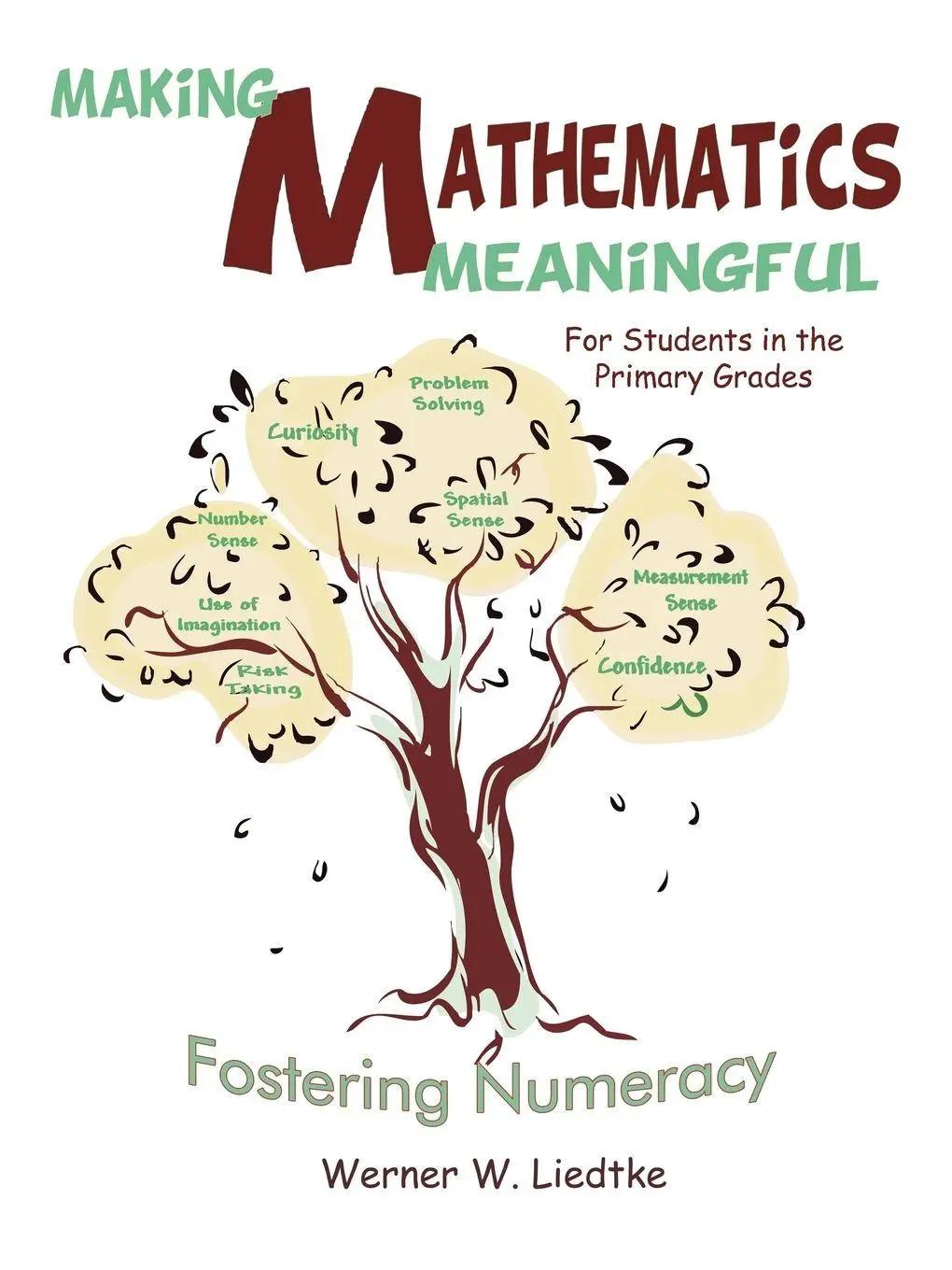
• Developing the important aspects of numeracy: number sense, spatialsense, measurement sense, statistical sense and sense of relationships.
• Enabling students to talk and write about the mathematics they learn intheir own words.
• Enabling students to connect mathematical terminology to familiarlanguage.
• Enabling students to acquire estimation strategies and strategies formental mathematics.
• Having students develop personal strategies for computationalprocedures.
• Using technology to foster important aspects of numeracy.
• Taking advantage of the power of high order thinking questions and open-endedquestions and tasks.
• Using high order thinking questions and accommodating all types ofresponses by students during the orchestration of discussions.
• Recognizing the importance and need for specific goals, and specificand correct language.
• Providing appropriate practice settings that contribute to fosteringimportant aspects of numeracy.
• Maximizing participation while orchestrating discussions.
• Using assessment questions and tasks that are appropriate and fair.
• Preparing specific reports for parents.
• Using the teaching about mathematics settings to contribute to languagedevelopment, reading comprehension and the development of evaluativeskills.
• Being aware of possible issues related to equity and multiculturalism.
Making mathematics meaningful for young learners involves many challenges.The examples that are included in the lists of strategies illustrate some of thechallenges that a teacher faces and the members of these lists reiterate theimportance of the role of a teacher.
The Purpose of the Book
The main purpose of the book is to make practical suggestions that can contribute tomaking mathematics meaningful for young learners and to do this with a minimumof theoretical discussion. The suggestions include:
• Types of questions that can be asked.
• Ideas for orchestrating discussions.
• Ways of accommodating different responses by students.
• Types of activities and problems for key ideas, procedures and skills.
• Examples of appropriate practice.
• Methods of assessing how meaningful the mathematics that has beenlearned is for young students.
• Ways of reporting assessment results for key aspects of mathematicslearning.
The goal of making mathematics meaningful to students cannot be reached withoutthe development of number sense, the key foundation of numeracy. Showing how thisdevelopment of number sense can be fostered and illustrating how it is an essentialrequisite for key ideas, procedures and skills is an important part of the framework ofthe book.
Making mathematics meaningful for young learners requires special strategies.Throughout the book strategies are illustrated that can contribute to:
• Fostering the ability to visualize.
• Fostering problem solving ability in through problem solving settings.
• Fostering mathematical reasoning which includes thinking aboutthinking and flexible thinking.
• Fostering ability to make connections.
• Fostering confidence, willingness to take risks and use of imagination.
Although the focus of the content of the book is on attempting to make mathematicsmeaningful to young learners, the strategies and activities that are described andillustrated can contribute to students' language development, reading comprehensionand to the development of evaluative skills.
For Reflection
Assume that you agree with the quote by Polyani, 'The teachingof mathematics is not only incredibly important, but also one of themost difficult topics to teach.' What major points would you includein a presentation to illustrate the importance and the possibledifficulties of teaching mathematics?
In 1989 Willoughby wrote, 'Our world is becoming moremathematical. We are constantly surrounded by mathematicalsituations and are regularly required to make mathematicaldecisions. Muddling through mathematics without the appropriateattitudes and abilities in mathematics has become and will continueto become, more difficult – for both individual and society.'
a) What are possible examples of appropriate attitudesand abilities?
b) What possible implications does this observation havefor how mathematics is taught?
c) What possible implications does this observation havefor how mathematics learning is assessed?
How would you respond to someone who states thatissues related to equity and multiculturalism are notrelated to aspects of mathematics teaching andlearning?
Newspapers put their support behind, 'Raise a Reader'.Consider possible reasons for changing this goal to,'Raise a Numerate Reader who is able to Think'.
CHAPTER 2
The Framework and Assumptions
This book is for anyone who is interested in helping young students in the primarygrades in their early journey of making sense of the many fascinating aspects ofmathematics. The purpose is to share information that can be of assistance not onlywith reaching major goals of the mathematics curriculum but also valuable outcomesfor other areas of learning.
Aspects of Meaningful Mathematics Learning – MainAssumptions
Conceptual Knowledge
Conceptual understanding facilitates transfer and therefore is the key to success forfuture mathematics learning. It is a pre-requisite for taking risks in problem solvingsettings and inventing personal strategies for computational procedures.
Conceptual understanding enables young students to look at dramatizations,simulations, or sketches that depict action and recognize the numbers, the action andthe order of the numbers. This recognition enables students to use numerals and theappropriate symbol to record a matching summary or equation. For example, a pictureshowing two planes in line on a runway and one plane taking off is summarized byrecording 3 – 1. If 'taking off' or 'flying away' is used as part of a matching word problem,this is indicative of understanding the mathematical term minus.
Conversely, given a summary or an equation, conceptual understanding enablesstudents to make up a meaningful word problem from their experience, simulate theaction with objects and to prepare a sketch that shows the action. For example, for 3 x 4the responses by a student of:
• reading this summary as 'three groups of four';
• showing three sets of four objects;
• creating the word problem, 'I am thinking of the wheels on three cars'are indicators of the ability to visualize or create visual images of the numbers, the orderand the operation, and ability to connect to experience. Visualization and connecting areimportant indicators of conceptual understanding.