Riassunto
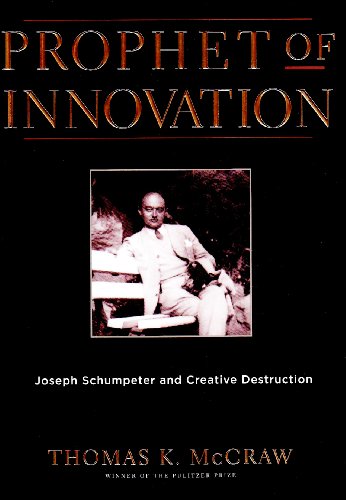
Pan Am, Gimbel’s, Pullman, Douglas Aircraft, Digital Equipment Corporation, British Leyland—all once as strong as dinosaurs, all now just as extinct. Destruction of businesses, fortunes, products, and careers is the price of progress toward a better material life. No one understood this bedrock economic principle better than Joseph A. Schumpeter. “Creative destruction,” he said, is the driving force of capitalism.Described by John Kenneth Galbraith as “the most sophisticated conservative” of the twentieth century, Schumpeter made his mark as the prophet of incessant change. His vision was stark: Nearly all businesses fail, victims of innovation by their competitors. Businesspeople ignore this lesson at their peril—to survive, they must be entrepreneurial and think strategically. Yet in Schumpeter’s view, the general prosperity produced by the “capitalist engine” far outweighs the wreckage it leaves behind.During a tumultuous life spanning two world wars, the Great Depression, and the early Cold War, Schumpeter reinvented himself many times. From boy wonder in turn-of-the-century Vienna to captivating Harvard professor, he was stalked by tragedy and haunted by the specter of his rival, John Maynard Keynes. By 1983—the centennial of the birth of both men—<i>Forbes</i> christened Schumpeter, not Keynes, the best navigator through the turbulent seas of globalization. Time has proved that assessment accurate.<i>Prophet of Innovation</i> is also the private story of a man rescued repeatedly by women who loved him and put his well-being above their own. Without them, he would likely have perished, so fierce were the conflicts between his reason and his emotions. Drawing on all of Schumpeter’s writings, including many intimate diaries and letters never before used, this biography paints the full portrait of a magnetic figure who aspired to become the world’s greatest economist, lover, and horseman—and admitted to failure only with the horses.
Recensione
Books on the lives of the great economists might not, at first blush, set the blood coursing. Yet Robert Skidelsky's masterly three-volume biography of John Maynard Keynes proved how engrossing such a life could be. It is high praise to say that Thomas McCraw's biography of Joseph Schumpeter, "Prophet of Innovation", has some of the same quality and appeal...McCraw, who has written the definitive biography of his subject, supplies many testimonials to Schumpeter's genius and influence from both his day and our own. --Robin Blackburn "The Nation" (09/24/2007)
Le informazioni nella sezione "Su questo libro" possono far riferimento a edizioni diverse di questo titolo.