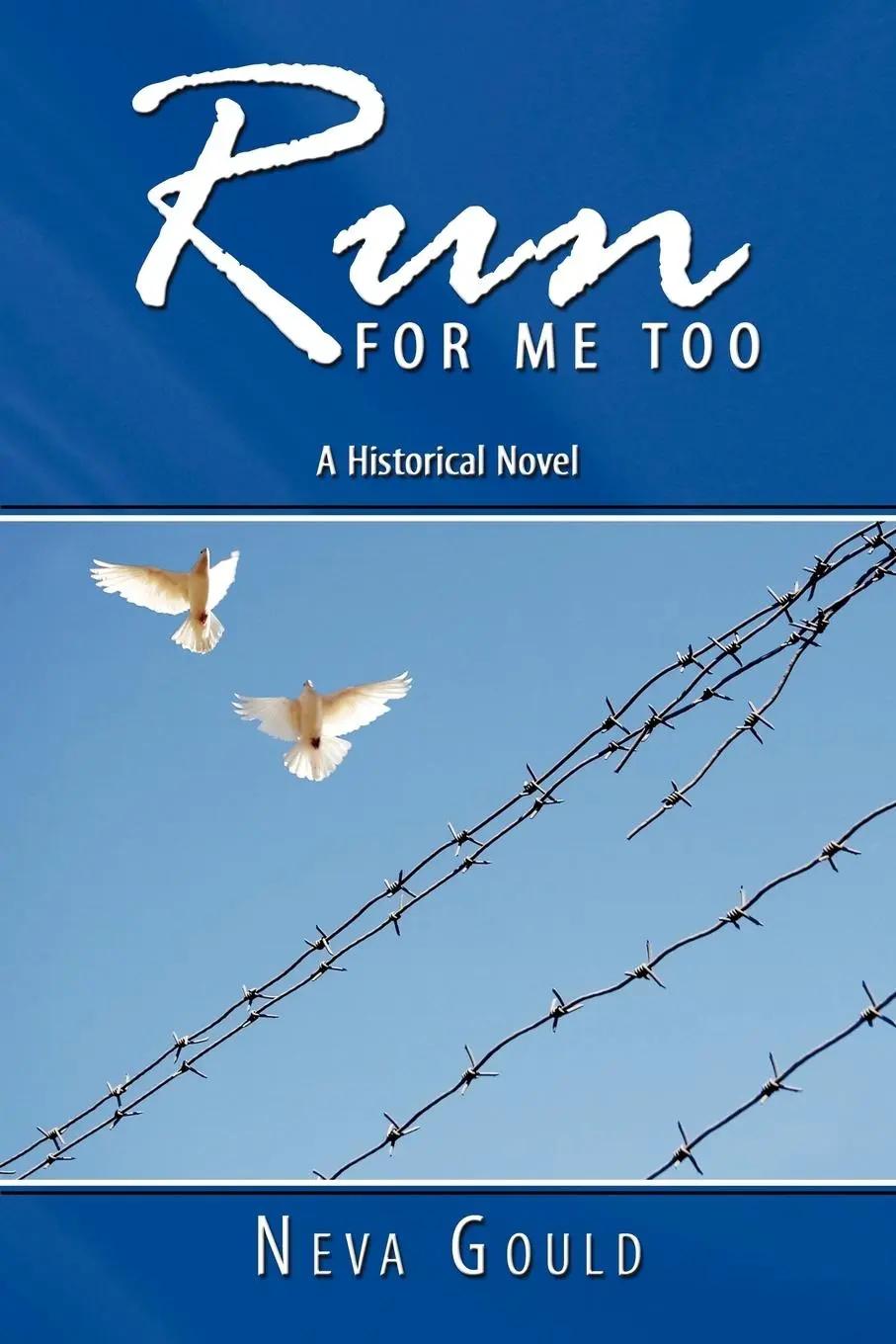
Saul Kestner, a small-town county physician in 1940 Croatia, agonizes over the possibility of German invasion and whether his family should emigrate. His teen-aged son, Peter, has fallen in love with Silvia, who is visiting from the big city. While Saul is overburdened by demands of his medical practice, Germany quickly defeats Yugoslavia in April, 1941, creates a fascist puppet state of Croatia, and brings escalating havoc to the local Jewish population. A county clerk whose wife Saul had treated warns Saul about impending deportation and under false pretext issues travel permits for Saul's family to go to Zagreb. There, Saul pays dearly for his family to be smuggled into Italy, where they are sent into confinement in a northern province. There they also meet other refugees: The beautiful Stella despairs about her fiance; an old man tries to console his wife with incredible salvation stories about their deported son; and Olga, a married woman, moves in with her lover. Meanwhile, Saul's wife Clara struggles with food shortages and Peter is conflicted about his feelings for Marisa, who reminds him of Silvia. Then in 1943 the Allies land in southern Italy. The Italian fascist government collapses, German troops invade Italy, and Saul's family is on the run again. This time they head south by train, by cart, and on foot through bombed out cities. Will all of them be able to dodge the Germans, cross the front lines, and finally be freed by the Allies?
Run For Me Too
By Neva GouldAuthorHouse
Copyright © 2009 Neva Gould
All right reserved.ISBN: 978-1-4389-9748-3Chapter One
The lights on Zrinska Street barely illuminated footprints stamped into the snow. Their author, Saul Kestner, walked along slowly, black bag in hand. His heart was light with fulfillment, though the rest of him was weary, and his head swam from lack of sleep. "I can no longer stay up with impunity the way I could when I was an intern," he told himself.
Not every day was his work and vigil so well rewarded. At last he had delivered Mrs. Lelich, despite her several miscarriages and the ominous murmurs of her rheumatic heart, of the baby she so desperately wanted. In most obstetric cases nature and the woman did the work, but with Milena Lelich he did not dare leave her bedside for a moment. And now he had a warm feeling inside, an inner satisfaction, as if he himself had bestowed life. An aroma of roasted chestnuts reached Saul from Vlado's kiosk, already shut. Too bad he was late, for he was fond of the chestnuts, Vlado, and Vlado's jokes.
Not many people were out on a dark, cold evening like this one, in December of 1940. It was snowing again, and the wind played with the loose surface layer, picked it up from one spot, twirled it around, and deposited it in another, quickly obliterating Saul's footprints. Thin streaks of light filtered through gingham-curtained windows and faintly reinforced the dim widely spaced streetlights.
In his mind Saul could see the flurry and scurry inside the houses, behind the thick walls. This was the time of day when the more prosperous men of the town read their newspapers, distracted by the odors of onions and garlic, fried meats and stewed vegetables their wives or cooks were preparing in the kitchen.
He knew it all so well. The little town of Slavonski Grad, which everyone simply called Grad, was located in the heart of Croatia, and since World War I had become part of Yugoslavia, was as much part of him as the blood that ran through his veins. It was not so for his parents; they had moved south from Hungary to this area, while it was still under Austro-Hungarian rule. But he and Robert were born here, this is where they belonged, and he felt a wave of pride sweep over him.
With delight Saul took in a deep breath, savoring the crisp clean winter freshness, and he realized that for once he was going to be on time for dinner! The twins would still be up. Darinka's soup would still be piping hot, the way he liked his soup. Perhaps he could even have a cat nap ... or maybe catch the evening news; he had not had a chance to tune in for a couple of days.
Ah, yes, the radio, that devilish instrument that linked him to the world at large, which had become his compulsion lately. Like an alcoholic, he could not stay away from it, yet he loathed it, loathed the connection that was bringing in the tentacles from the outside world into his little paradise. The dark empty street now became suffused by gloom, and the deep shadows between the lampposts cast ominous shadows. What had started as an exhilarating walk now was oppressive. It was the same nagging ill-defined perturbation that had been intermittently haunting him for months. This was the quiet before the storm.
Saul turned over the possibilities. War might come ... and if it did, they would have to flee to Bosnia or Serbia, which would remain in the free part, just as during World War I. The German army would be contained along the Balkan front, its progress arrested by the impenetrable mountain ranges. Or perhaps there would be no war. After all, Yugoslavia was not in Hitler's path, either on his way to the East or his way to the West.
He tried to cheer himself with his last thought, but the oppression clung to him and did not depart until he was well inside the gate of his own home. Barely audible ripples of "Per Elisa" emanating from Clara's piano seeped through invisible crevices and embraced him on the doorstep, dispelling all vestiges of gloom.
Darinka, the old cook, opened the door with a "Good evening, Dr. Kestner," and fluttered around to help him with his doctor's bag and overcoat. Clara's delicate arpeggios enveloped him more distinctly. "Well, what's new at home?" he inquired.
"Nothing much.... Farmer Babich brought eggs and a sack of flour. He sends you regards."
"It's been years since I treated his boy. He still stops by whenever he comes to town."
"Yes, he told me all about it."
"Oh, it was a small matter."
"No, sir, that's not what he said. He told me you drove up in the worst of blizzards."
Saul laughed, his left eye narrowing slightly, and Darinka could see a tiny twinkle, which she and many town folks found endearing. "Life is funny, Darinka. Sometimes I break my back and all I get are complaints. And sometimes, especially in the villages, the peasant folks are eternally grateful for my smallest efforts."
The music suddenly broke off. A moment later the living room door swung open, and Clara, smiling, came toward him.
"Hello, dear," she said and, raising herself on tiptoes, planted a kiss on his cheek. Then she tugged on his arm and led him into the dining room, where a white tablecloth gleamed, the places already set. "This will be a treat. You even have a few minutes to rest before dinner."
"Not so fast," he said, pulling her toward him, and bending down to kiss her on her lips. She rewarded him with a big smile, which momentarily erased the faint traces of matronliness that had recently made their appearance.
For an instant Clara looked just as she had when he asked her to marry him, with her light brown hair over one brow, her velvety brown eyes smiling from under.
"I thought you'd never ask," she had replied, clutching a bouquet of roses, which had been sent to her after her performance. Then she flung the roses, which nearly landed on the floor and abandoned herself totally to his embrace.
He had been very fond of Clara when he first met her, but it was her sister Tamara who had bewitched him and who had been the love of his life. When Tamara died and left him with an infant son - back in Zagreb after his training - everyone in his and Tamara's family had coaxed him, according to custom, to marry the sister. And eventually he made up his mind to confront Clara, feeling certain that she would turn him down, and that she would never give up the prospect of a career as a concert pianist to become the wife of a small town physician.
"Not only do I get you to love, but I even get a baby without the pains of labor," she told him, flashing a meter-long smile. He often didn't know what words to expect from Clara, what words would tumble from her mouth. He had offered to start his medical practice in Zagreb, rather than in Grad as he had planned, if she wished to continue at the conservatory. She shook her head emphatically and gave him another kiss. But that was a long time ago, in another life, and Clara had brought into his daily existence a quiet, steady love that warmed and comforted him, a contrast to the tumultuous flames of Tamara, that sometimes threatened to consume him. She had grown by his side from a somewhat brash young girl when he had first met her, to a most caring and loving wife and mother, and a remarkably logical and levelheaded observer of the life around them.
"Did Mrs. Lelich deliver?" Clara's words brought Saul back to the present.
"She did, and without much trouble. The baby is a bit small, but vigorous. I'm sure they'll both be fine."
A ruckus erupted nearby, something like the charge of the cavalry, and the twins, Ljerka and Rajko, made a noisy entry unbecoming of their nearly ten years. Screeching "Papi, Papi," they threw their arms around Saul's neck, each child tugging him in the opposite direction, as he bent down to their size.
"Did Mrs. Lelich get a baby?" Ljerka asked.
"Yes, she did. A beautiful little girl, but not quite as beautiful as you are."
The twins giggled and ran off.
"Now you lie down," Clara said, pointing to the sofa, "while I peek into Darinka's pots and pans. You look awfully tired."
"Where is Peter?" he inquired about their sixteen-year-old.
"He went to see Silvia. He should have been back by now!"
Left alone, Saul contemplated the sofa. It was lucky that he could catch little naps under most circumstances, and that was what gave him the strength to endure the rigorous demands of a rural medical practice. But before he had settled himself comfortably, he heard Clara's excited voice in the hallway, and a moment later she entered with Peter, their oldest - actually his and Tamara's boy.
"Oh my God," exclaimed Saul when he saw Peter enter, his face smeared with blood, and the right eye nearly shut.
Steering the boy to the sofa, he inspected his face. With a little pressure the bleeding, which came from Peter's slightly prominent nose, stopped. Darinka, who had entered with a tureen of soup, went back as quickly as her small heavy frame would allow, and returned with a carefully wrapped shard of ice from the ice box, which she carefully applied to Peter's eye.
"Peter, I've never known you to pick a street fight," Clara said sharply, but not without some surprise.
"I didn't, Mami! They attacked me."
"Who? What happened?" Saul asked impatiently.
"I was late coming back, and I didn't want you two to worry, so I took the short-cut along the park."
"And so?"
"Well, as I was coming around the bend, an ice-ball hit me in the back of my head. Someone yelled 'Kike,' and four boys sprang out of nowhere and pinned me to the ground. They shouted 'Son of a bitch dirty Jew,' and took turns punching my face and stomach. Stjepan's younger brother called me a 'Bastard Jew Christ killer'."
"To think that you delivered that boy," Clara said with rancor, addressing herself to Saul.
"The bully Vukovich," Peter continued, "who was their leader, suddenly ordered the boys to let me go. But as I tried to get away, he stuck his foot out, which I didn't notice, and I fell headlong into the snow. Then they laughed and attacked me again, cheering that idiot's cleverness. They tugged so hard on my scarf I thought they were going to choke me, but instead they tied my arms with it and rolled me down the hill. At the bottom I managed to free my arms and get away."
As Saul listened, the blood left his face, washing away doubt, surprise, and anxiety. Then it rushed back in a whirl, till he felt his temples bursting, and he was swept along by a fury that made his fist come crashing down on the dining room table, rattling the porcelain and tumbling a glass.
"Clara," he shouted, waving his arms, "I'll break their necks!" He paused briefly. "I'm through! I'm done with this lousy place!"
How could this be? His own son beaten up in their town! His roots ran deep in this corner of the world, but he would sever them. He would not allow weeds to choke off the fruit of his existence. He started pacing up and down the dining room floor. Turning to Clara again, he said, "We will leave as soon as I can arrange it. We'll go to Canada. I want to get out of here!"
Clara looked quizzically at her husband, as if trying to decide whether this threat of departure was genuine or merely the flash anger in which he sometimes indulged.
Peter found his voice again. "Father, why do we have to be Jewish?"
Saul felt a knife thrust into him. Why? Why indeed? He was at a loss. How could he explain such matters to his children, when his own convictions were muddled? Judaism had been a burden to him on a number of occasions, and he himself had often wished not to bear the stigma. It had been a detriment to him in the Austro-Hungarian army, and it had complicated his progress in medical school. And why?
As he sometimes put it, Saul considered himself "a Jew by habit," the habit by which others viewed him, simply because his parents happened to be Jewish. At one time he had seriously thought about conversion. His friend, jolly old friar Boniface, after whose health he had looked for some years, had told him many times, with a mischievous wink of his jaundiced eye: "Just a little Holy Water over your head, and you will be one of us. You don't even look Jewish."
But it had not been as simple as all that. In his heart Saul had wanted to get out of Judaism; but that meant not only shedding one religion, but trading it for another. It was this exchange that he was not convinced about. He knew he would offend his mother; not that she was particularly religious, but could he look her in the eye after admitting that it was expediency and cowardice, and not conviction, that had prompted his conversion? His father's dogma and sectarianism he could clash with, but his mother's adherence to tradition he did not wish to slight. And so he let the friar's offer rest.
Somehow, even after his parents' death, Saul failed to undertake the metamorphosis. Perhaps he was wrong not to have acted. He would have spared Peter the beating.
"Why, Papa?" asked Peter again.
Saul faltered. He did not have a plausible answer. Unexpectedly, Clara came to his rescue with characteristic brevity and razor-edge logic. "A Jew is a Jew before the Nazis, even if he is now Catholic."
The salt in Clara's words had scarcely had a chance to sting the wound in Saul's flesh, when the door opened and the two younger children burst in.
"When are we going to eat?" moaned Rajko. "I'm hungry."
"What happened to him?" exclaimed Ljerka, pointing to Peter.
Finding his tongue at last, Saul whispered, as he gently caressed Peter's head, "Let's talk more about that later. And about Canada."
A drill-like sound intruded itself on everyone. It was the shrill noise of the office buzzer, so unmistakably different from the regular chime, telling Saul that the outside world needed him again.
"It is the wife of the journalist," Clara said, after answering the call. "He'll need you before long."
"The journalist? The journalist you said?" He repeated more as a mental exercise than a question, and the second time he sighed involuntarily. No, not him! Not him again! He could do so little for that poor newspaper vendor, and such he was, though everyone in town had promoted him to the rank of a journalist. And besides, he did not wish to leave home after the events of the evening. Looking into Clara's eyes, into those soft, deep, brown pools of mystery that had soothed his soul after Tamara died, unwanted words of frustration spilled over, words which he immediately wished to disown. "Why ever did you marry a small town physician? You could have gone on to bigger and better things!"
"Nonsense," she said playfully. "I would never have made it, and you were my way out. You saved me from a showdown."
"That's not what they thought at the conservatory. You play Chopin like an angel."
Clara's face became serious. "I do love the piano, but it does not kiss me or hug me or love me back. So please go now, and come back as soon as you can."
With a knot somewhere inside him, he kissed Clara's lips, and in the distorted perspective of proximity, her soft brown eyes melted into a pool deep within which he saw the journalist, with his body withering away, and his eyes like tarnished silver. He shuddered.
"Won't you eat with us, Papi?" Ljerka piped up coquettishly, and momentarily took Saul away from his morbid patient. With her round little face she was the image of his mother and particularly precious to him. Though far more timid and serious than Rajko, in her brother's presence she sometimes became infected with his frolics.
Saul took her hand into his - it was a charming hand, he thought, no longer a little child's but not yet fully grown - and pressed it to his lips.
"No, darling," he said, "I'm not hungry."
Then he mussed Rajko's hair and wondered for the nth time what made the boy's large grey eyes look deceptively sad, for the moment the boy smiled, which was very often, his face became a picture of joy and mischief.
Saul kissed the twins good night, for those two lovable monkeys were certain to be asleep by the time he returned. As he took leave of Clara and Peter, Darinka entered with the reheated dinner.
(Continues...)
Excerpted from Run For Me Tooby Neva Gould Copyright © 2009 by Neva Gould. Excerpted by permission.
All rights reserved. No part of this excerpt may be reproduced or reprinted without permission in writing from the publisher.
Excerpts are provided by Dial-A-Book Inc. solely for the personal use of visitors to this web site.