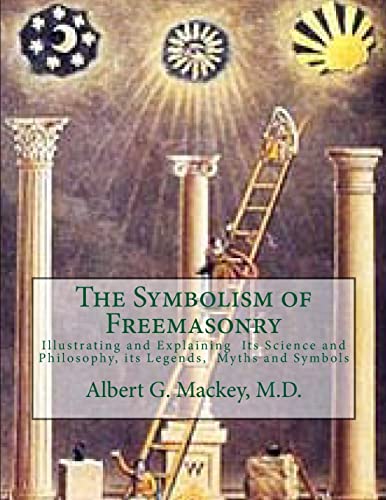
The Symbolism of Freemasonry : Illustrating and Explaining Its Science and Philosophy, Its Legends, Myths and Symbols
Mackey, Albert
ISBN 10: 1546783660 ISBN 13: 9781546783664
Editore: CreateSpace Independent Publishing Platform, 2017
Usato
Brossura
Da
Better World Books, Mishawaka, IN, U.S.A.
Valutazione del venditore 5 su 5 stelle

Venditore AbeBooks dal 3 agosto 2006
Questo articolo specifico non è più disponibile.
Riguardo questo articolo
Descrizione:
Former library book; may include library markings. Used book that is in excellent condition. May show signs of wear or have minor defects. Codice articolo 53544046-6
Riassunto:
Of the various modes of communicating instruction to the uninformed, the Masonic student is particularly interested in two; namely, the instruction by legends and that by symbols. It is to these two, almost exclusively, that he is indebted for all that he knows, and for all that he can know, of the philosophic system which is taught in the institution. All its mysteries and its dogmas, which constitute its philosophy, are entrusted for communication to the neophyte, sometimes to one, sometimes to the other of these two methods of instruction, and sometimes to both of them combined. The Freemason has no way of reaching any of the esoteric teachings of the Order except through the medium of a legend or a symbol. A legend differs from an historical narrative only in this—that it is without documentary evidence of authenticity. It is the offspring solely of tradition. Its details may be true in part or in whole. There may be no internal evidence to the contrary, or there may be internal evidence that they are altogether false. But neither the possibility of truth in the one case, nor the certainty of falsehood in the other, can remove the traditional narrative from the class of legends. It is a legend simply because it rests on no written foundation. It is oral, and therefore legendary. In grave problems of history, such as the establishment of empires, the discovery and settlement of countries, or the rise and fall of dynasties, the knowledge of the truth or falsity of the legendary narrative will be of importance, because the value of history is impaired by the imputation of doubt. But it is not so in Freemasonry. Here there need be no absolute question of the truth or falsity of the legend. The object of the Masonic legends is not to establish historical facts, but to convey philosophical doctrines. They are a method by which esoteric instruction is communicated, and the student accepts them with reference to nothing else except their positive use and meaning as developing Masonic dogmas. Take, for instance, the Hiramic legend of the third degree. Of what importance is it to the disciple of Masonry whether it be true or false? All that he wants to know is its internal signification; and when he learns that it is intended to illustrate the doctrine of the immortality of the soul, he is content with that interpretation, and he does not deem it necessary, except as a matter of curious or antiquarian inquiry, to investigate its historical accuracy, or to reconcile any of its apparent contradictions. So of the lost keystone; so of the second temple; so of the hidden ark: these are to him legendary narratives, which, like the casket, would be of no value were it not for the precious jewel contained within. Each of these legends is the expression of a philosophical idea. But there is another method of Masonic instruction, and that is by symbols. No science is more ancient than that of symbolism. At one time, nearly all the learning of the world was conveyed in symbols. And although modern philosophy now deals only in abstract propositions, Freemasonry still cleaves to the ancient method, and has preserved it in its primitive importance as a means of communicating knowledge. According to the derivation of the word from the Greek, "to symbolize" signifies "to compare one thing with another." Hence a symbol is the expression of an idea that has been derived from the comparison or contrast of some object with a moral conception or attribute. Thus we say that the plumb is a symbol of rectitude of conduct. The physical qualities of the plumb are here compared or contrasted with the moral conception of virtue, or rectitude. Then to the Speculative Mason it becomes, after he has been taught its symbolic meaning, the visible expression of the idea of moral uprightness. Albert G. mackey
Informazioni sull?autore: Albert Gallatin Mackey (March 12, 1807 – June 20, 1881) was an American medical doctor and author. He is best known for his writing many books and articles about freemasonry, particularly the Masonic Landmarks.
Le informazioni nella sezione "Su questo libro" possono far riferimento a edizioni diverse di questo titolo.
Dati bibliografici
Titolo: The Symbolism of Freemasonry : Illustrating ...
Casa editrice: CreateSpace Independent Publishing Platform
Data di pubblicazione: 2017
Legatura: Brossura
Condizione: Very Good
I migliori risultati di ricerca su AbeBooks

Immagini fornite dal venditore
Symbolism of Freemasonry : Illustrating and Explaining Its Science and Philosophy, Its Legends, Myths and Symbols
Editore:
CreateSpace Independent Publishing Platform, 2017
ISBN 10: 1546783660
ISBN 13: 9781546783664
Antico o usato
Brossura
Da: GreatBookPrices, Columbia, MD, U.S.A.
Valutazione del venditore 5 su 5 stelle
Condizione: As New. Unread book in perfect condition. Codice articolo 31546424
Compra usato
EUR 9,52
Spese di spedizione:
EUR 2,27
In U.S.A.
Quantità: Più di 20 disponibili
Immagini fornite dal venditore
Symbolism of Freemasonry : Illustrating and Explaining Its Science and Philosophy, Its Legends, Myths and Symbols
Editore:
CreateSpace Independent Publishing Platform, 2017
ISBN 10: 1546783660
ISBN 13: 9781546783664
Nuovo
Brossura
Da: GreatBookPrices, Columbia, MD, U.S.A.
Valutazione del venditore 5 su 5 stelle
Condizione: New. Codice articolo 31546424-n
Compra nuovo
EUR 10,07
Spese di spedizione:
EUR 2,27
In U.S.A.
Quantità: Più di 20 disponibili
Foto dell'editore
The Symbolism of Freemasonry: Illustrating and Explaining Its Science and Philosophy, its Legends, Myths and Symbols
Editore:
CreateSpace Independent Publishing Platform, 2017
ISBN 10: 1546783660
ISBN 13: 9781546783664
Nuovo
Brossura
Da: California Books, Miami, FL, U.S.A.
Valutazione del venditore 5 su 5 stelle
Condizione: New. Print on Demand. Codice articolo I-9781546783664
Compra nuovo
EUR 12,42
Spese di spedizione:
GRATIS
In U.S.A.
Quantità: Più di 20 disponibili
Immagini fornite dal venditore
The Symbolism of Freemasonry (Paperback)
Editore:
Createspace Independent Publishing Platform, 2017
ISBN 10: 1546783660
ISBN 13: 9781546783664
Nuovo
Paperback
Da: Grand Eagle Retail, Bensenville, IL, U.S.A.
Valutazione del venditore 5 su 5 stelle
Paperback. Condizione: new. Paperback. Of the various modes of communicating instruction to the uninformed, the Masonic student is particularly interested in two; namely, the instruction by legends and that by symbols. It is to these two, almost exclusively, that he is indebted for all that he knows, and for all that he can know, of the philosophic system which is taught in the institution. All its mysteries and its dogmas, which constitute its philosophy, are entrusted for communication to the neophyte, sometimes to one, sometimes to the other of these two methods of instruction, and sometimes to both of them combined. The Freemason has no way of reaching any of the esoteric teachings of the Order except through the medium of a legend or a symbol. A legend differs from an historical narrative only in this-that it is without documentary evidence of authenticity. It is the offspring solely of tradition. Its details may be true in part or in whole. There may be no internal evidence to the contrary, or there may be internal evidence that they are altogether false. But neither the possibility of truth in the one case, nor the certainty of falsehood in the other, can remove the traditional narrative from the class of legends. It is a legend simply because it rests on no written foundation. It is oral, and therefore legendary. In grave problems of history, such as the establishment of empires, the discovery and settlement of countries, or the rise and fall of dynasties, the knowledge of the truth or falsity of the legendary narrative will be of importance, because the value of history is impaired by the imputation of doubt. But it is not so in Freemasonry. Here there need be no absolute question of the truth or falsity of the legend. The object of the Masonic legends is not to establish historical facts, but to convey philosophical doctrines. They are a method by which esoteric instruction is communicated, and the student accepts them with reference to nothing else except their positive use and meaning as developing Masonic dogmas. Take, for instance, the Hiramic legend of the third degree. Of what importance is it to the disciple of Masonry whether it be true or false? All that he wants to know is its internal signification; and when he learns that it is intended to illustrate the doctrine of the immortality of the soul, he is content with that interpretation, and he does not deem it necessary, except as a matter of curious or antiquarian inquiry, to investigate its historical accuracy, or to reconcile any of its apparent contradictions. So of the lost keystone; so of the second temple; so of the hidden ark: these are to him legendary narratives, which, like the casket, would be of no value were it not for the precious jewel contained within. Each of these legends is the expression of a philosophical idea. But there is another method of Masonic instruction, and that is by symbols. No science is more ancient than that of symbolism. At one time, nearly all the learning of the world was conveyed in symbols. And although modern philosophy now deals only in abstract propositions, Freemasonry still cleaves to the ancient method, and has preserved it in its primitive importance as a means of communicating knowledge. According to the derivation of the word from the Greek, "to symbolize" signifies "to compare one thing with another." Hence a symbol is the expression of an idea that has been derived from the comparison or contrast of some object with a moral conception or attribute. Thus we say that the plumb is a symbol of rectitude of conduct. The physical qualities of the plumb are here compared or contrasted with the moral conception of virtue, or rectitude. Then to the Speculative Mason it becomes, after he has been taught its symbolic meaning, the visible expression of the idea of moral uprightness. Albert G. mackey This item is printed on demand. Shipping may be from multiple locations in the US or from the UK, depending on stock availability. Codice articolo 9781546783664
Compra nuovo
EUR 13,52
Spese di spedizione:
GRATIS
In U.S.A.
Quantità: 1 disponibili
Immagini fornite dal venditore
The Symbolism of Freemasonry
Editore:
Createspace Independent Publishing Platform, 2017
ISBN 10: 1546783660
ISBN 13: 9781546783664
Nuovo
Paperback
Da: Rarewaves USA, OSWEGO, IL, U.S.A.
Valutazione del venditore 5 su 5 stelle
Paperback. Condizione: New. Codice articolo LU-9781546783664
Compra nuovo
EUR 13,94
Spese di spedizione:
GRATIS
In U.S.A.
Quantità: Più di 20 disponibili
Immagini fornite dal venditore
Symbolism of Freemasonry : Illustrating and Explaining Its Science and Philosophy, Its Legends, Myths and Symbols
Editore:
CreateSpace Independent Publishing Platform, 2017
ISBN 10: 1546783660
ISBN 13: 9781546783664
Nuovo
Brossura
Da: GreatBookPricesUK, Woodford Green, Regno Unito
Valutazione del venditore 5 su 5 stelle
Condizione: New. Codice articolo 31546424-n
Compra nuovo
EUR 15,41
Spese di spedizione:
EUR 17,07
Da: Regno Unito a: U.S.A.
Quantità: Più di 20 disponibili
Immagini fornite dal venditore
The Symbolism of Freemasonry
Editore:
Createspace Independent Publishing Platform, 2017
ISBN 10: 1546783660
ISBN 13: 9781546783664
Nuovo
Paperback
Da: Rarewaves USA United, OSWEGO, IL, U.S.A.
Valutazione del venditore 5 su 5 stelle
Paperback. Condizione: New. Codice articolo LU-9781546783664
Compra nuovo
EUR 15,42
Spese di spedizione:
EUR 43,08
In U.S.A.
Quantità: Più di 20 disponibili
Foto dell'editore
The Symbolism of Freemasonry: Illustrating and Explaining Its Science and Philosophy, Its Legends, Myths and Symbols
Editore:
Createspace Independent Publishing Platform, 2017
ISBN 10: 1546783660
ISBN 13: 9781546783664
Nuovo
Paperback
Da: THE SAINT BOOKSTORE, Southport, Regno Unito
Valutazione del venditore 5 su 5 stelle
Paperback. Condizione: New. This item is printed on demand. New copy - Usually dispatched within 5-9 working days. Codice articolo C9781546783664
Compra nuovo
EUR 15,83
Spese di spedizione:
EUR 17,45
Da: Regno Unito a: U.S.A.
Quantità: Più di 20 disponibili
Immagini fornite dal venditore
Symbolism of Freemasonry : Illustrating and Explaining Its Science and Philosophy, Its Legends, Myths and Symbols
Editore:
CreateSpace Independent Publishing Platform, 2017
ISBN 10: 1546783660
ISBN 13: 9781546783664
Antico o usato
Brossura
Da: GreatBookPricesUK, Woodford Green, Regno Unito
Valutazione del venditore 5 su 5 stelle
Condizione: As New. Unread book in perfect condition. Codice articolo 31546424
Compra usato
EUR 15,91
Spese di spedizione:
EUR 17,07
Da: Regno Unito a: U.S.A.
Quantità: Più di 20 disponibili
Immagini fornite dal venditore
The Symbolism of Freemasonry
Editore:
Createspace Independent Publishing Platform, 2017
ISBN 10: 1546783660
ISBN 13: 9781546783664
Nuovo
Paperback
Da: Rarewaves.com UK, London, Regno Unito
Valutazione del venditore 5 su 5 stelle
Paperback. Condizione: New. Codice articolo LU-9781546783664
Compra nuovo
EUR 16,72
Spese di spedizione:
EUR 73,97
Da: Regno Unito a: U.S.A.
Quantità: Più di 20 disponibili