

Importo totale (1 articolo articoli):
Destinazione ordine:

LACHMANN, RICHARD (243 risultati)
Vai alla pagina principale dei risultati di ricerca
Filtri di ricerca
Tipo di articolo
- Tutti i tipi di prodotto
- Libri (241)
- Riviste e Giornali (Nessun altro risultato corrispondente a questo perfezionamento)
- Fumetti (Nessun altro risultato corrispondente a questo perfezionamento)
- Spartiti (2)
- Arte, Stampe e Poster (Nessun altro risultato corrispondente a questo perfezionamento)
- Fotografie (Nessun altro risultato corrispondente a questo perfezionamento)
- Mappe (Nessun altro risultato corrispondente a questo perfezionamento)
- Manoscritti e Collezionismo cartaceo (Nessun altro risultato corrispondente a questo perfezionamento)
Condizioni Maggiori informazioni
Legatura
Ulteriori caratteristiche
Lingua (3)
Spedizione gratuita
Paese del venditore
Valutazione venditore
-

Salome : Music Drama In One Act (After Oscar Wilde's Tragedy)
Lingua: Inglese
Editore: G. Schirmer, Inc., Milwaukee, Wisconsin, 1986
ISBN 10: 0793553849 ISBN 13: 9780793553846
Da: Granada Bookstore, IOBA, Woodlawn, IL, U.S.A.
Membro dell'associazione: IOBA
Valutazione del venditore 5 su 5 stelle

Soft cover. Condizione: Very Good. No Edition Or Printing Indicated. Red Stapled Wraps With White Lettering. Minor Wear.
-
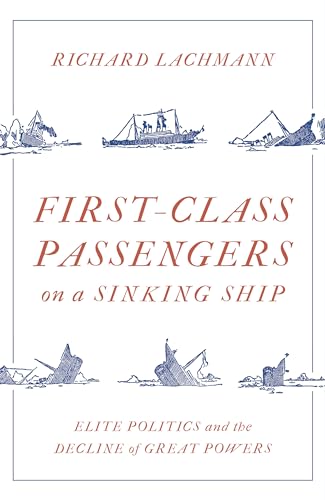
First Class Passengers on a Sinking Ship: Elite Politics and the Decline of Great Powers
Da: PlumCircle, West Mifflin, PA, U.S.A.
Valutazione del venditore 5 su 5 stelle
Hardcover. Condizione: Very Good. Publisher overstock. May have remainder mark / minor shelfwear. 99% of orders arrive in 4-10 days. Discounted shipping on multiple books.
-
First Class Passengers on a Sinking Ship: Elite Politics and the Decline of Great Powers
Da: PlumCircle, West Mifflin, PA, U.S.A.
Valutazione del venditore 5 su 5 stelle
Hardcover. Condizione: New. New item in gift quality condition. 99% of orders arrive in 4-10 days. Discounted shipping on multiple books.
-

States and Power
Libro 3 di 12: Political SociologyDa: Textbooks_Source, Columbia, MO, U.S.A.
Valutazione del venditore 5 su 5 stelle
Prima edizione
paperback. Condizione: Good. 1st Edition. Ships in a BOX from Central Missouri! May not include working access code. Will not include dust jacket. Has used sticker(s) and some writing or highlighting. UPS shipping for most packages, (Priority Mail for AK/HI/APO/PO Boxes).
-

paperback. Condizione: Very Good. Connecting readers with great books since 1972! Used books may not include companion materials, and may have some shelf wear or limited writing. We ship orders daily and Customer Service is our top priority!
-
States and Power
Libro 3 di 12: Political SociologyDa: Better World Books: West, Reno, NV, U.S.A.
Valutazione del venditore 5 su 5 stelle
Condizione: Very Good. Former library copy. Pages intact with possible writing/highlighting. Binding strong with minor wear. Dust jackets/supplements may not be included. Includes library markings. Stock photo provided. Product includes identifying sticker. Better World Books: Buy Books. Do Good.
-
States and Power: 6 (Political Sociology)
Libro 3 di 12: Political SociologyDa: WorldofBooks, Goring-By-Sea, WS, Regno Unito
Valutazione del venditore 5 su 5 stelle
EUR 10,91
Spedizione EUR 6,48
Spedito da Regno Unito a U.S.A.Quantità: 1 disponibili
Aggiungi al carrelloPaperback. Condizione: Very Good. The book has been read, but is in excellent condition. Pages are intact and not marred by notes or highlighting. The spine remains undamaged.
-

First-class passengers on a sinking ship, elite politics and the decline of great powers
Da: Bolerium Books Inc., San Francisco, CA, U.S.A.
Membro dell'associazione: ABAA ILAB
Valutazione del venditore 5 su 5 stelle
Prima edizione
Hardcover. 477p., first printing, very good condition in like unclipped dj.
-

States and Power (Political Sociology)
Libro 3 di 12: Political SociologyDa: Solr Books, Lincolnwood, IL, U.S.A.
Valutazione del venditore 5 su 5 stelle
Condizione: very_good. This books is in Very good condition. There may be a few flaws like shelf wear and some light wear.
-

First-class Passengers on a Sinking Ship. Elite Politics and the Decline of Great Powers
Editore: Verso, London, 2020
Da: Valley Books, AMHERST, MA, U.S.A.
Membro dell'associazione: SNEAB
Valutazione del venditore 3 su 5 stelle

Hardcover. Condizione: Fine. 477pp. Blue cloth binding stamped in sillver. No remainder mark. Photos sent on request. Size: 8vo - over 7¾" - 9¾" tall.
-

First-Class Passengers on a Sinking Ship : Elite Politics and the Decline of Great Powers
Da: GreatBookPrices, Columbia, MD, U.S.A.
Valutazione del venditore 5 su 5 stelle
Condizione: New.
-
First-Class Passengers on a Sinking Ship (Paperback)
Da: Grand Eagle Retail, Bensenville, IL, U.S.A.
Valutazione del venditore 5 su 5 stelle
Paperback. Condizione: new. Paperback. The extent and irreversibility of US decline is becoming ever more obvious as America loses war after war and as one industry after another loses its technological edge. Lachmann explains why the United States will not be able to sustain its global dominance. He contrasts Americas relatively brief period of hegemony with the Netherlands similarly short primacy and Britains far longer era of leadership.Decline in all those cases was not inevitable and did not respond to global capitalist cycles. Rather, decline is the product of elites success in grabbing control of resources and governmental powers. Not only are ordinary people harmed, but also capitalists become increasingly unable to coordinate their interests and adopt policies and make investments necessary to counter economic and geopolitical competitors elsewhere in the world.Conflicts among elites and challenges by non-elites determine the timing and mould the contours of decline. Lachmann traces the transformation of US politics from an era of elite consensus to present-day paralysis combined with neoliberal plunder, explains the paradox of an American military with an unprecedented technological edge unable to subdue even the weakest enemies, and the consequences of finances cannibalisation of the US economy. How all great powers decline-including the US Shipping may be from multiple locations in the US or from the UK, depending on stock availability.
-

First-Class Passengers on a Sinking Ship : Elite Politics and the Decline of Great Powers
Da: GreatBookPrices, Columbia, MD, U.S.A.
Valutazione del venditore 5 su 5 stelle
Condizione: As New. Unread book in perfect condition.
-

First-Class Passengers on a Sinking Ship
Da: Rarewaves.com USA, London, LONDO, Regno Unito
Valutazione del venditore 5 su 5 stelle
EUR 24,59
Spedizione gratuita
Spedito da Regno Unito a U.S.A.Quantità: Più di 20 disponibili
Aggiungi al carrelloPaperback. Condizione: New. The extent and irreversibility of US decline is becoming ever more obvious as America loses war after war and as one industry after another loses its technological edge. Lachmann explains why the United States will not be able to sustain its global dominance. He contrasts America's relatively brief period of hegemony with the Netherlands' similarly short primacy and Britain's far longer era of leadership.Decline in all those cases was not inevitable and did not respond to global capitalist cycles. Rather, decline is the product of elites' success in grabbing control of resources and governmental powers. Not only are ordinary people harmed, but also capitalists become increasingly unable to coordinate their interests and adopt policies and make investments necessary to counter economic and geopolitical competitors elsewhere in the world.Conflicts among elites and challenges by non-elites determine the timing and mould the contours of decline. Lachmann traces the transformation of US politics from an era of elite consensus to present-day paralysis combined with neoliberal plunder, explains the paradox of an American military with an unprecedented technological edge unable to subdue even the weakest enemies, and the consequences of finance's cannibalisation of the US economy.
-
First-Class Passengers on a Sinking Ship : Elite Politics and the Decline of Great Powers
Da: GreatBookPrices, Columbia, MD, U.S.A.
Valutazione del venditore 5 su 5 stelle
EUR 22,23
Spedizione EUR 2,29
Spedito in U.S.A.Quantità: Più di 20 disponibili
Aggiungi al carrelloCondizione: New.
-

First-Class Passengers on a Sinking Ship (Hardcover)
Da: Grand Eagle Retail, Bensenville, IL, U.S.A.
Valutazione del venditore 5 su 5 stelle
Hardcover. Condizione: new. Hardcover. The extent and irreversibility of US decline is becoming ever more obvious as America loses war after war and as one industry after another loses its technological edge. Lachmann explains why the United States will not be able to sustain its global dominance. He contrasts Americas relatively brief period of hegemony with the Netherlands similarly short primacy and Britains far longer era of leadership.Decline in all those cases was not inevitable and did not respond to global capitalist cycles. Rather, decline is the product of elites success in grabbing control of resources and governmental powers. Not only are ordinary people harmed, but also capitalists become increasingly unable to coordinate their interests and adopt policies and make investments necessary to counter economic and geopolitical competitors elsewhere in the world. How all great powers decline-including the US Shipping may be from multiple locations in the US or from the UK, depending on stock availability.
-

First-Class Passengers on a Sinking Ship : Elite Politics and the Decline of Great Powers
Da: GreatBookPrices, Columbia, MD, U.S.A.
Valutazione del venditore 5 su 5 stelle
EUR 22,89
Spedizione EUR 2,29
Spedito in U.S.A.Quantità: Più di 20 disponibili
Aggiungi al carrelloCondizione: As New. Unread book in perfect condition.
-

Paperback. Condizione: New. The extent and irreversibility of US decline is becoming ever more obvious as America loses war after war and as one industry after another loses its technological edge. Lachmann explains why the United States will not be able to sustain its global dominance. He contrasts America's relatively brief period of hegemony with the Netherlands' similarly short primacy and Britain's far longer era of leadership.Decline in all those cases was not inevitable and did not respond to global capitalist cycles. Rather, decline is the product of elites' success in grabbing control of resources and governmental powers. Not only are ordinary people harmed, but also capitalists become increasingly unable to coordinate their interests and adopt policies and make investments necessary to counter economic and geopolitical competitors elsewhere in the world.Conflicts among elites and challenges by non-elites determine the timing and mould the contours of decline. Lachmann traces the transformation of US politics from an era of elite consensus to present-day paralysis combined with neoliberal plunder, explains the paradox of an American military with an unprecedented technological edge unable to subdue even the weakest enemies, and the consequences of finance's cannibalisation of the US economy.
-
What is Historical Sociology?
Libro 1 di 6: What is Sociology?Da: GreatBookPrices, Columbia, MD, U.S.A.
Valutazione del venditore 5 su 5 stelle
EUR 23,35
Spedizione EUR 2,29
Spedito in U.S.A.Quantità: Più di 20 disponibili
Aggiungi al carrelloCondizione: New.
-

What is Historical Sociology?
Libro 1 di 6: What is Sociology?Lingua: Inglese
Editore: John Wiley and Sons Ltd, GB, 2013
ISBN 10: 0745660096 ISBN 13: 9780745660097
Da: Rarewaves.com USA, London, LONDO, Regno Unito
Valutazione del venditore 5 su 5 stelle
EUR 25,72
Spedizione gratuita
Spedito da Regno Unito a U.S.A.Quantità: Più di 20 disponibili
Aggiungi al carrelloPaperback. Condizione: New. Sociology began as a historical discipline, created by Marx, Weber and others, to explain the emergence and consequences of rational, capitalist society. Today, the best historical sociology combines precision in theory-construction with the careful selection of appropriate methodologies to address ongoing debates across a range of subfields. This innovative book explores what sociologists gain by treating temporality seriously, what we learn from placing social relations and events in historical context. In a series of chapters, readers will see how historical sociologists have addressed the origins of capitalism, revolutions and social movements, empires and states, inequality, gender and culture. The goal is not to present a comprehensive history of historical sociology; rather, readers will encounter analyses of exemplary works and see how authors engaged past debates and their contemporaries in sociology, history and other disciplines to advance our understanding of how societies are created and remade across time. This illuminating book is designed for use in graduate and advanced undergraduate courses as an introduction to historical sociology and as a guide to employing historical analysis across the discipline.
-

First-Class Passengers on a Sinking Ship: Elite Politics and the Decline of Great Powers
Da: Big River Books, Powder Springs, GA, U.S.A.
Valutazione del venditore 5 su 5 stelle
Condizione: like_new. This book is in Like New condition. It is unused, but has a remainder mark on the edge of the pages. Otherwise it is a new book.
-
What is Historical Sociology?
Libro 1 di 6: What is Sociology?Da: PBShop.store UK, Fairford, GLOS, Regno Unito
Valutazione del venditore 5 su 5 stelle
EUR 21,39
Spedizione EUR 4,81
Spedito da Regno Unito a U.S.A.Quantità: 15 disponibili
Aggiungi al carrelloPAP. Condizione: New. New Book. Shipped from UK. Established seller since 2000.
-
First-Class Passengers on a Sinking Ship
Da: PBShop.store US, Wood Dale, IL, U.S.A.
Valutazione del venditore 5 su 5 stelle
PAP. Condizione: New. New Book. Shipped from UK. Established seller since 2000.
-
EUR 15,89
Spedizione EUR 10,00
Spedito da Germania a U.S.A.Quantità: 1 disponibili
Aggiungi al carrelloCondizione: as new. Wie neu/Like new.
-
What is Historical Sociology?
Libro 1 di 6: What is Sociology?Da: GreatBookPrices, Columbia, MD, U.S.A.
Valutazione del venditore 5 su 5 stelle
EUR 24,79
Spedizione EUR 2,29
Spedito in U.S.A.Quantità: Più di 20 disponibili
Aggiungi al carrelloCondizione: As New. Unread book in perfect condition.
-
What is Historical Sociology?
Libro 1 di 6: What is Sociology?Da: Brook Bookstore On Demand, Napoli, NA, Italia
Valutazione del venditore 3 su 5 stelle
EUR 22,23
Spedizione EUR 5,50
Spedito da Italia a U.S.A.Quantità: Più di 20 disponibili
Aggiungi al carrelloCondizione: new.
-
First-Class Passengers on a Sinking Ship
Da: PBShop.store UK, Fairford, GLOS, Regno Unito
Valutazione del venditore 5 su 5 stelle
EUR 23,73
Spedizione EUR 4,81
Spedito da Regno Unito a U.S.A.Quantità: 9 disponibili
Aggiungi al carrelloPAP. Condizione: New. New Book. Shipped from UK. Established seller since 2000.
-
EUR 12,63
Spedizione EUR 16,50
Spedito da Francia a U.S.A.Quantità: 1 disponibili
Aggiungi al carrelloSoftcover. Condizione: Très bon. Ancien livre de bibliothèque avec équipements. Ammareal reverse jusqu'à 15% du prix net de cet article à des organisations caritatives. ENGLISH DESCRIPTION Book Condition: Used, Very good. Former library book. Ammareal gives back up to 15% of this item's net price to charity organizations.
-
FIRST CLASS PASSENGERS ON A SINKING SHIP
Da: Speedyhen LLC, Hialeah, FL, U.S.A.
Valutazione del venditore 2 su 5 stelle

EUR 30,41
Spedizione gratuita
Spedito in U.S.A.Quantità: Più di 20 disponibili
Aggiungi al carrelloCondizione: NEW.
-

Hardback. Condizione: New. The extent and irreversibility of US decline is becoming ever more obvious as America loses war after war and as one industry after another loses its technological edge. Lachmann explains why the United States will not be able to sustain its global dominance. He contrasts America's relatively brief period of hegemony with the Netherlands' similarly short primacy and Britain's far longer era of leadership.Decline in all those cases was not inevitable and did not respond to global capitalist cycles. Rather, decline is the product of elites' success in grabbing control of resources and governmental powers. Not only are ordinary people harmed, but also capitalists become increasingly unable to coordinate their interests and adopt policies and make investments necessary to counter economic and geopolitical competitors elsewhere in the world.Conflicts among elites and challenges by non-elites determine the timing and mould the contours of decline. Lachmann traces the transformation of US politics from an era of elite consensus to present-day paralysis combined with neoliberal plunder, explains the paradox of an American military with an unprecedented technological edge unable to subdue even the weakest enemies, and the consequences of finance's cannibalisation of the US economy.


