
Importo totale (1 articolo articoli):
Destinazione ordine:

bluhdorn ingolfur jun uwe (18 risultati)
Vai alla pagina principale dei risultati di ricerca
Filtri di ricerca
Tipo di articolo
- Tutti i tipi di prodotto
- Libri (18)
- Riviste e Giornali (Nessun altro risultato corrispondente a questo perfezionamento)
- Fumetti (Nessun altro risultato corrispondente a questo perfezionamento)
- Spartiti (Nessun altro risultato corrispondente a questo perfezionamento)
- Arte, Stampe e Poster (Nessun altro risultato corrispondente a questo perfezionamento)
- Fotografie (Nessun altro risultato corrispondente a questo perfezionamento)
- Mappe (Nessun altro risultato corrispondente a questo perfezionamento)
- Manoscritti e Collezionismo cartaceo (Nessun altro risultato corrispondente a questo perfezionamento)
Condizioni Maggiori informazioni
- Nuovo (17)
- Come nuovo, Ottimo o Quasi ottimo (1)
- Molto buono o Buono (Nessun altro risultato corrispondente a questo perfezionamento)
- Discreto o Mediocre (Nessun altro risultato corrispondente a questo perfezionamento)
- Come descritto (Nessun altro risultato corrispondente a questo perfezionamento)
Legatura
Ulteriori caratteristiche
- Prima ed. (Nessun altro risultato corrispondente a questo perfezionamento)
- Copia autograf. (Nessun altro risultato corrispondente a questo perfezionamento)
- Sovracoperta (Nessun altro risultato corrispondente a questo perfezionamento)
- Con foto (7)
- Non Print on Demand (9)
Lingua (1)
Spedizione gratuita
Paese del venditore
Valutazione venditore
-

Economic Efficiency, Democratic Empowerment: Contested Modernization in Britain and Germany
Da: Singing Saw Books, Portland, OR, U.S.A.
Valutazione del venditore 5 su 5 stelle

Paperback. Condizione: As New. Paperback. Nice condition overall.
-

Economic Efficiency, Democratic Empowerment
Lingua: Inglese
Editore: Bloomsbury Publishing Plc, US, 2007
ISBN 10: 0739112112 ISBN 13: 9780739112113
Da: Rarewaves.com USA, London, LONDO, Regno Unito
Valutazione del venditore 5 su 5 stelle
EUR 80,35
Spedizione gratuita
Spedito da Regno Unito a U.S.A.Quantità: Più di 20 disponibili
Aggiungi al carrelloPaperback. Condizione: New. Germany and Britain are two major European economies that have been trying to confront the challenges of globalisation in very different ways. Britain has favoured market liberal strategies; Germany has endeavoured to retain its tradition of consensualism and the strong welfare state. Focusing on the period since 1997/8, this book explores the controversies and struggles surrounding the agendas of social, economic, and political modernisation in the two countries. The New Labour governments in Britain and the Social Democratic coalition governments in Germany have been introducing a range of reform policies designed to reform the welfare state and increase the respective country's competitiveness in the global market. In both countries, however, these policies have triggered societal resistance. The governing parties had to confront electoral setbacks, an exodus of party members, strains on the relationship with traditional political allies, and an increasingly alienated public.Within this context, this book focuses on the tensions between two key parameters in contemporary modernisation discourses: economic efficiency and democratic renewal. Political elites in many European countries are presenting the achievement of efficiency gains as a primary objective of globalisation-induced societal reform. At the same time civic empowerment and the engagement of civil society are widely regarded as essential for increasing the quality, legitimacy, and effectiveness of public policy making. But can these two goals be achieved at the same time? What exactly does the highly contested term efficiency imply? What is its relationship towards the equally ambiguous goal of democratic renewal? Focusing on a variety of political actors, structures and strategies in Germany and Britain, the individual chapters in this book trace how the tensions between economic efficiency and democratic renewal surface, how definitional struggles surrounding these ideals are being managed, and how new syntheses between the two parameter.
-
Economic Efficiency - Democratic Empowerment: Contested Modernization in Britain and Germany
Da: Revaluation Books, Exeter, Regno Unito
Valutazione del venditore 5 su 5 stelle
EUR 116,71
Spedizione EUR 14,49
Spedito da Regno Unito a U.S.A.Quantità: 2 disponibili
Aggiungi al carrelloPaperback. Condizione: Brand New. 335 pages. 8.50x5.75x0.75 inches. In Stock.
-

Economic Efficiency, Democratic Empowerment
Lingua: Inglese
Editore: Bloomsbury Publishing Plc, US, 2007
ISBN 10: 0739112112 ISBN 13: 9780739112113
Da: Rarewaves.com UK, London, Regno Unito
Valutazione del venditore 5 su 5 stelle
EUR 74,57
Spedizione EUR 75,35
Spedito da Regno Unito a U.S.A.Quantità: Più di 20 disponibili
Aggiungi al carrelloPaperback. Condizione: New. Germany and Britain are two major European economies that have been trying to confront the challenges of globalisation in very different ways. Britain has favoured market liberal strategies; Germany has endeavoured to retain its tradition of consensualism and the strong welfare state. Focusing on the period since 1997/8, this book explores the controversies and struggles surrounding the agendas of social, economic, and political modernisation in the two countries. The New Labour governments in Britain and the Social Democratic coalition governments in Germany have been introducing a range of reform policies designed to reform the welfare state and increase the respective country's competitiveness in the global market. In both countries, however, these policies have triggered societal resistance. The governing parties had to confront electoral setbacks, an exodus of party members, strains on the relationship with traditional political allies, and an increasingly alienated public.Within this context, this book focuses on the tensions between two key parameters in contemporary modernisation discourses: economic efficiency and democratic renewal. Political elites in many European countries are presenting the achievement of efficiency gains as a primary objective of globalisation-induced societal reform. At the same time civic empowerment and the engagement of civil society are widely regarded as essential for increasing the quality, legitimacy, and effectiveness of public policy making. But can these two goals be achieved at the same time? What exactly does the highly contested term efficiency imply? What is its relationship towards the equally ambiguous goal of democratic renewal? Focusing on a variety of political actors, structures and strategies in Germany and Britain, the individual chapters in this book trace how the tensions between economic efficiency and democratic renewal surface, how definitional struggles surrounding these ideals are being managed, and how new syntheses between the two parameter.
-

Economic Efficiency, Democratic Empowerment: Contested Modernization in Britain and Germany
Da: California Books, Miami, FL, U.S.A.
Valutazione del venditore 5 su 5 stelle
EUR 152,55
Spedizione gratuita
Spedito in U.S.A.Quantità: Più di 20 disponibili
Aggiungi al carrelloCondizione: New.
-
Economic Efficiency, Democratic Empowerment: Contested Modernization in Britain and Germany
Da: Ria Christie Collections, Uxbridge, Regno Unito
Valutazione del venditore 5 su 5 stelle
EUR 148,81
Spedizione EUR 13,89
Spedito da Regno Unito a U.S.A.Quantità: Più di 20 disponibili
Aggiungi al carrelloCondizione: New. In.
-

Economic Efficiency, Democratic Empowerment
Lingua: Inglese
Editore: Bloomsbury Publishing Plc, US, 2007
ISBN 10: 0739112104 ISBN 13: 9780739112106
Da: Rarewaves.com USA, London, LONDO, Regno Unito
Valutazione del venditore 5 su 5 stelle
EUR 195,36
Spedizione gratuita
Spedito da Regno Unito a U.S.A.Quantità: Più di 20 disponibili
Aggiungi al carrelloHardback. Condizione: New. Germany and Britain are two major European economies that have been trying to confront the challenges of globalisation in very different ways. Britain has favoured market liberal strategies; Germany has endeavoured to retain its tradition of consensualism and the strong welfare state. Focusing on the period since 1997/8, this book explores the controversies and struggles surrounding the agendas of social, economic, and political modernisation in the two countries. The New Labour governments in Britain and the Social Democratic coalition governments in Germany have been introducing a range of reform policies designed to reform the welfare state and increase the respective country's competitiveness in the global market. In both countries, however, these policies have triggered societal resistance. The governing parties had to confront electoral setbacks, an exodus of party members, strains on the relationship with traditional political allies, and an increasingly alienated public.Within this context, this book focuses on the tensions between two key parameters in contemporary modernisation discourses: economic efficiency and democratic renewal. Political elites in many European countries are presenting the achievement of efficiency gains as a primary objective of globalisation-induced societal reform. At the same time civic empowerment and the engagement of civil society are widely regarded as essential for increasing the quality, legitimacy, and effectiveness of public policy making. But can these two goals be achieved at the same time? What exactly does the highly contested term efficiency imply? What is its relationship towards the equally ambiguous goal of democratic renewal? Focusing on a variety of political actors, structures and strategies in Germany and Britain, the individual chapters in this book trace how the tensions between economic efficiency and democratic renewal surface, how definitional struggles surrounding these ideals are being managed, and how new syntheses between the two parameter.
-
Economic Efficiency--Democratic Empowerment: Contested Modernization in Britain and Germany
Da: Revaluation Books, Exeter, Regno Unito
Valutazione del venditore 5 su 5 stelle
EUR 228,60
Spedizione EUR 14,49
Spedito da Regno Unito a U.S.A.Quantità: 2 disponibili
Aggiungi al carrelloHardcover. Condizione: Brand New. 335 pages. 9.00x6.25x1.00 inches. In Stock.
-

Economic Efficiency, Democratic Empowerment
Lingua: Inglese
Editore: Bloomsbury Publishing Plc, US, 2007
ISBN 10: 0739112104 ISBN 13: 9780739112106
Da: Rarewaves.com UK, London, Regno Unito
Valutazione del venditore 5 su 5 stelle
EUR 183,23
Spedizione EUR 75,35
Spedito da Regno Unito a U.S.A.Quantità: Più di 20 disponibili
Aggiungi al carrelloHardback. Condizione: New. Germany and Britain are two major European economies that have been trying to confront the challenges of globalisation in very different ways. Britain has favoured market liberal strategies; Germany has endeavoured to retain its tradition of consensualism and the strong welfare state. Focusing on the period since 1997/8, this book explores the controversies and struggles surrounding the agendas of social, economic, and political modernisation in the two countries. The New Labour governments in Britain and the Social Democratic coalition governments in Germany have been introducing a range of reform policies designed to reform the welfare state and increase the respective country's competitiveness in the global market. In both countries, however, these policies have triggered societal resistance. The governing parties had to confront electoral setbacks, an exodus of party members, strains on the relationship with traditional political allies, and an increasingly alienated public.Within this context, this book focuses on the tensions between two key parameters in contemporary modernisation discourses: economic efficiency and democratic renewal. Political elites in many European countries are presenting the achievement of efficiency gains as a primary objective of globalisation-induced societal reform. At the same time civic empowerment and the engagement of civil society are widely regarded as essential for increasing the quality, legitimacy, and effectiveness of public policy making. But can these two goals be achieved at the same time? What exactly does the highly contested term efficiency imply? What is its relationship towards the equally ambiguous goal of democratic renewal? Focusing on a variety of political actors, structures and strategies in Germany and Britain, the individual chapters in this book trace how the tensions between economic efficiency and democratic renewal surface, how definitional struggles surrounding these ideals are being managed, and how new syntheses between the two parameter.
-
Economic Efficiency, Democratic Empowerment (Paperback)
Lingua: Inglese
Editore: Bloomsbury Publishing Plc, Lanham, MD, 2007
ISBN 10: 0739112112 ISBN 13: 9780739112113
Da: Grand Eagle Retail, Bensenville, IL, U.S.A.
Valutazione del venditore 5 su 5 stelle
Paperback. Condizione: new. Paperback. Germany and Britain are two major European economies that have been trying to confront the challenges of globalisation in very different ways. Britain has favoured market liberal strategies; Germany has endeavoured to retain its tradition of consensualism and the strong welfare state. Focusing on the period since 1997/8, this book explores the controversies and struggles surrounding the agendas of social, economic, and political modernisation in the two countries. The New Labour governments in Britain and the Social Democratic coalition governments in Germany have been introducing a range of reform policies designed to reform the welfare state and increase the respective country's competitiveness in the global market. In both countries, however, these policies have triggered societal resistance. The governing parties had to confront electoral setbacks, an exodus of party members, strains on the relationship with traditional political allies, and an increasingly alienated public.Within this context, this book focuses on the tensions between two key parameters in contemporary modernisation discourses: economic efficiency and democratic renewal. Political elites in many European countries are presenting the achievement of efficiency gains as a primary objective of globalisation-induced societal reform. At the same time civic empowerment and the engagement of civil society are widely regarded as essential for increasing the quality, legitimacy, and effectiveness of public policy making. But can these two goals be achieved at the same time? What exactly does the highly contested term efficiency imply? What is its relationship towards the equally ambiguous goal of democratic renewal? Focusing on a variety of political actors, structures and strategies in Germany and Britain, the individual chapters in this book trace how the tensions between economic efficiency and democratic renewal surface, how definitional struggles surrounding these ideals are being managed, and how new syntheses between the two parameter Democratic procedures are often inefficient; efficient structures tend to be undemocratic. Focusing on Germany and Great Britain as case studies, this book explores the meaning and compatibility of efficiency and democracy in the project of modernizing advanced consumer democracies. This item is printed on demand. Shipping may be from multiple locations in the US or from the UK, depending on stock availability.
-
Economic Efficiency, Democratic Empowerment (Paperback)
Lingua: Inglese
Editore: Bloomsbury Publishing Plc, Lanham, MD, 2007
ISBN 10: 0739112112 ISBN 13: 9780739112113
Da: CitiRetail, Stevenage, Regno Unito
Valutazione del venditore 5 su 5 stelle
EUR 79,38
Spedizione EUR 42,89
Spedito da Regno Unito a U.S.A.Quantità: 1 disponibili
Aggiungi al carrelloPaperback. Condizione: new. Paperback. Germany and Britain are two major European economies that have been trying to confront the challenges of globalisation in very different ways. Britain has favoured market liberal strategies; Germany has endeavoured to retain its tradition of consensualism and the strong welfare state. Focusing on the period since 1997/8, this book explores the controversies and struggles surrounding the agendas of social, economic, and political modernisation in the two countries. The New Labour governments in Britain and the Social Democratic coalition governments in Germany have been introducing a range of reform policies designed to reform the welfare state and increase the respective country's competitiveness in the global market. In both countries, however, these policies have triggered societal resistance. The governing parties had to confront electoral setbacks, an exodus of party members, strains on the relationship with traditional political allies, and an increasingly alienated public.Within this context, this book focuses on the tensions between two key parameters in contemporary modernisation discourses: economic efficiency and democratic renewal. Political elites in many European countries are presenting the achievement of efficiency gains as a primary objective of globalisation-induced societal reform. At the same time civic empowerment and the engagement of civil society are widely regarded as essential for increasing the quality, legitimacy, and effectiveness of public policy making. But can these two goals be achieved at the same time? What exactly does the highly contested term efficiency imply? What is its relationship towards the equally ambiguous goal of democratic renewal? Focusing on a variety of political actors, structures and strategies in Germany and Britain, the individual chapters in this book trace how the tensions between economic efficiency and democratic renewal surface, how definitional struggles surrounding these ideals are being managed, and how new syntheses between the two parameter Democratic procedures are often inefficient; efficient structures tend to be undemocratic. Focusing on Germany and Great Britain as case studies, this book explores the meaning and compatibility of efficiency and democracy in the project of modernizing advanced consumer democracies. This item is printed on demand. Shipping may be from our UK warehouse or from our Australian or US warehouses, depending on stock availability.
-
Economic Efficiency, Democratic Empowerment
Lingua: Inglese
Editore: Bloomsbury Publishing (UK), 2007
ISBN 10: 0739112104 ISBN 13: 9780739112106
Da: PBShop.store UK, Fairford, GLOS, Regno Unito
Valutazione del venditore 4 su 5 stelle

EUR 154,33
Spedizione EUR 6,80
Spedito da Regno Unito a U.S.A.Quantità: Più di 20 disponibili
Aggiungi al carrelloHRD. Condizione: New. New Book. Delivered from our UK warehouse in 4 to 14 business days. THIS BOOK IS PRINTED ON DEMAND. Established seller since 2000.
-
Economic Efficiency, Democratic Empowerment
Lingua: Inglese
Editore: Bloomsbury Publishing (UK), 2007
ISBN 10: 0739112104 ISBN 13: 9780739112106
Da: PBShop.store US, Wood Dale, IL, U.S.A.
Valutazione del venditore 5 su 5 stelle
EUR 161,90
Spedizione gratuita
Spedito in U.S.A.Quantità: Più di 20 disponibili
Aggiungi al carrelloHRD. Condizione: New. New Book. Shipped from UK. THIS BOOK IS PRINTED ON DEMAND. Established seller since 2000.
-
Economic Efficiency, Democratic Empowerment (Hardcover)
Lingua: Inglese
Editore: Bloomsbury Publishing Plc, Lanham, MD, 2007
ISBN 10: 0739112104 ISBN 13: 9780739112106
Da: Grand Eagle Retail, Bensenville, IL, U.S.A.
Valutazione del venditore 5 su 5 stelle
Hardcover. Condizione: new. Hardcover. Germany and Britain are two major European economies that have been trying to confront the challenges of globalisation in very different ways. Britain has favoured market liberal strategies; Germany has endeavoured to retain its tradition of consensualism and the strong welfare state. Focusing on the period since 1997/8, this book explores the controversies and struggles surrounding the agendas of social, economic, and political modernisation in the two countries. The New Labour governments in Britain and the Social Democratic coalition governments in Germany have been introducing a range of reform policies designed to reform the welfare state and increase the respective country's competitiveness in the global market. In both countries, however, these policies have triggered societal resistance. The governing parties had to confront electoral setbacks, an exodus of party members, strains on the relationship with traditional political allies, and an increasingly alienated public.Within this context, this book focuses on the tensions between two key parameters in contemporary modernisation discourses: economic efficiency and democratic renewal. Political elites in many European countries are presenting the achievement of efficiency gains as a primary objective of globalisation-induced societal reform. At the same time civic empowerment and the engagement of civil society are widely regarded as essential for increasing the quality, legitimacy, and effectiveness of public policy making. But can these two goals be achieved at the same time? What exactly does the highly contested term efficiency imply? What is its relationship towards the equally ambiguous goal of democratic renewal? Focusing on a variety of political actors, structures and strategies in Germany and Britain, the individual chapters in this book trace how the tensions between economic efficiency and democratic renewal surface, how definitional struggles surrounding these ideals are being managed, and how new syntheses between the two parameter Democratic procedures are often inefficient; efficient structures tend to be undemocratic. Focusing on Germany and Great Britain as case studies, this book explores the meaning and compatibility of efficiency and democracy in the project of modernizing advanced consumer democracies. This item is printed on demand. Shipping may be from multiple locations in the US or from the UK, depending on stock availability.
-
Economic Efficiency, Democratic Empowerment (Hardcover)
Lingua: Inglese
Editore: Bloomsbury Publishing Plc, Lanham, MD, 2007
ISBN 10: 0739112104 ISBN 13: 9780739112106
Da: CitiRetail, Stevenage, Regno Unito
Valutazione del venditore 5 su 5 stelle
EUR 162,96
Spedizione EUR 42,89
Spedito da Regno Unito a U.S.A.Quantità: 1 disponibili
Aggiungi al carrelloHardcover. Condizione: new. Hardcover. Germany and Britain are two major European economies that have been trying to confront the challenges of globalisation in very different ways. Britain has favoured market liberal strategies; Germany has endeavoured to retain its tradition of consensualism and the strong welfare state. Focusing on the period since 1997/8, this book explores the controversies and struggles surrounding the agendas of social, economic, and political modernisation in the two countries. The New Labour governments in Britain and the Social Democratic coalition governments in Germany have been introducing a range of reform policies designed to reform the welfare state and increase the respective country's competitiveness in the global market. In both countries, however, these policies have triggered societal resistance. The governing parties had to confront electoral setbacks, an exodus of party members, strains on the relationship with traditional political allies, and an increasingly alienated public.Within this context, this book focuses on the tensions between two key parameters in contemporary modernisation discourses: economic efficiency and democratic renewal. Political elites in many European countries are presenting the achievement of efficiency gains as a primary objective of globalisation-induced societal reform. At the same time civic empowerment and the engagement of civil society are widely regarded as essential for increasing the quality, legitimacy, and effectiveness of public policy making. But can these two goals be achieved at the same time? What exactly does the highly contested term efficiency imply? What is its relationship towards the equally ambiguous goal of democratic renewal? Focusing on a variety of political actors, structures and strategies in Germany and Britain, the individual chapters in this book trace how the tensions between economic efficiency and democratic renewal surface, how definitional struggles surrounding these ideals are being managed, and how new syntheses between the two parameter Democratic procedures are often inefficient; efficient structures tend to be undemocratic. Focusing on Germany and Great Britain as case studies, this book explores the meaning and compatibility of efficiency and democracy in the project of modernizing advanced consumer democracies. This item is printed on demand. Shipping may be from our UK warehouse or from our Australian or US warehouses, depending on stock availability.
-
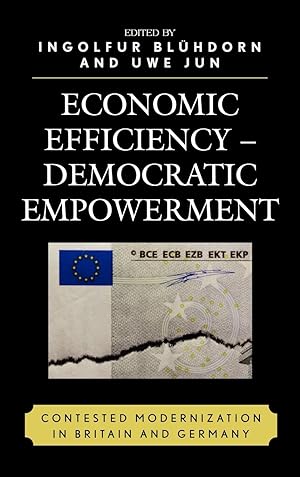
EUR 159,37
Spedizione EUR 48,99
Spedito da Germania a U.S.A.Quantità: Più di 20 disponibili
Aggiungi al carrelloCondizione: New. Dieser Artikel ist ein Print on Demand Artikel und wird nach Ihrer Bestellung fuer Sie gedruckt. Democratic procedures are often inefficient efficient structures tend to be undemocratic. Focusing on Germany and Great Britain as case studies, this book explores the meaning and compatibility of efficiency and democracy in the project of modernizing adva.
-
EUR 165,25
Spedizione EUR 70,00
Spedito da Germania a U.S.A.Quantità: 5 disponibili
Aggiungi al carrelloBuch. Condizione: Neu. Economic Efficiency, Democratic Empowerment | Contested Modernization in Britain and Germany | Ingolfur Blühdorn (u. a.) | Buch | Gebunden | Englisch | 2007 | Lexington Books | EAN 9780739112106 | Verantwortliche Person für die EU: Libri GmbH, Europaallee 1, 36244 Bad Hersfeld, gpsr[at]libri[dot]de | Anbieter: preigu Print on Demand.
-

EUR 197,47
Spedizione EUR 63,42
Spedito da Germania a U.S.A.Quantità: 1 disponibili
Aggiungi al carrelloBuch. Condizione: Neu. nach der Bestellung gedruckt Neuware - Printed after ordering - Democratic procedures are often inefficient; efficient structures tend to be undemocratic. Focusing on Germany and Great Britain as case studies, this book explores the meaning and compatibility of efficiency and democracy in the project of modernizing advanced consumer democracies.


