

Importo totale (1 articolo articoli):
Destinazione ordine:

carey miya (27 risultati)
Vai alla pagina principale dei risultati di ricerca
Filtri di ricerca
Tipo di articolo
- Tutti i tipi di prodotto
- Libri (27)
- Riviste e Giornali (Nessun altro risultato corrispondente a questo perfezionamento)
- Fumetti (Nessun altro risultato corrispondente a questo perfezionamento)
- Spartiti (Nessun altro risultato corrispondente a questo perfezionamento)
- Arte, Stampe e Poster (Nessun altro risultato corrispondente a questo perfezionamento)
- Fotografie (Nessun altro risultato corrispondente a questo perfezionamento)
- Mappe (Nessun altro risultato corrispondente a questo perfezionamento)
- Manoscritti e Collezionismo cartaceo (Nessun altro risultato corrispondente a questo perfezionamento)
Condizioni Maggiori informazioni
Legatura
Ulteriori caratteristiche
- Prima ed. (Nessun altro risultato corrispondente a questo perfezionamento)
- Copia autograf. (Nessun altro risultato corrispondente a questo perfezionamento)
- Sovracoperta (Nessun altro risultato corrispondente a questo perfezionamento)
- Con foto (Nessun altro risultato corrispondente a questo perfezionamento)
- Non Print on Demand (27)
Lingua (1)
Spedizione gratuita
Paese del venditore
Valutazione venditore
-

paperback. Condizione: Good.
-

Scarlet and Black: Slavery and Dispossession in Rutgers History (Volume 1)
Da: Your Online Bookstore, Houston, TX, U.S.A.
Valutazione del venditore 5 su 5 stelle

paperback. Condizione: Fair.
-
Scarlet and Black, Volume Two: Constructing Race and Gender at Rutgers, 1865-1945 (Volume 2)
Da: Gulf Coast Books, Cypress, TX, U.S.A.
Valutazione del venditore 5 su 5 stelle
paperback. Condizione: Good.
-
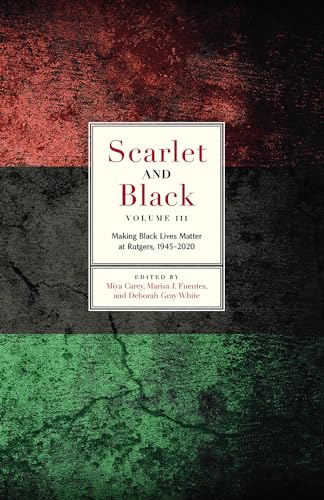
Scarlet and Black, Volume Three: Making Black Lives Matter at Rutgers, 1945-2020 (Scarlet and Black, 3)
Da: Your Online Bookstore, Houston, TX, U.S.A.
Valutazione del venditore 5 su 5 stelle
paperback. Condizione: Good.
-
Scarlet and Black, Volume Three: Making Black Lives Matter at Rutgers, 1945-2020
Da: Books From California, Simi Valley, CA, U.S.A.
Valutazione del venditore 4 su 5 stelle

Paperback. Condizione: Very Good.
-
Scarlet and Black, Volume Three : Making Black Lives Matter at Rutgers, 1945-2020
Da: Better World Books, Mishawaka, IN, U.S.A.
Valutazione del venditore 5 su 5 stelle
Condizione: Good. Pages intact with minimal writing/highlighting. The binding may be loose and creased. Dust jackets/supplements are not included. Stock photo provided. Product includes identifying sticker. Better World Books: Buy Books. Do Good.
-
Scarlet and Black, Volume Three: Making Black Lives Matter at Rutgers, 1945-2020
Da: World of Books (was SecondSale), Montgomery, IL, U.S.A.
Valutazione del venditore 5 su 5 stelle
Condizione: Like New. Item is in like new condition.
-
Scarlet and Black, Volume Three: Making Black Lives Matter at Rutgers, 1945-2020
Lingua: Inglese
Editore: Rutgers University Press May 2021, 2021
ISBN 10: 1978827318 ISBN 13: 9781978827318
Da: Eagle Eye Books, Decatur, GA, U.S.A.
Valutazione del venditore 4 su 5 stelle
Paper Back. Condizione: TRK.
-
Scarlet and Black, Volume Three: Making Black Lives Matter at Rutgers, 1945-2020
Da: WYEMART LIMITED, HEREFORD, Regno Unito
Valutazione del venditore 5 su 5 stelle
EUR 39,54
Spedizione EUR 13,92
Spedito da Regno Unito a U.S.A.Quantità: 1 disponibili
Aggiungi al carrellopaperback. Condizione: Good.
-

Scarlet and Black, Volume Three: Making Black Lives Matter at Rutgers, 1945-2020 (Scarlet and Black, 3)
Da: The Book Corner, Beaverton, OR, U.S.A.
Valutazione del venditore 5 su 5 stelle
hardcover. Condizione: New. Brand new. Ships from Friends bookstore to benefit Beaverton (Oregon) library.
-

Scarlet and Black (3 volume set) (eng)
Da: Brook Bookstore On Demand, Napoli, NA, Italia
Valutazione del venditore 4 su 5 stelle
EUR 61,08
Spedizione EUR 11,00
Spedito da Italia a U.S.A.Quantità: 6 disponibili
Aggiungi al carrelloCondizione: new.
-
Scarlet and Black (3 Volume Set) (Paperback)
Lingua: Inglese
Editore: Rutgers University Press, New Brunswick NJ, 2021
ISBN 10: 197882789X ISBN 13: 9781978827899
Da: Grand Eagle Retail, Bensenville, IL, U.S.A.
Valutazione del venditore 5 su 5 stelle
Paperback. Condizione: new. Paperback. The 250th anniversary of the founding of Rutgers University is a perfect moment for the Rutgers community to reconcile its past, and acknowledge its role in the enslavement and debasement of African Americans and the disfranchisement and elimination of Native American people and culture.Scarlet and Black, Volume One documents the history of Rutgers's connection to slavery, which was neither casual nor accidental-nor unusual. Like most early American colleges, Rutgers depended on slaves to build its campuses and serve its students and faculty; it depended on the sale of black people to fund its very existence. Scarlet and Black, Volume Two continues the work of the Committee on Enslaved and Disenfranchised Population in Rutgers History. This latest volume includes an introduction to the period from the end of the Civil War through WWII, a study of the first black students at Rutgers and New Brunswick Theological Seminary, and profiles of the earliest black women to matriculate at Douglass College.Scarlet and Black, Volume Three concludes this groundbreaking documentation and includes essays about Black and Puerto Rican students' experiences; the development of the Black Unity League; the Conklin Hall takeover; the divestment movement against South African apartheid; anti-racism struggles during the 1990s; and the Don Imus controversy and the 2007 Scarlet Knights women's basketball team. Scarlet and black are the colors Rutgers University uses to represent itself to the nation and world. They are the colors the athletes compete in, the graduates and administrators wear on celebratory occasions, and the colors that distinguish Rutgers from every other university in the United States. This body of work, however, uses these colors to signify something else: the blood that was spilled on the banks of the Raritan River by those dispossessed of their land and the bodies that labored unpaid and in bondage so that Rutgers could be built and sustained. The contributors to these volumes offer this history as a usable one-not to tear down or weaken this very renowned, robust, and growing institution-but to strengthen it and help direct its course for the future. To learn more about the work of the Committee on Enslaved and Disenfranchised Population in Rutgers History, visit the project's website at Documents the history of Rutgers's connection to slavery, which was neither casual nor accidental-nor unusual. Like most early American colleges, Rutgers depended on slaves to build its campuses and serve its students and faculty; it depended on the sale of black people to fund its very existence. Shipping may be from multiple locations in the US or from the UK, depending on stock availability.
-
Scarlet and Black (3 volume set)
Da: Kennys Bookshop and Art Galleries Ltd., Galway, GY, Irlanda
Valutazione del venditore 5 su 5 stelle
EUR 65,65
Spedizione EUR 10,50
Spedito da Irlanda a U.S.A.Quantità: 1 disponibili
Aggiungi al carrelloCondizione: New. 2021. This set is sold as a 3 volume set. Paperback. . . . . .
-
Scarlet and Black (3 volume set)
Lingua: Inglese
Editore: MW - Rutgers University Press, 2021
ISBN 10: 197882789X ISBN 13: 9781978827899
Da: PBShop.store UK, Fairford, GLOS, Regno Unito
Valutazione del venditore 4 su 5 stelle
EUR 77,45
Spedizione EUR 6,81
Spedito da Regno Unito a U.S.A.Quantità: 6 disponibili
Aggiungi al carrelloPAP. Condizione: New. New Book. Shipped from UK. Established seller since 2000.
-
Scarlet and Black (3 volume set)
Da: Revaluation Books, Exeter, Regno Unito
Valutazione del venditore 5 su 5 stelle
EUR 69,11
Spedizione EUR 17,39
Spedito da Regno Unito a U.S.A.Quantità: 2 disponibili
Aggiungi al carrelloPaperback. Condizione: Brand New. 280 pages. 10.25x8.25x5.75 inches. In Stock.
-
Scarlet and Black, Volume Three : Making Black Lives Matter at Rutgers, 1945-2020
Da: Buchpark, Maidenhead, Berkshire, Regno Unito
Valutazione del venditore 5 su 5 stelle
EUR 13,56
Spedizione EUR 75,37
Spedito da Regno Unito a U.S.A.Quantità: 1 disponibili
Aggiungi al carrelloCondizione: Fair. Condition: Fair | Pages: 344 | Language: English | Product Type: Books | The 250th anniversary of the founding of Rutgers University is a perfect moment for the Rutgers community to reconcile its past, and acknowledge its role in the enslavement and debasement of African Americans and the disfranchisement and elimination of Native American people and culture. .
-
Scarlet and Black (3 volume set)
Da: Kennys Bookstore, Olney, MD, U.S.A.
Valutazione del venditore 5 su 5 stelle
Condizione: New. 2021. This set is sold as a 3 volume set. Paperback. . . . . . Books ship from the US and Ireland.
-
Scarlet and Black (3 volume set)
Da: Books Puddle, New York, NY, U.S.A.
Valutazione del venditore 4 su 5 stelle
Condizione: New. This set is sold as a 3 volume set edition NO-PA16APR2015-KAP.
-
Scarlet and Black (3 Volume Set) (Paperback)
Lingua: Inglese
Editore: Rutgers University Press, New Brunswick NJ, 2021
ISBN 10: 197882789X ISBN 13: 9781978827899
Da: AussieBookSeller, Truganina, VIC, Australia
Valutazione del venditore 5 su 5 stelle
EUR 107,26
Spedizione EUR 31,96
Spedito da Australia a U.S.A.Quantità: 1 disponibili
Aggiungi al carrelloPaperback. Condizione: new. Paperback. The 250th anniversary of the founding of Rutgers University is a perfect moment for the Rutgers community to reconcile its past, and acknowledge its role in the enslavement and debasement of African Americans and the disfranchisement and elimination of Native American people and culture.Scarlet and Black, Volume One documents the history of Rutgers's connection to slavery, which was neither casual nor accidental-nor unusual. Like most early American colleges, Rutgers depended on slaves to build its campuses and serve its students and faculty; it depended on the sale of black people to fund its very existence. Scarlet and Black, Volume Two continues the work of the Committee on Enslaved and Disenfranchised Population in Rutgers History. This latest volume includes an introduction to the period from the end of the Civil War through WWII, a study of the first black students at Rutgers and New Brunswick Theological Seminary, and profiles of the earliest black women to matriculate at Douglass College.Scarlet and Black, Volume Three concludes this groundbreaking documentation and includes essays about Black and Puerto Rican students' experiences; the development of the Black Unity League; the Conklin Hall takeover; the divestment movement against South African apartheid; anti-racism struggles during the 1990s; and the Don Imus controversy and the 2007 Scarlet Knights women's basketball team. Scarlet and black are the colors Rutgers University uses to represent itself to the nation and world. They are the colors the athletes compete in, the graduates and administrators wear on celebratory occasions, and the colors that distinguish Rutgers from every other university in the United States. This body of work, however, uses these colors to signify something else: the blood that was spilled on the banks of the Raritan River by those dispossessed of their land and the bodies that labored unpaid and in bondage so that Rutgers could be built and sustained. The contributors to these volumes offer this history as a usable one-not to tear down or weaken this very renowned, robust, and growing institution-but to strengthen it and help direct its course for the future. To learn more about the work of the Committee on Enslaved and Disenfranchised Population in Rutgers History, visit the project's website at Documents the history of Rutgers's connection to slavery, which was neither casual nor accidental-nor unusual. Like most early American colleges, Rutgers depended on slaves to build its campuses and serve its students and faculty; it depended on the sale of black people to fund its very existence. Shipping may be from our Sydney, NSW warehouse or from our UK or US warehouse, depending on stock availability.
-

Scarlet and Black (3 volume set) (eng)
Da: Brook Bookstore On Demand, Napoli, NA, Italia
Valutazione del venditore 4 su 5 stelle
EUR 153,71
Spedizione EUR 13,50
Spedito da Italia a U.S.A.Quantità: 5 disponibili
Aggiungi al carrelloCondizione: new.
-
Scarlet and Black (3 Volume Set) (Hardcover)
Lingua: Inglese
Editore: Rutgers University Press, New Brunswick NJ, 2021
ISBN 10: 1978827903 ISBN 13: 9781978827905
Da: Grand Eagle Retail, Bensenville, IL, U.S.A.
Valutazione del venditore 5 su 5 stelle
Hardcover. Condizione: new. Hardcover. The 250th anniversary of the founding of Rutgers University is a perfect moment for the Rutgers community to reconcile its past, and acknowledge its role in the enslavement and debasement of African Americans and the disfranchisement and elimination of Native American people and culture.Scarlet and Black, Volume One documents the history of Rutgers's connection to slavery, which was neither casual nor accidental-nor unusual. Like most early American colleges, Rutgers depended on slaves to build its campuses and serve its students and faculty; it depended on the sale of black people to fund its very existence. Scarlet and Black, Volume Two continues the work of the Committee on Enslaved and Disenfranchised Population in Rutgers History. This latest volume includes an introduction to the period from the end of the Civil War through WWII, a study of the first black students at Rutgers and New Brunswick Theological Seminary, and profiles of the earliest black women to matriculate at Douglass College.Scarlet and Black, Volume Three concludes this groundbreaking documentation and includes essays about Black and Puerto Rican students' experiences; the development of the Black Unity League; the Conklin Hall takeover; the divestment movement against South African apartheid; anti-racism struggles during the 1990s; and the Don Imus controversy and the 2007 Scarlet Knights women's basketball team. Scarlet and black are the colors Rutgers University uses to represent itself to the nation and world. They are the colors the athletes compete in, the graduates and administrators wear on celebratory occasions, and the colors that distinguish Rutgers from every other university in the United States. This body of work, however, uses these colors to signify something else: the blood that was spilled on the banks of the Raritan River by those dispossessed of their land and the bodies that labored unpaid and in bondage so that Rutgers could be built and sustained. The contributors to these volumes offer this history as a usable one-not to tear down or weaken this very renowned, robust, and growing institution-but to strengthen it and help direct its course for the future. To learn more about the work of the Committee on Enslaved and Disenfranchised Population in Rutgers History, visit the project's website at Documents the history of Rutgers's connection to slavery, which was neither casual nor accidental-nor unusual. Like most early American colleges, Rutgers depended on slaves to build its campuses and serve its students and faculty; it depended on the sale of black people to fund its very existence. Shipping may be from multiple locations in the US or from the UK, depending on stock availability.
-
Scarlet and Black (3 volume set)
Da: Kennys Bookshop and Art Galleries Ltd., Galway, GY, Irlanda
Valutazione del venditore 5 su 5 stelle
EUR 168,08
Spedizione EUR 10,50
Spedito da Irlanda a U.S.A.Quantità: 1 disponibili
Aggiungi al carrelloCondizione: New. 2021. This set is sold as a 3 volume set. Hardcover. . . . . .
-
Scarlet and Black (3 Volume Set)
Da: THE SAINT BOOKSTORE, Southport, Regno Unito
Valutazione del venditore 5 su 5 stelle
EUR 168,07
Spedizione EUR 21,62
Spedito da Regno Unito a U.S.A.Quantità: 5 disponibili
Aggiungi al carrelloHardback. Condizione: New. New copy - Usually dispatched within 4 working days.
-
Scarlet and Black (3 volume set) (Scarlet and Black, 1-3)
Da: Books Puddle, New York, NY, U.S.A.
Valutazione del venditore 4 su 5 stelle
Condizione: New. This set is sold as a 3 volume set edition NO-PA16APR2015-KAP.
-
Scarlet and Black (3 volume set)
Da: Revaluation Books, Exeter, Regno Unito
Valutazione del venditore 5 su 5 stelle
EUR 182,95
Spedizione EUR 23,19
Spedito da Regno Unito a U.S.A.Quantità: 2 disponibili
Aggiungi al carrelloHardcover. Condizione: Brand New. pck edition. 662 pages. 9.00x6.00x5.80 inches. In Stock.
-
Scarlet and Black (3 volume set)
Da: Kennys Bookstore, Olney, MD, U.S.A.
Valutazione del venditore 5 su 5 stelle
Condizione: New. 2021. This set is sold as a 3 volume set. Hardcover. . . . . . Books ship from the US and Ireland.
-
Scarlet and Black (3 Volume Set) (Hardcover)
Lingua: Inglese
Editore: Rutgers University Press, New Brunswick NJ, 2021
ISBN 10: 1978827903 ISBN 13: 9781978827905
Da: AussieBookSeller, Truganina, VIC, Australia
Valutazione del venditore 5 su 5 stelle
EUR 254,44
Spedizione EUR 31,96
Spedito da Australia a U.S.A.Quantità: 1 disponibili
Aggiungi al carrelloHardcover. Condizione: new. Hardcover. The 250th anniversary of the founding of Rutgers University is a perfect moment for the Rutgers community to reconcile its past, and acknowledge its role in the enslavement and debasement of African Americans and the disfranchisement and elimination of Native American people and culture.Scarlet and Black, Volume One documents the history of Rutgers's connection to slavery, which was neither casual nor accidental-nor unusual. Like most early American colleges, Rutgers depended on slaves to build its campuses and serve its students and faculty; it depended on the sale of black people to fund its very existence. Scarlet and Black, Volume Two continues the work of the Committee on Enslaved and Disenfranchised Population in Rutgers History. This latest volume includes an introduction to the period from the end of the Civil War through WWII, a study of the first black students at Rutgers and New Brunswick Theological Seminary, and profiles of the earliest black women to matriculate at Douglass College.Scarlet and Black, Volume Three concludes this groundbreaking documentation and includes essays about Black and Puerto Rican students' experiences; the development of the Black Unity League; the Conklin Hall takeover; the divestment movement against South African apartheid; anti-racism struggles during the 1990s; and the Don Imus controversy and the 2007 Scarlet Knights women's basketball team. Scarlet and black are the colors Rutgers University uses to represent itself to the nation and world. They are the colors the athletes compete in, the graduates and administrators wear on celebratory occasions, and the colors that distinguish Rutgers from every other university in the United States. This body of work, however, uses these colors to signify something else: the blood that was spilled on the banks of the Raritan River by those dispossessed of their land and the bodies that labored unpaid and in bondage so that Rutgers could be built and sustained. The contributors to these volumes offer this history as a usable one-not to tear down or weaken this very renowned, robust, and growing institution-but to strengthen it and help direct its course for the future. To learn more about the work of the Committee on Enslaved and Disenfranchised Population in Rutgers History, visit the project's website at Documents the history of Rutgers's connection to slavery, which was neither casual nor accidental-nor unusual. Like most early American colleges, Rutgers depended on slaves to build its campuses and serve its students and faculty; it depended on the sale of black people to fund its very existence. Shipping may be from our Sydney, NSW warehouse or from our UK or US warehouse, depending on stock availability.

