
Importo totale (1 articolo articoli):
Destinazione ordine:

cason ben (7 risultati)
Vai alla pagina principale dei risultati di ricerca
Filtri di ricerca
Tipo di articolo
- Tutti i tipi di prodotto
- Libri (6)
- Riviste e Giornali (Nessun altro risultato corrispondente a questo perfezionamento)
- Fumetti (Nessun altro risultato corrispondente a questo perfezionamento)
- Spartiti (Nessun altro risultato corrispondente a questo perfezionamento)
- Arte, Stampe e Poster (Nessun altro risultato corrispondente a questo perfezionamento)
- Fotografie (Nessun altro risultato corrispondente a questo perfezionamento)
- Mappe (Nessun altro risultato corrispondente a questo perfezionamento)
- Manoscritti e Collezionismo cartaceo (1)
Condizioni Maggiori informazioni
- Nuovo (Nessun altro risultato corrispondente a questo perfezionamento)
- Come nuovo, Ottimo o Quasi ottimo (Nessun altro risultato corrispondente a questo perfezionamento)
- Molto buono o Buono (5)
- Discreto o Mediocre (1)
- Come descritto (1)
Legatura
- Tutte
- Rilegato (Nessun altro risultato corrispondente a questo perfezionamento)
- Brossura (5)
Ulteriori caratteristiche
- Prima ed. (1)
- Copia autograf. (Nessun altro risultato corrispondente a questo perfezionamento)
- Sovracoperta (Nessun altro risultato corrispondente a questo perfezionamento)
- Con foto (2)
- Non Print on Demand (7)
Lingua (2)
Prezzo
- Qualsiasi prezzo
- Inferiore a EUR 20
- EUR 20 a EUR 45
- Superiore a EUR 45 (Nessun altro risultato corrispondente a questo perfezionamento)
Spedizione gratuita
Paese del venditore
Valutazione venditore
-

The Obligation to Remember: The American Gathering of Jewish Holocaust Survivors, Washington, D.C., April 11-14, 1983.
Lingua: Inglese
Editore: Washington Post, 1983
Soft cover. Condizione: Very Good. Very good light cover wear - no markings. Contains a xerox letter with "American Gathering." letterhead by Benjamin Meed regarding this event and a postpaid postcard soliciting donations . etc.
-
The Obligation to Remember: The American Gathering of Jewish Holocaust Survivors, Washington, D.C., April 11-14, 1983.
Editore: The Washington Post, Washington, D.C., 1983
Da: Henry Hollander, Bookseller, Los Angeles, CA, U.S.A.
Valutazione del venditore 4 su 5 stelle

Softbound. Condizione: Very Good. Large quarto, paper covers, 66 pp., b/w photos.
-
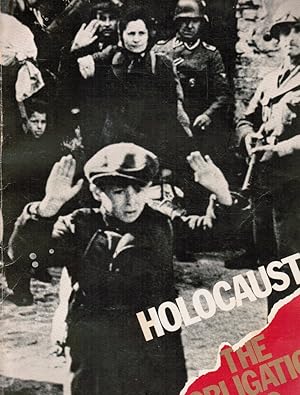
Holocaust: the Obligation to Remember: the American Gathering of Jewish Holocaust Survivors, Washington, DC, April 11-14, 1983
Editore: The Washington Post, 1983
Da: Bookshop Baltimore, Baltimore, MD, U.S.A.
Valutazione del venditore 5 su 5 stelle

Paperback. Condizione: Fair. Illustrated by Dudley Brooks, Charles Del Vecchio, Harry Naltchayan, Etc (illustratore). 66 pages. Clean inside, spine binding glue on the inside cover is visible, book is intact. Essay by various writers, some of which are: The Man Who Knew the Nazi Secret: The Futil Effort to Stop the Final Solution by Charles Fenyvesi; God and the Holocaust: Five Survivors and Their Faiths by Paula Herbut; Elie Wiesel: Four Decades After Auschwitz by Phil McCombs; Newspaper Columns are supposed to have a conclusion, this One Will Not by Richard Cohen plus others.
-

The Obligation to Remember, The American Gathering of Jewish Holocaust Survivors, Washington, DC, 4/11-4/14, 1983, An Anthology
Editore: Washington Post, 1983
Da: My Book Heaven, Alameda, CA, U.S.A.
Valutazione del venditore 5 su 5 stelle
Manoscritto / Collezionismo cartaceo
Ben Cason, editor The Obligation to Remember, The American Gathering of Jewish Holocaust Survivors, Washington, DC, 4/11-4/14, 1983, An Anthology 1983, Washington Post, large wraps, Very Good condition.
-
The Obligation to Remember: The American Gathering of Jewish Holocaust Survivors, Washington, DC, 4/11-14, 1983: An Anthology
Editore: The Washington Post
Da: Wonder Book, Frederick, MD, U.S.A.
Membro dell'associazione: ABAA ILAB
Valutazione del venditore 5 su 5 stelle
Condizione: Good. Good condition. (Jewish Holocaust 1939-1945, Holocaust survivors, congresses) A copy that has been read but remains intact. May contain markings such as bookplates, stamps, limited notes and highlighting, or a few light stains. Bundled media such as CDs, DVDs, floppy disks or access codes may not be included.
-
Holocaust: The Obligation to Remember The American Gathering of Jewish Holocaust Survivors April 11-14 1983
Editore: Washington Post, 1983
Da: Schoen Books, South Deerfield, MA, U.S.A.
Membro dell'associazione: SNEAB
Valutazione del venditore 3 su 5 stelle

Condizione: Very Good. Location:150 67 pp. Filled with photos from the Holocaust and articles. Top corner bumped. Large 8vo. 150.
-
The Obligation to Remember; The American Gathering of Jewish Holocaust Survivors, Washington, DC, 4/11-14, 1983: An Anthology by the Staff of the Washington Post
Editore: The Washington Post, Washington, DC, 1983
Da: Ground Zero Books, Ltd., Silver Spring, MD, U.S.A.
Valutazione del venditore 4 su 5 stelle
Prima edizione
Wraps. Condizione: Good. Presumed First Edition, First printing. The format is approximately 9.5 inches by 13 inches. 66, wraps, Illustrated cover. Illustrations. The covers are somewhat worn and soiled. The cover title: Holocaust, the obligation to remember. The Holocaust was the genocide of European Jews during World War II. Between 1941 and 1945, Nazi Germany and its collaborators systematically murdered some six million Jews across German-occupied Europe, around two-thirds of Europe's Jewish population. The murders were carried out primarily through mass shootings and poison gas in extermination camps, chiefly Auschwitz-Birkenau, Treblinka, Belzec, Sobibor, and Che mno in occupied Poland. The Nazis developed their ideology based on racism and pursuit of "living space", and seized power in early 1933. Meant to force all German Jews regardless of means to attempt to emigrate, the regime passed anti-Jewish laws, encouraged harassment, and orchestrated a nationwide pogrom in November 1938. After Germany invaded Poland in September 1939, occupation authorities began to establish ghettos to segregate Jews. Following the invasion of the Soviet Union in June 1941, 1.5 to 2 million Jews were shot by German forces and local collaborators. Many Jewish survivors emigrated outside of Europe after the war. A few Holocaust perpetrators faced criminal trials. Billions of dollars in reparations have been paid, although falling short of the Jews' losses. The Holocaust has also been commemorated in museums, memorials, and culture. It has become central to Western historical consciousness as a symbol of the ultimate human evil. From a Washington Post article published in 1983: IT IS NOW 38 years since the defeat of Hitler's empire and the Allied armies' relief of the death camps. Anyone who survived those camps is now well into middle age; most are elderly. That is the reason for the American Gathering of Jewish Holocaust Survivors here this week. It is preparation for a time when there will no longer be living witnesses to those events. Some of those who died in the camps were gypsies, and some were intellectuals. Some were Christians whose consciences made them disruptive influences in Hitler's New Order. But a very great majority of them were, of course, Jews sent there in the empire's attempt to destroy a faith together with all who followed it and their entire families. In Europe, that attempt nearly succeeded. The Holocaust will necessarily have a special meaning for Jews, but it would be deeply wrong to let the memory of the death camps be consigned to an exclusively Jewish heritage. The message of the Holocaust deserves the most careful consideration of everyone of any religion or none at all. Even in 1945, in the heat of war, the significance of the Holocaust transcended national politics. It was correctly taken as evidence of the presence of a militant and purposeful evil, in the sense in which the moralists and theologians have always used the word. There had been optimistic times in the 18th and 19th centuries when enlightened people often thought of evil as a condition that rising standards of living and improved education would eventually cure. That brave thought collapsed in the first half of the present century. The death camps were the creation of people who were highly endowed, by the world's standards, with both material wealth and an elevated culture. The 1930s and the 1940s brought the demonstration that the heart of darkness does not lie in the upper reaches of some exotic or primitive place, but much closer to home, in the most "advanced" of societies. The death camps stand in our history as profound warning against certain dangerously easy assumptions about human nature. The camps constitute a commentary not simply on Nazi Germany, but on habits of mind and spirit that can be found elsewhere as well. It is more pleasant not to think about these things, and to keep the conversation to those moments in history that show the human race at its best. But at the other extreme are those stark camps, still within the memory of people here in this city, conveying their own terrible instruction. That is the point of the gathering here. There is a moral obligation to remember--always.


