Importo totale (1 articolo articoli):
Destinazione ordine:

cheung ivan (15 risultati)
Vai alla pagina principale dei risultati di ricerca
Filtri di ricerca
Tipo di articolo
- Tutti i tipi di prodotto
- Libri (15)
- Riviste e Giornali (Nessun altro risultato corrispondente a questo perfezionamento)
- Fumetti (Nessun altro risultato corrispondente a questo perfezionamento)
- Spartiti (Nessun altro risultato corrispondente a questo perfezionamento)
- Arte, Stampe e Poster (Nessun altro risultato corrispondente a questo perfezionamento)
- Fotografie (Nessun altro risultato corrispondente a questo perfezionamento)
- Mappe (Nessun altro risultato corrispondente a questo perfezionamento)
- Manoscritti e Collezionismo cartaceo (Nessun altro risultato corrispondente a questo perfezionamento)
Condizioni Maggiori informazioni
- Nuovo (10)
- Come nuovo, Ottimo o Quasi ottimo (2)
- Molto buono o Buono (3)
- Discreto o Mediocre (Nessun altro risultato corrispondente a questo perfezionamento)
- Come descritto (Nessun altro risultato corrispondente a questo perfezionamento)
Legatura
Ulteriori caratteristiche
- Prima ed. (1)
- Copia autograf. (Nessun altro risultato corrispondente a questo perfezionamento)
- Sovracoperta (Nessun altro risultato corrispondente a questo perfezionamento)
- Con foto (7)
- Non Print on Demand (13)
Lingua (2)
Spedizione gratuita
Paese del venditore
Valutazione venditore
-
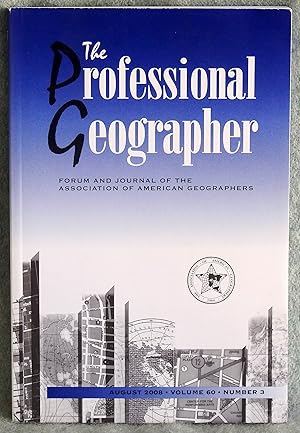
The Professional Geographer August 2008 Volume 60 Number 3
Lingua: Inglese
Editore: Association of American Geographers, Philadelphia, 2008
Da: Argyl Houser, Bookseller, Altadena, CA, U.S.A.
Valutazione del venditore 4 su 5 stelle

Soft cover. Condizione: Very Good. Spotless inside and out. Lower right corner of front cover and all pages mildly bent near the tip. Upper right corner of the front cover mildly bent. Lower left corner of the back cover bent near the tip. Crease in the spine. Very little wear otherwise. It will be bubble-wrapped and carefully packed in a sturdy box to ensure safe transit. This issue includes: "Land, Labor, and Rural Development: Analyzing Participation in India's Village Dairy Cooperatives" by Pratyusha Basu and Jayajit Chakraborty; "Style for the Zeitgeist: The Stealthy Revival of Historical Housing Since the Late 1960s" by Nadine Dostrovsky and Richard Harris; "Urban Hierarchy or Local Buzz? High-Order Producer Service and (or) Knowledge-Intensive Business Service Location in Canada, 1991-2001" by Richard Shearmar and David Doloreux; "Skills in Professional Geography: An Assessment of Workforce Needs and Expectations" by Michael Solem, Ivan Cheung, and M. Beth Schlemper; "Changing Properties of Snowpack in the Great Lake Basin, Western United States, from a 26-year SNOTEL Record" by Daniel Bedford and Andrea Douglass; "'If They Only Knew': Color Blindness and Uinversalism in California Alternative Food Institutions" by Julie Guthman; "Assessing Climate Change in the Contiguous United States Using a Modified Thornthwaite Climate Classification Scheme" by Andrew Groundstein; "The Geography of Religious Diversity in the United States" by Barney Warf and Mort Winsberg plus numerous book reviews.
-
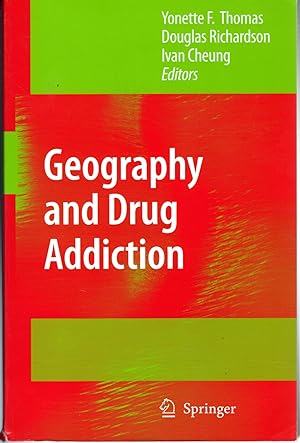
Geography and Drug Addiction
Lingua: Inglese
Editore: Springer, NY, 2008
Da: Dorley House Books, Inc., Hagerstown, MD, U.S.A.
Valutazione del venditore 4 su 5 stelle
Prima edizione
Paperback. Condizione: Near Fine. 1st. 538 clean, unmarked pages/index.
-
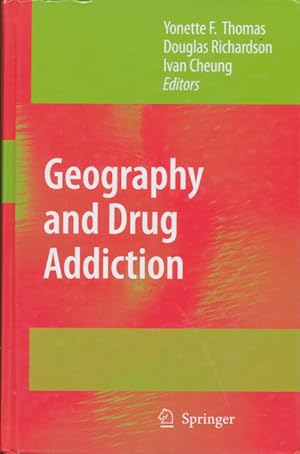
Hardcover. Condizione: Very Good. Dust jacket condition: No Jacket (as issued). Very nice and clean. Text free of highlighting and writing. Tightly bound. Making Connections: Geography and Drug Addiction Geography involves making connections - connections in our world among people and places, cultures, human activities, and natural processes. It involves understa- ing the relationships and âconnections' between seemingly disparate or unrelated ideas and between what is and what might be. Geography also involves connecting with people. When I rst encountered an extraordinarily vibrant, intelligent, and socially engaged scientist at a private d- ner several years ago, I was immediately captivated by the intensity of her passion to understand how and why people become addicted to drugs, and what could be done to treat or prevent drug addiction. Fortunately, she was willing to think beyond the bounds of her own discipline in her search for answers. Our conversation that evening, which began with her research on fundamental biochemical processes of drug addiction in the human body, evolved inevitably to an exploration of the ways in which research on the geographical context of drug addiction might contribute to the better understanding of etiology of addiction, its diffusion, its interaction with geographically variable environmental, social, and economic factors, and the strategies for its treatment and prevention. This fascinating woman, I soon learned, was Nora Volkow, the Director of the National Institute on Drug Abuse as well as the granddaughter of Leon Trotsky. 300 pages. Drug addiction--Etiology--Congresses, Drug addiction--Social aspects--Congresses, Drug addiction--Environmental aspects--Congresses, Drug addiction--Mathematical models--Congresses, Applied human geography--Congresses, Medical geography--Congresses.
-

Almanah - Mednarodne Fotografije
Lingua: Spagnolo
Editore: Ljubljana, Ljubljana, 1952
Da: Caixa Baixa, Florianopolis, SC, Brasile
Valutazione del venditore 5 su 5 stelle

EUR 46,27
Spedizione EUR 17,23
Spedito da Brasile a U.S.A.Quantità: 1 disponibili
Aggiungi al carrelloEncuadernación de tapa blanda. Condizione: Muy Bien. Wears to front covers and general handling marks.
-
Geography and Drug Addiction
Da: Books Puddle, New York, NY, U.S.A.
Valutazione del venditore 4 su 5 stelle
Condizione: New. pp. 604.
-
Geography and Drug Addiction
Da: Majestic Books, Hounslow, Regno Unito
Valutazione del venditore 4 su 5 stelle
EUR 145,77
Spedizione EUR 7,49
Spedito da Regno Unito a U.S.A.Quantità: 1 disponibili
Aggiungi al carrelloCondizione: New. pp. 604.
-
Geography and Drug Addiction
Da: Lucky's Textbooks, Dallas, TX, U.S.A.
Valutazione del venditore 5 su 5 stelle
EUR 159,29
Spedizione EUR 3,44
Spedito in U.S.A.Quantità: Più di 20 disponibili
Aggiungi al carrelloCondizione: New.
-
Geography and Drug Addiction
Da: Biblios, Frankfurt am main, HESSE, Germania
Valutazione del venditore 4 su 5 stelle
EUR 149,11
Spedizione EUR 9,95
Spedito da Germania a U.S.A.Quantità: 1 disponibili
Aggiungi al carrelloCondizione: New. pp. 604.
-
Geography and Drug Addiction
Da: Ria Christie Collections, Uxbridge, Regno Unito
Valutazione del venditore 5 su 5 stelle
EUR 159,48
Spedizione EUR 13,81
Spedito da Regno Unito a U.S.A.Quantità: Più di 20 disponibili
Aggiungi al carrelloCondizione: New. In.
-
Geography and Drug Addiction
Da: Mispah books, Redhill, SURRE, Regno Unito
Valutazione del venditore 4 su 5 stelle
EUR 178,12
Spedizione EUR 28,82
Spedito da Regno Unito a U.S.A.Quantità: 1 disponibili
Aggiungi al carrelloHardcover. Condizione: Like New. LIKE NEW. SHIPS FROM MULTIPLE LOCATIONS. book.
-

Geography and Drug Addiction
Lingua: Inglese
Editore: Springer Netherlands, Springer Netherlands Okt 2008, 2008
ISBN 10: 1402085087 ISBN 13: 9781402085086
Da: buchversandmimpf2000, Emtmannsberg, BAYE, Germania
Valutazione del venditore 5 su 5 stelle
EUR 160,49
Spedizione EUR 60,00
Spedito da Germania a U.S.A.Quantità: 2 disponibili
Aggiungi al carrelloBuch. Condizione: Neu. Neuware -Making Connections: Geography and Drug Addiction Geography involves making connections ¿ connections in our world among people and places, cultures, human activities, and natural processes. It involves understa- ing the relationships and ¿connections¿ between seemingly disparate or unrelated ideas and between what is and what might be. Geography also involves connecting with people. When I rst encountered an extraordinarily vibrant, intelligent, and socially engaged scientist at a private d- ner several years ago, I was immediately captivated by the intensity of her passion to understand how and why people become addicted to drugs, and what could be done to treat or prevent drug addiction. Fortunately, she was willing to think beyond the bounds of her own discipline in her search for answers. Our conversation that evening, which began with her research on fundamental biochemical processes of drug addiction in the human body, evolved inevitably to an exploration of the ways in which research on the geographical context of drug addiction might contribute to the better understanding of etiology of addiction, its diffusion, its interaction with geographically variable environmental, social, and economic factors, and the strategies for its treatment and prevention. This fascinating woman, I soon learned, was Nora Volkow, the Director of the National Institute on Drug Abuse as well as the granddaughter of Leon Trotsky.Springer Verlag GmbH, Tiergartenstr. 17, 69121 Heidelberg 604 pp. Englisch.
-
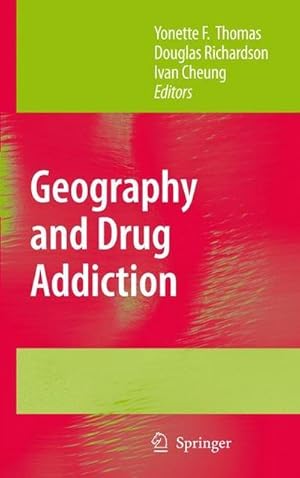
Geography and Drug Addiction
Lingua: Inglese
Editore: Springer Netherlands, Springer Netherlands, 2008
ISBN 10: 1402085087 ISBN 13: 9781402085086
EUR 168,53
Spedizione EUR 65,31
Spedito da Germania a U.S.A.Quantità: 1 disponibili
Aggiungi al carrelloBuch. Condizione: Neu. Druck auf Anfrage Neuware - Printed after ordering - Making Connections: Geography and Drug Addiction Geography involves making connections - connections in our world among people and places, cultures, human activities, and natural processes. It involves understa- ing the relationships and 'connections' between seemingly disparate or unrelated ideas and between what is and what might be. Geography also involves connecting with people. When I rst encountered an extraordinarily vibrant, intelligent, and socially engaged scientist at a private d- ner several years ago, I was immediately captivated by the intensity of her passion to understand how and why people become addicted to drugs, and what could be done to treat or prevent drug addiction. Fortunately, she was willing to think beyond the bounds of her own discipline in her search for answers. Our conversation that evening, which began with her research on fundamental biochemical processes of drug addiction in the human body, evolved inevitably to an exploration of the ways in which research on the geographical context of drug addiction might contribute to the better understanding of etiology of addiction, its diffusion, its interaction with geographically variable environmental, social, and economic factors, and the strategies for its treatment and prevention. This fascinating woman, I soon learned, was Nora Volkow, the Director of the National Institute on Drug Abuse as well as the granddaughter of Leon Trotsky.
-
Geography and Drug Addiction
Da: Revaluation Books, Exeter, Regno Unito
Valutazione del venditore 5 su 5 stelle
EUR 240,87
Spedizione EUR 17,29
Spedito da Regno Unito a U.S.A.Quantità: 2 disponibili
Aggiungi al carrelloHardcover. Condizione: Brand New. 1st edition. 538 pages. 9.50x6.50x1.00 inches. In Stock.
-
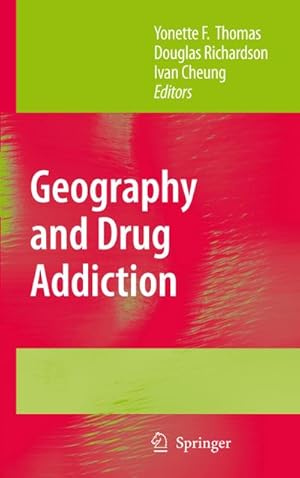
Geography and Drug Addiction
Lingua: Inglese
Editore: Springer Netherlands Okt 2008, 2008
ISBN 10: 1402085087 ISBN 13: 9781402085086
Da: BuchWeltWeit Ludwig Meier e.K., Bergisch Gladbach, Germania
Valutazione del venditore 5 su 5 stelle
EUR 160,49
Spedizione EUR 23,00
Spedito da Germania a U.S.A.Quantità: 2 disponibili
Aggiungi al carrelloBuch. Condizione: Neu. This item is printed on demand - it takes 3-4 days longer - Neuware -Making Connections: Geography and Drug Addiction Geography involves making connections - connections in our world among people and places, cultures, human activities, and natural processes. It involves understa- ing the relationships and 'connections' between seemingly disparate or unrelated ideas and between what is and what might be. Geography also involves connecting with people. When I rst encountered an extraordinarily vibrant, intelligent, and socially engaged scientist at a private d- ner several years ago, I was immediately captivated by the intensity of her passion to understand how and why people become addicted to drugs, and what could be done to treat or prevent drug addiction. Fortunately, she was willing to think beyond the bounds of her own discipline in her search for answers. Our conversation that evening, which began with her research on fundamental biochemical processes of drug addiction in the human body, evolved inevitably to an exploration of the ways in which research on the geographical context of drug addiction might contribute to the better understanding of etiology of addiction, its diffusion, its interaction with geographically variable environmental, social, and economic factors, and the strategies for its treatment and prevention. This fascinating woman, I soon learned, was Nora Volkow, the Director of the National Institute on Drug Abuse as well as the granddaughter of Leon Trotsky. 604 pp. Englisch.
-
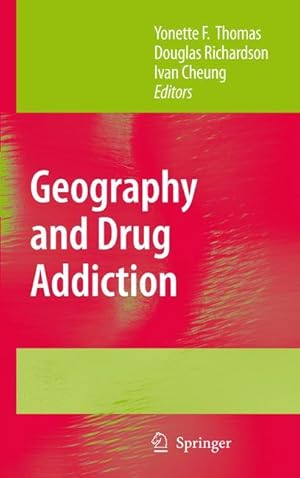
EUR 136,16
Spedizione EUR 48,99
Spedito da Germania a U.S.A.Quantità: Più di 20 disponibili
Aggiungi al carrelloGebunden. Condizione: New. Dieser Artikel ist ein Print on Demand Artikel und wird nach Ihrer Bestellung fuer Sie gedruckt. The only book focused on the intersection of geography and drug abuse researchMultidisciplinary chapters combining the methodologies of both social and physical sciencesThese unique mixed-methodological approaches move beyond more tradition.