

Importo totale (1 articolo articoli):
Destinazione ordine:

committee framework developing new taxonomy (6 risultati)
Vai alla pagina principale dei risultati di ricerca
Filtri di ricerca
Tipo di articolo
- Tutti i tipi di prodotto
- Libri (6)
- Riviste e Giornali (Nessun altro risultato corrispondente a questo perfezionamento)
- Fumetti (Nessun altro risultato corrispondente a questo perfezionamento)
- Spartiti (Nessun altro risultato corrispondente a questo perfezionamento)
- Arte, Stampe e Poster (Nessun altro risultato corrispondente a questo perfezionamento)
- Fotografie (Nessun altro risultato corrispondente a questo perfezionamento)
- Mappe (Nessun altro risultato corrispondente a questo perfezionamento)
- Manoscritti e Collezionismo cartaceo (Nessun altro risultato corrispondente a questo perfezionamento)
Condizioni Maggiori informazioni
- Nuovo (3)
- Come nuovo, Ottimo o Quasi ottimo (1)
- Molto buono o Buono (2)
- Discreto o Mediocre (Nessun altro risultato corrispondente a questo perfezionamento)
- Come descritto (Nessun altro risultato corrispondente a questo perfezionamento)
Legatura
Ulteriori caratteristiche
- Prima ed. (Nessun altro risultato corrispondente a questo perfezionamento)
- Copia autograf. (Nessun altro risultato corrispondente a questo perfezionamento)
- Sovracoperta (1)
- Con foto (2)
- Non Print on Demand (6)
Lingua (1)
Spedizione gratuita
Paese del venditore
Valutazione venditore
-
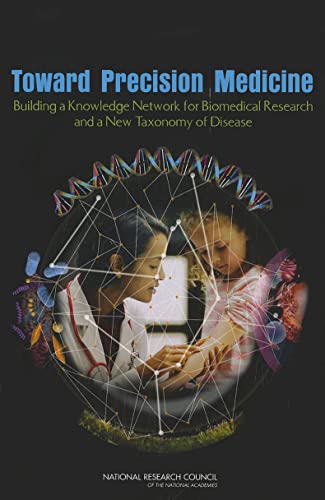
Toward Precision Medicine: Building a Knowledge Network for Biomedical Research and a New Taxonomy of Disease
Lingua: Inglese
Editore: National Academies Press (edition Illustrated), 2011
ISBN 10: 0309222222 ISBN 13: 9780309222228
Da: BooksRun, Philadelphia, PA, U.S.A.
Valutazione del venditore 5 su 5 stelle

Paperback. Condizione: Very Good. Illustrated. It's a well-cared-for item that has seen limited use. The item may show minor signs of wear. All the text is legible, with all pages included. It may have slight markings and/or highlighting.
-
Toward Precision Medicine: Building a Knowledge Network for Biomedical Research and a New Taxonomy of Disease (Environmental Health Matters Initiative)
Da: Wonder Book, Frederick, MD, U.S.A.
Membro dell'associazione: ABAA ILAB
Valutazione del venditore 5 su 5 stelle
Condizione: As New. Like New condition. A near perfect copy that may have very minor cosmetic defects.
-
Toward Precision Medicine: Building a Knowledge Network for Biomedical Research and a New Taxonomy of Disease
Da: St Vincent de Paul of Lane County, Eugene, OR, U.S.A.
Valutazione del venditore 5 su 5 stelle
Condizione: Good. >>> paperback This item shows wear from consistent use but remains in good readable condition. It may have marks on or in it, and may show other signs of previous use or shelf wear. May have minor creases or signs of wear on dust jacket. Packed with care, shipped promptly.
-

Toward Precision Medicine
Lingua: Inglese
Editore: National Academies Press, US, 2011
ISBN 10: 0309222222 ISBN 13: 9780309222228
Da: Rarewaves.com USA, London, LONDO, Regno Unito
Valutazione del venditore 5 su 5 stelle
EUR 53,29
Spedizione gratuita
Spedito da Regno Unito a U.S.A.Quantità: 1 disponibili
Aggiungi al carrelloPaperback. Condizione: New. Motivated by the explosion of molecular data on humans-particularly data associated with individual patients-and the sense that there are large, as-yet-untapped opportunities to use this data to improve health outcomes, Toward Precision Medicine explores the feasibility and need for "a new taxonomy of human disease based on molecular biology" and develops a potential framework for creating one.The book says that a new data network that integrates emerging research on the molecular makeup of diseases with clinical data on individual patients could drive the development of a more accurate classification of diseases and ultimately enhance diagnosis and treatment. The "new taxonomy" that emerges would define diseases by their underlying molecular causes and other factors in addition to their traditional physical signs and symptoms. The book adds that the new data network could also improve biomedical research by enabling scientists to access patients' information during treatment while still protecting their rights. This would allow the marriage of molecular research and clinical data at the point of care, as opposed to research information continuing to reside primarily in academia.Toward Precision Medicine notes that moving toward individualized medicine requires that researchers and health care providers have access to very large sets of health- and disease-related data linked to individual patients. These data are also critical for developing the information commons, the knowledge network of disease, and ultimately the new taxonomy.
-
Toward Precision Medicine: Building a Knowledge Network for Biomedical Research and a New Taxonomy of Disease
Da: Ria Christie Collections, Uxbridge, Regno Unito
Valutazione del venditore 5 su 5 stelle
EUR 47,46
Spedizione EUR 13,67
Spedito da Regno Unito a U.S.A.Quantità: 2 disponibili
Aggiungi al carrelloCondizione: New. In.
-

Toward Precision Medicine
Lingua: Inglese
Editore: National Academies Press, US, 2011
ISBN 10: 0309222222 ISBN 13: 9780309222228
Da: Rarewaves.com UK, London, Regno Unito
Valutazione del venditore 5 su 5 stelle
EUR 49,33
Spedizione EUR 74,17
Spedito da Regno Unito a U.S.A.Quantità: 1 disponibili
Aggiungi al carrelloPaperback. Condizione: New. Motivated by the explosion of molecular data on humans-particularly data associated with individual patients-and the sense that there are large, as-yet-untapped opportunities to use this data to improve health outcomes, Toward Precision Medicine explores the feasibility and need for "a new taxonomy of human disease based on molecular biology" and develops a potential framework for creating one.The book says that a new data network that integrates emerging research on the molecular makeup of diseases with clinical data on individual patients could drive the development of a more accurate classification of diseases and ultimately enhance diagnosis and treatment. The "new taxonomy" that emerges would define diseases by their underlying molecular causes and other factors in addition to their traditional physical signs and symptoms. The book adds that the new data network could also improve biomedical research by enabling scientists to access patients' information during treatment while still protecting their rights. This would allow the marriage of molecular research and clinical data at the point of care, as opposed to research information continuing to reside primarily in academia.Toward Precision Medicine notes that moving toward individualized medicine requires that researchers and health care providers have access to very large sets of health- and disease-related data linked to individual patients. These data are also critical for developing the information commons, the knowledge network of disease, and ultimately the new taxonomy.
