
Importo totale (1 articolo articoli):
Destinazione ordine:

cooper driver (26 risultati)
Vai alla pagina principale dei risultati di ricerca
Filtri di ricerca
Tipo di articolo
- Tutti i tipi di prodotto
- Libri (26)
- Riviste e Giornali (Nessun altro risultato corrispondente a questo perfezionamento)
- Fumetti (Nessun altro risultato corrispondente a questo perfezionamento)
- Spartiti (Nessun altro risultato corrispondente a questo perfezionamento)
- Arte, Stampe e Poster (Nessun altro risultato corrispondente a questo perfezionamento)
- Fotografie (Nessun altro risultato corrispondente a questo perfezionamento)
- Mappe (Nessun altro risultato corrispondente a questo perfezionamento)
- Manoscritti e Collezionismo cartaceo (Nessun altro risultato corrispondente a questo perfezionamento)
Condizioni Maggiori informazioni
- Nuovo (18)
- Come nuovo, Ottimo o Quasi ottimo (2)
- Molto buono o Buono (6)
- Discreto o Mediocre (Nessun altro risultato corrispondente a questo perfezionamento)
- Come descritto (Nessun altro risultato corrispondente a questo perfezionamento)
Legatura
Ulteriori caratteristiche
- Prima ed. (1)
- Copia autograf. (Nessun altro risultato corrispondente a questo perfezionamento)
- Sovracoperta (1)
- Con foto (12)
- Non Print on Demand (16)
Lingua (2)
Spedizione gratuita
Paese del venditore
Valutazione venditore
-
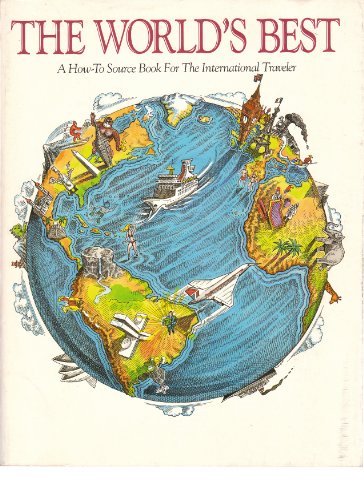
The World's Best: A How-to Source Book for the International Traveler
Lingua: Inglese
Editore: Agora Inc.- William R. Bonner, 1986
ISBN 10: 0945332033 ISBN 13: 9780945332039
Da: Wonder Book, Frederick, MD, U.S.A.
Membro dell'associazione: ABAA ILAB
Valutazione del venditore 5 su 5 stelle

Condizione: Good. Ray Driver (illustratore). Good condition. A copy that has been read but remains intact. May contain markings such as bookplates, stamps, limited notes and highlighting, or a few light stains. Bundled media such as CDs, DVDs, floppy disks or access codes may not be included.
-
The World's Best: A How-to Source Book for the International Traveler
Da: ThriftBooks-Atlanta, AUSTELL, GA, U.S.A.
Valutazione del venditore 5 su 5 stelle
Paperback. Condizione: Good. No Jacket. Ray Driver (illustratore). Pages can have notes/highlighting. Spine may show signs of wear. ~ ThriftBooks: Read More, Spend Less.
-
The World's Best A How-To-Source Book For the International Traveler
Lingua: Inglese
Editore: Agora Inc.- William R. Bonner, 1986, 1986
ISBN 10: 0945332033 ISBN 13: 9780945332039
Da: Virtuous Volumes et al., Wilson, WI, U.S.A.
Valutazione del venditore 5 su 5 stelle
Soft Cover. Condizione: Very Good+. Ray Driver, Illustrator (illustratore). First? Soft Cover. Very Good+. First? 4to - over 9¾" - 12" tall. ISBN:0-945332-03-3. Lightly edgeworn. "All the best things the world has to offer.over 300 pages of things to do.places to go.finest food, hotels, tours, resorts." (?) 298 pages.
-

Indian Tribes of North America
Editore: Waverly Press, Baltimore, 1953
Da: Browse Awhile Books, Tipp City, OH, U.S.A.
Valutazione del venditore 5 su 5 stelle
Soft Cover. Condizione: Very Good. Indiana University Publications in Anthropology and Linguistics Memoir 9 of the International Journal of American Linguistics. 30pp. Map in rear pocket. Owner's name stamped on front cover. Size: Quarto.
-
EUR 21,01
Spedizione EUR 15,45
Spedito da Regno Unito a U.S.A.Quantità: 1 disponibili
Aggiungi al carrelloCondizione: Good. Volume 19. This is an ex-library book and may have the usual library/used-book markings inside.This book has hardback covers. Clean from markings. In good all round condition. No dust jacket. Please note the Image in this listing is a stock photo and may not match the covers of the actual item,600grams, ISBN:0306420066.
-

Lycopods and Ferns of the Drakensberg and Lesotho
Lingua: Inglese
Editore: Briza Publications,South Africa, 2016
ISBN 10: 1920146105 ISBN 13: 9781920146108
Da: Chapter 1, Johannesburg, GAU, Sudafrica
Valutazione del venditore 5 su 5 stelle
Prima edizione
EUR 37,22
Spedizione EUR 17,50
Spedito da Sudafrica a U.S.A.Quantità: 1 disponibili
Aggiungi al carrelloHardcover. Condizione: Fine. No Jacket. First Edition. Heavy book may require extra postage unless posted within South Africa. Publication of 384 pages. The Pictionary boards are in fine condition. Internally, there are no markings or inscriptions, and the pages are immaculately clean and complete. The binding is excellent. GK. Our orders are shipped using tracked courier delivery services.
-
Chemically Mediated Interactions Between Plants and Other Organisms: 19
Da: Second Chance Books, Independence, OR, U.S.A.
Valutazione del venditore 4 su 5 stelle

Hardcover. Condizione: Very Good. Condizione sovraccoperta: Very Good. Back cover lightly rubbed, jacket has some light edge wear and rubbing and one small tear. Book.
-

Chemically Mediated Interactions between Plants and Other Organisms (Recent Advances in Phytochemistry)
Da: Lucky's Textbooks, Dallas, TX, U.S.A.
Valutazione del venditore 5 su 5 stelle
EUR 102,84
Spedizione EUR 3,43
Spedito in U.S.A.Quantità: Più di 20 disponibili
Aggiungi al carrelloCondizione: New.
-
Chemically Mediated Interactions between Plants and Other Organisms (Recent Advances in Phytochemistry, 19)
Da: Lucky's Textbooks, Dallas, TX, U.S.A.
Valutazione del venditore 5 su 5 stelle
EUR 103,17
Spedizione EUR 3,43
Spedito in U.S.A.Quantità: Più di 20 disponibili
Aggiungi al carrelloCondizione: New.
-
Chemically Mediated Interactions between Plants and Other Organisms (Recent Advances in Phytochemistry, 19)
Da: Ria Christie Collections, Uxbridge, Regno Unito
Valutazione del venditore 5 su 5 stelle
EUR 111,99
Spedizione EUR 13,81
Spedito da Regno Unito a U.S.A.Quantità: Più di 20 disponibili
Aggiungi al carrelloCondizione: New. In.
-
Chemically Mediated Interactions between Plants and Other Organisms (Recent Advances in Phytochemistry)
Da: Ria Christie Collections, Uxbridge, Regno Unito
Valutazione del venditore 5 su 5 stelle
EUR 111,99
Spedizione EUR 13,81
Spedito da Regno Unito a U.S.A.Quantità: Più di 20 disponibili
Aggiungi al carrelloCondizione: New. In.
-
Chemically Mediated Interactions between Plants and Other Organisms
Da: Books Puddle, New York, NY, U.S.A.
Valutazione del venditore 4 su 5 stelle
Condizione: New. pp. 260.
-
Chemically Mediated Interactions between Plants and Other Organisms (Recent Advances in Phytochemistry)
Da: Revaluation Books, Exeter, Regno Unito
Valutazione del venditore 5 su 5 stelle
EUR 151,65
Spedizione EUR 11,53
Spedito da Regno Unito a U.S.A.Quantità: 2 disponibili
Aggiungi al carrelloPaperback. Condizione: Brand New. reprint edition. 256 pages. 9.02x5.98x0.59 inches. In Stock.
-
EUR 112,77
Spedizione EUR 61,91
Spedito da Germania a U.S.A.Quantità: 1 disponibili
Aggiungi al carrelloTaschenbuch. Condizione: Neu. Druck auf Anfrage Neuware - Printed after ordering - Chemical warfare between plants and their herbivores and pathogens was first brought to our attention by the publication 25 years ago of the paper by Fraenkel in Science. There, he pointed out that most plants have similar nutritional characteristics so that the selection of plants by insect herbivores must depend on the relative toxicity of secondary compounds. This led, rather gradually, to a host of papers on plant-herbivore interactions. More or less at the same time, insect physiologists and ecologists were starting to realise the importance of chemical communi cation systems in determining sexual and other characteristics of insect behaviour. Nine years ago the Phytochemical Society of North America published their Symposium on 'Biochemical Interaction Between Plants and Insects' in which the plant apparency theory was expounded by both Paul Feeny and Rex Cates and David Rhoades. This stated that plants which are apparent usually contain secondary components which reduce digestibility (tannins and lignins) while ephemeral plants have more toxic, and perhaps less costly, compounds such as alkaloids. These papers stimulated much research on biochemical ecology. The recognition of the importance of the biochemical factors in such interactions is not just of scientific interest. It is vitally important in programs for the production of new varieties of cultivated plants, especially in tropical countries where about one-third or more of the crops are lost to predation or disease.
-
EUR 114,36
Spedizione EUR 62,80
Spedito da Germania a U.S.A.Quantità: 1 disponibili
Aggiungi al carrelloBuch. Condizione: Neu. Druck auf Anfrage Neuware - Printed after ordering - Chemical warfare between plants and their herbivores and pathogens was first brought to our attention by the publication 25 years ago of the paper by Fraenkel in Science. There, he pointed out that most plants have similar nutritional characteristics so that the selection of plants by insect herbivores must depend on the relative toxicity of secondary compounds. This led, rather gradually, to a host of papers on plant-herbivore interactions. More or less at the same time, insect physiologists and ecologists were starting to realise the importance of chemical communi cation systems in determining sexual and other characteristics of insect behaviour. Nine years ago the Phytochemical Society of North America published their Symposium on 'Biochemical Interaction Between Plants and Insects' in which the plant apparency theory was expounded by both Paul Feeny and Rex Cates and David Rhoades. This stated that plants which are apparent usually contain secondary components which reduce digestibility (tannins and lignins) while ephemeral plants have more toxic, and perhaps less costly, compounds such as alkaloids. These papers stimulated much research on biochemical ecology. The recognition of the importance of the biochemical factors in such interactions is not just of scientific interest. It is vitally important in programs for the production of new varieties of cultivated plants, especially in tropical countries where about one-third or more of the crops are lost to predation or disease.
-
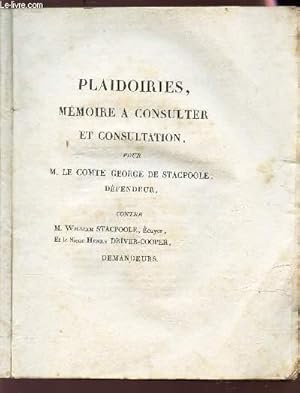
PLAIDOIRIES, MEMOIRE A CONSULTER ET CONSULTATION POUR M. LE COMTE GEORGE DE STACPOOLE, DEFENDEUR, CONTRE M. William STACPOOLE, Ecuyer, et le sieur Henry DRIVER-COOPER DEMANDEUR - DELIBERE A PARIS, LE 31 JANVIER 1824.
Editore: A COMPTE D'AUTEUR, 1824
Da: Le-Livre, SABLONS, Francia
Membro dell'associazione: ILAB
Valutazione del venditore 5 su 5 stelle
EUR 155,00
Spedizione EUR 42,00
Spedito da Francia a U.S.A.Quantità: 1 disponibili
Aggiungi al carrelloCouverture souple. Condizione: bon. R320073658: 1824. In-4. Broché. Bon état, Couv. convenable, Dos satisfaisant, Intérieur frais. 66 pages - Couverture de substitution. . . . Classification Dewey : 340-Droit.
-
Chemically Mediated Interactions between Plants and Other Organisms
Lingua: Inglese
Editore: Springer, Springer Apr 2013, 2013
ISBN 10: 1475796609 ISBN 13: 9781475796605
Da: BuchWeltWeit Ludwig Meier e.K., Bergisch Gladbach, Germania
Valutazione del venditore 5 su 5 stelle
EUR 106,99
Spedizione EUR 23,00
Spedito da Germania a U.S.A.Quantità: 2 disponibili
Aggiungi al carrelloTaschenbuch. Condizione: Neu. This item is printed on demand - it takes 3-4 days longer - Neuware -Chemical warfare between plants and their herbivores and pathogens was first brought to our attention by the publication 25 years ago of the paper by Fraenkel in Science. There, he pointed out that most plants have similar nutritional characteristics so that the selection of plants by insect herbivores must depend on the relative toxicity of secondary compounds. This led, rather gradually, to a host of papers on plant-herbivore interactions. More or less at the same time, insect physiologists and ecologists were starting to realise the importance of chemical communi cation systems in determining sexual and other characteristics of insect behaviour. Nine years ago the Phytochemical Society of North America published their Symposium on 'Biochemical Interaction Between Plants and Insects' in which the plant apparency theory was expounded by both Paul Feeny and Rex Cates and David Rhoades. This stated that plants which are apparent usually contain secondary components which reduce digestibility (tannins and lignins) while ephemeral plants have more toxic, and perhaps less costly, compounds such as alkaloids. These papers stimulated much research on biochemical ecology. The recognition of the importance of the biochemical factors in such interactions is not just of scientific interest. It is vitally important in programs for the production of new varieties of cultivated plants, especially in tropical countries where about one-third or more of the crops are lost to predation or disease. 260 pp. Englisch.
-

EUR 92,27
Spedizione EUR 48,99
Spedito da Germania a U.S.A.Quantità: Più di 20 disponibili
Aggiungi al carrelloCondizione: New. Dieser Artikel ist ein Print on Demand Artikel und wird nach Ihrer Bestellung fuer Sie gedruckt. Chemical warfare between plants and their herbivores and pathogens was first brought to our attention by the publication 25 years ago of the paper by Fraenkel in Science. There, he pointed out that most plants have similar nutritional characteristics so tha.
-
EUR 92,27
Spedizione EUR 48,99
Spedito da Germania a U.S.A.Quantità: Più di 20 disponibili
Aggiungi al carrelloGebunden. Condizione: New. Dieser Artikel ist ein Print on Demand Artikel und wird nach Ihrer Bestellung fuer Sie gedruckt. Chemical warfare between plants and their herbivores and pathogens was first brought to our attention by the publication 25 years ago of the paper by Fraenkel in Science. There, he pointed out that most plants have similar nutritional characteristics so tha.
-
Chemically Mediated Interactions between Plants and Other Organisms
Da: Majestic Books, Hounslow, Regno Unito
Valutazione del venditore 4 su 5 stelle
EUR 146,80
Spedizione EUR 7,49
Spedito da Regno Unito a U.S.A.Quantità: 4 disponibili
Aggiungi al carrelloCondizione: New. Print on Demand pp. 260 52:B&W 6.14 x 9.21in or 234 x 156mm (Royal 8vo) Case Laminate on White w/Gloss Lam.
-
Chemically Mediated Interactions between Plants and Other Organisms
Da: Biblios, Frankfurt am main, HESSE, Germania
Valutazione del venditore 4 su 5 stelle
EUR 148,55
Spedizione EUR 9,95
Spedito da Germania a U.S.A.Quantità: 4 disponibili
Aggiungi al carrelloCondizione: New. PRINT ON DEMAND pp. 260.
-

EUR 95,70
Spedizione EUR 70,00
Spedito da Germania a U.S.A.Quantità: 5 disponibili
Aggiungi al carrelloTaschenbuch. Condizione: Neu. Chemically Mediated Interactions between Plants and Other Organisms | Gillian A. Cooper-Driver (u. a.) | Taschenbuch | x | Englisch | 2013 | Springer | EAN 9781475796605 | Verantwortliche Person für die EU: Springer Verlag GmbH, Tiergartenstr. 17, 69121 Heidelberg, juergen[dot]hartmann[at]springer[dot]com | Anbieter: preigu Print on Demand.
-

Chemically Mediated Interactions between Plants and Other Organisms
Lingua: Inglese
Editore: Springer New York, Springer US Apr 2013, 2013
ISBN 10: 1475796609 ISBN 13: 9781475796605
Da: buchversandmimpf2000, Emtmannsberg, BAYE, Germania
Valutazione del venditore 5 su 5 stelle
EUR 106,99
Spedizione EUR 60,00
Spedito da Germania a U.S.A.Quantità: 1 disponibili
Aggiungi al carrelloTaschenbuch. Condizione: Neu. This item is printed on demand - Print on Demand Titel. Neuware -Chemical warfare between plants and their herbivores and pathogens was first brought to our attention by the publication 25 years ago of the paper by Fraenkel in Science. There, he pointed out that most plants have similar nutritional characteristics so that the selection of plants by insect herbivores must depend on the relative toxicity of secondary compounds. This led, rather gradually, to a host of papers on plant-herbivore interactions. More or less at the same time, insect physiologists and ecologists were starting to realise the importance of chemical communi cation systems in determining sexual and other characteristics of insect behaviour. Nine years ago the Phytochemical Society of North America published their Symposium on 'Biochemical Interaction Between Plants and Insects' in which the plant apparency theory was expounded by both Paul Feeny and Rex Cates and David Rhoades. This stated that plants which are apparent usually contain secondary components which reduce digestibility (tannins and lignins) while ephemeral plants have more toxic, and perhaps less costly, compounds such as alkaloids. These papers stimulated much research on biochemical ecology. The recognition of the importance of the biochemical factors in such interactions is not just of scientific interest. It is vitally important in programs for the production of new varieties of cultivated plants, especially in tropical countries where about one-third or more of the crops are lost to predation or disease.Springer Verlag GmbH, Tiergartenstr. 17, 69121 Heidelberg 260 pp. Englisch.
-

Chemically Mediated Interactions between Plants and Other Organisms
Lingua: Inglese
Editore: Springer US, Springer US Mai 1985, 1985
ISBN 10: 0306420066 ISBN 13: 9780306420061
Da: buchversandmimpf2000, Emtmannsberg, BAYE, Germania
Valutazione del venditore 5 su 5 stelle
EUR 106,99
Spedizione EUR 60,00
Spedito da Germania a U.S.A.Quantità: 1 disponibili
Aggiungi al carrelloBuch. Condizione: Neu. This item is printed on demand - Print on Demand Titel. Neuware -Chemical warfare between plants and their herbivores and pathogens was first brought to our attention by the publication 25 years ago of the paper by Fraenkel in Science. There, he pointed out that most plants have similar nutritional characteristics so that the selection of plants by insect herbivores must depend on the relative toxicity of secondary compounds. This led, rather gradually, to a host of papers on plant-herbivore interactions. More or less at the same time, insect physiologists and ecologists were starting to realise the importance of chemical communi cation systems in determining sexual and other characteristics of insect behaviour. Nine years ago the Phytochemical Society of North America published their Symposium on 'Biochemical Interaction Between Plants and Insects' in which the plant apparency theory was expounded by both Paul Feeny and Rex Cates and David Rhoades. This stated that plants which are apparent usually contain secondary components which reduce digestibility (tannins and lignins) while ephemeral plants have more toxic, and perhaps less costly, compounds such as alkaloids. These papers stimulated much research on biochemical ecology. The recognition of the importance of the biochemical factors in such interactions is not just of scientific interest. It is vitally important in programs for the production of new varieties of cultivated plants, especially in tropical countries where about one-third or more of the crops are lost to predation or disease.Springer Verlag GmbH, Tiergartenstr. 17, 69121 Heidelberg 260 pp. Englisch.
-
EUR 95,70
Spedizione EUR 70,00
Spedito da Germania a U.S.A.Quantità: 5 disponibili
Aggiungi al carrelloBuch. Condizione: Neu. Chemically Mediated Interactions between Plants and Other Organisms | Gillian A. Cooper-Driver (u. a.) | Buch | x | Englisch | 1985 | Springer US | EAN 9780306420061 | Verantwortliche Person für die EU: Springer Verlag GmbH, Tiergartenstr. 17, 69121 Heidelberg, juergen[dot]hartmann[at]springer[dot]com | Anbieter: preigu Print on Demand.
-
Chemically Mediated Interactions between Plants and Other Organisms
Da: BuchWeltWeit Ludwig Meier e.K., Bergisch Gladbach, Germania
Valutazione del venditore 5 su 5 stelle
EUR 160,49
Spedizione EUR 23,00
Spedito da Germania a U.S.A.Quantità: 2 disponibili
Aggiungi al carrelloBuch. Condizione: Neu. This item is printed on demand - it takes 3-4 days longer - Neuware -Chemical warfare between plants and their herbivores and pathogens was first brought to our attention by the publication 25 years ago of the paper by Fraenkel in Science. There, he pointed out that most plants have similar nutritional characteristics so that the selection of plants by insect herbivores must depend on the relative toxicity of secondary compounds. This led, rather gradually, to a host of papers on plant-herbivore interactions. More or less at the same time, insect physiologists and ecologists were starting to realise the importance of chemical communi cation systems in determining sexual and other characteristics of insect behaviour. Nine years ago the Phytochemical Society of North America published their Symposium on 'Biochemical Interaction Between Plants and Insects' in which the plant apparency theory was expounded by both Paul Feeny and Rex Cates and David Rhoades. This stated that plants which are apparent usually contain secondary components which reduce digestibility (tannins and lignins) while ephemeral plants have more toxic, and perhaps less costly, compounds such as alkaloids. These papers stimulated much research on biochemical ecology. The recognition of the importance of the biochemical factors in such interactions is not just of scientific interest. It is vitally important in programs for the production of new varieties of cultivated plants, especially in tropical countries where about one-third or more of the crops are lost to predation or disease. 260 pp. Englisch.


