

Importo totale (1 articolo articoli):
Destinazione ordine:

coulls anthony (141 risultati)
Vai alla pagina principale dei risultati di ricerca
Filtri di ricerca
Tipo di articolo
- Tutti i tipi di prodotto
- Libri (141)
- Riviste e Giornali (Nessun altro risultato corrispondente a questo perfezionamento)
- Fumetti (Nessun altro risultato corrispondente a questo perfezionamento)
- Spartiti (Nessun altro risultato corrispondente a questo perfezionamento)
- Arte, Stampe e Poster (Nessun altro risultato corrispondente a questo perfezionamento)
- Fotografie (Nessun altro risultato corrispondente a questo perfezionamento)
- Mappe (Nessun altro risultato corrispondente a questo perfezionamento)
- Manoscritti e Collezionismo cartaceo (Nessun altro risultato corrispondente a questo perfezionamento)
Condizioni Maggiori informazioni
- Nuovo (124)
- Come nuovo, Ottimo o Quasi ottimo (9)
- Molto buono o Buono (8)
- Discreto o Mediocre (Nessun altro risultato corrispondente a questo perfezionamento)
- Come descritto (Nessun altro risultato corrispondente a questo perfezionamento)
Legatura
Ulteriori caratteristiche
- Prima ed. (Nessun altro risultato corrispondente a questo perfezionamento)
- Copia autograf. (Nessun altro risultato corrispondente a questo perfezionamento)
- Sovracoperta (Nessun altro risultato corrispondente a questo perfezionamento)
- Con foto (53)
- Non Print on Demand (141)
Lingua (1)
Spedizione gratuita
Paese del venditore
Valutazione venditore
-
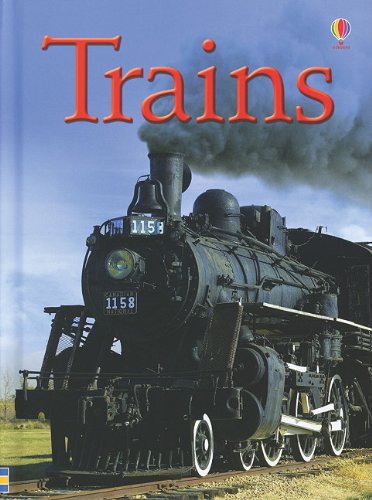
Hardcover. Condizione: Good. Fox, Christyan (illustratore).
-
Trains (Usborne Beginner's)
Libro 41 di 76: BeginnersDa: Gulf Coast Books, Cypress, TX, U.S.A.
Valutazione del venditore 5 su 5 stelle

hardcover. Condizione: Good. Fox, Christyan (illustratore).
-

Spirit of Locomotion: The National Railway Museum at Shildon
Da: WorldofBooks, Goring-By-Sea, WS, Regno Unito
Valutazione del venditore 5 su 5 stelle
EUR 2,41
Spedizione EUR 6,49
Spedito da Regno Unito a U.S.A.Quantità: 4 disponibili
Aggiungi al carrelloPaperback. Condizione: Very Good. The book has been read, but is in excellent condition. Pages are intact and not marred by notes or highlighting. The spine remains undamaged.
-

Spirit of Locomotion: The National Railway Museum at Shildon
Da: WeBuyBooks, Rossendale, LANCS, Regno Unito
Valutazione del venditore 5 su 5 stelle
EUR 2,89
Spedizione EUR 6,37
Spedito da Regno Unito a U.S.A.Quantità: 1 disponibili
Aggiungi al carrelloCondizione: Like New. Most items will be dispatched the same or the next working day. An apparently unread copy in perfect condition. Dust cover is intact with no nicks or tears. Spine has no signs of creasing. Pages are clean and not marred by notes or folds of any kind.
-

Stationary Steam Engines (Britain's Heritage)
Da: WeBuyBooks, Rossendale, LANCS, Regno Unito
Valutazione del venditore 5 su 5 stelle
EUR 4,94
Spedizione EUR 6,37
Spedito da Regno Unito a U.S.A.Quantità: 1 disponibili
Aggiungi al carrelloCondizione: Like New. Most items will be dispatched the same or the next working day. An apparently unread copy in perfect condition. Dust cover is intact with no nicks or tears. Spine has no signs of creasing. Pages are clean and not marred by notes or folds of any kind.
-

Condizione: As New. Unread book in perfect condition.
-

The Slate Industry
Da: Rarewaves.com USA, London, LONDO, Regno Unito
Valutazione del venditore 5 su 5 stelle
EUR 12,29
Spedizione gratuita
Spedito da Regno Unito a U.S.A.Quantità: Più di 20 disponibili
Aggiungi al carrelloPaperback. Condizione: New. Slate from British quarries roofed the world. For a period in the nineteenth century, ships exported thousands of tons of roofing slate from the UK to an international market. The development of slate as a roofing material drove the business of extraction, but many other slate products have been made as well, including writing slates, electrical installations and even snooker tables.Slate is synonymous with North Wales, where a bid for World Heritage Site status is being made for the landscape formed by quarrying, but there was also a slate industry in Leicestershire, Cornwall and Cumbria. The enormous physical remains of the quarries themselves have sometimes developed as tourist attractions and at other times have been left as landscape features ripe for exploration and discovery.This book is part of the Britain's Heritage series, which provides definitive introductions to the riches of Britain's past, and is the perfect way to get acquainted with the slate industry in all its variety.
-

Condizione: New.
-

The Slate Industry (Paperback)
Lingua: Inglese
Editore: Amberley Publishing, Chalford, 2019
ISBN 10: 1445691051 ISBN 13: 9781445691053
Da: Grand Eagle Retail, Bensenville, IL, U.S.A.
Valutazione del venditore 5 su 5 stelle
Paperback. Condizione: new. Paperback. Slate from British quarries roofed the world. For a period in the nineteenth century, ships exported thousands of tons of roofing slate from the UK to an international market. The development of slate as a roofing material drove the business of extraction, but many other slate products have been made as well, including writing slates, electrical installations and even snooker tables.Slate is synonymous with North Wales, where a bid for World Heritage Site status is being made for the landscape formed by quarrying, but there was also a slate industry in Leicestershire, Cornwall and Cumbria. The enormous physical remains of the quarries themselves have sometimes developed as tourist attractions and at other times have been left as landscape features ripe for exploration and discovery.This book is part of the Britains Heritage series, which provides definitive introductions to the riches of Britains past, and is the perfect way to get acquainted with the slate industry in all its variety. For thousands of years slate has been quarried in Britain, but in Victorian times it became big business, and the legacy of the industry now shapes the landscape of North Wales, especially. Shipping may be from multiple locations in the US or from the UK, depending on stock availability.
-

Industrial Railways (Britain's Heritage)
Da: WorldofBooks, Goring-By-Sea, WS, Regno Unito
Valutazione del venditore 5 su 5 stelle
EUR 5,72
Spedizione EUR 6,49
Spedito da Regno Unito a U.S.A.Quantità: 2 disponibili
Aggiungi al carrelloPaperback. Condizione: Very Good. The book has been read, but is in excellent condition. Pages are intact and not marred by notes or highlighting. The spine remains undamaged.
-

Narrow Gauge Locomotives
Libro 21 di 40: Britain?s HeritageDa: GreatBookPrices, Columbia, MD, U.S.A.
Valutazione del venditore 5 su 5 stelle
Condizione: As New. Unread book in perfect condition.
-

Narrow Gauge Locomotives
Libro 21 di 40: Britain?s HeritageDa: GreatBookPrices, Columbia, MD, U.S.A.
Valutazione del venditore 5 su 5 stelle
Condizione: New.
-

Narrow Gauge Locomotives
Libro 21 di 40: Britain?s HeritageDa: Rarewaves.com USA, London, LONDO, Regno Unito
Valutazione del venditore 5 su 5 stelle
EUR 12,82
Spedizione gratuita
Spedito da Regno Unito a U.S.A.Quantità: Più di 20 disponibili
Aggiungi al carrelloPaperback. Condizione: New. Narrow gauge railways have long been a source of fascination for many. From famous public lines such as the Ffestiniog Railway and Lynton and Barnstaple Railway, to peat extraction lines in Cumbria and brickworks systems on Humberside, the narrow gauge railway has transcended two centuries.A big part of the charm of these lines is the locomotives that were built to operate them. Narrow gauge is defined as anything less than the standard gauge of UK main lines - usually down to 15 inch gauge - but in that spectrum there is no limit to size, simplicity or shape. These were machines built to do a job, pure and simple, but those jobs were many and varied. Multiple wheeled complex engines could share the same track as a simple motorised wagon, whilst all manner of propulsion could be found - steam, diesel, petrol and electric - even fireless, compressed air or steam locos converted to electric power. This book looks at them all and their legacy today across the plethora of pleasure and heritage lines that exist.This book is part of the Britain's Heritage series, which provides definitive introductions to the riches of Britain's past, and is the perfect way to get acquainted with narrow gauge locomotives in all their variety.
-

Narrow Gauge Locomotives (Paperback)
Libro 21 di 40: Britain?s HeritageLingua: Inglese
Editore: Amberley Publishing, Chalford, 2018
ISBN 10: 1445675560 ISBN 13: 9781445675565
Da: Grand Eagle Retail, Bensenville, IL, U.S.A.
Valutazione del venditore 5 su 5 stelle
Paperback. Condizione: new. Paperback. Narrow Gauge Railways have long been a source of fascination for many. From famous public lines such as the Ffestiniog Railway and Lynton & Barnstaple Railways, to peat extraction lines in Cumbria and brickworks systems on Humberside, the narrow gauge railway has transcended two centuries. Ubiquitous in their day, but often unseen, the attraction of these lines is unique. A big part of the charm of these lines is the locomotives that were built to operate them. Narrow Gauge is defined as anything less than the standard gauge of UK main lines - usually down to fifteen inch gauge - but in that spectrum there is no limit to size, simplicity or shape. These were machines built to do a job, pure and simple, but those jobs were many and varied. Multiple wheeled complex engines could share the same track as a simple motorised wagon, whilst all manner of propulsion could be found - steam, diesel, petrol & electric - even fireless, compressed air or steam locos converted to electric power. This book looks at them all and their legacy today across the plethora of pleasure and heritage lines that exist. Britains narrow gauge railways are host to some of the oldest, most charming, varied and extraordinary locomotives to be found anywhere. This book is a fascinating survey of these appealing engines. Shipping may be from multiple locations in the US or from the UK, depending on stock availability.
-

Stationary Steam Engines (Britain's Heritage)
Da: MusicMagpie, Stockport, Regno Unito
Valutazione del venditore 5 su 5 stelle
EUR 6,26
Spedizione EUR 6,36
Spedito da Regno Unito a U.S.A.Quantità: 1 disponibili
Aggiungi al carrelloCondizione: Very Good. 1771754491. 2/22/2026 10:01:31 AM.
-

Steam Lorries (Paperback)
Lingua: Inglese
Editore: Amberley Publishing, Chalford, 2020
ISBN 10: 1445698501 ISBN 13: 9781445698502
Da: Grand Eagle Retail, Bensenville, IL, U.S.A.
Valutazione del venditore 5 su 5 stelle
Paperback. Condizione: new. Paperback. Steam power led the transport revolution in England throughout the nineteenth century, but was crippled on the road network by punitive legislation. As the century turned, the laws were altered in such a way that the development of the English Steam Lorry or Wagon became a viable transport proposition.For the best part of four decades, the steam lorry was a major player on the transport scene, being developed into a highly technical machine designed to beat competition from the petrol and diesel lorry. The most advanced machines were efficient and very fast. Made by a variety of builders, including the famous Sentinel company of Shrewsbury, who built waggons with a double g, and Foden, of Sandbach, steam lorries came in many shapes and sizes. This book looks at their birth, and the operation and engineering that set them aside from the traction engine and steam roller.This book is part of the Britains Heritage series, which provides definitive introductions to the riches of Britains past, and is the perfect way to get acquainted with steam lorries in all their variety. Titans of the road, steam lorries were a key part of the road haulage scene before the Second World War. They eventually lost out to diesel, but their romance lives on. This is their story. Shipping may be from multiple locations in the US or from the UK, depending on stock availability.
-

Paperback. Condizione: New. Steam power led the transport revolution in England throughout the nineteenth century, but was crippled on the road network by punitive legislation. As the century turned, the laws were altered in such a way that the development of the English Steam Lorry or Wagon became a viable transport proposition.For the best part of four decades, the steam lorry was a major player on the transport scene, being developed into a highly technical machine designed to beat competition from the petrol and diesel lorry. The most advanced machines were efficient and very fast. Made by a variety of builders, including the famous Sentinel company of Shrewsbury, who built waggons with a double 'g', and Foden, of Sandbach, steam lorries came in many shapes and sizes. This book looks at their birth, and the operation and engineering that set them aside from the traction engine and steam roller.This book is part of the Britain's Heritage series, which provides definitive introductions to the riches of Britain's past, and is the perfect way to get acquainted with steam lorries in all their variety.
-

Steam Lorries
Da: Rarewaves.com USA, London, LONDO, Regno Unito
Valutazione del venditore 5 su 5 stelle
EUR 13,42
Spedizione gratuita
Spedito da Regno Unito a U.S.A.Quantità: Più di 20 disponibili
Aggiungi al carrelloPaperback. Condizione: New. Steam power led the transport revolution in England throughout the nineteenth century, but was crippled on the road network by punitive legislation. As the century turned, the laws were altered in such a way that the development of the English Steam Lorry or Wagon became a viable transport proposition.For the best part of four decades, the steam lorry was a major player on the transport scene, being developed into a highly technical machine designed to beat competition from the petrol and diesel lorry. The most advanced machines were efficient and very fast. Made by a variety of builders, including the famous Sentinel company of Shrewsbury, who built waggons with a double 'g', and Foden, of Sandbach, steam lorries came in many shapes and sizes. This book looks at their birth, and the operation and engineering that set them aside from the traction engine and steam roller.This book is part of the Britain's Heritage series, which provides definitive introductions to the riches of Britain's past, and is the perfect way to get acquainted with steam lorries in all their variety.
-

Industrial Railways
Da: GreatBookPrices, Columbia, MD, U.S.A.
Valutazione del venditore 5 su 5 stelle
Condizione: As New. Unread book in perfect condition.
-

Industrial Railways
Da: GreatBookPrices, Columbia, MD, U.S.A.
Valutazione del venditore 5 su 5 stelle
Condizione: New.
-

Paperback. Condizione: New. Since the dawn of the railways, away from the glamour of the main line express, thousands of miles of industrial railway moved raw materials and finished products. From sewage works to sugar factories, all manner of industries were served. These sometimes employed dozens of locomotives, or in other cases simply a horse or a petrol tractor.The Beckton gas works in London ran a massive railway, complete with locomotive roundhouse and signals, while the ironstone industry of the East Midlands operated on the edge of fields. It can be said that one was never more than a mile or two from an industrial railway, though often its existence might not have been well known. A corncucopia of locomotives provided power, while a fantastic array of specialist wagons moved all manner of goods. A few industrial lines have survived as heritage attractions, and one is even a Scheduled Ancient Monument.This book is part of the Britain's Heritage series, which provides definitive introductions to the riches of Britain's past, and is the perfect way to get acquainted with Industrial Railways in all their variety.
-

Industrial Railways (Paperback)
Lingua: Inglese
Editore: Amberley Publishing, Chalford, 2022
ISBN 10: 1445698625 ISBN 13: 9781445698625
Da: Grand Eagle Retail, Bensenville, IL, U.S.A.
Valutazione del venditore 5 su 5 stelle
Paperback. Condizione: new. Paperback. Since the dawn of the railways, away from the glamour of the main line express, thousands of miles of industrial railway moved raw materials and finished products. From sewage works to sugar factories, all manner of industries were served. These sometimes employed dozens of locomotives, or in other cases simply a horse or a petrol tractor.The Beckton gas works in London ran a massive railway, complete with locomotive roundhouse and signals, while the ironstone industry of the East Midlands operated on the edge of fields. It can be said that one was never more than a mile or two from an industrial railway, though often its existence might not have been well known. A corncucopia of locomotives provided power, while a fantastic array of specialist wagons moved all manner of goods. A few industrial lines have survived as heritage attractions, and one is even a Scheduled Ancient Monument.This book is part of the Britains Heritage series, which provides definitive introductions to the riches of Britains past, and is the perfect way to get acquainted with Industrial Railways in all their variety. The very first railways were built by British industry, and at their height private industrial railways could be found all over Britain, moving mined and quarried raw materials, finished goods and much else. This is their story. Shipping may be from multiple locations in the US or from the UK, depending on stock availability.
-

Industrial Railways
Da: Rarewaves.com USA, London, LONDO, Regno Unito
Valutazione del venditore 5 su 5 stelle
EUR 13,64
Spedizione gratuita
Spedito da Regno Unito a U.S.A.Quantità: Più di 20 disponibili
Aggiungi al carrelloPaperback. Condizione: New. Since the dawn of the railways, away from the glamour of the main line express, thousands of miles of industrial railway moved raw materials and finished products. From sewage works to sugar factories, all manner of industries were served. These sometimes employed dozens of locomotives, or in other cases simply a horse or a petrol tractor.The Beckton gas works in London ran a massive railway, complete with locomotive roundhouse and signals, while the ironstone industry of the East Midlands operated on the edge of fields. It can be said that one was never more than a mile or two from an industrial railway, though often its existence might not have been well known. A corncucopia of locomotives provided power, while a fantastic array of specialist wagons moved all manner of goods. A few industrial lines have survived as heritage attractions, and one is even a Scheduled Ancient Monument.This book is part of the Britain's Heritage series, which provides definitive introductions to the riches of Britain's past, and is the perfect way to get acquainted with Industrial Railways in all their variety.
-
Stationary Steam Engines (Paperback)
Lingua: Inglese
Editore: Amberley Publishing, Chalford, 2019
ISBN 10: 1445691078 ISBN 13: 9781445691077
Da: Grand Eagle Retail, Bensenville, IL, U.S.A.
Valutazione del venditore 5 su 5 stelle
Paperback. Condizione: new. Paperback. The quiet powerhouses of the industrial revolution, stationary steam engines provided the driving force behind every manufacturing process for well over a century, as well as providing drainage of mines and allowing clean water supplies for the majority of our larger towns and cities. From a small sewage pump at the edge of a field of a few horsepower, to a twelve thousand horsepower leviathan rolling armoured plate for battleships, these gentle giants of the steam age kept working quietly for many decades, unseen by many, but often loved and cared for by the men who operated and maintained them. The engine houses they were kept in could be plain or ornate, and a variety of boilers provided the steam for them. This book looks at all of these aspects and what it was like to run a large steam engine for industry. The legacy of these iron giants is seen in the dozens of engines preserved for posterity all over the UK, in museums or in their original locations, as well as giving thousands of people the chance to see them and enjoy getting involved in their care and display. From small engines for driving machinery to the massive beam horizontal engines that kept tunnels dry and our cities clean, stationary engines are impressive relics of our industrial past. This is their story. Shipping may be from multiple locations in the US or from the UK, depending on stock availability.
-

Stationary Steam Engines
Da: Rarewaves.com USA, London, LONDO, Regno Unito
Valutazione del venditore 5 su 5 stelle
EUR 13,74
Spedizione gratuita
Spedito da Regno Unito a U.S.A.Quantità: Più di 20 disponibili
Aggiungi al carrelloPaperback. Condizione: New. Stationary steam engines were the quiet powerhouses of the Industrial Revolution. They provided the driving force behind every manufacturing process for well over a century, as well as drainage of mines and allowing clean water supplies for the majority of our towns and cities. From a small sewage pump at the edge of a field of a few horsepower, to a 12,000 horsepower leviathan rolling armoured plate for battleships, these wonders of the steam age kept working for many decades, unseen by many, but often loved by the men who operated and maintained them. The engine houses they were kept in could be plain or ornate, and a rich variety of boilers provided the steam for them.This book looks at all of these aspects and what it was like to run a large steam engine for industry. The legacy of these iron giants is seen in the dozens of engines preserved for posterity all over the UK, in museums or in their original locations, giving thousands of people the chance to see them or enjoy getting involved in their preservation.This book is part of the Britain's Heritage series, which provides definitive introductions to the riches of Britain's past, and is the perfect way to get acquainted with stationary steam engines in all their variety.
-

Traction Engines (Paperback)
Libro 3 di 40: Britain?s HeritageLingua: Inglese
Editore: Amberley Publishing, Chalford, 2017
ISBN 10: 1445668866 ISBN 13: 9781445668864
Da: Grand Eagle Retail, Bensenville, IL, U.S.A.
Valutazione del venditore 5 su 5 stelle
Paperback. Condizione: new. Paperback. The first self-propelled agricultural steam locomotives were built around the middle of the nineteenth century, and with their great pulling power and ability to provide power for other equipment, they revolutionised both road haulage and agriculture, until the introduction of the internal combustion engine after the First World War saw their popularity rapidly decline. Great makers like Burrell and Garrett from East Anglia, Taskers and Wallis & Stevens from Hampshire, Marshalls and Foster from Lincolnshire, and Fowlers and McLaren from Leeds filled Britain (and much of the rest of the world) with their engines, operating ploughing equipment and providing power for threshing machines on farms, hauling heavy loads on the road, and generating electricity to power all the latest attractions at the fairground. They ranged in size from the small 3nhp road locomotives like Taskers' Little Giant, up to giant Fowler ploughing engines of 22nhp and the grandest Burrell 10nhp showmans engine, resplendent in gold-lined paintwork and twisted brass canopy supports. The period of the traction engine's ascendency was relatively short, but they have left an indelible mark, with enthusiasts up and down the country having saved hundreds of machines from the scrapmen to entertain us every weekend at steam fairs and other vintage events. Traction engines are a familiar and stirring sight at steam rallies up and down the country, but what were they for, why do they look as they look, and where were they built? These book answers all these questions and more. Shipping may be from multiple locations in the US or from the UK, depending on stock availability.
-

Traction Engines
Libro 3 di 40: Britain?s HeritageDa: Rarewaves.com USA, London, LONDO, Regno Unito
Valutazione del venditore 5 su 5 stelle
EUR 14,21
Spedizione gratuita
Spedito da Regno Unito a U.S.A.Quantità: Più di 20 disponibili
Aggiungi al carrelloPaperback. Condizione: New. The first traction engines were built around the middle of the nineteenth century. Their great pulling power and ability to provide power for other equipment revolutionised road haulage and agriculture.Great makers like Burrell and Garrett from East Anglia, Taskers and Wallis and Steevens from Hampshire, Marshalls and Foster from Lincolnshire, and Fowlers and McLaren from Leeds filled Britain (and much of the rest of the world) with their engines. They ranged in size from the small road locomotives like Taskers' Little Giant, up to giant Fowler ploughing engines and the grandest Burrell showman's engine, resplendent in gold-lined paintwork and twisted brass canopy supports. The age of the traction engine was relatively short, declining rapidly after the First World War, but they have left an indelible mark, with enthusiasts up and down the country having saved hundreds of machines from the scrapmen to entertain us every weekend at steam fairs and other vintage events.This book is part of the Britain's Heritage series, which provides definitive introductions to the riches of Britain's past, and is the perfect way to get acquainted with traction engines in all their variety.
-

Road Rollers (Paperback)
Libro 25 di 40: Britain?s HeritageLingua: Inglese
Editore: Amberley Publishing, Chalford, 2018
ISBN 10: 1445675803 ISBN 13: 9781445675800
Da: Grand Eagle Retail, Bensenville, IL, U.S.A.
Valutazione del venditore 5 su 5 stelle
Paperback. Condizione: new. Paperback. The need to improve the UK road system saw a number of developments in the nineteenth century. To allow people to travel more safely and faster, smoother roads were needed and engineers began to develop and devise the tools to make this possible. The road roller began as a horse drawn device, followed by the favourite, the steam roller, seen on British roads for over a century. Several manufacturers including Fowler built hundreds, but no company could challenge Aveling and Porter of Rochester for its dominance of the market. As technology changed, rollers began to get lighter and new ways of propulsion - petrol and diesel came in - and whilst these continue to this day, the term steam roller has entered popular culture, even though motor roller is what the machine will usually be these days. The basic function of a deadweight compacting device remains, but the appeal of the steam roller is far greater - and hundreds survive to this day in the hands enthusiasts, who present them to the public at steam rallies up and down the country. Even diesel and petrol rollers now have their following as they are a very accessible way into the vintage restoration world. This books looks at the past and present of road rollers and the ephemera surrounding the road making scene. From the earliest steam rollers to classic diesel and petrol rollers, this book presents the history of these popular road-making machines and their accessories, once such a common sight on our roads. Shipping may be from multiple locations in the US or from the UK, depending on stock availability.
-

Road Rollers
Libro 25 di 40: Britain?s HeritageDa: Rarewaves.com USA, London, LONDO, Regno Unito
Valutazione del venditore 5 su 5 stelle
EUR 14,23
Spedizione gratuita
Spedito da Regno Unito a U.S.A.Quantità: Più di 20 disponibili
Aggiungi al carrelloPaperback. Condizione: New. In the nineteenth century, it became obvious that the UK's road system needed to be improved. Smoother roads were required to allow people to travel faster and more safely, and the engineers went to work to make this possible. In this book, author Anthony Coulls looks at one of the best known ways of doing this: the road roller.The first road rollers were horse-drawn and these were followed in 1865 by the steam-powered road roller, which was seen on British roads for more than a century. Aveling and Porter of Rochester was the firm that dominated the steam roller market, although several other manufacturers made plenty. As technology improved, rollers began to get lighter and new forms of propulsion came in - petrol and diesel engines. Even though a road roller today will be one of these more modern types, the term 'steam roller' is a firm part of the public's imagination. The appeal of the steam roller means that hundreds survive to this day in the hands of enthusiasts, who take them to steam rallies up and down the country, and petrol and diesel rollers have great appeal too.This book is part of the Britain's Heritage series, which provides definitive introductions to the riches of Britain's past, and is the perfect way to get acquainted with road rollers in all their variety.
-
Industrial Railways
Da: PBShop.store US, Wood Dale, IL, U.S.A.
Valutazione del venditore 5 su 5 stelle
PAP. Condizione: New. New Book. Shipped from UK. Established seller since 2000.
