

Importo totale (1 articolo articoli):
Destinazione ordine:

dipak nikam (6 risultati)
Vai alla pagina principale dei risultati di ricerca
Filtri di ricerca
Tipo di articolo
- Tutti i tipi di prodotto
- Libri (6)
- Riviste e Giornali (Nessun altro risultato corrispondente a questo perfezionamento)
- Fumetti (Nessun altro risultato corrispondente a questo perfezionamento)
- Spartiti (Nessun altro risultato corrispondente a questo perfezionamento)
- Arte, Stampe e Poster (Nessun altro risultato corrispondente a questo perfezionamento)
- Fotografie (Nessun altro risultato corrispondente a questo perfezionamento)
- Mappe (Nessun altro risultato corrispondente a questo perfezionamento)
- Manoscritti e Collezionismo cartaceo (Nessun altro risultato corrispondente a questo perfezionamento)
Condizioni Maggiori informazioni
- Nuovo (6)
- Come nuovo, Ottimo o Quasi ottimo (Nessun altro risultato corrispondente a questo perfezionamento)
- Molto buono o Buono (Nessun altro risultato corrispondente a questo perfezionamento)
- Discreto o Mediocre (Nessun altro risultato corrispondente a questo perfezionamento)
- Come descritto (Nessun altro risultato corrispondente a questo perfezionamento)
Legatura
- Tutte
- Rilegato (Nessun altro risultato corrispondente a questo perfezionamento)
- Brossura (6)
Ulteriori caratteristiche
- Prima ed. (Nessun altro risultato corrispondente a questo perfezionamento)
- Copia autograf. (Nessun altro risultato corrispondente a questo perfezionamento)
- Sovracoperta (Nessun altro risultato corrispondente a questo perfezionamento)
- Con foto (4)
- Non Print on Demand (1)
Lingua (1)
Prezzo
- Qualsiasi prezzo
- Inferiore a EUR 20 (Nessun altro risultato corrispondente a questo perfezionamento)
- EUR 20 a EUR 45
- Superiore a EUR 45
Spedizione gratuita
- Spedizione gratuita in U.S.A. (Nessun altro risultato corrispondente a questo perfezionamento)
Paese del venditore
Valutazione venditore
-

DNA Fingerprinting of Rice Through Ssr Markers
Da: Books Puddle, New York, NY, U.S.A.
Valutazione del venditore 4 su 5 stelle

Condizione: New. pp. 80.
-
DNA Fingerprinting of Rice through SSR markers
Da: BuchWeltWeit Ludwig Meier e.K., Bergisch Gladbach, Germania
Valutazione del venditore 5 su 5 stelle

EUR 45,90
Spedizione EUR 23,00
Spedito da Germania a U.S.A.Quantità: 2 disponibili
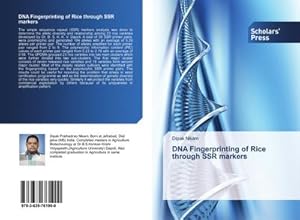
Aggiungi al carrelloTaschenbuch. Condizione: Neu. This item is printed on demand - it takes 3-4 days longer - Neuware -The simple sequence repeat (SSR) markers analysis was done to determine the allelic diversity and relationship among 23 rice varieties developed by Dr, B. S. K. K. V. Dapoli. A total of 35 SSR primer pairs were polymorphic and generated 184 alleles with an average of 5.26 alleles per primer pair. The number of alleles amplified for each primer pair ranged from 2 to 8. The polymorphic information content (PIC) values of each primer pair ranged from 0.23 to 0.78 with an average of 0.58. The UPGMA grouped 23 rice varieties into two main clusters which were further divided into two sub-clusters. The first major cluster consists of seven released rice varieties and 16 varieties form second major cluster. Most of the closely related cultivars were identified with the fingerprinting based on the polymorphic SSR primer pairs. The results could be useful for resolving the problem that arises in seed certification programme as well as the determination of genetic diversity of the rice varieties very quickly. Similarly it will protect the varieties from commercial exploitation by others because of its uniqueness in amplification pattern. 80 pp. Englisch.
-
DNA Fingerprinting of Rice Through Ssr Markers
Da: Biblios, Frankfurt am main, HESSE, Germania
Valutazione del venditore 4 su 5 stelle
EUR 70,00
Spedizione EUR 9,95
Spedito da Germania a U.S.A.Quantità: 4 disponibili
Aggiungi al carrelloCondizione: New. PRINT ON DEMAND pp. 80.
-

EUR 38,74
Spedizione EUR 48,99
Spedito da Germania a U.S.A.Quantità: Più di 20 disponibili
Aggiungi al carrelloCondizione: New. Dieser Artikel ist ein Print on Demand Artikel und wird nach Ihrer Bestellung fuer Sie gedruckt. Autor/Autorin: Nikam DipakDipak Pralhadrao Nikam, Born at Jafrabad, Dist jalna (MS) India. Completed masters in Agriculture Biotechnology at Dr.B.S.Konkan Krishi Vidyapeeth,(Agriculture University) Dapoli, Also completed graduation in Agriculture i.
-

DNA Fingerprinting of Rice through SSR markers
Da: buchversandmimpf2000, Emtmannsberg, BAYE, Germania
Valutazione del venditore 5 su 5 stelle
EUR 45,90
Spedizione EUR 60,00
Spedito da Germania a U.S.A.Quantità: 1 disponibili
Aggiungi al carrelloTaschenbuch. Condizione: Neu. This item is printed on demand - Print on Demand Titel. Neuware -The simple sequence repeat (SSR) markers analysis was done to determine the allelic diversity and relationship among 23 rice varieties developed by Dr, B. S. K. K. V. Dapoli. A total of 35 SSR primer pairs were polymorphic and generated 184 alleles with an average of 5.26 alleles per primer pair. The number of alleles amplified for each primer pair ranged from 2 to 8. The polymorphic information content (PIC) values of each primer pair ranged from 0.23 to 0.78 with an average of 0.58. The UPGMA grouped 23 rice varieties into two main clusters which were further divided into two sub-clusters. The first major cluster consists of seven released rice varieties and 16 varieties form second major cluster. Most of the closely related cultivars were identified with the fingerprinting based on the polymorphic SSR primer pairs. The results could be useful for resolving the problem that arises in seed certification programme as well as the determination of genetic diversity of the rice varieties very quickly. Similarly it will protect the varieties from commercial exploitation by others because of its uniqueness in amplification pattern.VDM Verlag, Dudweiler Landstraße 99, 66123 Saarbrücken 80 pp. Englisch.
-
EUR 45,90
Spedizione EUR 60,69
Spedito da Germania a U.S.A.Quantità: 1 disponibili
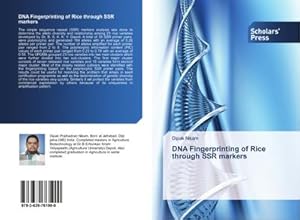
Aggiungi al carrelloTaschenbuch. Condizione: Neu. nach der Bestellung gedruckt Neuware - Printed after ordering - The simple sequence repeat (SSR) markers analysis was done to determine the allelic diversity and relationship among 23 rice varieties developed by Dr, B. S. K. K. V. Dapoli. A total of 35 SSR primer pairs were polymorphic and generated 184 alleles with an average of 5.26 alleles per primer pair. The number of alleles amplified for each primer pair ranged from 2 to 8. The polymorphic information content (PIC) values of each primer pair ranged from 0.23 to 0.78 with an average of 0.58. The UPGMA grouped 23 rice varieties into two main clusters which were further divided into two sub-clusters. The first major cluster consists of seven released rice varieties and 16 varieties form second major cluster. Most of the closely related cultivars were identified with the fingerprinting based on the polymorphic SSR primer pairs. The results could be useful for resolving the problem that arises in seed certification programme as well as the determination of genetic diversity of the rice varieties very quickly. Similarly it will protect the varieties from commercial exploitation by others because of its uniqueness in amplification pattern.

