
Importo totale (1 articolo articoli):
Destinazione ordine:

dunkerly robert (261 risultati)
Vai alla pagina principale dei risultati di ricerca
Filtri di ricerca
Tipo di articolo
- Tutti i tipi di prodotto
- Libri (261)
- Riviste e Giornali (Nessun altro risultato corrispondente a questo perfezionamento)
- Fumetti (Nessun altro risultato corrispondente a questo perfezionamento)
- Spartiti (Nessun altro risultato corrispondente a questo perfezionamento)
- Arte, Stampe e Poster (Nessun altro risultato corrispondente a questo perfezionamento)
- Fotografie (Nessun altro risultato corrispondente a questo perfezionamento)
- Mappe (Nessun altro risultato corrispondente a questo perfezionamento)
- Manoscritti e Collezionismo cartaceo (Nessun altro risultato corrispondente a questo perfezionamento)
Condizioni Maggiori informazioni
Legatura
Ulteriori caratteristiche
- Prima ed. (3)
- Copia autograf. (Nessun altro risultato corrispondente a questo perfezionamento)
- Sovracoperta (1)
- Con foto (130)
- Non Print on Demand (245)
Lingua (2)
Spedizione gratuita
Paese del venditore
Valutazione venditore
-

paperback. Condizione: Very Good. Connecting readers with great books since 1972! Used books may not include companion materials, and may have some shelf wear or limited writing. We ship orders daily and Customer Service is our top priority!
-

Force of a Cyclone: The Battle of Stones River: December 31, 1862â"January 2, 1863 (Emerging Civil War Series)
Libro 51 di 65: Emerging Civil WarDa: Books From California, Simi Valley, CA, U.S.A.
Valutazione del venditore 5 su 5 stelle

paperback. Condizione: Very Good.
-

paperback. Condizione: Very Good. Connecting readers with great books since 1972! Used books may not include companion materials, and may have some shelf wear or limited writing. We ship orders daily and Customer Service is our top priority!
-
No Turning Back: A Guide to the 1864 Overland Campaign, from the Wilderness to Cold Harbor, May 4 - June 13, 1864
Libro 2 di 65: Emerging Civil WarDa: ThriftBooks-Dallas, Dallas, TX, U.S.A.
Valutazione del venditore 5 su 5 stelle
Paperback. Condizione: Good. No Jacket. Pages can have notes/highlighting. Spine may show signs of wear. ~ ThriftBooks: Read More, Spend Less.
-
No Turning Back: A Guide to the 1864 Overland Campaign, from the Wilderness to Cold Harbor, May 4 - June 13, 1864
Libro 2 di 65: Emerging Civil WarDa: ThriftBooks-Atlanta, AUSTELL, GA, U.S.A.
Valutazione del venditore 5 su 5 stelle
Paperback. Condizione: Good. No Jacket. Pages can have notes/highlighting. Spine may show signs of wear. ~ ThriftBooks: Read More, Spend Less.
-
No Turning Back: A Guide to the 1864 Overland Campaign, from the Wilderness to Cold Harbor, May 4 - June 13, 1864
Libro 2 di 65: Emerging Civil WarDa: ThriftBooks-Dallas, Dallas, TX, U.S.A.
Valutazione del venditore 5 su 5 stelle
Paperback. Condizione: Very Good. No Jacket. May have limited writing in cover pages. Pages are unmarked. ~ ThriftBooks: Read More, Spend Less.
-

Condizione: Very Good. [ No Hassle 30 Day Returns ][ Ships Daily ] [ Underlining/Highlighting: NONE ] [ Writing: NONE ] [ Edition: First ] Publisher: Savas Beatie Pub Date: 1/12/2021 Binding: Paperback Pages: 192 First edition.
-

Paperback. Condizione: Very Good. Connecting readers with great books since 1972! Used books may not include companion materials, and may have some shelf wear or limited writing. We ship orders daily and Customer Service is our top priority!
-
Paperback. Condizione: Very Good. Connecting readers with great books since 1972! Used books may not include companion materials, and may have some shelf wear or limited writing. We ship orders daily and Customer Service is our top priority!
-
To the Bitter End: Appomattox, Bennett Place, and the Surrenders of the Confederacy
Libro 5 di 65: Emerging Civil WarDa: ThriftBooks-Atlanta, AUSTELL, GA, U.S.A.
Valutazione del venditore 5 su 5 stelle
Paperback. Condizione: Good. No Jacket. Pages can have notes/highlighting. Spine may show signs of wear. ~ ThriftBooks: Read More, Spend Less.
-

Old Ninety Six: A History & Guide (Landmarks)
Libro 1 di 210: LandmarksDa: Bay State Book Company, North Smithfield, RI, U.S.A.
Valutazione del venditore 5 su 5 stelle
Condizione: very_good.
-

Old Ninety Six: A History & Guide
Libro 1 di 210: LandmarksDa: ThriftBooks-Atlanta, AUSTELL, GA, U.S.A.
Valutazione del venditore 5 su 5 stelle
Paperback. Condizione: Good. No Jacket. Pages can have notes/highlighting. Spine may show signs of wear. ~ ThriftBooks: Read More, Spend Less.
-

Paperback. Condizione: Very Good. Connecting readers with great books since 1972! Used books may not include companion materials, and may have some shelf wear or limited writing. We ship orders daily and Customer Service is our top priority!
-
No Turning Back : A Guide to the 1864 Overland Campaign, from the Wilderness to Cold Harbor, May 4 - June 13 1864
Libro 2 di 65: Emerging Civil WarDa: Better World Books, Mishawaka, IN, U.S.A.
Valutazione del venditore 5 su 5 stelle
Condizione: Good. Used book that is in clean, average condition without any missing pages.
-
No Turning Back: A Guide to the 1864 Overland Campaign, from the Wilderness to Cold Harbor, May 4 - June 13, 1864 (Emerging Civil War Series)
Libro 2 di 65: Emerging Civil WarDa: More Than Words, Waltham, MA, U.S.A.
Valutazione del venditore 5 su 5 stelle
Condizione: Good. A sound copy with only light wear. Overall a solid copy at a great price!
-
Force of a Cyclone : The Battle of Stones River: December 31, 1862-January 2 1863
Libro 51 di 65: Emerging Civil WarDa: Better World Books, Mishawaka, IN, U.S.A.
Valutazione del venditore 5 su 5 stelle
Condizione: Very Good. Used book that is in excellent condition. May show signs of wear or have minor defects.
-
Embattled Capital: A Guide to Richmond During the Civil War (Emerging Civil War Series)
Libro 27 di 65: Emerging Civil WarDa: Books From California, Simi Valley, CA, U.S.A.
Valutazione del venditore 5 su 5 stelle
paperback. Condizione: Fine.
-
To the Bitter End: Appomattox, Bennett Place, and the Surrenders of the Confederacy (Emerging Civil War Series)
Libro 5 di 65: Emerging Civil WarDa: BooksRun, Philadelphia, PA, U.S.A.
Valutazione del venditore 5 su 5 stelle
Paperback. Condizione: Fair. The item might be beaten up but readable. May contain markings or highlighting, as well as stains, bent corners, or any other major defect, but the text is not obscured in any way.
-
To the Bitter End: Appomattox, Bennett Place, and the Surrenders of the Confederacy (Emerging Civil War Series)
Libro 5 di 65: Emerging Civil WarDa: Books From California, Simi Valley, CA, U.S.A.
Valutazione del venditore 5 su 5 stelle
Paperback. Condizione: Very Good. Mild to Moderate creasing / bending to covers and pages. Book is otherwise very clean, unmarked and 100% functional.
-
No Turning Back: A Guide to the 1864 Overland Campaign, from the Wilderness to Cold Harbor, May 4 - June 13, 1864 (Emerging Civil War)
Libro 2 di 65: Emerging Civil WarDa: Books From California, Simi Valley, CA, U.S.A.
Valutazione del venditore 5 su 5 stelle
Paperback. Condizione: Very Good.
-

More Than Roman Valor
Da: The Maryland Book Bank, Baltimore, MD, U.S.A.
Valutazione del venditore 5 su 5 stelle
paperback. Condizione: Like New. 0th Edition. Used - Like New.
-
Force of a Cyclone: The Battle of Stones River: December 31, 1862â"January 2, 1863 (Emerging Civil War Series)
Libro 51 di 65: Emerging Civil WarDa: Books From California, Simi Valley, CA, U.S.A.
Valutazione del venditore 5 su 5 stelle
paperback. Condizione: Fine.
-
Women of the Revolution: Bravery and Sacrifice on the Southern Battlefields (Paperback)
Libro 87 di 110: American HeritageDa: Transition Living, Asheville, NC, U.S.A.
Valutazione del venditore 3 su 5 stelle

Paperback. Condizione: Very Good.
-
To the Bitter End: Appomattox, Bennett Place, and the Surrenders of the Confederacy (Emerging Civil War Series)
Libro 5 di 65: Emerging Civil WarDa: Books From California, Simi Valley, CA, U.S.A.
Valutazione del venditore 5 su 5 stelle
Paperback. Condizione: Fine.
-

Old Ninety Six: A History & Guide (Landmarks)
Libro 1 di 210: LandmarksDa: -OnTimeBooks-, Phoenix, AZ, U.S.A.
Valutazione del venditore 5 su 5 stelle
Condizione: very_good. Gently read. May have name of previous ownership, or ex-library edition. Binding tight; spine straight and smooth, with no creasing; covers clean and crisp. Minimal signs of handling or shelving. 100% GUARANTEE! Shipped with delivery confirmation, if you're not satisfied with purchase please return item for full refund. Ships USPS Media Mail.
-
No Turning Back (Paperback)
Libro 2 di 65: Emerging Civil WarLingua: Inglese
Editore: Savas Beatie, El Dorado Hills, 2014
ISBN 10: 161121193X ISBN 13: 9781611211931
Da: Grand Eagle Retail, Bensenville, IL, U.S.A.
Valutazione del venditore 5 su 5 stelle
Paperback. Condizione: new. Paperback. "There will be no turning back," said Lt. Gen. Ulysses S. Grant. It was May, 1864. The Civil War had dragged into its fourth spring. It was time to end things, Grant resolved, once and for all. With the Union Army of the Potomac as his sledge, Grant crossed the Rapidan River, intending to draw the Army of Northern Virginia into one final battle. Short of that, he planned "to hammer continuously against the armed forces of the enemy and his resources, until by mere attrition, if in no other way, there should be nothing left to him . . . ." Almost immediately, though, Robert E. Lee's Confederates brought Grant to bay in the thick tangle of the Wilderness. Rather than retreat, as other army commanders had done in the past, Grant outmaneuvered Lee, swinging left and south. There was, after all, no turning back. "I intend to fight it out along this line if it takes all summer," Grant vowed. And he did: from the dark, close woods of the Wilderness to the Muleshoe of Spotsylvania, to the steep banks of the North Anna River, to the desperate charges of Cold Harbor. The 1864 Overland Campaign would be a nonstop grind of fighting, maneuvering, and marching, much of it in rain and mud, with casualty lists longer than anything yet seen in the war. In this book from the Wilderness to Cold Harbor, May 4 - June 13, 1864, historians Robert M. Dunkerly, Donald C. Pfanz, and David R. Ruth allow readers to follow in the footsteps of the armies as they grapple across the Virginia landscape. Pfanz spent his career as a National Park Service historian on the battlefields where the campaign began; Dunkerly and Ruth work on the battlefields where it concluded. Few people know the ground, or the campaign, better. AUTHOR: Robert M. Dunkerly is a historian, award-winning author, and speaker who is actively involved in historic preservation and research. Donald C. Pfanz worked for 32 years as a National Park Service historian, most of it at Fredericksburg and Spotsylvania County National Military Park. David R. Ruth has served as the superintendent of Richmond National Battlefield Park since 2008. His career with the National Park Service spans more than 40 years. 171 illustrations [T]here will be no turning back, said Lt. Gen. Ulysses S. Grant. It was May, 1864. The Civil War had dragged into its fourth spring. It was time to end things, Grant resolved, once and for all. With the Union Army of the Potomac as his sledge, Grant crossed the Rapidan River, intending to draw the Army of Northern Virginia into one final battle. Shipping may be from multiple locations in the US or from the UK, depending on stock availability.
-

No Turning Back : A Guide to the 1864 Overland Campaign, from the Wilderness to Cold Harbor, May 4 - June 13, 1864
Libro 2 di 65: Emerging Civil WarDa: GreatBookPrices, Columbia, MD, U.S.A.
Valutazione del venditore 5 su 5 stelle
Condizione: New.
-
Old Ninety Six: A History & Guide
Libro 1 di 210: LandmarksDa: The Last Word Bookstore, Mt. Airy, MD, U.S.A.
Valutazione del venditore 4 su 5 stelle

Paperback.
-
To the Bitter End (Paperback)
Libro 5 di 65: Emerging Civil WarLingua: Inglese
Editore: Savas Beatie, El Dorado Hills, 2015
ISBN 10: 1611212529 ISBN 13: 9781611212525
Da: Grand Eagle Retail, Bensenville, IL, U.S.A.
Valutazione del venditore 5 su 5 stelle
Paperback. Condizione: new. Paperback. Across the Confederacy, determination remained high through the winter of 1864 into the New Year. Yet ominous signs were everywhere. The peace conference had failed. Large areas were overrun, the armies could not stop Union advances, the economy was in shambles, and industry and infrastructure were crumbling-the Confederacy could not make, move, or maintain anything. No one knew what the future held, but uncertainty. Civilians and soldiers, generals and governors, resolved to fight to the bitter end. Myths and misconceptions abound about those last days of the Confederacy. There would be no single surrender or treaty that brought the war to an end. Rather, the Confederacy collapsed, its government on the run, its cities occupied, its armies surrendering piecemeal. Offering a fresh look at the various surrenders that ended the war, To the Bitter End: Appomattox, Bennett Place, and the Surrenders of the Confederacy by Robert M. Dunkerly brings to light little-known facts and covers often-overlooked events. Each surrender-starting at Appomattox and continuing through Greensboro, Citronelle, and the Trans Mississippi-unfolded on its own course. Many involved confusing and chaotic twists and turns. Misunderstandings plagued many of the negotiations. Communications were problematic. Discipline often broke down. Tempers flared. It was anything but a nice, neat ending to the war. How did the war finally end? What was the status of former Confederate soldiers? Of slaves? How would everyone get home? Was there even a home to go to? As the surrenders unfolded, daunting questions remained. Appomattox was just the beginning. 150 images and maps Across the Confederacy, determination remained high through the winter of 1864 into the new year. Yet ominous signs were everywhere. The peace conference had failed. Shipping may be from multiple locations in the US or from the UK, depending on stock availability.
-
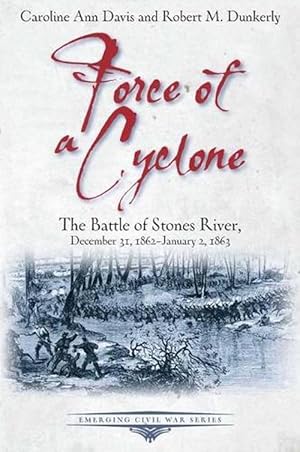
Force of a Cyclone (Paperback)
Libro 51 di 65: Emerging Civil WarLingua: Inglese
Editore: Savas Beatie, El Dorado Hills, 2023
ISBN 10: 1611216397 ISBN 13: 9781611216394
Da: Grand Eagle Retail, Bensenville, IL, U.S.A.
Valutazione del venditore 5 su 5 stelle
Paperback. Condizione: new. Paperback. uthors Caroline Davis and Bert Dunkerly explore a significant turning point of the Civil War - a battle that had the highest percentage of casualties on both sides. The stakes for the Army of the Cumberland, in the wake of other Federal failures were enormous. All of middle Tennessee held its breath when the new year dawned in 1863. On the previous day, December 31 - the last day of 1862 - just outside Murfreesboro along Stones River, the Confederate Army of Tennessee had launched a morning attack that nearly bent the Federal Army of the Cumberland back upon itself. The two armies, nearly equal in size, had prepared identical attack plans, but the Confederates had struck first. Fighting throughout the day, amid the rocky outcroppings and cedar groves, proved desperate. Federals managed to hold on until dark, but as the last hours of the old year slipped away, the Army of the Cumberland faced possible annihilation. The armies rang in the New Year to the sounds of suffering on the battlefield, although the armies themselves remained largely still. Meanwhile, hundreds of miles to the east, President Lincoln signed the Emancipation Proclamation. He needed battlefield victories to bolster its authority, but thus far, those victories had eluded him. The stakes for the Army of the Cumberland, in the wake of other Federal failures were enormous. But the fighting along Stones River was not over. On January 2, Confederates launched another massive assault. In Force of a Cyclone: The Battle of Stones River, December 31, 1862-January 2, 1863, authors Caroline Davis and Bert Dunkerly explore a significant turning point of the Civil War - a battle that had the highest percentage of casualties on both sides. Lincoln himself often looked back on that fragile New Year's Day and all that was at stake. "I can never forget whilst I remember anything," he told Federal commander Maj. Gen. William S. Rosecrans, "that about the end of last year and the beginning of this, you gave us a hard-earned victory, which, had there been a defeat instead the nation could scarcely have lived over." AUTHORS: Caroline Ann Davis studied American history at Ball State University in Muncie, Indiana, and historical preservation with a concentration on public history at Georgia State University in Atlanta, GA. In 2015, she worked at the Stones River National Battlefield through the Student Conservation Association. During her summer there she began researching the battle and surrounding area's history, while giving multiple tours of the battlefield. This is her first book in the Emerging Civil War Series. Robert M. Dunkerly is a historian, award-winning author, and speaker who is actively involved in historic preservation and research. He works as a park ranger at Richmond National Battlefield Park. Among his several books are two in the ECW Series: To the Bitter End: Appomattox, Bennett Place, and the Surrenders of the Confederacy and No Turning Back: A Guide to the 1864 Overland Campaign. 75 images, 10 maps Authors Caroline Davis and Bert Dunkerly explore a significant turning point of the Civil War a battle that had the highest percentage of casualties on both sides. The stakes for the Army of the Cumberland, in the wake of other Federal failures were enormous. Shipping may be from multiple locations in the US or from the UK, depending on stock availability.


