

Importo totale (1 articolo articoli):
Destinazione ordine:

edited hans wysling (3 risultati)
Vai alla pagina principale dei risultati di ricerca
Filtri di ricerca
Tipo di articolo
- Tutti i tipi di prodotto
- Libri (3)
- Riviste e Giornali (Nessun altro risultato corrispondente a questo perfezionamento)
- Fumetti (Nessun altro risultato corrispondente a questo perfezionamento)
- Spartiti (Nessun altro risultato corrispondente a questo perfezionamento)
- Arte, Stampe e Poster (Nessun altro risultato corrispondente a questo perfezionamento)
- Fotografie (Nessun altro risultato corrispondente a questo perfezionamento)
- Mappe (Nessun altro risultato corrispondente a questo perfezionamento)
- Manoscritti e Collezionismo cartaceo (Nessun altro risultato corrispondente a questo perfezionamento)
Condizioni Maggiori informazioni
- Nuovo (Nessun altro risultato corrispondente a questo perfezionamento)
- Come nuovo, Ottimo o Quasi ottimo (1)
- Molto buono o Buono (Nessun altro risultato corrispondente a questo perfezionamento)
- Discreto o Mediocre (Nessun altro risultato corrispondente a questo perfezionamento)
- Come descritto (2)
Legatura
- Tutte
- Rilegato (3)
- Brossura (Nessun altro risultato corrispondente a questo perfezionamento)
Ulteriori caratteristiche
- Prima ed. (2)
- Copia autograf. (Nessun altro risultato corrispondente a questo perfezionamento)
- Sovracoperta (3)
- Con foto (1)
- Non Print on Demand (3)
Lingua (1)
Prezzo
- Qualsiasi prezzo
- Inferiore a EUR 20
- EUR 20 a EUR 45
- Superiore a EUR 45 (Nessun altro risultato corrispondente a questo perfezionamento)
Spedizione gratuita
Paese del venditore
Valutazione venditore
-
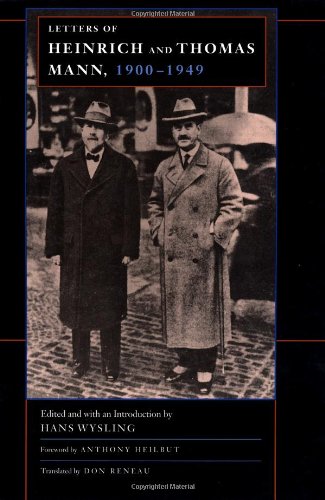
The Letters of Heinrich and Thomas Mann, 1900-1949
Lingua: Inglese
Editore: University of California Press, Berkeley, Los Angeles, & London, 1998
ISBN 10: 0520072782 ISBN 13: 9780520072787
Prima edizione
Hardcover. Condizione: Fine. Condizione sovraccoperta: Near Fine. 1st Edition. FINE virtually AS-NEW First Edition hardcover (Orig. 1998) First Printing: FINE virtually AS-NEW mylar-protected jacket w/ AS-NEW edges & corners BUT w/ clear-tape reinforcing of bottom spine-cap & outside bottom corners, NEW blue linen-over-boards cover w/ titles handsomely gold-stamped within gilt border on spine, EXCELLENT smooth-cut text-block exterior BUT showing slightest self-dust soiling, SUPERB unblemished pale-ocher laid-wheat card-stock end-papers, NEW perfect binding w/ tight signatures, PRISTINE interior printed w/ handsome clarity in Jansen on EXCELLENT unblemished archival paper * 7.26" x 10.24" x 1.50", 1.24 kg, xviii+444 (462) pp * ABOUT THE BOOK: Fortunately for us, brothers Heinrich & Thomas Mann remained devoted & eloquent correspondents even while disagreeing passionately on matters literary, political, philosophical, & personal. In their correspondence, set against a shifting backdrop of locations in Europe & America, mundane concerns blend easily w/ astonishing artistic & critical insights. That these irrepressible siblings were among the giants of 20th-century letters gives their exchanges unique literary & historical fascination. Beginning in Germany & Italy at the turn of the century, the letters document w/ disarming immediacy the brothers' views on aesthetics, politics, & the social responsibility of the writer, as well as their mutual jealousy, admiration, rivalry, & loyalty. The devastating rift caused by Thomas's support of Germany during World War I & his brother's utter opposition to the war took many years to mend, but they found their way back to friendship in the 1920s. After Hitler rose to power, both writers ultimately sought refuge in the United States. The letters offer a moving portrayal of their struggle, as novelists & socially engaged intellectuals, to bear witness to the cataclysmic historical changes around them & to their experience of exile, in Europe & then in America. This first complete English translation of their correspondence is a dramatic human dialogue & a major literary event. * ABOUT THE EDITOR ET ALS: HANS WYSLING as Director of the Thomas Mann Archive at the Eidgenössische Technische Hochschule in Zürich. DON RENEAU is a freelance translator living in Connecticut. ANTHONY HEILBUT is author of "Thomas Mann: Eros and Literature" (California paperback, 1997). * SHIPPING: MNEMOSYNE carefully wraps, labels & custom-packages this fine book for FREE domestic shipment via USPS MEDIA MAIL or USPS PRIORITY MAIL for a below-cost additional fee & via USPS FIRST CLASS INTERNATIONAL AIRMAIL to international destinations at our posted rates.
-
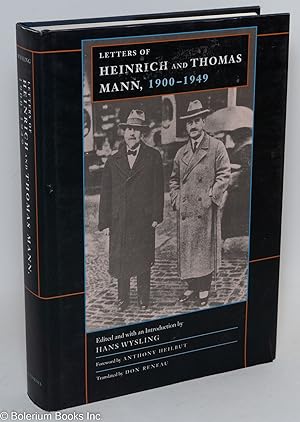
Letters of Heinrich and Thomas Mann, 1900-1949
Lingua: Inglese
Editore: University of California Press, Berkeley, 1998
ISBN 10: 0520072782 ISBN 13: 9780520072787
Da: Bolerium Books Inc., San Francisco, CA, U.S.A.
Membro dell'associazione: ABAA ILAB
Valutazione del venditore 5 su 5 stelle

Prima edizione
Hardcover. xviii, 444p., foreword, introduction, letters, documents, notes, bibliography, index, glossy b&w photo section, very good first edition, first printing stated in blue cloth boards and unclipped dj. Weimar & Now: German Cultural Criticism series #18, edited by Martin Jay & Anton Kaes.
-
Letters of Heinrich and Thomas Mann, 1900-1949
Lingua: Inglese
Editore: University of California Press, 1998
ISBN 10: 0520072782 ISBN 13: 9780520072787
Hardcover. Condizione sovraccoperta: Near Fine. 7-1/4 by 10-1/4 inches. Volume 12 in the Weimar and Now: German Cultural Criticism series. First edition (first printing). A near fine copy in a near fine dust jacket. Fortunately for us, brothers Heinrich and Thomas Mann remained devoted and eloquent correspondents even while disagreeing passionately on matters literary, political, philosophical, and personal. In their correspondence, set against a shifting backdrop of locations in Europe and America, mundane concerns blend easily with astonishing artistic and critical insights. That these irrepressible siblings were among the giants of twentieth-century letters gives their exchanges unique literary and historical fascination. Beginning in Germany and Italy at the turn of the century, the letters document with disarming immediacy the brothers' views on aesthetics, politics, and the social responsibility of the writer, as well as their mutual jealousy, admiration, rivalry, and loyalty. The devastating rift caused by Thomas's support of Germany during World War I and his brother's utter opposition to the war took many years to mend, but they found their way back to friendship in the 1920s. After Hitler rose to power, both writers ultimately sought refuge in the United States. The letters offer a moving portrayal of their struggle, as novelists and socially engaged intellectuals, to bear witness to the cataclysmic historical changes around them and to their experience of exile, in Europe and then in America. This first complete English translation of their correspondence is a dramatic human dialogue and a major literary event.
