

Importo totale (1 articolo articoli):
Destinazione ordine:

enyart byron (9 risultati)
Vai alla pagina principale dei risultati di ricerca
Filtri di ricerca
Tipo di articolo
- Tutti i tipi di prodotto
- Libri (9)
- Riviste e Giornali (Nessun altro risultato corrispondente a questo perfezionamento)
- Fumetti (Nessun altro risultato corrispondente a questo perfezionamento)
- Spartiti (Nessun altro risultato corrispondente a questo perfezionamento)
- Arte, Stampe e Poster (Nessun altro risultato corrispondente a questo perfezionamento)
- Fotografie (Nessun altro risultato corrispondente a questo perfezionamento)
- Mappe (Nessun altro risultato corrispondente a questo perfezionamento)
- Manoscritti e Collezionismo cartaceo (Nessun altro risultato corrispondente a questo perfezionamento)
Condizioni Maggiori informazioni
- Nuovo (Nessun altro risultato corrispondente a questo perfezionamento)
- Come nuovo, Ottimo o Quasi ottimo (Nessun altro risultato corrispondente a questo perfezionamento)
- Molto buono o Buono (7)
- Discreto o Mediocre (1)
- Come descritto (1)
Legatura
Ulteriori caratteristiche
- Prima ed. (2)
- Copia autograf. (Nessun altro risultato corrispondente a questo perfezionamento)
- Sovracoperta (2)
- Con foto (5)
- Non Print on Demand (9)
Lingua (2)
Spedizione gratuita
Paese del venditore
Valutazione venditore
-

A mile of glory: Pennsylvania Avenue from the Capitol to the White House
Da: ThriftBooks-Dallas, Dallas, TX, U.S.A.
Valutazione del venditore 5 su 5 stelle

Unknown. Condizione: Very Good. No Jacket. Missing dust jacket; May have limited writing in cover pages. Pages are unmarked. ~ ThriftBooks: Read More, Spend Less.
-

Aerospace Historian Vol. XIV No. 4 (Winter 1967)
Editore: Air Force Historical Foundation
Da: Wonder Book, Frederick, MD, U.S.A.
Membro dell'associazione: ABAA ILAB
Valutazione del venditore 5 su 5 stelle
Condizione: Fair. Acceptable condition. Volume 14, # 4, Winter 1967. (history, space, flight) A readable, intact copy that may have noticeable tears and wear to the spine. All pages of text are present, but they may include extensive notes and highlighting or be heavily stained. Includes reading copy only books.
-
Aerospace Historian: The Heritage of Flight - Volume 16, Summer 1969, Number 2
Editore: Air Force Historical Foundation, 1969
Paperback. Condizione: Very Good. ***VERY GOOD CONDITION***CLEAN PAGES*** Light cover wear. Light edge wear to cover. We specialize in non-fiction books. Follow us on Facebook and Instagram.
-
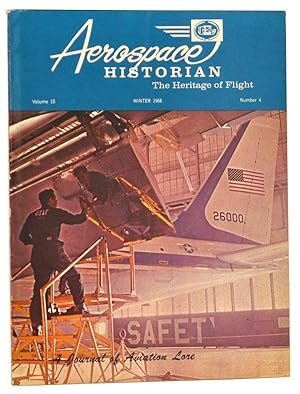
Aerospace Historian, Vol. 15, No. 4 (Winter, 1968)
Editore: Air Force Historical Foundaiton, Bolling Air Force Base, Washington, D.C., 1968
Da: Cat's Cradle Books, Archdale, NC, U.S.A.
Valutazione del venditore 5 su 5 stelle
Ephemera. Condizione: Very Good with no dust jacket. Stapled binding is sound. Pages clean, slightly off-white. Wraps have light handling wear. Contents: Michalski, Perfection Is His Trademark. Vaughn, Mission: Flying the President. Fillmore, When a Blue Jay Landed at Thule. Hobbs, Watch That Basket. Hinkle, Wings and Saddles (Part Two). Cap Goes to College. ; 11.25" tall; 48 pages.
-

Aerospace Historian Vol. 15 No. 3 (Autumn 1968)
Editore: Air Force Historical Foundation, Bolling AFB, DC, 1968
Soft Cover. Condizione: Good. Autumn 1968 issue of Aerospace Historian magazine. Text clean & bright; binding tight; minor wear to covers. 64 pages. Illustrated. Articles on Donald Douglas, Vietnam, Hickam AFB, Octave Chanute, the DH-4, and more. We also carry other issues of this magazine.
-

Aerospace Historian Vol. XIV No. 4 (Winter 1967)
Editore: Air Force Historical Foundation, Bolling AFB, DC, 1967
Soft Cover. Condizione: Good. Winter 1967 issue of Aerospace Historian magazine. Text clean & bright; binding tight; minor wear to covers. 64 pages. Illustrated. Articles on Barney Oldfield, ditchings in the Ijsselmeer, Arch Hoxsey, the Air Force Cross medal, Project Mercury, and more. We also carry other issues of this magazine.
-

Aerospace Historian Vol. 16 No. 1 (Spring 1969)
Editore: Air Force Historical Foundation, Bolling AFB, DC, 1969
Soft Cover. Condizione: Good. Spring 1969 issue of Aerospace Historian magazine. Text clean & bright; binding tight; minor wear to covers. 54 pages. Illustrated. Articles on William C. Maxwell, first parachute jump, history of aircraft insignia, the Bloomer Girl, the DH-4 and the 1919 Punitive Expedition, and more. We also carry other issues of this magazine.
-

A Mile of Glory - Pennsylvania Avenue from the Capitol to the White House
Editore: Vantage Press, New York, 1976
Da: R Bryan Old Books, Sewell, NJ, U.S.A.
Valutazione del venditore 5 su 5 stelle
Prima edizione
Hardcover. Condizione: Very Good. Condizione sovraccoperta: Good. First Edition. Local history. First edition stated. Blue cloth covers very nice, light bumps on the spine ends. Dust jacket rubbed, moderate soil, no tears, price clipped. Interior clean and tight.
-
A Mile of Glory; Pennsylvania Avenue From the Capitol to the White House
Editore: Vantage Press, New York, N.Y., 1976
Da: Ground Zero Books, Ltd., Silver Spring, MD, U.S.A.
Valutazione del venditore 4 su 5 stelle

Prima edizione
Hardcover. Condizione: Very good. Condizione sovraccoperta: Very good. [24], 104 pages. Illustrations. Map. Minor page and DJ soiling noted. Includes Introduction; The Dream of a Few Prior to 1800; The Great Serbonian Bog, 1800-1814; The Appian Way of the Republic, 1814-1849; Early Industry and Homes Prior to the Twentieth Century; Storm Clouds Gather, Then Burst, 1850-1870; A Time of Peace--Almost, 1870-1900; A New Century, The Twentieth Century; The Future; The Parade in Washington: Problems, Problems; Statues, Monuments, Memorials, and Parks on Pennsylvania Avenue; and Some "Firsts" and Some Odds and Ends. Also includes Bibliography, as well as 16 black and white photographs. The author presents the events surrounding the birth of Washington as the nation's capital and relates the story of the original plans for the city, which were devised by Charles Pierre L'Enfant, a Frenchman and a military engineer who had been wounded when fighting as a volunteer in the American Revolution. The author worked for the Interstate Commerce Commission and was an Air Force Reserve Officer prior to WWII. He was called to active service a few days after Pearl Harbor. He was later assigned to the White House. He served as an editor of Aerospace Historian magazine and was active in various history projects. Pennsylvania Avenue is a diagonal street in Washington, D.C. and Prince George's County, Maryland that connects the White House and the United States Capitol and then crosses the city to Maryland. In Maryland it is also Maryland Route 4 (MD 4) to MD 717 in Upper Marlboro, where it becomes Stephanie Roper Highway. The section between the White House and Congress is called "America's Main Street"; it is the location of official parades and processions, as well as protest marches. Moreover, Pennsylvania Avenue is an important commuter road and is part of the National Highway System. Although Pennsylvania Avenue extends six miles within Washington, D.C., the expanse between the White House and the Capitol constitutes the ceremonial heart of the nation. Washington called this stretch "most magnificent & most convenient". Laid out by Pierre (Peter) Charles L'Enfant, Pennsylvania Avenue was one of the earliest streets constructed in the Federal City. The first reference to the street as Pennsylvania Avenue comes in a 1791 letter from Thomas Jefferson. One theory is that the street was named for Pennsylvania as consolation for moving the capital from Philadelphia. Both Jefferson and George Washington considered the avenue an important feature of the new capital. After inspecting L'Enfant's plan, President Washington referred to the thoroughfare as a "Grand Avenue". Jefferson concurred, and while the "grand avenue" was little more than a wide dirt road ridiculed as "The Great Serbonian Bog", he planted it with rows of fast-growing Lombardy poplars. At one time Pennsylvania Avenue provided an unobstructed view between the White House and the Capitol. The construction of an expansion to the Treasury Building blocked this view, and supposedly President Andrew Jackson did this on purpose. Relations between the president and Congress were strained, and Jackson did not want to see the Capitol out his window, though in reality the Treasury Building was simply built on what was cheap government land. In an effort to tame dust and dirt, Pennsylvania Avenue was first paved using the macadam method in 1832, but over the years other pavement methods were trialed on the avenue: cobblestones in 1849 followed by Belgian blocks and then, in 1871, wooden blocks. In 1876, as part of an initiative begun by President Ulysses S. Grant to see Washington City's streets improved, Pennsylvania Avenue was paved with asphalt by Civil War veteran William Averell using Trinidad lake asphalt. On September 30, 1965, portions of the avenue and surrounding area were designated the Pennsylvania Avenue National Historic Site. The National Park Service administers this area which includes the United States Navy Memorial, Old Post Office Tower, and Pershing Park. Congress created the Pennsylvania Avenue Development Corporation (PADC) on October 27, 1972 to rehabilitate the street between the Capitol and the White House, an area seen as blighted. The new organization was given the mandate of developing Pennsylvania Avenue "in a manner suitable to its ceremonial, physical, and historic relationship to the legislative and executive branches of the Federal Government" First Edition [stated], presumed first printing.


