

Importo totale (1 articolo articoli):
Destinazione ordine:

friedrichs gordon (153 risultati)
Vai alla pagina principale dei risultati di ricerca
Filtri di ricerca
Tipo di articolo
- Tutti i tipi di prodotto
- Libri (153)
- Riviste e Giornali (Nessun altro risultato corrispondente a questo perfezionamento)
- Fumetti (Nessun altro risultato corrispondente a questo perfezionamento)
- Spartiti (Nessun altro risultato corrispondente a questo perfezionamento)
- Arte, Stampe e Poster (Nessun altro risultato corrispondente a questo perfezionamento)
- Fotografie (Nessun altro risultato corrispondente a questo perfezionamento)
- Mappe (Nessun altro risultato corrispondente a questo perfezionamento)
- Manoscritti e Collezionismo cartaceo (Nessun altro risultato corrispondente a questo perfezionamento)
Condizioni Maggiori informazioni
- Nuovo (133)
- Come nuovo, Ottimo o Quasi ottimo (19)
- Molto buono o Buono (1)
- Discreto o Mediocre (Nessun altro risultato corrispondente a questo perfezionamento)
- Come descritto (Nessun altro risultato corrispondente a questo perfezionamento)
Legatura
Ulteriori caratteristiche
- Prima ed. (2)
- Copia autograf. (Nessun altro risultato corrispondente a questo perfezionamento)
- Sovracoperta (Nessun altro risultato corrispondente a questo perfezionamento)
- Con foto (49)
- Non Print on Demand (112)
Lingua (2)
Spedizione gratuita
Paese del venditore
Valutazione venditore
-
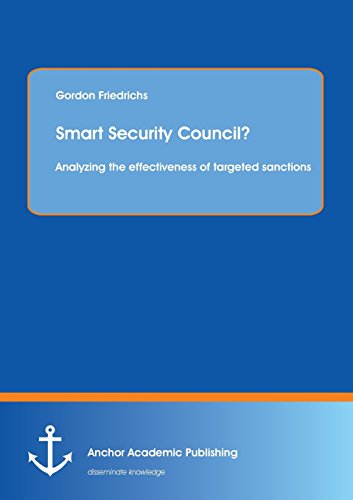
Smart Security Council? Analyzing the effectiveness of targeted sanctions
Lingua: Inglese
Editore: Anchor Academic Publishing, 2013
ISBN 10: 3954890216 ISBN 13: 9783954890217
EUR 5,73
Spedizione EUR 12,99
Spedito da Spagna a U.S.A.Quantità: 1 disponibili
Aggiungi al carrelloCondizione: Muy bueno. : Este libro de Gordon Friedrichs analiza la efectividad de las sanciones selectivas impuestas por el Consejo de Seguridad de las Naciones Unidas. Examina cómo los estados miembros contribuyen a la ratificación y aplicación de estas sanciones, y si su uso ha aumentado la eficacia del Consejo como organismo sancionador. El autor utiliza el concepto de legitimidad de entrada/salida como modelo para analizar el compromiso de los estados miembros, ofreciendo una nueva perspectiva sobre la efectividad de las sanciones. EAN: 9783954890217 Tipo: Libros Categoría: Otros Título: Smart Security Council? Analyzing the effectiveness of targeted sanctions Autor: Gordon Friedrichs Editorial: Anchor Academic Publishing Idioma: en Páginas: 152 Formato: tapa blanda.
-

U.s. Global Leadership Role and Domestic Polarization : A Role Theory Approach
Libro 11 di 15: Role Theory and International RelationsDa: GreatBookPrices, Columbia, MD, U.S.A.
Valutazione del venditore 5 su 5 stelle

EUR 47,57
Spedizione EUR 2,22
Spedito in U.S.A.Quantità: Più di 20 disponibili
Aggiungi al carrelloCondizione: New.
-

National Role Conceptions in a New Millennium : Defining a Place in a Changing World
Libro 13 di 15: Role Theory and International RelationsDa: GreatBookPrices, Columbia, MD, U.S.A.
Valutazione del venditore 5 su 5 stelle
EUR 53,40
Spedizione EUR 2,22
Spedito in U.S.A.Quantità: Più di 20 disponibili
Aggiungi al carrelloCondizione: As New. Unread book in perfect condition.
-
U.s. Global Leadership Role and Domestic Polarization : A Role Theory Approach
Libro 11 di 15: Role Theory and International RelationsDa: GreatBookPrices, Columbia, MD, U.S.A.
Valutazione del venditore 5 su 5 stelle
EUR 55,27
Spedizione EUR 2,22
Spedito in U.S.A.Quantità: Più di 20 disponibili
Aggiungi al carrelloCondizione: As New. Unread book in perfect condition.
-
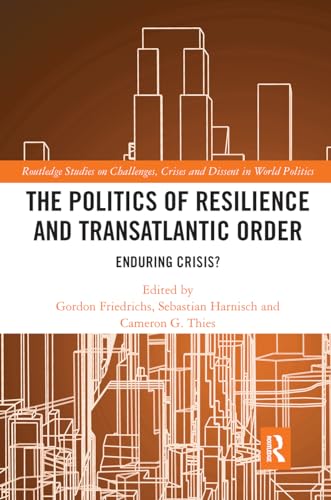
Politics of Resilience and Transatlantic Order : Enduring Crisis?
Libro 10 di 14: Routledge Studies on Challenges, Crises and Dissent in World PoliticsDa: GreatBookPrices, Columbia, MD, U.S.A.
Valutazione del venditore 5 su 5 stelle
Condizione: As New. Unread book in perfect condition.
-
U.S. Global Leadership Role and Domestic Polarization (Role Theory and International Relations)
Libro 11 di 15: Role Theory and International RelationsDa: Lucky's Textbooks, Dallas, TX, U.S.A.
Valutazione del venditore 5 su 5 stelle
EUR 55,80
Spedizione EUR 3,36
Spedito in U.S.A.Quantità: Più di 20 disponibili
Aggiungi al carrelloCondizione: New.
-
U.s. Global Leadership Role and Domestic Polarization: A Role Theory Approach (Role Theory and International Relations)
Libro 11 di 15: Role Theory and International RelationsDa: Books Puddle, New York, NY, U.S.A.
Valutazione del venditore 4 su 5 stelle

Condizione: New.
-
The Politics of Resilience and Transatlantic Order
Libro 10 di 14: Routledge Studies on Challenges, Crises and Dissent in World PoliticsDa: PBShop.store UK, Fairford, GLOS, Regno Unito
Valutazione del venditore 4 su 5 stelle
EUR 54,89
Spedizione EUR 5,76
Spedito da Regno Unito a U.S.A.Quantità: 1 disponibili
Aggiungi al carrelloPAP. Condizione: New. New Book. Shipped from UK. Established seller since 2000.
-
National Role Conceptions in a New Millennium : Defining a Place in a Changing World
Libro 13 di 15: Role Theory and International RelationsDa: GreatBookPrices, Columbia, MD, U.S.A.
Valutazione del venditore 5 su 5 stelle
EUR 59,08
Spedizione EUR 2,22
Spedito in U.S.A.Quantità: Più di 20 disponibili
Aggiungi al carrelloCondizione: New.
-
National Role Conceptions in a New Millennium: Defining a Place in a Changing World (Role Theory and International Relations)
Libro 13 di 15: Role Theory and International RelationsDa: Books Puddle, New York, NY, U.S.A.
Valutazione del venditore 4 su 5 stelle
Condizione: New. 1st edition NO-PA16APR2015-KAP.
-
National Role Conceptions in a New Millennium (Role Theory and International Relations)
Libro 13 di 15: Role Theory and International RelationsDa: California Books, Miami, FL, U.S.A.
Valutazione del venditore 5 su 5 stelle
EUR 61,58
Spedizione gratuita
Spedito in U.S.A.Quantità: Più di 20 disponibili
Aggiungi al carrelloCondizione: New.
-
National Role Conceptions in a New Millennium: Defining a Place in a Changing World (Role Theory and International Relations)
Libro 13 di 15: Role Theory and International RelationsDa: Majestic Books, Hounslow, Regno Unito
Valutazione del venditore 4 su 5 stelle
EUR 53,88
Spedizione EUR 7,46
Spedito da Regno Unito a U.S.A.Quantità: 3 disponibili
Aggiungi al carrelloCondizione: New.
-
Politics of Resilience and Transatlantic Order : Enduring Crisis?
Libro 10 di 14: Routledge Studies on Challenges, Crises and Dissent in World PoliticsDa: GreatBookPrices, Columbia, MD, U.S.A.
Valutazione del venditore 5 su 5 stelle
Condizione: New.
-
U.S. Global Leadership Role and Domestic Polarization (Role Theory and International Relations)
Libro 11 di 15: Role Theory and International RelationsDa: California Books, Miami, FL, U.S.A.
Valutazione del venditore 5 su 5 stelle
EUR 64,18
Spedizione gratuita
Spedito in U.S.A.Quantità: Più di 20 disponibili
Aggiungi al carrelloCondizione: New.
-
The Politics of Resilience and Transatlantic Order (Routledge Studies on Challenges, Crises and Dissent in World Politics)
Libro 10 di 14: Routledge Studies on Challenges, Crises and Dissent in World PoliticsDa: Books Puddle, New York, NY, U.S.A.
Valutazione del venditore 4 su 5 stelle
Condizione: New. 1st edition NO-PA16APR2015-KAP.
-
The Politics of Resilience and Transatlantic Order (Routledge Studies on Challenges, Crises and Dissent in World Politics)
Libro 10 di 14: Routledge Studies on Challenges, Crises and Dissent in World PoliticsDa: Majestic Books, Hounslow, Regno Unito
Valutazione del venditore 4 su 5 stelle
EUR 57,61
Spedizione EUR 7,46
Spedito da Regno Unito a U.S.A.Quantità: 3 disponibili
Aggiungi al carrelloCondizione: New.
-

The Politics of Resilience and Transatlantic Order
Libro 10 di 14: Routledge Studies on Challenges, Crises and Dissent in World PoliticsLingua: Inglese
Editore: Taylor and Francis Ltd, GB, 2020
ISBN 10: 0367729148 ISBN 13: 9780367729141
Da: Rarewaves.com USA, London, LONDO, Regno Unito
Valutazione del venditore 5 su 5 stelle
EUR 66,19
Spedizione gratuita
Spedito da Regno Unito a U.S.A.Quantità: 1 disponibili
Aggiungi al carrelloPaperback. Condizione: New. This edited volume bridges the "analytical divide" between studies of transatlantic relations, democratic peace theory, and foreign policy analysis, and improves our theoretical understanding of the logic of crises prevention and resolution.The recent rise of populism and polarization in both the U.S.A and Europe adds to a host of foreign policy crises that have emerged in transatlantic relations over the last two decades. Through examining how democracies can manage to sustain and maintain mechanisms of crisis resilience that are embedded in the democratic peace, and particularly transatlantic relations, this book helps enhance the understanding of inter-democratic crisis resolution across issue areas. In doing so, it addresses some of the most important and prevalent crises of our time, such as anti-terrorism intervention in Afghanistan; Iran's nuclear program; burden-sharing within North Atlantic Treaty Organization NATO; key aspects of the international order, such as binding norms for cyber security and the integration of China into the Western-led international economic order; as well as domestic order shifts, such as the British vote to leave the European Union (EU) and the impact of the Trump administration populist foreign policy on transatlantic crisis resolution. This book will be of key interest to students and scholars of International Relations, Transatlantic Studies, Foreign Policy Analysis, and Comparative Politics.
-
Politics of Resilience and Transatlantic Order : Enduring Crisis?
Libro 10 di 14: Routledge Studies on Challenges, Crises and Dissent in World PoliticsDa: GreatBookPricesUK, Woodford Green, Regno Unito
Valutazione del venditore 5 su 5 stelle
EUR 51,47
Spedizione EUR 17,21
Spedito da Regno Unito a U.S.A.Quantità: 1 disponibili
Aggiungi al carrelloCondizione: New.
-
Smart Security Council? Analyzing the effectiveness of targeted sanctions
Lingua: Inglese
Editore: Anchor Academic Publishing, 2013
ISBN 10: 3954890216 ISBN 13: 9783954890217
Da: Rheinberg-Buch Andreas Meier eK, Bergisch Gladbach, Germania
Valutazione del venditore 5 su 5 stelle
EUR 44,99
Spedizione EUR 23,00
Spedito da Germania a U.S.A.Quantità: 5 disponibili
Aggiungi al carrelloTaschenbuch. Condizione: Neu. Neuware -In 2004 the United Nations Security Council initiated a Working Group on General Issues of Sanctions in order to increase the Council s effectiveness in terms of sanctions implementation. With this reform, the Council reacted to the harsh criticism from the UN against the conventional sanctions practice. It was the Security Council s latest endeavor to make ratified sanctions more punitive, coercive, and thus effective as far as causing compliance within its judicial framework is concerned. Summarized under the term smart sanctions , the Security Council tries to be more accurate in addressing sanctions thereby seeking not only to increase political effectiveness, but also to reduce unintended humanitarian suffering. While conventional sanctions are comprehensive and comprised of a variety of measures, such as trade boycotts and embargoes against the entire country, smart or targeted sanctions (as they are also termed) are selective, targeting only at certain areas or individuals. Consequently, sanctions are the practical expression of the Council s sovereignty. The Council lives and breathes through the ratification of sanctions, so their corroboration and proper enforcement reflect the organization s vitality. In short, if sanctions fail, the Council fails.So far scholars have accentuated technical questions in their research, such as how to engage in a successful bargaining process and how to imply isolation. They further focused on examining the compliance rate of targeted states. What has been slightly ignored is a potentially poor commitment by states to enforce sanctions in the first place. Quite possibly, the Security Council lacks ratification (what I term input legitimacy) and enforcement (what I term output legitimacy) of smart sanctions. Consequently, the effectiveness of smart sanctions does not necessarily have to be linked to the compliance rate of the targeted state. Instead, it might be connected to the commitment shown by the enforcing member states: the level of legitimacy granted to the Council and its tools. Two questions can be raised:How do member states contribute to the ratification and enforcement of smart sanctions Has the use of smart sanctions increased the effectiveness of the UNSC as a sanctioning body The concept of input/output legitimacy serves as a model for analyzing the member states commitment and will to impose smart sanctions, thus developing an alternative understanding of the term effectiveness . As the cases of Iran and North-Korea reveal, the ratification and enforcement of smart sanctions suffer legitimacy. This has ramifications both theoretically and empirically as it makes the concept of legitimacy a valuable tool for policy makers and reformists while simultaneously exposing substantial weaknesses of the new sanction practice. 154 pp. Englisch.
-
Smart Security Council? Analyzing the effectiveness of targeted sanctions
Lingua: Inglese
Editore: Anchor Academic Publishing, 2013
ISBN 10: 3954890216 ISBN 13: 9783954890217
Da: BuchWeltWeit Ludwig Meier e.K., Bergisch Gladbach, Germania
Valutazione del venditore 5 su 5 stelle
EUR 44,99
Spedizione EUR 23,00
Spedito da Germania a U.S.A.Quantità: 2 disponibili
Aggiungi al carrelloTaschenbuch. Condizione: Neu. Neuware -In 2004 the United Nations Security Council initiated a Working Group on General Issues of Sanctions in order to increase the Council s effectiveness in terms of sanctions implementation. With this reform, the Council reacted to the harsh criticism from the UN against the conventional sanctions practice. It was the Security Council s latest endeavor to make ratified sanctions more punitive, coercive, and thus effective as far as causing compliance within its judicial framework is concerned. Summarized under the term smart sanctions , the Security Council tries to be more accurate in addressing sanctions thereby seeking not only to increase political effectiveness, but also to reduce unintended humanitarian suffering. While conventional sanctions are comprehensive and comprised of a variety of measures, such as trade boycotts and embargoes against the entire country, smart or targeted sanctions (as they are also termed) are selective, targeting only at certain areas or individuals. Consequently, sanctions are the practical expression of the Council s sovereignty. The Council lives and breathes through the ratification of sanctions, so their corroboration and proper enforcement reflect the organization s vitality. In short, if sanctions fail, the Council fails.So far scholars have accentuated technical questions in their research, such as how to engage in a successful bargaining process and how to imply isolation. They further focused on examining the compliance rate of targeted states. What has been slightly ignored is a potentially poor commitment by states to enforce sanctions in the first place. Quite possibly, the Security Council lacks ratification (what I term input legitimacy) and enforcement (what I term output legitimacy) of smart sanctions. Consequently, the effectiveness of smart sanctions does not necessarily have to be linked to the compliance rate of the targeted state. Instead, it might be connected to the commitment shown by the enforcing member states: the level of legitimacy granted to the Council and its tools. Two questions can be raised:How do member states contribute to the ratification and enforcement of smart sanctions Has the use of smart sanctions increased the effectiveness of the UNSC as a sanctioning body The concept of input/output legitimacy serves as a model for analyzing the member states commitment and will to impose smart sanctions, thus developing an alternative understanding of the term effectiveness . As the cases of Iran and North-Korea reveal, the ratification and enforcement of smart sanctions suffer legitimacy. This has ramifications both theoretically and empirically as it makes the concept of legitimacy a valuable tool for policy makers and reformists while simultaneously exposing substantial weaknesses of the new sanction practice. 154 pp. Englisch.
-
The Politics of Resilience and Transatlantic Order (Routledge Studies on Challenges, Crises and Dissent in World Politics)
Libro 10 di 14: Routledge Studies on Challenges, Crises and Dissent in World PoliticsDa: Ria Christie Collections, Uxbridge, Regno Unito
Valutazione del venditore 5 su 5 stelle
EUR 54,71
Spedizione EUR 13,74
Spedito da Regno Unito a U.S.A.Quantità: 1 disponibili
Aggiungi al carrelloCondizione: New. In.
-
U.s. Global Leadership Role and Domestic Polarization : A Role Theory Approach
Libro 11 di 15: Role Theory and International RelationsDa: GreatBookPricesUK, Woodford Green, Regno Unito
Valutazione del venditore 5 su 5 stelle
EUR 51,12
Spedizione EUR 17,21
Spedito da Regno Unito a U.S.A.Quantità: Più di 20 disponibili
Aggiungi al carrelloCondizione: New.
-
The Politics of Resilience and Transatlantic Order: Enduring Crisis?
Libro 10 di 14: Routledge Studies on Challenges, Crises and Dissent in World PoliticsDa: THE SAINT BOOKSTORE, Southport, Regno Unito
Valutazione del venditore 5 su 5 stelle
EUR 57,76
Spedizione EUR 14,45
Spedito da Regno Unito a U.S.A.Quantità: 1 disponibili
Aggiungi al carrelloPaperback / softback. Condizione: New. New copy - Usually dispatched within 4 working days.
-
The Politics of Resilience and Transatlantic Order: Enduring Crisis? (Routledge Studies on Challenges, Crises and Dissent in World)
Libro 10 di 14: Routledge Studies on Challenges, Crises and Dissent in World PoliticsDa: Chiron Media, Wallingford, Regno Unito
Valutazione del venditore 5 su 5 stelle
EUR 54,77
Spedizione EUR 17,77
Spedito da Regno Unito a U.S.A.Quantità: 1 disponibili
Aggiungi al carrelloPaperback. Condizione: New.
-
National Role Conceptions in a New Millennium : Defining a Place in a Changing World
Libro 13 di 15: Role Theory and International RelationsDa: GreatBookPricesUK, Woodford Green, Regno Unito
Valutazione del venditore 5 su 5 stelle
EUR 54,61
Spedizione EUR 17,21
Spedito da Regno Unito a U.S.A.Quantità: Più di 20 disponibili
Aggiungi al carrelloCondizione: As New. Unread book in perfect condition.
-
U.S. Global Leadership Role and Domestic Polarization: A Role Theory Approach
Libro 11 di 15: Role Theory and International RelationsDa: THE SAINT BOOKSTORE, Southport, Regno Unito
Valutazione del venditore 5 su 5 stelle
EUR 57,76
Spedizione EUR 16,46
Spedito da Regno Unito a U.S.A.Quantità: 1 disponibili
Aggiungi al carrelloPaperback / softback. Condizione: New. New copy - Usually dispatched within 4 working days.
-

International Organizations Amid Global Crises: Analysing Role Selection and Impact through Role Theory
Da: Books From California, Simi Valley, CA, U.S.A.
Valutazione del venditore 4 su 5 stelle
hardcover. Condizione: Fine.
-
National Role Conceptions in a New Millennium : Defining a Place in a Changing World
Libro 13 di 15: Role Theory and International RelationsDa: GreatBookPricesUK, Woodford Green, Regno Unito
Valutazione del venditore 5 su 5 stelle
EUR 58,01
Spedizione EUR 17,21
Spedito da Regno Unito a U.S.A.Quantità: Più di 20 disponibili
Aggiungi al carrelloCondizione: New.
-
National Role Conceptions in a New Millennium (Role Theory and International Relations)
Libro 13 di 15: Role Theory and International RelationsDa: Ria Christie Collections, Uxbridge, Regno Unito
Valutazione del venditore 5 su 5 stelle
EUR 61,27
Spedizione EUR 13,74
Spedito da Regno Unito a U.S.A.Quantità: Più di 20 disponibili
Aggiungi al carrelloCondizione: New. In.
-
U.s. Global Leadership Role and Domestic Polarization : A Role Theory Approach
Libro 11 di 15: Role Theory and International RelationsDa: GreatBookPricesUK, Woodford Green, Regno Unito
Valutazione del venditore 5 su 5 stelle
EUR 58,06
Spedizione EUR 17,21
Spedito da Regno Unito a U.S.A.Quantità: Più di 20 disponibili
Aggiungi al carrelloCondizione: As New. Unread book in perfect condition.

