

Importo totale (1 articolo articoli):
Destinazione ordine:

global studies (153 risultati)
Vai alla pagina principale dei risultati di ricerca
Filtri di ricerca
Tipo di articolo
- Tutti i tipi di prodotto
- Libri (152)
- Riviste e Giornali (1)
- Fumetti (Nessun altro risultato corrispondente a questo perfezionamento)
- Spartiti (Nessun altro risultato corrispondente a questo perfezionamento)
- Arte, Stampe e Poster (Nessun altro risultato corrispondente a questo perfezionamento)
- Fotografie (Nessun altro risultato corrispondente a questo perfezionamento)
- Mappe (Nessun altro risultato corrispondente a questo perfezionamento)
- Manoscritti e Collezionismo cartaceo (Nessun altro risultato corrispondente a questo perfezionamento)
Condizioni Maggiori informazioni
Legatura
Ulteriori caratteristiche
- Prima ed. (6)
- Copia autograf. (Nessun altro risultato corrispondente a questo perfezionamento)
- Sovracoperta (Nessun altro risultato corrispondente a questo perfezionamento)
- Con foto (37)
- Non Print on Demand (148)
Lingua (2)
Spedizione gratuita
Paese del venditore
Valutazione venditore
-

Globalization and Culture: Global MÃ lange
Lingua: Inglese
Editore: Rowman & Littlefield Publishers, 2015
ISBN 10: 1442222557 ISBN 13: 9781442222557
Paperback. Condizione: Very Good. Connecting readers with great books since 1972! Used books may not include companion materials, and may have some shelf wear or limited writing. We ship orders daily and Customer Service is our top priority!
-

Governing Globalization: Challenges for Democracy and Global Society
Lingua: Inglese
Editore: Rowman & Littlefield Publishers (edition ), 2016
ISBN 10: 1783487631 ISBN 13: 9781783487639
Da: BooksRun, Philadelphia, PA, U.S.A.
Valutazione del venditore 5 su 5 stelle

Paperback. Condizione: Fair. The item might be beaten up but readable. May contain markings or highlighting, as well as stains, bent corners, or any other major defect, but the text is not obscured in any way.
-

Wild Atom: Nuclear Terrorism : Global Organized Crime Project (Csis Task Force Report)
Lingua: Inglese
Editore: Center for Strategic & Intl studies, 1998
ISBN 10: 0892063343 ISBN 13: 9780892063345
Da: Wonder Book, Frederick, MD, U.S.A.
Membro dell'associazione: ABAA ILAB
Valutazione del venditore 5 su 5 stelle
Condizione: Very Good. Very Good condition. A copy that may have a few cosmetic defects. May also contain light spine creasing or a few markings such as an owner's name, short gifter's inscription or light stamp.
-

Achieving Sustainable Global Capacity for Surveillance and Response to Emerging Diseases of Zoonotic Origin: Workshop Summary
Da: Booksavers of Virginia, Harrisonburg, VA, U.S.A.
Valutazione del venditore 5 su 5 stelle
paperback. Condizione: Very Good. In very good, unmarked condition. Your purchase benefits the world-wide relief efforts of Mennonite Central Committee.
-

Condizione: Good. [ No Hassle 30 Day Returns ][ Ships Daily ] [ Underlining/Highlighting: NONE ] [ Writing: NONE ] [ Edition: First ] Publisher: National Academies Press Pub Date: 12/12/1996 Binding: Paperback Pages: 171 First edition.
-

Incorporating Climate Change and Climate Policy into Macroeconomic Modeling: Proceedings of a Workshop
Da: Books From California, Simi Valley, CA, U.S.A.
Valutazione del venditore 4 su 5 stelle

paperback. Condizione: Very Good.
-

Improving the Intelligence Community's Leveraging of the Full Science and Technology Ecosystem
Da: Books From California, Simi Valley, CA, U.S.A.
Valutazione del venditore 4 su 5 stelle
paperback. Condizione: Fine.
-

Engaging Scientists in Central Asia on Life Science Data Governance Principles: Proceedings of a Workshop Series
Da: Books From California, Simi Valley, CA, U.S.A.
Valutazione del venditore 4 su 5 stelle
paperback. Condizione: Very Good.
-

Integrating Public and Ecosystem Health Systems to Foster Resilience: A Workshop to Identify Research to Bridge the Knowledge-to-Action Gap: Proceedings of a Workshop
Da: Books From California, Simi Valley, CA, U.S.A.
Valutazione del venditore 4 su 5 stelle
paperback. Condizione: Fine.
-
Integrating Public and Ecosystem Health Systems to Foster Resilience: A Workshop to Identify Research to Bridge the Knowledge-to-Action Gap: Proceedings of a Workshop
Da: Books From California, Simi Valley, CA, U.S.A.
Valutazione del venditore 4 su 5 stelle
paperback. Condizione: Very Good. Cover and edges may have some wear.
-
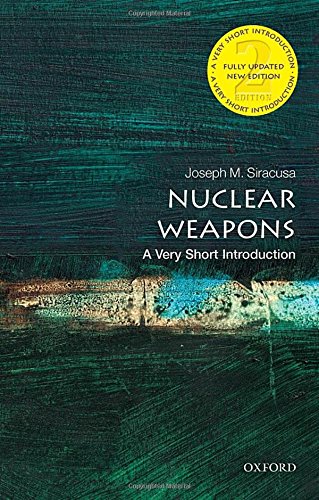
Nuclear Weapons: A Very Short Introduction
Libro 92 di 344: Very Short IntroductionsLingua: Inglese
Editore: Oxford University Press, United Kingdom, Oxford, 2015
ISBN 10: 0198727232 ISBN 13: 9780198727231
Da: WorldofBooks, Goring-By-Sea, WS, Regno Unito
Valutazione del venditore 5 su 5 stelle
EUR 6,59
Spedizione EUR 6,42
Spedito da Regno Unito a U.S.A.Quantità: 1 disponibili
Aggiungi al carrelloPaperback. Condizione: Very Good. Despite not having been used in anger since Hiroshima and Nagasaki, the atomic bomb is still the biggest threat that faces us in the 21st century. As Bill Clinton's first secretary of defence, Les Aspin, aptly put it: 'The Cold War is over, the Soviet Union is no more. But the post-Cold War world is decidedly not post-nuclear'. For all the effort to reduce nuclear stockpiles to zero, it seems that the bomb is here to stay. This Very Short Introduction reveals why. The history and politics of the bomb are explained: from the technology of nuclear weapons, to the revolutionary implications of the H-bomb, and the politics of nuclear deterrence. The issues are set against a backdrop of the changing international landscape, from the early days of development through the Cold War. In this new edition, Joseph M. Siracusa includes a new concluding chapter, moving away from the emphasis of nuclear weapons in the 'age of terrorism', to the significant lessons to be learnt from the history of the nuclear weapons era. Siracusa shows that because 21st century nuclear proliferation has deep roots in the past, an understanding of the lessons of this nuclear history is paramount for future global policies to be successful. ABOUT THE SERIES: The Very Short Introductions series from Oxford University Press contains hundreds of titles in almost every subject area. These pocket-sized books are the perfect way to get ahead in a new subject quickly. Our expert authors combine facts, analysis, perspective, new ideas, and enthusiasm to make interesting and challenging topics highly readable. The book has been read, but is in excellent condition. Pages are intact and not marred by notes or highlighting. The spine remains undamaged.
-

A Theory of Global Capitalism: Production, Class, and State in a Transnational World (Themes in Global Social Change)
Lingua: Inglese
Editore: Johns Hopkins University Press, United States, Baltimore, MD, 2004
ISBN 10: 0801879272 ISBN 13: 9780801879272
Da: WorldofBooks, Goring-By-Sea, WS, Regno Unito
Valutazione del venditore 5 su 5 stelle
EUR 6,80
Spedizione EUR 6,42
Spedito da Regno Unito a U.S.A.Quantità: 2 disponibili
Aggiungi al carrelloPaperback. Condizione: Very Good. In this book, sociologist William I. Robinson offers a theory of globalization that follows the rise of a new capitalist class and a transnational state. Growing beyond national boundaries, this new class comprises a global system in which Japanese capitalists are just as comfortable investing in Latin America as North Americans are in Southeast Asia. Their development of global, interconnected industries and businesses make them drivers of world capitalism. Robinson explains how global capital mobility has allowed capital to reorganize production worldwide in accordance with a whole range of considerations that allow for maximizing profit making opportunities. As a result, production systems that were once located in a single country have been fragmented and integrated externally into new globalized circuits of accumulation. What this means, however, is not simply that factories are located overseas where labor might be cheaper, but rather that the whole production process is broken down into smaller parts and each of those parts moved to a different country, depending on where investment might be highest. Yet at the same time, this worldwide decentralization and fragmentation of the production process has taken place alongside the centralization of command and control of the global economy in transnational capital. In turn, this economic organization finds a political counterpart in the rise of a transnational state. The leaders of global businesses and industries think about themselves and how they live in new ways. Hegemony in the twenty-first century, Robinson argues, will be exercised not by a particular nation-state but by this new global ruling class through the machinery of this transnational state. Robinson observes, for example, that global elites, regardless of their nationality, increasingly tend to share similar lifestyles and interact through expanding networks of the transnational state. Globalization is in this way unifying the world into a single mode of production and a single global system and bringing about the integration of different countries and regions into a new global economy and society. But the new global capitalism is rife with contradictions, such as the growing rift between the global rich and the global poor, concludes Robinson. The twenty-first century is likely to harbor ongoing conflicts and disputes for control between the new transnational ruling group and the expanding ranks of the poor and the marginalized. Sure to stir controversy and debate, A Theory of Global Capitalism will be of interest to sociologists and economists alike. The book has been read, but is in excellent condition. Pages are intact and not marred by notes or highlighting. The spine remains undamaged.
-

Protecting U.S. Technological Advantage
Da: Books From California, Simi Valley, CA, U.S.A.
Valutazione del venditore 4 su 5 stelle
paperback. Condizione: Very Good.
-
Civilocracy : Equality and Diversity in Democracy
Da: Mahler Books, PFLUGERVILLE, TX, U.S.A.
Valutazione del venditore 5 su 5 stelle
Paperback. Condizione: Very Good. This book is in very good condition; no remainder marks. Appears to have been gently used. Inside pages are clean. ; 6 X 1.24 X 9 inches; 556 pages.
-

Risk Analysis Methods for Nuclear War and Nuclear Terrorism (Consensus Study Report)
Da: Books From California, Simi Valley, CA, U.S.A.
Valutazione del venditore 4 su 5 stelle
paperback. Condizione: Fine.
-
Risk Analysis Methods for Nuclear War and Nuclear Terrorism (Consensus Study Report)
Da: Books From California, Simi Valley, CA, U.S.A.
Valutazione del venditore 4 su 5 stelle
paperback. Condizione: Very Good.
-

Globalization and Culture: Global MÃ lange
Libro 18 di 24: GlobalizationLingua: Inglese
Editore: Rowman & Littlefield Publishers, 2019
ISBN 10: 1538115239 ISBN 13: 9781538115237
paperback. Condizione: Very Good. Connecting readers with great books since 1972! Used books may not include companion materials, and may have some shelf wear or limited writing. We ship orders daily and Customer Service is our top priority!
-

paperback. Condizione: Good. Connecting readers with great books since 1972! Used textbooks may not include companion materials such as access codes, etc. May have some wear or writing/highlighting. We ship orders daily and Customer Service is our top priority!
-
Globalization and Culture: Global M�lange
Libro 18 di 24: GlobalizationLingua: Inglese
Editore: Rowman & Littlefield Publishers, 2019
ISBN 10: 1538115239 ISBN 13: 9781538115237
Da: Textbooks_Source, Columbia, MO, U.S.A.
Valutazione del venditore 5 su 5 stelle
paperback. Condizione: Good. Fourth. Ships same day or next business day! UPS shipping available (Priority Mail for AK/HI/APO/PO Boxes). Used sticker and some writing and/or highlighting. Used books may not include working access code or dust jacket.
-
Change and Tradition: China and the Islamic Middle East
Da: ThriftBooks-Dallas, Dallas, TX, U.S.A.
Valutazione del venditore 5 su 5 stelle
Paperback. Condizione: Good. No Jacket. Pages can have notes/highlighting. Spine may show signs of wear. ~ ThriftBooks: Read More, Spend Less.
-
Incorporating Climate Change and Climate Policy into Macroeconomic Modeling: Proceedings of a Workshop
Da: Books From California, Simi Valley, CA, U.S.A.
Valutazione del venditore 4 su 5 stelle
paperback. Condizione: Fine.
-

International Network of Global Fiducial Stations: Science and Implementation Issues
Da: West Coast Bookseller, Moorpark, CA, U.S.A.
Valutazione del venditore 4 su 5 stelle
paperback. Condizione: As New.
-

paperback. Condizione: Very Good. Connecting readers with great books since 1972! Used books may not include companion materials, and may have some shelf wear or limited writing. We ship orders daily and Customer Service is our top priority!
-

paperback. Condizione: Good. Softcover book, light wear to cover and book edges.
-

Community Colleges in the Evolving STEM Education Landscape: Summary of a Summit
Da: Books From California, Simi Valley, CA, U.S.A.
Valutazione del venditore 4 su 5 stelle
Paperback. Condizione: Very Good.
-
Change and Tradition: China and the Islamic Middle East
Lingua: Inglese
Editore: Pearson Custom Publishing January 2009, 2009
ISBN 10: 0558372465 ISBN 13: 9780558372460
Da: The Book Garden, Bountiful, UT, U.S.A.
Valutazione del venditore 5 su 5 stelle
Trade Paperback. Condizione: Very Good - Cash. Minor rubbing and edge wear to cover, with light reader wear to pages. Still great condition. Stock photos may not look exactly like the book.
-

Age Of Ai In The Life Sciences
Da: GreatBookPrices, Columbia, MD, U.S.A.
Valutazione del venditore 5 su 5 stelle
Condizione: As New. Unread book in perfect condition.
-
Age Of Ai In The Life Sciences
Da: GreatBookPrices, Columbia, MD, U.S.A.
Valutazione del venditore 5 su 5 stelle
Condizione: New.
-
The Age of AI in the Life Sciences
Da: PBShop.store US, Wood Dale, IL, U.S.A.
Valutazione del venditore 5 su 5 stelle
PAP. Condizione: New. New Book. Shipped from UK. Established seller since 2000.
-

The Age of AI in the Life Sciences
Lingua: Inglese
Editore: National Academies Press, US, 2025
ISBN 10: 0309733359 ISBN 13: 9780309733359
Paperback. Condizione: New. Artificial intelligence (AI) applications in the life sciences have the potential to enable advances in biological discovery and design at a faster pace and efficiency than is possible with classical experimental approaches alone. At the same time, AI-enabled biological tools developed for beneficial applications could potentially be misused for harmful purposes. Although the creation of biological weapons is not a new concept or risk, the potential for AI-enabled biological tools to affect this risk has raised concerns during the past decade.This report, as requested by the Department of Defense, assesses how AI-enabled biological tools could uniquely impact biosecurity risk, and how advancements in such tools could also be used to mitigate these risks. The Age of AI in the Life Sciences reviews the capabilities of AI-enabled biological tools and can be used in conjunction with the 2018 National Academies report, Biodefense in the Age of Synthetic Biology, which sets out a framework for identifying the different risk factors associated with synthetic biology capabilities.


