

Importo totale (1 articolo articoli):
Destinazione ordine:

gregory starace (7 risultati)
Vai alla pagina principale dei risultati di ricerca
Filtri di ricerca
Tipo di articolo
- Tutti i tipi di prodotto
- Libri (7)
- Riviste e Giornali (Nessun altro risultato corrispondente a questo perfezionamento)
- Fumetti (Nessun altro risultato corrispondente a questo perfezionamento)
- Spartiti (Nessun altro risultato corrispondente a questo perfezionamento)
- Arte, Stampe e Poster (Nessun altro risultato corrispondente a questo perfezionamento)
- Fotografie (Nessun altro risultato corrispondente a questo perfezionamento)
- Mappe (Nessun altro risultato corrispondente a questo perfezionamento)
- Manoscritti e Collezionismo cartaceo (Nessun altro risultato corrispondente a questo perfezionamento)
Condizioni Maggiori informazioni
- Nuovo (1)
- Come nuovo, Ottimo o Quasi ottimo (1)
- Molto buono o Buono (3)
- Discreto o Mediocre (Nessun altro risultato corrispondente a questo perfezionamento)
- Come descritto (2)
Legatura
- Tutte
- Rilegato (7)
- Brossura (Nessun altro risultato corrispondente a questo perfezionamento)
Ulteriori caratteristiche
- Prima ed. (Nessun altro risultato corrispondente a questo perfezionamento)
- Copia autograf. (Nessun altro risultato corrispondente a questo perfezionamento)
- Sovracoperta (2)
- Con foto (2)
- Non Print on Demand (7)
Lingua (1)
Prezzo
- Qualsiasi prezzo
- Inferiore a EUR 20
- EUR 20 a EUR 40 (Nessun altro risultato corrispondente a questo perfezionamento)
- Superiore a EUR 40 (Nessun altro risultato corrispondente a questo perfezionamento)
Spedizione gratuita
- Spedizione gratuita in U.S.A. (Nessun altro risultato corrispondente a questo perfezionamento)
Paese del venditore
Valutazione venditore
-
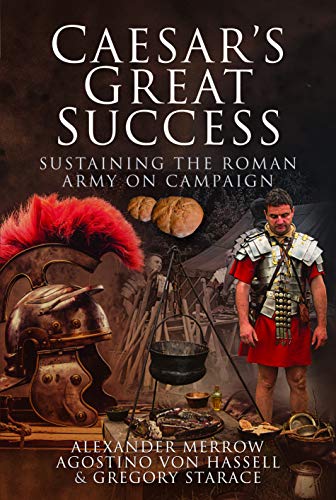
Caesar's Great Success: Sustaining the Roman Army on Campaign
Lingua: Inglese
Editore: Frontline Books, Yorkshire, 2020
ISBN 10: 147385587X ISBN 13: 9781473855878
Da: Montana Book Company, Fond du Lac, WI, U.S.A.
Valutazione del venditore 5 su 5 stelle

Hardcover. Condizione: Near Fine. 154 pp. Tightly bound. Corners not bumped. Text is free of markings. No ownership markings. Fine dust jacket.
-
Caesar's Great Success: Sustaining the Roman Army on Campaign
Da: Books From California, Simi Valley, CA, U.S.A.
Valutazione del venditore 4 su 5 stelle

Hardcover. Condizione: Very Good. Cover/edges have minor shelf wear/scuffing.
-
hardcover. Condizione: Very Good. Connecting readers with great books since 1972! Used books may not include companion materials, and may have some shelf wear or limited writing. We ship orders daily and Customer Service is our top priority!
-
Caesar's Great Success: Sustaining the Roman Army on Campaign
Da: Books From California, Simi Valley, CA, U.S.A.
Valutazione del venditore 4 su 5 stelle
Hardcover. Condizione: Good. Edges have very slight tear/wear but all pages are clean/intact.
-
CAESAR'S GREAT SUCCESS; SUSTAINING THE ROMAN ARMY ON CAMPAIGN.
Lingua: Inglese
Editore: Barnsley, South Yorkshire, Great Britain: Frontline Books [Pen & Sword Books Ltd.], 2020., 2020
ISBN 10: 147385587X ISBN 13: 9781473855878
Da: David Hallinan, Bookseller, Columbus, MS, U.S.A.
Valutazione del venditore 4 su 5 stelle
viii, 154 pages. Hardcover. Dust jacket lightly rubbed; slight scuffing and bumping at edges. Black boards with vibrant gilt stamping to spine; slight bumping to rear board's fore-edge corners. Interior pages are bright and clean. Binding is firm. ISBN 9781473855878.
-

Caesar's Great Success: Sustaining the Roman Army on Campaign
Da: Allen Williams Books, Dover, KENT, Regno Unito
Valutazione del venditore 5 su 5 stelle
EUR 12,40
Spedizione EUR 22,92
Spedito da Regno Unito a U.S.A.Quantità: 1 disponibili
Aggiungi al carrelloHardcover. Condizione: New. Condizione sovraccoperta: New. Logistics have become a principle, if not a governing factor, in modern military operations. Armies need to be fed and supplied and the larger the army, the greater the logistical difficulties that have to be overcome. Two thousand years ago, when communications were far more primitive, the size of armies was limited by the difficulties of supply. It was because the Romans developed a sophisticated supply system that they were able to maintain large armies in the field - armies that conquered much of the then known world. In Caesar's Great Success: Sustaining the Roman Army on Campaign the authors examine and detail the world's first ever fully-developed logistical supply system - the forerunner of today's complex arrangements. This includes an examination of the sea, river and land transportation of food while on campaign, and of how the food was assembled at the operational bases and subsequently distributed. The defence of the Roman food supplies, and especially of lines of communication, was an important factor in Caesar's operational planning, as was interdicting the enemy's supplies. The eating habits of Caesar's men are considered and what items could be obtained locally by forage and which were taken by requisition - and how much food a legionnaire was expected to carry on campaign. With this, the nature of the actual food consumed by the legionnaires is therefore examined and sample recipes are provided with each chapter of the book to enable the reader to relive those momentous days when Caesar and Rome ruled the world. Size: 8vo - over 7¾" - 9¾" tall. Book.
-

Caesar's Great Success: Sustaining the Roman Army on Campaign
Da: Book Grocer, Tullamarine, VIC, Australia
Valutazione del venditore 5 su 5 stelle
EUR 15,44
Spedizione EUR 25,48
Spedito da Australia a U.S.A.Quantità: 4 disponibili
Aggiungi al carrelloHardback. , . Author: Alexander MerrowFormat: HardbackNumber of Pages: 248Logistics have become a principle, if not a governing factor, in modern military operations. Armies need to be fed and supplied and the larger the army, the greater the logistical difficulties that have to be overcome. Two thousand years ago, when communications were far more primitive, the size of armies was limited by the difficulties of supply. It was because the Romans developed a sophisticated supply system that they were able to maintain large armies in the field - armies that conquered much of the then known world. In Caesar's Great Success: Sustaining the Roman Army on Campaign the authors examine and detail the world's first ever fully-developed logistical supply system - the forerunner of today's complex arrangements. This includes an examination of the sea, river and land transportation of food while on campaign, and of how the food was assembled at the operational bases and subsequently distributed. The defence of the Roman food supplies, and especially of lines of communication, was an important factor in Caesar's operational planning, as was interdicting the enemy's supplies. The eating habits of Caesar's men are considered and what items could be obtained locally by forage and which were taken by requisition - and how much food a legionnaire was expected to carry on campaign. With this, the nature of the actual food consumed by the legionnaires is therefore examined and sample recipes are provided with each chapter of the book to enable the reader to relive those momentous days when Caesar and Rome ruled the world. AUTHOR: Alexander Merrow studied history and German at Denison University before completing a masters' degree in history at Cambridge University and a Ph.D. in European history at Georgetown University, writing his dissertation in the field of Modern German History. He taught European History at Georgetown University, Franklin & Marshall College, and the University of Tennessee, Knoxville. He is the co-author of numerous works of military history and, under a nom de plume, the author of numerous works of fiction. 16 illustrations. Hardback.

