

Importo totale (1 articolo articoli):
Destinazione ordine:

ian besler (14 risultati)
Vai alla pagina principale dei risultati di ricerca
Filtri di ricerca
Tipo di articolo
- Tutti i tipi di prodotto
- Libri (13)
- Riviste e Giornali (1)
- Fumetti (Nessun altro risultato corrispondente a questo perfezionamento)
- Spartiti (Nessun altro risultato corrispondente a questo perfezionamento)
- Arte, Stampe e Poster (Nessun altro risultato corrispondente a questo perfezionamento)
- Fotografie (Nessun altro risultato corrispondente a questo perfezionamento)
- Mappe (Nessun altro risultato corrispondente a questo perfezionamento)
- Manoscritti e Collezionismo cartaceo (Nessun altro risultato corrispondente a questo perfezionamento)
Condizioni Maggiori informazioni
- Nuovo (12)
- Come nuovo, Ottimo o Quasi ottimo (2)
- Molto buono o Buono (Nessun altro risultato corrispondente a questo perfezionamento)
- Discreto o Mediocre (Nessun altro risultato corrispondente a questo perfezionamento)
- Come descritto (Nessun altro risultato corrispondente a questo perfezionamento)
Legatura
- Tutte
- Rilegato (Nessun altro risultato corrispondente a questo perfezionamento)
- Brossura (14)
Ulteriori caratteristiche
- Prima ed. (Nessun altro risultato corrispondente a questo perfezionamento)
- Copia autograf. (Nessun altro risultato corrispondente a questo perfezionamento)
- Sovracoperta (Nessun altro risultato corrispondente a questo perfezionamento)
- Con foto (10)
- Non Print on Demand (14)
Lingua (1)
Prezzo
- Qualsiasi prezzo
- Inferiore a EUR 20
- EUR 20 a EUR 45
- Superiore a EUR 45 (Nessun altro risultato corrispondente a questo perfezionamento)
Spedizione gratuita
Paese del venditore
Valutazione venditore
-
Log 36
Da: Anyone Corporation, New York, NY, U.S.A.
Valutazione del venditore 5 su 5 stelle

Rivista / Giornale
Soft cover. Condizione: New. Guest edited by architect Greg Lynn, Log 36: ROBOLOG explores the challenges and potentials posed to architecture by the rapidly accelerating field of robotics. Tossing aside the usual fabrication-focused discourse around robots, the 23 contributors to ROBOLOG investigate topics ranging from hyperrealistic robotic drag queens to machine vision to buildings that move. In addition to a collection of thought-provoking essays, this issue includes conversations with Elizabeth Diller, Nicholas de Monchaux and Ken Goldberg, and Chuck Hoberman. Rather than providing easy answers or touting cutting-edge technologies, ROBOLOG offers provocations to both architects and theorists. Robotic sensors, actuators, and networks have fundamentally transformed the world around us. What will architecture choose to do with them?
-

Condizione: As New. Unread book in perfect condition.
-

Condizione: New.
-

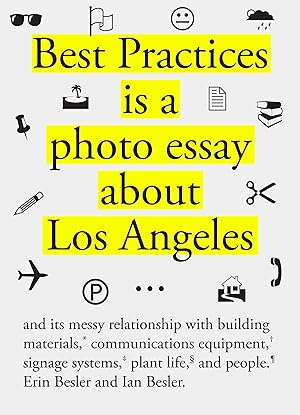
Paperback. Condizione: New. In visually cataloging the endearing and enigmatic ways in which the built environment takes shape, Best Practices proposes a new way of thinking about neighbourhoods, housing developments, streetscapes, and storefronts, not so much as places defined by building codes, dimensions, or geographic features, but as assemblages of ad hoc interventions and incidental ephemera. Drawing on the history of architecture, media theory, cultural anthropology, and urban studies, Best Practices pairs photographic documentation with extensive captions and citations to define a territory within the margins between the sanctioned and unsanctioned, the regulated and unregulated, the tasteful and tacky, the novel and the nonsense. While not necessarily in opposition of those mechanisms, Best Practices asserts that interest, knowledge, and meaning are more often generated on the lines that divide such categories. This book advocates for a more thorough consideration of the unauthorised remodels, slap-dash handiwork, haphazard paint jobs, half-hearted do-it-yourself projects, cracked facades, contradictions, compromises, and coincidences.
-

Best Practices
Da: Rarewaves.com USA, London, LONDO, Regno Unito
Valutazione del venditore 5 su 5 stelle
EUR 32,42
Spedizione gratuita
Spedito da Regno Unito a U.S.A.Quantità: 2 disponibili
Aggiungi al carrelloPaperback. Condizione: New. In visually cataloging the endearing and enigmatic ways in which the built environment takes shape, Best Practices proposes a new way of thinking about neighbourhoods, housing developments, streetscapes, and storefronts, not so much as places defined by building codes, dimensions, or geographic features, but as assemblages of ad hoc interventions and incidental ephemera. Drawing on the history of architecture, media theory, cultural anthropology, and urban studies, Best Practices pairs photographic documentation with extensive captions and citations to define a territory within the margins between the sanctioned and unsanctioned, the regulated and unregulated, the tasteful and tacky, the novel and the nonsense. While not necessarily in opposition of those mechanisms, Best Practices asserts that interest, knowledge, and meaning are more often generated on the lines that divide such categories. This book advocates for a more thorough consideration of the unauthorised remodels, slap-dash handiwork, haphazard paint jobs, half-hearted do-it-yourself projects, cracked facades, contradictions, compromises, and coincidences.
-

-
Best Practices: A photo essay about Los Angeles and its messy relationship with building materials, signage systems, communication equipment, plant life, and people
Da: Aardvark Rare Books, Bucknell, SHROP, Regno Unito
Valutazione del venditore 5 su 5 stelle
EUR 19,09
Spedizione EUR 16,15
Spedito da Regno Unito a U.S.A.Quantità: 1 disponibili
Aggiungi al carrellopaperback. Condizione: New. **PAPERBACK**.
-

Best Practices
Da: GreatBookPricesUK, Woodford Green, Regno Unito
Valutazione del venditore 5 su 5 stelle
EUR 22,65
Spedizione EUR 17,31
Spedito da Regno Unito a U.S.A.Quantità: 4 disponibili
Aggiungi al carrelloCondizione: New.
-
Best Practices: A companion to architecture and its messy relationship with building materials, signage systems, communication equipment, plant life, and people
Da: Ria Christie Collections, Uxbridge, Regno Unito
Valutazione del venditore 5 su 5 stelle
EUR 26,62
Spedizione EUR 13,82
Spedito da Regno Unito a U.S.A.Quantità: 6 disponibili
Aggiungi al carrelloCondizione: New. In.
-
Best Practices: A Companion to Architecture and Its Messy Relationship With Building Materials, Signage Systems, Communication Equipment, Plant Life, and People
Da: Revaluation Books, Exeter, Regno Unito
Valutazione del venditore 5 su 5 stelle
EUR 26,91
Spedizione EUR 14,42
Spedito da Regno Unito a U.S.A.Quantità: 2 disponibili
Aggiungi al carrelloPaperback. Condizione: Brand New. 224 pages. 9.25x6.12x0.80 inches. In Stock.
-

Best Practices
Da: GreatBookPricesUK, Woodford Green, Regno Unito
Valutazione del venditore 5 su 5 stelle
EUR 26,40
Spedizione EUR 17,31
Spedito da Regno Unito a U.S.A.Quantità: 4 disponibili
Aggiungi al carrelloCondizione: As New. Unread book in perfect condition.
-

Paperback. Condizione: New. In visually cataloging the endearing and enigmatic ways in which the built environment takes shape, Best Practices proposes a new way of thinking about neighbourhoods, housing developments, streetscapes, and storefronts, not so much as places defined by building codes, dimensions, or geographic features, but as assemblages of ad hoc interventions and incidental ephemera. Drawing on the history of architecture, media theory, cultural anthropology, and urban studies, Best Practices pairs photographic documentation with extensive captions and citations to define a territory within the margins between the sanctioned and unsanctioned, the regulated and unregulated, the tasteful and tacky, the novel and the nonsense. While not necessarily in opposition of those mechanisms, Best Practices asserts that interest, knowledge, and meaning are more often generated on the lines that divide such categories. This book advocates for a more thorough consideration of the unauthorised remodels, slap-dash handiwork, haphazard paint jobs, half-hearted do-it-yourself projects, cracked facades, contradictions, compromises, and coincidences.
-
EUR 26,96
Spedizione EUR 48,99
Spedito da Germania a U.S.A.Quantità: 3 disponibili
Aggiungi al carrelloCondizione: New. Drawing on the history of architecture, media theory, cultural anthropology, and urban studies, Best Practices pairs photographic documentation with extensive captions and citations to define a territory within the margins between the sanctioned and unsanct.
-

EUR 26,62
Spedizione EUR 74,99
Spedito da Regno Unito a U.S.A.Quantità: 2 disponibili
Aggiungi al carrelloPaperback. Condizione: New. In visually cataloging the endearing and enigmatic ways in which the built environment takes shape, Best Practices proposes a new way of thinking about neighbourhoods, housing developments, streetscapes, and storefronts, not so much as places defined by building codes, dimensions, or geographic features, but as assemblages of ad hoc interventions and incidental ephemera. Drawing on the history of architecture, media theory, cultural anthropology, and urban studies, Best Practices pairs photographic documentation with extensive captions and citations to define a territory within the margins between the sanctioned and unsanctioned, the regulated and unregulated, the tasteful and tacky, the novel and the nonsense. While not necessarily in opposition of those mechanisms, Best Practices asserts that interest, knowledge, and meaning are more often generated on the lines that divide such categories. This book advocates for a more thorough consideration of the unauthorised remodels, slap-dash handiwork, haphazard paint jobs, half-hearted do-it-yourself projects, cracked facades, contradictions, compromises, and coincidences.


