

Importo totale (1 articolo articoli):
Destinazione ordine:

judith l watson (8 risultati)
Vai alla pagina principale dei risultati di ricerca
Filtri di ricerca
Tipo di articolo
- Tutti i tipi di prodotto
- Libri (8)
- Riviste e Giornali (Nessun altro risultato corrispondente a questo perfezionamento)
- Fumetti (Nessun altro risultato corrispondente a questo perfezionamento)
- Spartiti (Nessun altro risultato corrispondente a questo perfezionamento)
- Arte, Stampe e Poster (Nessun altro risultato corrispondente a questo perfezionamento)
- Fotografie (Nessun altro risultato corrispondente a questo perfezionamento)
- Mappe (Nessun altro risultato corrispondente a questo perfezionamento)
- Manoscritti e Collezionismo cartaceo (Nessun altro risultato corrispondente a questo perfezionamento)
Condizioni Maggiori informazioni
- Nuovo (6)
- Come nuovo, Ottimo o Quasi ottimo (1)
- Molto buono o Buono (1)
- Discreto o Mediocre (Nessun altro risultato corrispondente a questo perfezionamento)
- Come descritto (Nessun altro risultato corrispondente a questo perfezionamento)
Legatura
Ulteriori caratteristiche
- Prima ed. (1)
- Copia autograf. (Nessun altro risultato corrispondente a questo perfezionamento)
- Sovracoperta (1)
- Con foto (1)
- Non Print on Demand (4)
Lingua (2)
Spedizione gratuita
Paese del venditore
Valutazione venditore
-

The Rugged Buggy: Reflections of a Bomber Pilot and POW in World War II
Da: Ria Christie Collections, Uxbridge, Regno Unito
Valutazione del venditore 5 su 5 stelle

EUR 16,19
Spedizione EUR 13,88
Spedito da Regno Unito a U.S.A.Quantità: Più di 20 disponibili
Aggiungi al carrelloCondizione: New. In.
-
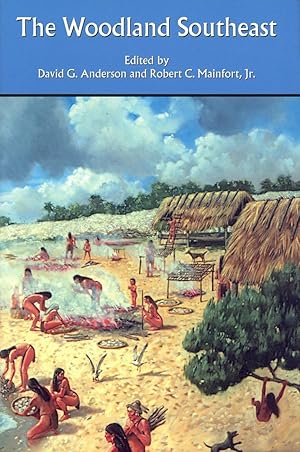
The Woodland Southeast
Da: Birkitt's Books, SARASOTA, FL, U.S.A.
Valutazione del venditore 4 su 5 stelle

Paperback. Condizione: Very Good. Minor shelf wear, binding tight, pages clean and unmarked. This collection presents, for the first time, a much-needed synthesis of the major research themes and findings that characterize the Woodland Period in the southeastern United States.The Woodland Period (ca. 1200 B.C. to A.D. 1000) has been the subject of a great deal of archaeological research over the past 25 years. Researchers have learned that in this approximately 2000-year era the peoples of the Southeast experienced increasing sedentism, population growth, and organizational complexity. At the beginning of the period, people are assumed to have been living in small groups, loosely bound by collective burial rituals. But by the first millennium A.D., some parts of the region had densely packed civic ceremonial centers ruled by hereditary elites. Maize was now the primary food crop. Perhaps most importantly, the ancient animal-focused and hunting-based religion and cosmology were being replaced by solar and warfare iconography, consistent with societies dependent on agriculture, and whose elites were increasingly in competition with one another. This volume synthesizes the research on what happened during this era and how these changes came about while analyzing the period's archaeological record.In gathering the latest research available on the Woodland Period, the editors have included contributions from the full range of specialists working in the field, highlighted major themes, and directed readers to the proper primary sources. Of interest to archaeologists and anthropologists, both professional and amateur, this will be a valuable reference work essential to understanding the Woodland Period in the Southeast.
-
The Rugged Buggy (Paperback)
Da: Grand Eagle Retail, Bensenville, IL, U.S.A.
Valutazione del venditore 5 su 5 stelle
Paperback. Condizione: new. Paperback. These are the previously unpublished memoirs of Col. James E. O'Brien (1919 - 2001). James O'Brien began training for the U. S. Army Air Corps six months before Pearl Harbor and the start of the Second World War, and received his commission as a second lieutenant shortly after the United States entered the war. He was one of the first thirty pilots to be trained to fly the B-24 bomber, and was assigned to the 44th Bomb Group, which headed to England to take part in the early American bombing raids on Europe in 1942. There, O'Brien became commander of the 68th squadron. He discusses in this book his experiences with bombing doctrines and tactics, the use of the Norden bombsight and so-called "precision bombing", and the tragic mission of April 5, 1943, which led to the deaths of over 900 Belgian civilians in Mortsel, Belgium, many of them children. O'Brien was shot down over Kiel, Germany on May 14, 1943. He then spent much of the remainder of the war as a POW in Stalag Luft III near Zagan, Poland. This POW camp is best known as the site of "The Great Escape", popularized by a 1963 film by the same name, in which 76 men escaped through an elaborate tunnel system. O'Brien briefed the future escapees on how to hijack German planes and, as "block head" of 104, protected the tunnel named "Harry" from discovery. Near the end of the war, he and his fellow POWs were forced on a 62-mile march through a blizzard, and then crammed into boxcars for a fetid railway journey to Moosberg, Germany. They were held at Stalag VII-A in Moosberg, with little food or sanitation, for three months, being freed by Gen. Patton on April 29, 1945. Col. O'Brien discusses both the Great Escape and the long march in this book, as well as many aspects of POW life, including the use of secret communications, spiritual life in the barracks, and the prisoners' responses to racism. O'Brien went on to pursue a Master's in Social Work from the University of Pittsburgh after the war. He had a long career as a social worker in Youngstown, Ohio, and Pittsburgh, Pennsylvania. He also worked to advance Civil Rights, end segregation, and promote integrated public housing. He retired as director of the non-profit Brashear Association, in South-Side Pittsburgh, in 1981. Although some of O'Brien's experiences have been published previously, including in Martin Bowman's Home by Christmas (1987), and a few publications by other former POWs, most of them have not been recorded elsewhere. It is hoped that this book provides source material for those interested in history and the experiences of those in the "Good War". This item is printed on demand. Shipping may be from multiple locations in the US or from the UK, depending on stock availability.
-
The Rugged Buggy
Da: PBShop.store US, Wood Dale, IL, U.S.A.
Valutazione del venditore 5 su 5 stelle
EUR 18,38
Spedizione gratuita
Spedito in U.S.A.Quantità: Più di 20 disponibili
Aggiungi al carrelloPAP. Condizione: New. New Book. Shipped from UK. THIS BOOK IS PRINTED ON DEMAND. Established seller since 2000.
-
The Rugged Buggy
Da: PBShop.store UK, Fairford, GLOS, Regno Unito
Valutazione del venditore 5 su 5 stelle
EUR 15,97
Spedizione EUR 4,82
Spedito da Regno Unito a U.S.A.Quantità: Più di 20 disponibili
Aggiungi al carrelloPAP. Condizione: New. New Book. Delivered from our UK warehouse in 4 to 14 business days. THIS BOOK IS PRINTED ON DEMAND. Established seller since 2000.
-

Bioprocesses and Biotechnology for Functional Foods and Nutraceuticals: 02 (Nutraceutical Science and Technology)
Libro 3 di 6: Nutraceutical Science and TechnologyDa: Chiron Media, Wallingford, Regno Unito
Valutazione del venditore 5 su 5 stelle
EUR 334,29
Spedizione EUR 17,95
Spedito da Regno Unito a U.S.A.Quantità: 5 disponibili
Aggiungi al carrelloHardcover. Condizione: New.
-

Artibus et Historiae An Art Anthology N.° 16 - 1987
Lingua: Italiano
Editore: Irsa Verlag, Firenze -Wien, 1987
Da: Luigi De Bei, PREGANZIOL, TV, Italia
Valutazione del venditore 2 su 5 stelle

Prima edizione
EUR 85,00
Spedizione EUR 37,00
Spedito da Italia a U.S.A.Quantità: 1 disponibili
Aggiungi al carrelloCouverture rigide. Condizione: Comme neuf. Condizione sovraccoperta: Comme neuf. Edition originale. Artibus et Historiae.An Art Anthology N.° 16-1987.Saggi di Josef Grabski/Leo Steinberg/Samuel Y.Edgerton/Walter Cahn/Joseph Gutman/Christian L.Joost-Gaugier/Judith Zilczer/Paul F.Watson/ Joseph F.Chorpenning e Ferdinando Bologna.Firenze/Wien Irsa Verlag 1987 Language : english and Italian text rilagto Ills. codice articolo 011212.
-
The Rugged Buggy (Paperback)
Da: CitiRetail, Stevenage, Regno Unito
Valutazione del venditore 5 su 5 stelle
EUR 19,68
Spedizione EUR 42,87
Spedito da Regno Unito a U.S.A.Quantità: 1 disponibili
Aggiungi al carrelloPaperback. Condizione: new. Paperback. These are the previously unpublished memoirs of Col. James E. O'Brien (1919 - 2001). James O'Brien began training for the U. S. Army Air Corps six months before Pearl Harbor and the start of the Second World War, and received his commission as a second lieutenant shortly after the United States entered the war. He was one of the first thirty pilots to be trained to fly the B-24 bomber, and was assigned to the 44th Bomb Group, which headed to England to take part in the early American bombing raids on Europe in 1942. There, O'Brien became commander of the 68th squadron. He discusses in this book his experiences with bombing doctrines and tactics, the use of the Norden bombsight and so-called "precision bombing", and the tragic mission of April 5, 1943, which led to the deaths of over 900 Belgian civilians in Mortsel, Belgium, many of them children. O'Brien was shot down over Kiel, Germany on May 14, 1943. He then spent much of the remainder of the war as a POW in Stalag Luft III near Zagan, Poland. This POW camp is best known as the site of "The Great Escape", popularized by a 1963 film by the same name, in which 76 men escaped through an elaborate tunnel system. O'Brien briefed the future escapees on how to hijack German planes and, as "block head" of 104, protected the tunnel named "Harry" from discovery. Near the end of the war, he and his fellow POWs were forced on a 62-mile march through a blizzard, and then crammed into boxcars for a fetid railway journey to Moosberg, Germany. They were held at Stalag VII-A in Moosberg, with little food or sanitation, for three months, being freed by Gen. Patton on April 29, 1945. Col. O'Brien discusses both the Great Escape and the long march in this book, as well as many aspects of POW life, including the use of secret communications, spiritual life in the barracks, and the prisoners' responses to racism. O'Brien went on to pursue a Master's in Social Work from the University of Pittsburgh after the war. He had a long career as a social worker in Youngstown, Ohio, and Pittsburgh, Pennsylvania. He also worked to advance Civil Rights, end segregation, and promote integrated public housing. He retired as director of the non-profit Brashear Association, in South-Side Pittsburgh, in 1981. Although some of O'Brien's experiences have been published previously, including in Martin Bowman's Home by Christmas (1987), and a few publications by other former POWs, most of them have not been recorded elsewhere. It is hoped that this book provides source material for those interested in history and the experiences of those in the "Good War". This item is printed on demand. Shipping may be from our UK warehouse or from our Australian or US warehouses, depending on stock availability.


