

Importo totale (1 articolo articoli):
Destinazione ordine:

june 6 1944 (5 risultati)
Vai alla pagina principale dei risultati di ricerca
Filtri di ricerca
Tipo di articolo
- Tutti i tipi di prodotto
- Libri (4)
- Riviste e Giornali (Nessun altro risultato corrispondente a questo perfezionamento)
- Fumetti (Nessun altro risultato corrispondente a questo perfezionamento)
- Spartiti (Nessun altro risultato corrispondente a questo perfezionamento)
- Arte, Stampe e Poster (Nessun altro risultato corrispondente a questo perfezionamento)
- Fotografie (Nessun altro risultato corrispondente a questo perfezionamento)
- Mappe (Nessun altro risultato corrispondente a questo perfezionamento)
- Manoscritti e Collezionismo cartaceo (1)
Condizioni Maggiori informazioni
- Nuovo (1)
- Come nuovo, Ottimo o Quasi ottimo (1)
- Molto buono o Buono (2)
- Discreto o Mediocre (Nessun altro risultato corrispondente a questo perfezionamento)
- Come descritto (1)
Legatura
Ulteriori caratteristiche
Lingua (2)
Spedizione gratuita
Paese del venditore
Valutazione venditore
-

Overlord, D-Day and the Battle for Normandy 1944
Editore: Book Club Associates, United Kingdom, 1984
Da: Crouch Rare Books, Godalming, Regno Unito
Valutazione del venditore 5 su 5 stelle

EUR 5,06
Spedizione EUR 24,28
Spedito da Regno Unito a U.S.A.Quantità: 1 disponibili
Aggiungi al carrello8vo size, 20.5 x 14 cms, 368pp, publisher's boards with title gilt on spine, colour illustrated dustwrapper (not price clipped), maps on end papers with 11 additional maps, 12 line drawings, 32 pages of photos, there is a Surrey County Council Library stamp on the front endpaper (on a map) despite this, however, the contents are very clean, binding very firm, otherwise nearly as new - there's no list of borrowers and I suspect it was never loaned Nearly as new (see description).
-
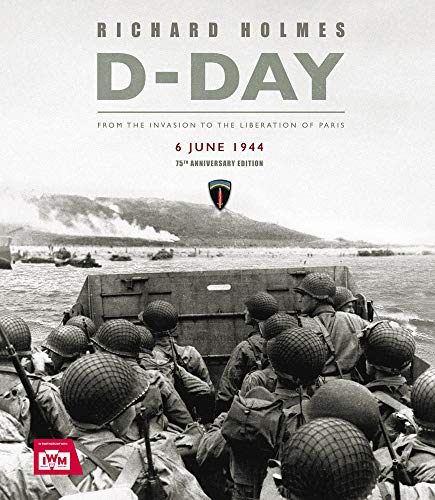
D-Day: From the Invasion to the Liberation of Paris 6 June 1944 (75th Anniversary Edition) Holmes, Richard
Da: Aragon Books Canada, OTTAWA, ON, Canada
Valutazione del venditore 3 su 5 stelle

EUR 39,04
Spedizione EUR 19,81
Spedito da Canada a U.S.A.Quantità: 1 disponibili
Aggiungi al carrelloCondizione: New.
-

Fantastic Adventures Vol.6 No.3 June 1944 (The Strange Mission of Arthur Pendran; The Man Who Lost His Shadow; The Truthful Pencil; Hitler's Right Eye; Man From the Magic River; Bury Me Deep; Horn o' Plenty; Curse of the Phantom Legion)
Editore: Chicago: Ziff-Davis Publishing Company June 1944 First Edition Pulp Magazine, 1944
Da: N & A Smiles, Kellerberrin, WA, Australia
Valutazione del venditore 5 su 5 stelle
Prima edizione
EUR 15,97
Spedizione EUR 25,84
Spedito da Australia a U.S.A.Quantità: 1 disponibili
Aggiungi al carrelloSoft cover. Condizione: Very Good. 1st Edition. VG+ Moderate edgewear, mild age-toning to pages, otherwise an attractive copy, very clean throughout. Front cover art by Robert Gibson Jones, illustrating "The Strange Mission of Arthur Pendran", rear cover art by Frank R. Paul, illustrating "Belle rophon and the Chimera", a feature by Morris J. Steele. Interior artwork by Malcolm Smith, Robert Fuqua, Magarian, J. Allen St. John, Virgil Finlay, Julian S. Krupe, Arnold Kohn, Rod Ruth.
-
[Archive of correspondence between the India Independence League and M.S.M. Somasundram Chettiar].
Lingua: Inglese
Editore: Kyaiklat, Burma, British India, 1943
Da: Dale Steffey Books, ABAA, ILAB, Bloomington, IN, U.S.A.
Membro dell'associazione: ABAA ILAB
Valutazione del venditore 5 su 5 stelle
Manoscritto / Collezionismo cartaceo
Loose Leaf. Condizione: Very Good. Correspondence from Chettiar in Tamil, from IIL in English. 9 letters from Chettiar and IIL, in manuscript and typescript; 10 pieces of correspondence from IIL on note cards with IIL letterhead; 1 IIL membership card for Chettiar. CONDITION: Overall Very Good, old folds, some splitting and tape repairs along folds of documents by IIL but Chettiar's letters largely free of wear or tear, text legible throughout. All documents now housed in sleeves that are mounted onto backing, but it remains easy to remove documents from enclosures. This collection contains English translations of Chettiar's letters, presumably made by the previous owner, who also wrote captions describing each piece of correspondence on their respective mounts. An evocative collection of correspondence document- ing an Indian nationalist organization's coercion of funds from a member of a prominent money-lending Burmese-Tamil family. These letters show the Indian Independence League's attempt to extort money from a wealthy man whom they had identified as being in a position to help "free India from bondage and for the maintenance of the Indian National Army." This was M.S.M. Somasundarum Chettiar, a 63-year-old merchant who operated his business on Strand Road, in Kyaiklat, a town in the Pyapon District of Burma. A recent historical study by Suppiah and Raja on the Chettiar families of Burma suggests that Somasundaram was part of a "distinguished ethnic group comprising the business class among Malaysian Indian-Tamils," who made their fortunes by lending money to the Indian working class in Burma. The Chettiar ethnic group boasted "a centuries long tradition as an indigenous banking caste in South India," and thus, due to a combination of "stringent business regulations during British colonialism in the Madras Presidency and economic opportunities in the newly opened British colonies in Southeast Asia," both the Indian working class in Burma and members of the Straits Settlement Chinese utilized "Chettiar agents in order to conduct bank transactions?in the middle of the nineteenth century." This reliance upon the Chettiar's services only increased by the turn of the twen- tieth century, as the demand rose for rubber and tin made in Southeast Asia. As "local Chinese and Malays with only small and medium capital sources relied on loans from Chettiar agents to develop land, plant rubber and open mines?Chettiar agents" became "known as the leading moneylenders" in late-colonial Burma. Somasundaram would thus have been part of a known community of capitalists "who accumulated capital for further expansion of their activities at the expense of the Indian working class." The Indian Independence League and the Indian National Army were closely intertwined movements during WWII, both led by Subhas Chandra Bose and governed by the Azad Hind Provisional Government in Exile.They worked to unite the Indian diaspora in Southeast Asia to support the cause of independence and sought military support from Japan to facilitate an armed wing for their movement. Primary source documentation of the Azad Hind government's activities is scant institutionally. We locate a scrapbook created by a member of the Indian National Army, held at the Institute of Social Research in the Netherlands, and a letter from Subhas Chandra Bose asking for a loan from the Hikari Kikan of Syonan, held by the National Library Board of Singapore. This would be the only comparable collection held in North America.A rich collection of correspondence highlighting the conflicting poles between Indian diasporic wealth and Indian nationalists' aspirations for the nation's self-rule (listing credit Pico Banerjee, Peek A Boo Rare Books & Ephemera).
-
Pegasus Bridge; June 6, 1944
Editore: Simon and Schuster, New York, 1985
Da: The First Edition Rare Books, LLC, Cincinnati, OH, U.S.A.
Membro dell'associazione: ABAA ILAB IOBA MWABA
Valutazione del venditore 5 su 5 stelle
Prima edizione Copia autografata
Hardcover. Condizione: Near fine. Condizione sovraccoperta: near fine. The signed first edition of Pegasus Bridge: June 6, 1944 by Stephen E. Ambrose. (illustratore). First Edition, First Printing. Octavo, 197pp, [3]. Blue hardcover, blue cloth spine. The first printing, with a full number line on the copyright page. Library stamp on the verso of title page, otherwise a clean copy. Solid text block. In the publisher's first state dust jacket, $14.95 on the front flap, faint shelf wear, a bright, near fine example. Signed on the title page by the author. The Battle of Pegasus Bridge occurred shortly after midnight on June 6, 1944, part of the opening phase of the D-Day invasion of Normandy. Major John Howard and his men of D Company, 2nd Battalion, Oxfordshire and Buckinghamshire Light Infantry, along with Royal Engineers and supporting troops of the British 6th Airborne Division, landed in Horsa gliders just yards from their objective - a vital bridge over the Caen Canal near Bénouville. Their mission was to seize and hold the bridge to prevent German counterattacks from reaching the eastern flank of the invasion beaches. The bridge was captured within minutes and held through fierce German counterattacks until relieved by forces advancing from Sword Beach. Signed.


![Immagine del venditore per [Archive of correspondence between the India Independence League and M.S.M. Somasundram Chettiar]. venduto da Dale Steffey Books, ABAA, ILAB](https://pictures.abebooks.com/inventory/md/md32419729433.jpg)
