
Importo totale (1 articolo articoli):
Destinazione ordine:

lesser barbara (5 risultati)
Intendevi
lester barbara
Vai alla pagina principale dei risultati di ricerca
Filtri di ricerca
Tipo di articolo
- Tutti i tipi di prodotto
- Libri (5)
- Riviste e Giornali (Nessun altro risultato corrispondente a questo perfezionamento)
- Fumetti (Nessun altro risultato corrispondente a questo perfezionamento)
- Spartiti (Nessun altro risultato corrispondente a questo perfezionamento)
- Arte, Stampe e Poster (Nessun altro risultato corrispondente a questo perfezionamento)
- Fotografie (Nessun altro risultato corrispondente a questo perfezionamento)
- Mappe (Nessun altro risultato corrispondente a questo perfezionamento)
- Manoscritti e Collezionismo cartaceo (Nessun altro risultato corrispondente a questo perfezionamento)
Condizioni Maggiori informazioni
- Nuovo (Nessun altro risultato corrispondente a questo perfezionamento)
- Come nuovo, Ottimo o Quasi ottimo (3)
- Molto buono o Buono (Nessun altro risultato corrispondente a questo perfezionamento)
- Discreto o Mediocre (Nessun altro risultato corrispondente a questo perfezionamento)
- Come descritto (2)
Legatura
Ulteriori caratteristiche
- Prima ed. (1)
- Copia autograf. (Nessun altro risultato corrispondente a questo perfezionamento)
- Sovracoperta (2)
- Con foto (2)
- Non Print on Demand (5)
Lingua (2)
Spedizione gratuita
- Spedizione gratuita in U.S.A. (Nessun altro risultato corrispondente a questo perfezionamento)
Paese del venditore
Valutazione venditore
-
![Immagine del venditore per The rise of anthropological theory : a history of theories of culture [Enlightenment -- Reaction and recovery : the early nineteenth century -- Rise of racial determinism -- Spencerism -- Evolutionism : methods -- The evolutionists : results -- Dialectical materialism -- Historical particularism : Boas -- The Boasian milieu -- The ethnographic basis of particularism -- Kroeber -- Lowie -- Diffusionism -- Culture and personality : pre-Freudian -- Culture and personality : Freudian -- Culture and personality : new directions -- French structuralism -- British social anthropology -- Emics, etics, and the new ethnography -- Statistical survey and the Nomothetic revival -- Cultural materialism : general evolution -- cultural ecology ] venduto da Joseph Valles - Books](https://pictures.abebooks.com/inventory/md/md11978979755.jpg)
The rise of anthropological theory : a history of theories of culture [Enlightenment -- Reaction and recovery : the early nineteenth century -- Rise of racial determinism -- Spencerism -- Evolutionism : methods -- The evolutionists : results -- Dialectical materialism -- Historical particularism : Boas -- The Boasian milieu -- The ethnographic basis of particularism -- Kroeber -- Lowie -- Diffusionism -- Culture and personality : pre-Freudian -- Culture and personality : Freudian -- Culture and personality : new directions -- French structuralism -- British social anthropology -- Emics, etics, and the new ethnography -- Statistical survey and the Nomothetic revival -- Cultural materialism : general evolution -- cultural ecology ]
Da: Joseph Valles - Books, Stockbridge, GA, U.S.A.
Valutazione del venditore 5 su 5 stelle

Hardcover. Condizione: Fine. Condizione sovraccoperta: Fine. 806 p. 24 cm. ; ISBN: 0690703228; 9780690703221; National Library: 0171053 LCCN: 68-17392 ; LC: GN320; CB19; Dewey: 572/.09; NLM: GN 320 ; OCLC: 439933 ; The best known, most often cited history of anthropological theory ; Contents: Enlightenment -- Reaction and recovery : the early nineteenth century -- Rise of racial determinism -- Spencerism -- Evolutionism : methods -- The evolutionists : results -- Dialectical materialism -- Historical particularism : Boas -- The Boasian milieu -- The ethnographic basis of particularism -- Kroeber -- Lowie -- Diffusionism -- Culture and personality : pre-Freudian -- Culture and personality : Freudian -- Culture and personality : new directions -- French structuralism -- British social anthropology -- Emics, etics, and the new ethnography -- Statistical survey and the Nomothetic revival -- Cultural materialism : general evolution -- Cultural materialism : cultural ecology. ; brown cloth in dustjacket ; large, heavy volume ; FINE/FINE. Book.
-
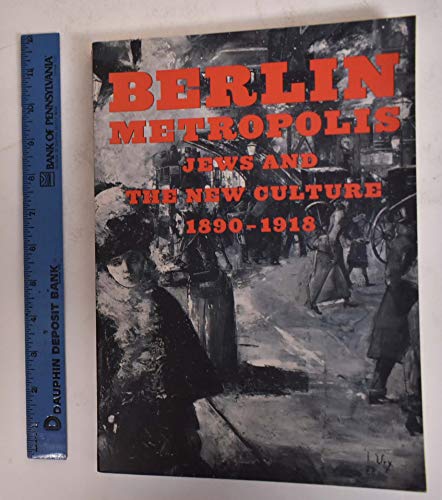
Berlin Metropolis: Jews and the New Culture, 1890-1918
Lingua: Inglese
Editore: University of California Press/ The Jewish Museum, Under the Auspices of The Jewish Theological Seminary of America, Berkeley & Los Angeles, CA, London; New York, 1999
ISBN 10: 0520222423 ISBN 13: 9780520222427
Soft Cover. Condizione: Like New. Lesser Uly (Front Cover); Ludwig Meidner (Back Cover) (illustratore). 265 pp. Over-sized and/ or over weight book; may require additional postage. Please note that large and/ or heavy items may incur extra shipping charge for both domestic and/or international shipments. An excellent, spotlessly clean copy! Clean, fresh, sharp, tight, essentially flawless copy with crisp pages, clean text, and very light shelf wear. Synopsis: Between 1890 and 1918 the city of Berlin evolved into a commercial and industrial hub that also became an international center for radical new ideas in the visual, performing, and literary arts. Jews were key leaders in developing this unique cosmopolitan culture. Berlin Metropolis: Jews and the New Culture, 1890-1918 vividly documents the many ways that Jewish artists and entrepreneurs participated in this burst of artistic creativity and promoted the emergence of modernism on the international scene. The book and exhibition at The Jewish Museum highlight leading cultural figures such as Max Liebermann, a founder of the Berlin Secession, and Herwarth Walden, who founded Der Sturm; artists such as Ludwig Meidner and Jakob Steinhardt; pioneers of cabaret, theater, and film, including Max Reinhardt and Ernst Lubitsch; art dealers, publishers, and writers; and, leading intellectual and political figures such as Martin Buber and Georg Simmel. These and other fascinating individuals are represented by more than 200 diverse objects: paintings, sculpture, drawings, prints, books, letters, posters, graphic arts, theater memorabilia, and film.The book includes eight essays by scholars of German and Jewish culture and art history that provide a truly interdisciplinary interpretation of the Berlin renaissance. The period represented in Berlin Metropolis was a time when Jews were traditionally restricted from participating in major areas of German public life such as the army, government, and the university. But by turning to the 'alternative public spheres' characteristic of urban society - galleries, cafes, journals, theaters, cabarets - they emerged as innovative cultural leaders whose intellectual and artistic impact is still felt today.
-

1870-1970 THE FIRST HUNDRED YEARS; Greeley, Colorado
Editore: Greater Greeley Centennial Com, Greeley CO, 1970
Da: Second Life Books, Inc., Lanesborough, MA, U.S.A.
Membro dell'associazione: ABAA ILAB SNEAB
Valutazione del venditore 5 su 5 stelle
Prima edizione
Lesser, Thomas D. (illustratore). First Edition. 4to, pp. 96. Illustrated by Thomas D. Lesser. Empty pocket at rear as usual. Blue cloth. A nice copy in slightly chipped and soiled dj.
-

Programming the IBM System/360
Editore: JOHN WILEY & SONS, NEW YORK, 1967
Da: Princeton Antiques Bookshop, Atlantic City, NJ, U.S.A.
Valutazione del venditore 4 su 5 stelle

HARD BACK BLUE. Condizione: GOOD. JACKET: WORN DJ. General wear. Gold gilt on front cover and spine.Light wear. Bookplate on front inside cover. No markings. Clean pages. Few pencil markings on title page. DATE PUBLISHED: 1967 EDITION: 316.
-
Berlin Metropolis: Jews and the New Culture, 1890-1918
Lingua: Inglese
Editore: University of California Press/ The Jewish Museum, Under the Auspices of The Jewish Theological Seminary of America, Berkeley & Los Angeles, CA, London; New York, 1999
ISBN 10: 0520222423 ISBN 13: 9780520222427
Soft Cover. Condizione: Like New. Lesser Uly (Front Cover); Ludwig Meidner (Back Cover) (illustratore). 265 pp. Over-sized and/ or over weight book; may require additional postage. Please note that large and/ or heavy items may incur extra shipping charge for both domestic and/or international shipments. An excellent, spotlessly clean copy! Clean, fresh, sharp, tight, essentially flawless copy with crisp pages, clean text, and very light shelf wear. Synopsis: Between 1890 and 1918 the city of Berlin evolved into a commercial and industrial hub that also became an international center for radical new ideas in the visual, performing, and literary arts. Jews were key leaders in developing this unique cosmopolitan culture. Berlin Metropolis: Jews and the New Culture, 1890-1918 vividly documents the many ways that Jewish artists and entrepreneurs participated in this burst of artistic creativity and promoted the emergence of modernism on the international scene. The book and exhibition at The Jewish Museum highlight leading cultural figures such as Max Liebermann, a founder of the Berlin Secession, and Herwarth Walden, who founded Der Sturm; artists such as Ludwig Meidner and Jakob Steinhardt; pioneers of cabaret, theater, and film, including Max Reinhardt and Ernst Lubitsch; art dealers, publishers, and writers; and, leading intellectual and political figures such as Martin Buber and Georg Simmel. These and other fascinating individuals are represented by more than 200 diverse objects: paintings, sculpture, drawings, prints, books, letters, posters, graphic arts, theater memorabilia, and film.The book includes eight essays by scholars of German and Jewish culture and art history that provide a truly interdisciplinary interpretation of the Berlin renaissance. The period represented in Berlin Metropolis was a time when Jews were traditionally restricted from participating in major areas of German public life such as the army, government, and the university. But by turning to the 'alternative public spheres' characteristic of urban society - galleries, cafes, journals, theaters, cabarets - they emerged as innovative cultural leaders whose intellectual and artistic impact is still felt today.


