

Importo totale (1 articolo articoli):
Destinazione ordine:

luci cavallero (68 risultati)
Vai alla pagina principale dei risultati di ricerca
Filtri di ricerca
Tipo di articolo
- Tutti i tipi di prodotto
- Libri (68)
- Riviste e Giornali (Nessun altro risultato corrispondente a questo perfezionamento)
- Fumetti (Nessun altro risultato corrispondente a questo perfezionamento)
- Spartiti (Nessun altro risultato corrispondente a questo perfezionamento)
- Arte, Stampe e Poster (Nessun altro risultato corrispondente a questo perfezionamento)
- Fotografie (Nessun altro risultato corrispondente a questo perfezionamento)
- Mappe (Nessun altro risultato corrispondente a questo perfezionamento)
- Manoscritti e Collezionismo cartaceo (Nessun altro risultato corrispondente a questo perfezionamento)
Condizioni Maggiori informazioni
- Nuovo (60)
- Come nuovo, Ottimo o Quasi ottimo (6)
- Molto buono o Buono (1)
- Discreto o Mediocre (Nessun altro risultato corrispondente a questo perfezionamento)
- Come descritto (1)
Legatura
Ulteriori caratteristiche
- Prima ed. (1)
- Copia autograf. (Nessun altro risultato corrispondente a questo perfezionamento)
- Sovracoperta (Nessun altro risultato corrispondente a questo perfezionamento)
- Con foto (31)
- Non Print on Demand (52)
Lingua (6)
Spedizione gratuita
Paese del venditore
Valutazione venditore
-

A Feminist Reading of Debt (Mapping Social Reproduction Theory)
Da: Greenworld Books, Arlington, TX, U.S.A.
Valutazione del venditore 5 su 5 stelle

Condizione: good. Fast Free Shipping â" Good condition. It may show normal signs of use, such as light writing, highlighting, or library markings, but all pages are intact and the book is fully readable. A solid, complete copy that's ready to enjoy.
-

The Home as Laboratory: Finance, Housing, and Feminist Struggle
Da: Lakeside Books, Benton Harbor, MI, U.S.A.
Valutazione del venditore 5 su 5 stelle
Condizione: New. Brand New! Not Overstocks or Low Quality Book Club Editions! Direct From the Publisher! We're not a giant, faceless warehouse organization! We're a small town bookstore that loves books and loves it's customers! Buy from Lakeside Books!
-

The Home as Laboratory: Finance, Housing, and Feminist Struggle (Paperback or Softback)
Da: BargainBookStores, Grand Rapids, MI, U.S.A.
Valutazione del venditore 5 su 5 stelle
Paperback or Softback. Condizione: New. The Home as Laboratory: Finance, Housing, and Feminist Struggle. Book.
-

EUR 13,72
Spedizione gratuita
Spedito in U.S.A.Quantità: Più di 20 disponibili
Aggiungi al carrelloPaperback. Condizione: New. The home has become a laboratory for capital but also for forms of financial disobedience. It has become increasingly clear that home is not a site of private life and isolation, but a battleground where the conflict over the reorganization of working days, over what even counts as labor, is waged. In the very spaces that capital historically sought to portray as an "unproductive" and apolitical space, and refused to pay for, now emerge new forms of debt and profit extraction. Although the home has been transformed into a favored site of finance's colonization of social life and of experimentation for capital, this is not a finished process-or one without its resistance. The Home as Laboratory traces this story through the links between debt and financial technologies, the violence of property, and reproductive and feminized labor, and everyday forms of feminist organizing.Drawing on militant research and interventions with feminist organizers in informal settlements and renters' organizations in Buenos Aires, Luci Cavallero, Verónica Gago, and Liz Mason-Deese offer a powerful feminist methodology that points to the vital space of the home as an open dispute. They critically analyze the changes that have occurred in domestic routines, in labor dynamics, in the very cuts imposed by the pandemic's reorganization of the sensible and of logistics. Thus, the home-its spatiality, functioning, and dynamics-suffered from reconfigurations during these novel years of the COVID-19 pandemic that have not ended. Yet, these processes are also resisted by feminist organizations, which have put the question of debt at the forefront of alliance-building, political education, and public interventions. The Home as Laboratory provides key insights into transformations in the home leading up to and during the pandemic, showing how what was historically considered an "unproductive space" became a crucial laboratory for capital and new financial technologies. Luci Cavallero, Verónica Gago, and Liz Mason-Deese analyze how the home has become a site of battles over what work is considered essential, the intensification of paid and unpaid work, often at the same time, the expansion of new forms of financial extraction, and multiple and interconnected forms of violence. But, importantly, by highlighting the research and action of feminist and housing organizations, they also demonstrate how these processes are being resisted on a daily basis.
-

The Home as Laboratory
Da: Rarewaves.com USA, London, LONDO, Regno Unito
Valutazione del venditore 5 su 5 stelle
EUR 14,87
Spedizione gratuita
Spedito da Regno Unito a U.S.A.Quantità: 9 disponibili
Aggiungi al carrelloPaperback. Condizione: New. The home has become a laboratory for capital but also for forms of financial disobedience. It has become increasingly clear that home is not a site of private life and isolation, but a battleground where the conflict over the reorganization of working days, over what even counts as labor, is waged. In the very spaces that capital historically sought to portray as an "unproductive" and apolitical space, and refused to pay for, now emerge new forms of debt and profit extraction. Although the home has been transformed into a favored site of finance's colonization of social life and of experimentation for capital, this is not a finished process-or one without its resistance. The Home as Laboratory traces this story through the links between debt and financial technologies, the violence of property, and reproductive and feminized labor, and everyday forms of feminist organizing.Drawing on militant research and interventions with feminist organizers in informal settlements and renters' organizations in Buenos Aires, Luci Cavallero, Verónica Gago, and Liz Mason-Deese offer a powerful feminist methodology that points to the vital space of the home as an open dispute. They critically analyze the changes that have occurred in domestic routines, in labor dynamics, in the very cuts imposed by the pandemic's reorganization of the sensible and of logistics. Thus, the home-its spatiality, functioning, and dynamics-suffered from reconfigurations during these novel years of the COVID-19 pandemic that have not ended. Yet, these processes are also resisted by feminist organizations, which have put the question of debt at the forefront of alliance-building, political education, and public interventions. The Home as Laboratory provides key insights into transformations in the home leading up to and during the pandemic, showing how what was historically considered an "unproductive space" became a crucial laboratory for capital and new financial technologies. Luci Cavallero, Verónica Gago, and Liz Mason-Deese analyze how the home has become a site of battles over what work is considered essential, the intensification of paid and unpaid work, often at the same time, the expansion of new forms of financial extraction, and multiple and interconnected forms of violence. But, importantly, by highlighting the research and action of feminist and housing organizations, they also demonstrate how these processes are being resisted on a daily basis.
-
The Home as Laboratory: Finance, Housing, and Feminist Struggle
Da: California Books, Miami, FL, U.S.A.
Valutazione del venditore 5 su 5 stelle
EUR 15,97
Spedizione gratuita
Spedito in U.S.A.Quantità: Più di 20 disponibili
Aggiungi al carrelloCondizione: New.
-
Condizione: NEW.
-
The Home as Laboratory (Paperback)
Da: Grand Eagle Retail, Bensenville, IL, U.S.A.
Valutazione del venditore 5 su 5 stelle
Paperback. Condizione: new. Paperback. The home has become a laboratory for capital but also for forms of financial disobedience.It has become increasingly clear that home is not a site of private life and isolation, but a battleground where the conflict over the reorganization of working days, over what even counts as labor, is waged. In the very spaces that capital historically sought to portray as an "unproductive" and apolitical space, and refused to pay for, now emerge new forms of debt and profit extraction. Although the home has been transformed into a favored site of finance's colonization of social life and of experimentation for capital, this is not a finished process-or one without its resistance.The Home as Laboratory traces this story through the links between debt and financial technologies, the violence of property, and reproductive and feminized labor, and everyday forms of feminist organizing.Drawing on militant research and interventions with feminist organizers in informal settlements and renters' organizations in Buenos Aires, Luci Cavallero, Vernica Gago, and Liz Mason-Deese offer a powerful feminist methodology that points to the vital space of the home as an open dispute. They critically analyze the changes that have occurred in domestic routines, in labor dynamics, in the very cuts imposed by the pandemic's reorganization of the sensible and of logistics. Thus, the home-its spatiality, functioning, and dynamics-suffered from reconfigurations during these novel years of the COVID-19 pandemic that have not ended. Yet, these processes are also resisted by feminist organizations, which have put the question of debt at the forefront of alliance-building, political education, and public interventions.The Home as Laboratory provides key insights into transformations in the home leading up to and during the pandemic, showing how what was historically considered an "unproductive space" became a crucial laboratory for capital and new financial technologies. Luci Cavallero, Vernica Gago, and Liz Mason-Deese analyze how the home has become a site of battles over what work is considered essential, the intensification of paid and unpaid work, often at the same time, the expansion of new forms of financial extraction, and multiple and interconnected forms of violence. But, importantly, by highlighting the research and action of feminist and housing organizations, they also demonstrate how these processes are being resisted on a daily basis. Shipping may be from multiple locations in the US or from the UK, depending on stock availability.
-

Feminist Reading of Debt
Da: GreatBookPrices, Columbia, MD, U.S.A.
Valutazione del venditore 5 su 5 stelle
EUR 18,25
Spedizione EUR 2,27
Spedito in U.S.A.Quantità: Più di 20 disponibili
Aggiungi al carrelloCondizione: As New. Unread book in perfect condition.
-
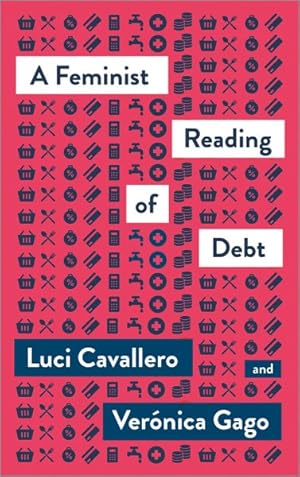
Feminist Reading of Debt
Da: GreatBookPrices, Columbia, MD, U.S.A.
Valutazione del venditore 5 su 5 stelle
EUR 21,23
Spedizione EUR 2,27
Spedito in U.S.A.Quantità: Più di 20 disponibili
Aggiungi al carrelloCondizione: New.
-

A Feminist Reading of Debt
Da: Rarewaves.com USA, London, LONDO, Regno Unito
Valutazione del venditore 5 su 5 stelle
EUR 26,71
Spedizione gratuita
Spedito da Regno Unito a U.S.A.Quantità: Più di 20 disponibili
Aggiungi al carrelloPaperback. Condizione: New. ***Winner of an English PEN Award 2021***In this sharp intervention, authors Lucí Cavallero and Verónica Gago defiantly develop a feminist understanding of debt, showing its impact on women and members of the LGBTQ+ community and examining the relationship between debt and social reproduction.Exploring the link between financial activity and the rise of conservative forces in Latin America, the book demonstrates that debt is intimately linked to gendered violence and patriarchal notions of the family. Yet, rather than seeing these forces as insurmountable, the authors also show ways in which debt can be resisted, drawing on concrete experiences and practices from Latin America and around the world.Featuring interviews with women in Argentina and Brazil, the book reveals the real-life impact of debt and how it falls mainly on the shoulders of women, from the household to the wider effects of national debt and austerity. However, through discussions around experiences of work, prisons, domestic labour, agriculture, family, abortion and housing, a narrative of resistance emerges.Translated by Liz Mason-Deese.
-

A Feminist Reading of Debt (Paperback or Softback)
Lingua: Inglese
Editore: Pluto Press (UK) 4/20/2021, 2021
ISBN 10: 0745341721 ISBN 13: 9780745341729
Da: BargainBookStores, Grand Rapids, MI, U.S.A.
Valutazione del venditore 5 su 5 stelle
Paperback or Softback. Condizione: New. A Feminist Reading of Debt. Book.
-
The Home As Laboratory: Finance, Housing, and Feminist Struggle
Da: Revaluation Books, Exeter, Regno Unito
Valutazione del venditore 5 su 5 stelle
EUR 15,71
Spedizione EUR 11,50
Spedito da Regno Unito a U.S.A.Quantità: 2 disponibili
Aggiungi al carrelloPaperback. Condizione: Brand New. 112 pages. 5.00x8.00x0.25 inches. In Stock.
-
The Home as Laboratory: Finance, Housing, and Feminist Struggle
Da: Ria Christie Collections, Uxbridge, Regno Unito
Valutazione del venditore 5 su 5 stelle
EUR 15,28
Spedizione EUR 13,78
Spedito da Regno Unito a U.S.A.Quantità: Più di 20 disponibili
Aggiungi al carrelloCondizione: New. In.
-
Home As Laboratory
Da: Kennys Bookshop and Art Galleries Ltd., Galway, GY, Irlanda
Valutazione del venditore 5 su 5 stelle
EUR 17,81
Spedizione EUR 10,50
Spedito da Irlanda a U.S.A.Quantità: 2 disponibili
Aggiungi al carrelloCondizione: New.
-

EUR 9,50
Spedizione EUR 15,91
Spedito da Spagna a U.S.A.Quantità: 1 disponibili
Aggiungi al carrelloCondizione: New. *** Nota: Los envíos a España peninsular, Baleares y Canarias se realizan a través de mensajería urgente. No aceptamos pedidos con destino a Ceuta y Melilla.
-
Condizione: New.
-

EUR 12,00
Spedizione EUR 10,68
Spedito da Francia a U.S.A.Quantità: 1 disponibili
Aggiungi al carrelloCondizione: Neuf.
-
The Home as Laboratory: Finance, Housing, and Feminist Struggle
Da: Chiron Media, Wallingford, Regno Unito
Valutazione del venditore 5 su 5 stelle
EUR 13,02
Spedizione EUR 17,81
Spedito da Regno Unito a U.S.A.Quantità: 2 disponibili
Aggiungi al carrellopaperback. Condizione: New.
-

A Feminist Reading of Debt
Da: Kennys Bookstore, Olney, MD, U.S.A.
Valutazione del venditore 4 su 5 stelle

EUR 23,38
Spedizione EUR 9,04
Spedito in U.S.A.Quantità: Più di 20 disponibili
Aggiungi al carrelloCondizione: New. 2021. Paperback. . . . . . Books ship from the US and Ireland.
-
A Feminist Reading of Debt (Mapping Social Reproduction Theory)
Da: Majestic Books, Hounslow, Regno Unito
Valutazione del venditore 4 su 5 stelle
EUR 26,90
Spedizione EUR 7,47
Spedito da Regno Unito a U.S.A.Quantità: 3 disponibili
Aggiungi al carrelloCondizione: New.
-

Feminist Reading of Debt
Da: GreatBookPricesUK, Woodford Green, Regno Unito
Valutazione del venditore 5 su 5 stelle
EUR 19,00
Spedizione EUR 17,25
Spedito da Regno Unito a U.S.A.Quantità: Più di 20 disponibili
Aggiungi al carrelloCondizione: New.
-
A Feminist Reading of Debt (Mapping Social Reproduction Theory)
Da: Ria Christie Collections, Uxbridge, Regno Unito
Valutazione del venditore 5 su 5 stelle
EUR 23,91
Spedizione EUR 13,78
Spedito da Regno Unito a U.S.A.Quantità: Più di 20 disponibili
Aggiungi al carrelloCondizione: New. In English.
-

Feminist Reading of Debt
Da: GreatBookPricesUK, Woodford Green, Regno Unito
Valutazione del venditore 5 su 5 stelle
EUR 22,03
Spedizione EUR 17,25
Spedito da Regno Unito a U.S.A.Quantità: Più di 20 disponibili
Aggiungi al carrelloCondizione: As New. Unread book in perfect condition.
-
A Feminist Reading of Debt
Da: THE SAINT BOOKSTORE, Southport, Regno Unito
Valutazione del venditore 5 su 5 stelle
EUR 24,61
Spedizione EUR 14,24
Spedito da Regno Unito a U.S.A.Quantità: Più di 20 disponibili
Aggiungi al carrelloPaperback / softback. Condizione: New. New copy - Usually dispatched within 4 working days.
-

Condizione: New. Enviamos a todo el mundo. We ship worldwide.
-
A Feminist Reading of Debt (Mapping Social Reproduction Theory)
Da: Books Puddle, New York, NY, U.S.A.
Valutazione del venditore 4 su 5 stelle
Condizione: New.
-
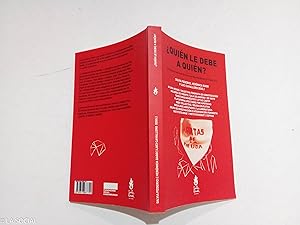
¿Quién le debe a quién? Ensayos trasnacionales de desobediencia financiera
Da: La Social. Galería y Libros, Barcelona, B, Spagna
Valutazione del venditore 5 su 5 stelle
Prima edizione
EUR 17,49
Spedizione EUR 25,50
Spedito da Spagna a U.S.A.Quantità: 1 disponibili
Aggiungi al carrelloEncuadernación de tapa blanda. Condizione: Excelente. 1ª Edición. PRIMERA EDICIÓN. FIRST EDITION. EXCELENTE ejemplar. 236pp.
-

Vive, libere e senza debiti! Una lettura femminista del debito
Da: libreriauniversitaria.it, Occhiobello, RO, Italia
Valutazione del venditore 4 su 5 stelle
EUR 13,30
Spedizione EUR 17,95
Spedito da Italia a U.S.A.Quantità: 2 disponibili
Aggiungi al carrelloCondizione: NEW.
-

The Home as Laboratory
Da: Rarewaves USA United, OSWEGO, IL, U.S.A.
Valutazione del venditore 5 su 5 stelle
EUR 15,13
Spedizione EUR 43,06
Spedito in U.S.A.Quantità: Più di 20 disponibili
Aggiungi al carrelloPaperback. Condizione: New. The home has become a laboratory for capital but also for forms of financial disobedience. It has become increasingly clear that home is not a site of private life and isolation, but a battleground where the conflict over the reorganization of working days, over what even counts as labor, is waged. In the very spaces that capital historically sought to portray as an "unproductive" and apolitical space, and refused to pay for, now emerge new forms of debt and profit extraction. Although the home has been transformed into a favored site of finance's colonization of social life and of experimentation for capital, this is not a finished process-or one without its resistance. The Home as Laboratory traces this story through the links between debt and financial technologies, the violence of property, and reproductive and feminized labor, and everyday forms of feminist organizing.Drawing on militant research and interventions with feminist organizers in informal settlements and renters' organizations in Buenos Aires, Luci Cavallero, Verónica Gago, and Liz Mason-Deese offer a powerful feminist methodology that points to the vital space of the home as an open dispute. They critically analyze the changes that have occurred in domestic routines, in labor dynamics, in the very cuts imposed by the pandemic's reorganization of the sensible and of logistics. Thus, the home-its spatiality, functioning, and dynamics-suffered from reconfigurations during these novel years of the COVID-19 pandemic that have not ended. Yet, these processes are also resisted by feminist organizations, which have put the question of debt at the forefront of alliance-building, political education, and public interventions. The Home as Laboratory provides key insights into transformations in the home leading up to and during the pandemic, showing how what was historically considered an "unproductive space" became a crucial laboratory for capital and new financial technologies. Luci Cavallero, Verónica Gago, and Liz Mason-Deese analyze how the home has become a site of battles over what work is considered essential, the intensification of paid and unpaid work, often at the same time, the expansion of new forms of financial extraction, and multiple and interconnected forms of violence. But, importantly, by highlighting the research and action of feminist and housing organizations, they also demonstrate how these processes are being resisted on a daily basis.

