

Importo totale (1 articolo articoli):
Destinazione ordine:

michael seadle (87 risultati)
Vai alla pagina principale dei risultati di ricerca
Filtri di ricerca
Tipo di articolo
- Tutti i tipi di prodotto
- Libri (87)
- Riviste e Giornali (Nessun altro risultato corrispondente a questo perfezionamento)
- Fumetti (Nessun altro risultato corrispondente a questo perfezionamento)
- Spartiti (Nessun altro risultato corrispondente a questo perfezionamento)
- Arte, Stampe e Poster (Nessun altro risultato corrispondente a questo perfezionamento)
- Fotografie (Nessun altro risultato corrispondente a questo perfezionamento)
- Mappe (Nessun altro risultato corrispondente a questo perfezionamento)
- Manoscritti e Collezionismo cartaceo (Nessun altro risultato corrispondente a questo perfezionamento)
Condizioni Maggiori informazioni
- Nuovo (75)
- Come nuovo, Ottimo o Quasi ottimo (11)
- Molto buono o Buono (1)
- Discreto o Mediocre (Nessun altro risultato corrispondente a questo perfezionamento)
- Come descritto (Nessun altro risultato corrispondente a questo perfezionamento)
Legatura
Ulteriori caratteristiche
- Prima ed. (2)
- Copia autograf. (1)
- Sovracoperta (Nessun altro risultato corrispondente a questo perfezionamento)
- Con foto (31)
- Non Print on Demand (70)
Lingua (2)
Spedizione gratuita
Paese del venditore
Valutazione venditore
-

Automating Mainframe Management : Using Expert Systems with Examples from VM and MVS
Da: Bingo Books 2, Vancouver, WA, U.S.A.
Valutazione del venditore 5 su 5 stelle

Prima edizione Copia autografata
Hardcover. Condizione: Fine. 1st Edition. hardback book in fine condition,presentation signature appears to be the author. Signed by Author(s).
-

Quantifying Research Integrity (Synthesis Lectures on Information Concepts, Retrieval, and Services, 53)
Da: suffolkbooks, Center moriches, NY, U.S.A.
Valutazione del venditore 4 su 5 stelle

paperback. Condizione: Very Good. Fast Shipping - Safe and Secure 7 days a week!
-
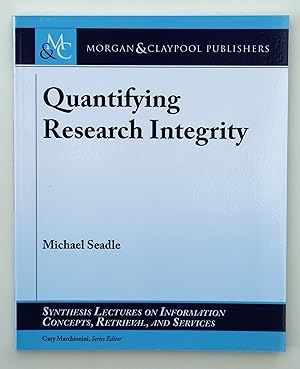
Quantifying Research Integrity (Synthesis Lectures on Information Concepts, Retrieval, and Services)
Lingua: Inglese
Editore: Morgan & Claypool Publishers, 2016
ISBN 10: 1627056408 ISBN 13: 9781627056403
Da: Our Kind Of Books, Liphook, Regno Unito
Valutazione del venditore 5 su 5 stelle
EUR 11,88
Spedizione EUR 25,56
Spedito da Regno Unito a U.S.A.Quantità: 1 disponibili
Aggiungi al carrelloSoft cover. Condizione: As New. This book has been in storage since publication and is unread. Hence the description as new .
-

Measurement of Information Integrity : An Information Science Perspective
Da: GreatBookPrices, Columbia, MD, U.S.A.
Valutazione del venditore 5 su 5 stelle
EUR 49,40
Spedizione EUR 2,27
Spedito in U.S.A.Quantità: Più di 20 disponibili
Aggiungi al carrelloCondizione: As New. Unread book in perfect condition.
-
Measurement of Information Integrity : An Information Science Perspective
Da: GreatBookPrices, Columbia, MD, U.S.A.
Valutazione del venditore 5 su 5 stelle
EUR 56,54
Spedizione EUR 2,27
Spedito in U.S.A.Quantità: Più di 20 disponibili
Aggiungi al carrelloCondizione: New.
-

The Measurement of Information Integrity (Paperback or Softback)
Da: BargainBookStores, Grand Rapids, MI, U.S.A.
Valutazione del venditore 5 su 5 stelle
Condizione: New. The Measurement of Information Integrity (Paperback or Softback).
-
The Measurement of Information Integrity
Da: California Books, Miami, FL, U.S.A.
Valutazione del venditore 5 su 5 stelle
EUR 60,26
Spedizione gratuita
Spedito in U.S.A.Quantità: Più di 20 disponibili
Aggiungi al carrelloCondizione: New.
-
The Measurement of Information Integrity
Da: Majestic Books, Hounslow, Regno Unito
Valutazione del venditore 4 su 5 stelle
EUR 52,51
Spedizione EUR 7,50
Spedito da Regno Unito a U.S.A.Quantità: 3 disponibili
Aggiungi al carrelloCondizione: New.
-
The Measurement of Information Integrity: An Information Science Perspective
Da: Chiron Media, Wallingford, Regno Unito
Valutazione del venditore 5 su 5 stelle
EUR 44,58
Spedizione EUR 17,87
Spedito da Regno Unito a U.S.A.Quantità: 5 disponibili
Aggiungi al carrelloPaperback. Condizione: New.
-
Measurement of Information Integrity : An Information Science Perspective
Da: GreatBookPricesUK, Woodford Green, Regno Unito
Valutazione del venditore 5 su 5 stelle
EUR 45,33
Spedizione EUR 17,31
Spedito da Regno Unito a U.S.A.Quantità: Più di 20 disponibili
Aggiungi al carrelloCondizione: New.
-
The Measurement of Information Integrity
Da: Books Puddle, New York, NY, U.S.A.
Valutazione del venditore 4 su 5 stelle
Condizione: New.
-
The Measurement of Information Integrity
Da: THE SAINT BOOKSTORE, Southport, Regno Unito
Valutazione del venditore 5 su 5 stelle
EUR 52,37
Spedizione EUR 14,54
Spedito da Regno Unito a U.S.A.Quantità: 1 disponibili
Aggiungi al carrelloPaperback / softback. Condizione: New. New copy - Usually dispatched within 4 working days.
-

Information Science (Paperback)
Da: Grand Eagle Retail, Bensenville, IL, U.S.A.
Valutazione del venditore 5 su 5 stelle
Paperback. Condizione: new. Paperback. What is Information Science? This comprehensive book answers this key question and explains how information science differs from data science and library science.Using a range of practical examples, the book explores how information science cuts across disciplines and integrates a range of information into a coherent whole. Starting with a historical overview of information science, subsequent chapters explore:communication toolsinformation integrity and behaviourartificial intelligence and data scienceinformation retrieval, curation and non-verbal informationinformation in technology, education and politics.A core text for those teaching library and information science as well as practising librarians or those working in information and communication fields, Information Science is an authoritative and subject-defining publication. It can be challenging to define information science as a discipline. This book helps to build a systematic viewpoint whilst acknowledging everyday practical applications. Shipping may be from multiple locations in the US or from the UK, depending on stock availability.
-
Measurement of Information Integrity : An Information Science Perspective
Da: GreatBookPricesUK, Woodford Green, Regno Unito
Valutazione del venditore 5 su 5 stelle
EUR 52,67
Spedizione EUR 17,31
Spedito da Regno Unito a U.S.A.Quantità: Più di 20 disponibili
Aggiungi al carrelloCondizione: As New. Unread book in perfect condition.
-
Information Science - History, Ideas, Applications
Da: PBShop.store UK, Fairford, GLOS, Regno Unito
Valutazione del venditore 4 su 5 stelle
EUR 64,90
Spedizione EUR 4,80
Spedito da Regno Unito a U.S.A.Quantità: 15 disponibili
Aggiungi al carrelloPAP. Condizione: New. New Book. Shipped from UK. Established seller since 2000.
-
The Measurement of Information Integrity
Da: Ria Christie Collections, Uxbridge, Regno Unito
Valutazione del venditore 5 su 5 stelle
EUR 58,95
Spedizione EUR 13,82
Spedito da Regno Unito a U.S.A.Quantità: Più di 20 disponibili
Aggiungi al carrelloCondizione: New. In.
-
The Measurement of Information Integrity
Da: Biblios, Frankfurt am main, HESSE, Germania
Valutazione del venditore 4 su 5 stelle
EUR 59,92
Spedizione EUR 9,95
Spedito da Germania a U.S.A.Quantità: 3 disponibili
Aggiungi al carrelloCondizione: New.
-

Information Science : History, Ideas, Applications
Da: GreatBookPrices, Columbia, MD, U.S.A.
Valutazione del venditore 5 su 5 stelle
EUR 82,47
Spedizione EUR 2,27
Spedito in U.S.A.Quantità: Più di 20 disponibili
Aggiungi al carrelloCondizione: New.
-

Information Science: History, Ideas, Applications
Da: Rarewaves.com USA, London, LONDO, Regno Unito
Valutazione del venditore 5 su 5 stelle
EUR 84,82
Spedizione gratuita
Spedito da Regno Unito a U.S.A.Quantità: 5 disponibili
Aggiungi al carrelloPaperback. Condizione: New. What is Information Science? This comprehensive book answers this key question and explains how information science differs from data science and library science.Using a range of practical examples, the book explores how information science cuts across disciplines and integrates a range of information into a coherent whole. Starting with a historical overview of information science, subsequent chapters explore:communication toolsinformation integrity and behaviourartificial intelligence and data scienceinformation retrieval, curation and non-verbal informationinformation in technology, education and politics.A core text for those teaching library and information science as well as practising librarians or those working in information and communication fields, Information Science is an authoritative and subject-defining publication.
-

Information Science : History, Ideas, Applications
Da: GreatBookPrices, Columbia, MD, U.S.A.
Valutazione del venditore 5 su 5 stelle
EUR 84,51
Spedizione EUR 2,27
Spedito in U.S.A.Quantità: Più di 20 disponibili
Aggiungi al carrelloCondizione: As New. Unread book in perfect condition.
-
The Measurement of Information Integrity: An Information Science Perspective
Da: Revaluation Books, Exeter, Regno Unito
Valutazione del venditore 5 su 5 stelle
EUR 77,23
Spedizione EUR 14,42
Spedito da Regno Unito a U.S.A.Quantità: 2 disponibili
Aggiungi al carrelloPaperback. Condizione: Brand New. 160 pages. 9.21x6.14x0.43 inches. In Stock.
-
Information Science History, Ideas, Applications
Da: Revaluation Books, Exeter, Regno Unito
Valutazione del venditore 5 su 5 stelle
EUR 83,23
Spedizione EUR 11,54
Spedito da Regno Unito a U.S.A.Quantità: 2 disponibili
Aggiungi al carrelloPaperback. Condizione: Brand New. 222 pages. 9.01x6.01x9.21 inches. In Stock.
-
Information Science (Paperback)
Da: AussieBookSeller, Truganina, VIC, Australia
Valutazione del venditore 5 su 5 stelle
EUR 62,79
Spedizione EUR 31,84
Spedito da Australia a U.S.A.Quantità: 1 disponibili
Aggiungi al carrelloPaperback. Condizione: new. Paperback. What is Information Science? This comprehensive book answers this key question and explains how information science differs from data science and library science.Using a range of practical examples, the book explores how information science cuts across disciplines and integrates a range of information into a coherent whole. Starting with a historical overview of information science, subsequent chapters explore:communication toolsinformation integrity and behaviourartificial intelligence and data scienceinformation retrieval, curation and non-verbal informationinformation in technology, education and politics.A core text for those teaching library and information science as well as practising librarians or those working in information and communication fields, Information Science is an authoritative and subject-defining publication. It can be challenging to define information science as a discipline. This book helps to build a systematic viewpoint whilst acknowledging everyday practical applications. Shipping may be from our Sydney, NSW warehouse or from our UK or US warehouse, depending on stock availability.
-

Information Science : History, Ideas, Applications
Da: GreatBookPricesUK, Woodford Green, Regno Unito
Valutazione del venditore 5 su 5 stelle
EUR 79,73
Spedizione EUR 17,31
Spedito da Regno Unito a U.S.A.Quantità: Più di 20 disponibili
Aggiungi al carrelloCondizione: New.
-
Information Science: History, Ideas, Applications
Da: Ria Christie Collections, Uxbridge, Regno Unito
Valutazione del venditore 5 su 5 stelle
EUR 85,69
Spedizione EUR 13,82
Spedito da Regno Unito a U.S.A.Quantità: Più di 20 disponibili
Aggiungi al carrelloCondizione: New. In.
-

Information Science : History, Ideas, Applications
Da: GreatBookPricesUK, Woodford Green, Regno Unito
Valutazione del venditore 5 su 5 stelle
EUR 86,27
Spedizione EUR 17,31
Spedito da Regno Unito a U.S.A.Quantità: Più di 20 disponibili
Aggiungi al carrelloCondizione: As New. Unread book in perfect condition.
-
Information Science: History, Ideas, Applications
Da: THE SAINT BOOKSTORE, Southport, Regno Unito
Valutazione del venditore 5 su 5 stelle
EUR 86,04
Spedizione EUR 18,47
Spedito da Regno Unito a U.S.A.Quantità: 10 disponibili
Aggiungi al carrelloPaperback / softback. Condizione: New. New copy - Usually dispatched within 4 working days.
-
Information Science: History, Ideas, Applications
Da: Chiron Media, Wallingford, Regno Unito
Valutazione del venditore 5 su 5 stelle
EUR 93,82
Spedizione EUR 17,87
Spedito da Regno Unito a U.S.A.Quantità: 2 disponibili
Aggiungi al carrellopaperback. Condizione: New.
-

Quantifying Research Integrity
Lingua: Inglese
Editore: Springer International Publishing, 2016
ISBN 10: 3031011783 ISBN 13: 9783031011788
EUR 48,14
Spedizione EUR 61,42
Spedito da Germania a U.S.A.Quantità: 1 disponibili
Aggiungi al carrelloTaschenbuch. Condizione: Neu. Druck auf Anfrage Neuware - Printed after ordering - Institutions typically treat research integrity violations as black and white, right or wrong. The result is that the wide range of grayscale nuances that separate accident, carelessness, and bad practice from deliberate fraud and malpractice often get lost. This lecture looks at how to quantify the grayscale range in three kinds of research integrity violations: plagiarism, data falsification, and image manipulation.Quantification works best with plagiarism, because the essential one-to-one matching algorithms are well known and established tools for detecting when matches exist. Questions remain, however, of how many matching words of what kind in what location in which discipline constitute reasonable suspicion of fraudulent intent. Different disciplines take different perspectives on quantity and location. Quantification is harder with data falsification, because the original data are often not available, and because experimental replication remains surprisingly difficult. The same is true with image manipulation, where tools exist for detecting certain kinds of manipulations, but where the tools are also easily defeated.This lecture looks at how to prevent violations of research integrity from a pragmatic viewpoint, and at what steps can institutions and publishers take to discourage problems beyond the usual ethical admonitions. There are no simple answers, but two measures can help: the systematic use of detection tools and requiring original data and images. These alone do not suffice, but they represent a start.The scholarly community needs a better awareness of the complexity of research integrity decisions. Only an open and wide-spread international discussion can bring about a consensus on where the boundary lines are and when grayscale problems shade into black. One goal of this work is to move that discussion forward.
-

Quantifying Research Integrity
Lingua: Inglese
Editore: Springer International Publishing, Springer International Publishing Dez 2016, 2016
ISBN 10: 3031011783 ISBN 13: 9783031011788
Da: buchversandmimpf2000, Emtmannsberg, BAYE, Germania
Valutazione del venditore 5 su 5 stelle
EUR 48,14
Spedizione EUR 60,00
Spedito da Germania a U.S.A.Quantità: 2 disponibili
Aggiungi al carrelloTaschenbuch. Condizione: Neu. Neuware -Institutions typically treat research integrity violations as black and white, right or wrong. The result is that the wide range of grayscale nuances that separate accident, carelessness, and bad practice from deliberate fraud and malpractice often get lost. This lecture looks at how to quantify the grayscale range in three kinds of research integrity violations: plagiarism, data falsification, and image manipulation.Quantification works best with plagiarism, because the essential one-to-one matching algorithms are well known and established tools for detecting when matches exist. Questions remain, however, of how many matching words of what kind in what location in which discipline constitute reasonable suspicion of fraudulent intent. Different disciplines take different perspectives on quantity and location. Quantification is harder with data falsification, because the original data are often not available, and because experimental replication remains surprisingly difficult. The same is true with image manipulation, where tools exist for detecting certain kinds of manipulations, but where the tools are also easily defeated.This lecture looks at how to prevent violations of research integrity from a pragmatic viewpoint, and at what steps can institutions and publishers take to discourage problems beyond the usual ethical admonitions. There are no simple answers, but two measures can help: the systematic use of detection tools and requiring original data and images. These alone do not suffice, but they represent a start.The scholarly community needs a better awareness of the complexity of research integrity decisions. Only an open and wide-spread international discussion can bring about a consensus on where the boundary lines are and when grayscale problems shade into black. One goal of this work is to move that discussion forward.Springer Verlag GmbH, Tiergartenstr. 17, 69121 Heidelberg 144 pp. Englisch.

