

Importo totale (1 articolo articoli):
Destinazione ordine:

morland howard (19 risultati)
Vai alla pagina principale dei risultati di ricerca
Filtri di ricerca
Tipo di articolo
- Tutti i tipi di prodotto
- Libri (19)
- Riviste e Giornali (Nessun altro risultato corrispondente a questo perfezionamento)
- Fumetti (Nessun altro risultato corrispondente a questo perfezionamento)
- Spartiti (Nessun altro risultato corrispondente a questo perfezionamento)
- Arte, Stampe e Poster (Nessun altro risultato corrispondente a questo perfezionamento)
- Fotografie (Nessun altro risultato corrispondente a questo perfezionamento)
- Mappe (Nessun altro risultato corrispondente a questo perfezionamento)
- Manoscritti e Collezionismo cartaceo (Nessun altro risultato corrispondente a questo perfezionamento)
Condizioni Maggiori informazioni
Legatura
- Tutte
- Rilegato (19)
- Brossura (Nessun altro risultato corrispondente a questo perfezionamento)
Ulteriori caratteristiche
Lingua (1)
Spedizione gratuita
Paese del venditore
Valutazione venditore
-

The Secret That Exploded
Lingua: Inglese
Editore: Random House, Incorporated, 1981
ISBN 10: 0394512979 ISBN 13: 9780394512976
Da: Better World Books, Mishawaka, IN, U.S.A.
Valutazione del venditore 5 su 5 stelle

Prima edizione
Condizione: Good. 1st. Pages intact with minimal writing/highlighting. The binding may be loose and creased. Dust jackets/supplements are not included. Stock photo provided. Product includes identifying sticker. Better World Books: Buy Books. Do Good.
-
The Secret That Exploded
Da: ThriftBooks-Dallas, Dallas, TX, U.S.A.
Valutazione del venditore 5 su 5 stelle
Hardcover. Condizione: Good. No Jacket. Pages can have notes/highlighting. Spine may show signs of wear. ~ ThriftBooks: Read More, Spend Less.
-
The Secret That Exploded
Da: ThriftBooks-Dallas, Dallas, TX, U.S.A.
Valutazione del venditore 5 su 5 stelle
Hardcover. Condizione: Very Good. No Jacket. May have limited writing in cover pages. Pages are unmarked. ~ ThriftBooks: Read More, Spend Less.
-
The Secret That Exploded
Da: ThriftBooks-Atlanta, AUSTELL, GA, U.S.A.
Valutazione del venditore 5 su 5 stelle
Hardcover. Condizione: Fair. No Jacket. Readable copy. Pages may have considerable notes/highlighting. ~ ThriftBooks: Read More, Spend Less.
-
The Secret That Exploded
Lingua: Inglese
Editore: Random House, Incorporated, 1981
ISBN 10: 0394512979 ISBN 13: 9780394512976
Da: Better World Books, Mishawaka, IN, U.S.A.
Valutazione del venditore 5 su 5 stelle
Prima edizione
Condizione: Good. 1st. Former library copy. Pages intact with minimal writing/highlighting. The binding may be loose and creased. Dust jackets/supplements are not included. Includes library markings. Stock photo provided. Product includes identifying sticker. Better World Books: Buy Books. Do Good.
-
SECRET THAT EXPLODED, THE
Lingua: Inglese
Editore: Random House, New York, NY, 1981
ISBN 10: 0394512979 ISBN 13: 9780394512976
Da: Riverow Bookshop, Owego, NY, U.S.A.
Membro dell'associazione: ABAA ILAB
Valutazione del venditore 5 su 5 stelle
Hardcover w/DJ. Condizione: Good/Good. Black & White Plates (illustratore). New York, NY: Random House. Good/Good. 1981. . Hardcover w/DJ. Sm 4to., 288 p.p., Shelf wear; shelf lean; corners of dust jacket torn; head and tail of both dust jacket and hard cover bumped; corners of cover bumped; past sticker residue on front dust jacket; dust jacket scratched; light foxing on page edges; original price intact; pages clean and unmarked. .
-
The Secret That Exploded
Da: BoundlessBookstore, Wallingford, Regno Unito
Valutazione del venditore 5 su 5 stelle
EUR 11,84
Spedizione EUR 8,03
Spedito da Regno Unito a U.S.A.Quantità: 1 disponibili
Aggiungi al carrelloHardcover. Condizione: Good. Second printing. Light wear to boards. Content is clean and bright. Good DJ with some edge wear and loss.
-
The Secret That Exploded
Da: Ulysses Books, Michael L. Muilenberg, Bookseller, Trumansburg, NY, U.S.A.
Membro dell'associazione: IOBA SNEAB
Valutazione del venditore 5 su 5 stelle
Prima edizione
Hardcover. Condizione: Very Good. Condizione sovraccoperta: Very Good. 1st Edition. Hardcover in Very Good-plus condition in a very good-plus dust jacket, 8vo, pages, xii,288. Red paper-covered boards, black cloth shelf-back with titles in gold, black-and-white plates from photographs, appendix. Very light wear and soiling, top edges of boards slightly sunned, top of block faintly spotted, back panel of dust jacket with small cello-tape repair of closed tear, not price clipped ($14.95). Bookseller accession no.: 12A10.
-
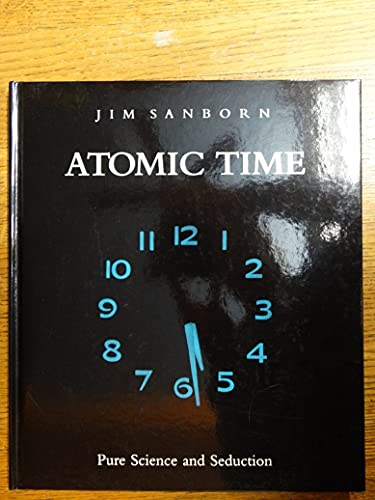
Jim Sanborn: Atomic Time: Pure Science and Seduction
Da: Wonder Book, Frederick, MD, U.S.A.
Membro dell'associazione: ABAA ILAB
Valutazione del venditore 5 su 5 stelle
Condizione: Very Good. Very Good condition. A copy that may have a few cosmetic defects. May also contain light spine creasing or a few markings such as an owner's name, short gifter's inscription or light stamp.
-
The Secret That Exploded
Da: Steve Thorson, Bookseller, Minneapolis, MN, U.S.A.
Valutazione del venditore 5 su 5 stelle
Prima edizione
Hardcover. Condizione: Near Fine. Condizione sovraccoperta: Near Fine. 1st Edition. Unread book, tight, square corners, first edition stated, full numberline 9-2. Dustjacket (priced at $14.95), light edge wear to corners, some rubbing to glossy black jacket, in removable mylar archival protector. Book shipped well packed in a box and USPS tracking number available if requested by buyer.
-
The Secret that Exploded. The true story of an intrepid citizen's investigation of our sacrosanct nuclear weapons industry, and the secret of the H-bomb and how the government tried (unsuccessfully) to censor what he discovered.
Da: Cosmo Books, Shropshire., Regno Unito
Valutazione del venditore 5 su 5 stelle
Prima edizione
EUR 19,19
Spedizione EUR 11,50
Spedito da Regno Unito a U.S.A.Quantità: 1 disponibili
Aggiungi al carrelloHardcover. Condizione: Very Good. Condizione sovraccoperta: Fair. First Edition. 288 pages, 1 portrait. Original black & red cloth, gilt lettered. With a very worn and torn dustwrapper. Contents clean throughout. Size: 26 x 24 cms. Category: Atomic & Nuclear; Featured Items; Hardback Books; ISBN: 0394512979. ISBN/EAN: 9780394512976. This item may require more postage than the rates shown for delivery outside the UK. If extra postage is required we will contact you before processing your order and you will be given the details and option to decline the extra cost. Cosmo Books : 28 years selling on ABE; 28 years of taking care of customers on ABE; A seller you can rely on.
-

The Secret That Exploded
Da: Book Bar Wales, Wrexham, Regno Unito
Valutazione del venditore 5 su 5 stelle
Prima edizione
EUR 9,48
Spedizione EUR 22,42
Spedito da Regno Unito a U.S.A.Quantità: 1 disponibili
Aggiungi al carrelloHardcover. Condizione: Very Good. Condizione sovraccoperta: Good. 1st Edition. Ex-lib HB with DJ laminated to protective plastic wrapper. usual lib stamps/stickers with inside pages clean and tight. 288pp. incl section of b/w photos.
-
The Secret That Exploded
Da: Ground Zero Books, Ltd., Silver Spring, MD, U.S.A.
Valutazione del venditore 4 su 5 stelle

Prima edizione
Condizione: as is, fair to good. First Edition. 288, illus., appendix, errata, damp stains inside boards & flyleaves & to fore-edge, small stains in margins, DJ scuffed & edges worn. Small tears to top and bottom DJ edges, front DJ flap creased. The author, an antinuclear activist, published the key concepts of the workings of the H-bomb.
-
The Secret That Exploded
Da: Ground Zero Books, Ltd., Silver Spring, MD, U.S.A.
Valutazione del venditore 4 su 5 stelle
Prima edizione
Condizione: very good, good. First Edition. First Printing. 288, illus., appendix, errata, DJ somewhat scuffed & scratched: small edge chips. The author, an antinuclear activist, published the key concepts of the workings of the H-bomb.
-
Atomic Time: Pure Science and Seduction
Da: Revaluation Books, Exeter, Regno Unito
Valutazione del venditore 5 su 5 stelle
EUR 40,57
Spedizione EUR 14,37
Spedito da Regno Unito a U.S.A.Quantità: 1 disponibili
Aggiungi al carrelloHardcover. Condizione: Brand New. 96 pages. 12.00x10.50x0.75 inches. In Stock.
-
The Secret That Exploded
Da: Ground Zero Books, Ltd., Silver Spring, MD, U.S.A.
Valutazione del venditore 4 su 5 stelle
Prima edizione Copia autografata
Hardcover. Condizione: Very good. Condizione sovraccoperta: Good. First Edition [stated]. [10], 288, [4] pages. Illustrations. Appendix. Errata. DJ has wear, tears, soiling and chips. Inscribed and dated by the author ("Howard") on the fep. Howard Morland (born September 14, 1942) is an American journalist and activist against nuclear weapons who, in 1979, became famous for apparently discovering the "secret" of the hydrogen bomb (the Teller-Ulam design) and publishing it after a lengthy censorship attempt by the Department of Energy (United States v. The Progressive). Because of some similarities in experience, he became outspoken in the protest against the detention of Mordechai Vanunu. In 1978, magazine editor Samuel H. Day recruited Morland to write a series of articles on nuclear weapons for The Progressive, a magazine based in Madison, Wisconsin. The federal government tried to halt publication of his second article, "The H-Bomb Secret: How We Got It, Why We're Telling It", taking the magazine to court. Publication was blocked for six months by government intervention which provoked a landmark First Amendment legal case, United States v. The Progressive. The government's case for censorship collapsed when the information in question was shown to be in the public domain. Ironically, the court case produced new information that enabled Morland to correct a number of errors in his original article. According to Morland, the article's purpose was to help energize the Ban-the-bomb movement and merge it with the broader Anti-nuclear movement. The author, an antinuclear activist, published the key concepts of the workings of the H-bomb. Derived from a Kirkus review: This work addresses nuclear secrets and the First Amendment and presents how Morland researched and wrote an article on the H-bomb's inner workings for The Progressive, and what happened when the government tried to suppress its publication. A former Air Force pilot turned off by the Vietnam War and radicalized by the 1977 Seabrook demonstration, Morland is up front about his antinuke views. The point of the article was to "present the world with a real, substantial, solid, mechanical bomb, not a mere idea"; and to force readers to focus on the objective reality of nuclear weapons and their capacity for annihilation. Motives aside, Morland accomplished an extraordinary feat of investigative reporting, piecing together the mosaic of the H-bomb secret from encyclopedia articles, basic college physics books, technical articles, interviews with scientists, and government-sanctioned visits to a number of major nuclear-weapons production facilities. He insists that he received no classified documents from anyone, and his careful account of how he cracked the mystery--including errors and detours--substantiates his claim. A copy of Morland's manuscript reached the government, which moved immediately to enjoin publication--thus setting up a classic legal confrontation between First Amendment freedom-of-press doctrine and the Atomic Energy Act of 1946, which bars disclosure of any nuclear weapons information if the writer has "reason to believe such data will be utilized to injure the United States." Lawyers for Morland and The Progressive argued that, if all of the material had been gathered from public sources, Morland could not fairly be deemed to have had the "reason to believe" required for application of the 1946 Act. The government contended that publishing the Morland article would cause irreparable harm to the nation; and a lower-court federal judge agreed. Prior to the hearing on appeal, however, the government dropped the suit (claiming it had been rendered moot by the publication of an article similar to Morland's), so the legal battle was never fully resolved. Despite some high-tech wading in the secret-cracking chapters, a solid effort, of interest to scientists, journalists, lawyers, and anyone concerned about nuclear weapons.
-
The Secret That Exploded
Da: Ground Zero Books, Ltd., Silver Spring, MD, U.S.A.
Valutazione del venditore 4 su 5 stelle
Prima edizione Copia autografata
Hardcover. Condizione: Very good. Condizione sovraccoperta: Good. First Edition [stated]. [10], 288, [4] pages. Illustrations. Appendix. Errata. DJ somewhat scuffed: small edge tears/chips. Signed by the author ("Howard"). Howard Morland (born September 14, 1942) is an American journalist and activist against nuclear weapons who, in 1979, became famous for apparently discovering the "secret" of the hydrogen bomb (the Teller-Ulam design) and publishing it after a lengthy censorship attempt by the Department of Energy (United States v. The Progressive). Because of some similarities in experience, he became outspoken in the protest against the detention of Mordechai Vanunu. In 1978, magazine editor Samuel H. Day recruited Morland to write a series of articles on nuclear weapons for The Progressive, a magazine based in Madison, Wisconsin. The federal government tried to halt publication of his second article, "The H-Bomb Secret: How We Got It, Why We're Telling It", taking the magazine to court. Publication was blocked for six months by government intervention which provoked a landmark First Amendment legal case, United States v. The Progressive. The government's case for censorship collapsed when the information in question was shown to be in the public domain. Ironically, the court case produced new information that enabled Morland to correct a number of errors in his original article. According to Morland, the article's purpose was to help energize the Ban-the-bomb movement and merge it with the broader Anti-nuclear movement. The author, an antinuclear activist, published the key concepts of the workings of the H-bomb. Derived from a Kirkus review: This work addresses nuclear secrets and the First Amendment and presents how Morland researched and wrote an article on the H-bomb's inner workings for The Progressive, and what happened when the government tried to suppress its publication. A former Air Force pilot turned off by the Vietnam War and radicalized by the 1977 Seabrook demonstration, Morland is up front about his antinuke views. The point of the article was to "present the world with a real, substantial, solid, mechanical bomb, not a mere idea"; and to force readers to focus on the objective reality of nuclear weapons and their capacity for annihilation. Motives aside, Morland accomplished an extraordinary feat of investigative reporting, piecing together the mosaic of the H-bomb secret from encyclopedia articles, basic college physics books, technical articles, interviews with scientists, and government-sanctioned visits to a number of major nuclear-weapons production facilities. He insists that he received no classified documents from anyone, and his careful account of how he cracked the mystery--including errors and detours--substantiates his claim. A copy of Morland's manuscript reached the government, which moved immediately to enjoin publication--thus setting up a classic legal confrontation between First Amendment freedom-of-press doctrine and the Atomic Energy Act of 1946, which bars disclosure of any nuclear weapons information if the writer has "reason to believe such data will be utilized to injure the United States." Lawyers for Morland and The Progressive argued that, if all of the material had been gathered from public sources, Morland could not fairly be deemed to have had the "reason to believe" required for application of the 1946 Act. The government contended that publishing the Morland article would cause irreparable harm to the nation; and a lower-court federal judge agreed. Prior to the hearing on appeal, however, the government dropped the suit (claiming it had been rendered moot by the publication of an article similar to Morland's), so the legal battle was never fully resolved. Despite some high-tech wading in the secret-cracking chapters, a solid effort, of interest to scientists, journalists, lawyers, and anyone concerned about nuclear weapons.
-
Jim Sanborn: Atomic Time: Pure Science and Seduction
Da: BennettBooksLtd, Los Angeles, CA, U.S.A.
Valutazione del venditore 5 su 5 stelle
hardcover. Condizione: New. In shrink wrap. Looks like an interesting title!
-
Jim Sanborn: Atomic Time: Pure Science and Seduction (CORCORAN GALLER)
Da: Alplaus Books, Alplaus, NY, U.S.A.
Valutazione del venditore 5 su 5 stelle
Hardcover. Condizione: Good. Signed by Jim Sanborn to Hans Bethe, Nobel laureate in physics. With gallery presentation letter documenting signature. Glossy hardcover. Gentle surface wear of covers (rubbing, several light scuffs, writing indentations), else limited wear. Pages unmarked.


