
Importo totale (1 articolo articoli):
Destinazione ordine:

mortensen joel (25 risultati)
Vai alla pagina principale dei risultati di ricerca
Filtri di ricerca
Tipo di articolo
- Tutti i tipi di prodotto
- Libri (25)
- Riviste e Giornali (Nessun altro risultato corrispondente a questo perfezionamento)
- Fumetti (Nessun altro risultato corrispondente a questo perfezionamento)
- Spartiti (Nessun altro risultato corrispondente a questo perfezionamento)
- Arte, Stampe e Poster (Nessun altro risultato corrispondente a questo perfezionamento)
- Fotografie (Nessun altro risultato corrispondente a questo perfezionamento)
- Mappe (Nessun altro risultato corrispondente a questo perfezionamento)
- Manoscritti e Collezionismo cartaceo (Nessun altro risultato corrispondente a questo perfezionamento)
Condizioni Maggiori informazioni
- Nuovo (23)
- Come nuovo, Ottimo o Quasi ottimo (Nessun altro risultato corrispondente a questo perfezionamento)
- Molto buono o Buono (2)
- Discreto o Mediocre (Nessun altro risultato corrispondente a questo perfezionamento)
- Come descritto (Nessun altro risultato corrispondente a questo perfezionamento)
Legatura
Ulteriori caratteristiche
- Prima ed. (2)
- Copia autograf. (Nessun altro risultato corrispondente a questo perfezionamento)
- Sovracoperta (Nessun altro risultato corrispondente a questo perfezionamento)
- Con foto (10)
- Non Print on Demand (14)
Lingua (1)
Spedizione gratuita
Paese del venditore
Valutazione venditore
-
![Immagine dell'editore per Antimicrobial Resistance: A Crisis in Health Care [Advances in Experimental Medicine and Biology, Volume 390] venduto da Tiber Books](https://pictures.abebooks.com/isbn/9780306452079-it-300.jpg)
Antimicrobial Resistance: A Crisis in Health Care [Advances in Experimental Medicine and Biology, Volume 390]
Da: Tiber Books, Cockeysville, MD, U.S.A.
Valutazione del venditore 4 su 5 stelle

Hardcover. Condizione: Very Good. 8vo, hardcover. No dj. Vg condition. Prev. owner's name-labels removed from endpaper, contents bright & clean, binding tight; rear cover lightly smudged. x, 248 p., illus. Based on the proceedings of the Eastern Pennsylvania Branch of the American Society of Microbiology Symposium on Antimicrobial Resistance: a Crisis in Healthcare--Clinical Laboratory and Epidemiologic Considerations, held November 11-12, 1993 in Philadelphia, Pennsylvania.
-
Hardcover. Condizione: Good. Connecting readers with great books since 1972! Used textbooks may not include companion materials such as access codes, etc. May have some wear or writing/highlighting. We ship orders daily and Customer Service is our top priority!
-

Antimicrobial Resistance: A Crisis in Health Care
Da: Ria Christie Collections, Uxbridge, Regno Unito
Valutazione del venditore 5 su 5 stelle

EUR 52,39
Spedizione EUR 13,75
Spedito da Regno Unito a U.S.A.Quantità: Più di 20 disponibili
Aggiungi al carrelloCondizione: New. In.
-

Antimicrobial Resistance: A Crisis in Health Care (Advances in Experimental Medicine and Biology)
Da: Lucky's Textbooks, Dallas, TX, U.S.A.
Valutazione del venditore 5 su 5 stelle
EUR 156,12
Spedizione EUR 3,39
Spedito in U.S.A.Quantità: Più di 20 disponibili
Aggiungi al carrelloCondizione: New.
-
Antimicrobial Resistance: A Crisis in Health Care (Advances in Experimental Medicine and Biology, 390)
Da: Lucky's Textbooks, Dallas, TX, U.S.A.
Valutazione del venditore 5 su 5 stelle
EUR 156,12
Spedizione EUR 3,39
Spedito in U.S.A.Quantità: Più di 20 disponibili
Aggiungi al carrelloCondizione: New.
-
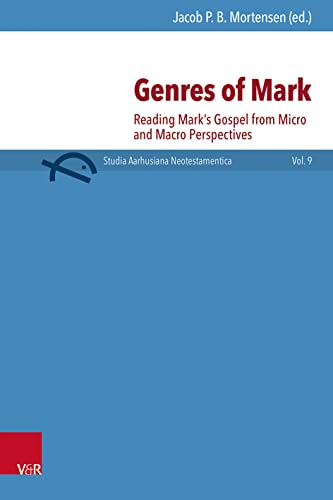
Genres of Mark (Hardcover)
Lingua: Inglese
Editore: Vandenhoeck & Ruprecht GmbH & Co KG, 2022
ISBN 10: 3525560605 ISBN 13: 9783525560600
Da: Grand Eagle Retail, Bensenville, IL, U.S.A.
Valutazione del venditore 5 su 5 stelle
Prima edizione
Hardcover. Condizione: new. Hardcover. One of the most fundamental questions when reading and trying to understand New Testament texts is the question of genre. It is impossible to understand a text, its meaning and intention, in its proper historical setting if one does not understand its genre: As an example, interpreting a satirical text without understanding the genre would no doubt lead to grave misunderstandings. The same logic applies to texts from the New Testament, and the matter is complicated even further by the immense historical gap between the time of the genesis of the New Testament canon and now. The problem of the New Testament texts genre(s) is therefore a vital area of scholarly discussion within international New Testament scholarship. The current volume utilizes the newest insights from current research on the New Testament to cast new light on the question of the genre of Marks Gospel. Here, prominent international New Testament scholars discuss how we should understand the genre(s) of Marks Gospel, thus making an important contribution to international scholarship on the Gospel of Mark as well as the Gospel genre in general. What is the genre of the earliest gospel narrative and which sub-genres does Mark use to spread his message? Shipping may be from multiple locations in the US or from the UK, depending on stock availability.
-
Antimicrobial Resistance: A Crisis in Health Care (Advances in Experimental Medicine and Biology)
Da: Ria Christie Collections, Uxbridge, Regno Unito
Valutazione del venditore 5 su 5 stelle
EUR 158,81
Spedizione EUR 13,75
Spedito da Regno Unito a U.S.A.Quantità: Più di 20 disponibili
Aggiungi al carrelloCondizione: New. In.
-
Antimicrobial Resistance: A Crisis in Health Care (Advances in Experimental Medicine and Biology, 390)
Da: Ria Christie Collections, Uxbridge, Regno Unito
Valutazione del venditore 5 su 5 stelle
EUR 158,81
Spedizione EUR 13,75
Spedito da Regno Unito a U.S.A.Quantità: Più di 20 disponibili
Aggiungi al carrelloCondizione: New. In.
-
Antimicrobial Resistance
Da: Books Puddle, New York, NY, U.S.A.
Valutazione del venditore 4 su 5 stelle
Condizione: New. pp. 264.
-

Antimicrobial Resistance
Lingua: Inglese
Editore: Springer US, Springer US Feb 1996, 1996
ISBN 10: 0306452073 ISBN 13: 9780306452079
Da: buchversandmimpf2000, Emtmannsberg, BAYE, Germania
Valutazione del venditore 5 su 5 stelle
EUR 160,49
Spedizione EUR 60,00
Spedito da Germania a U.S.A.Quantità: 2 disponibili
Aggiungi al carrelloBuch. Condizione: Neu. Neuware -Development and Implications of Antimicrobial Resistance One of the most ominous trends in the field of antimicrobial chemotherapy over the past decade has been the increasing pace of development of antimicrobial resistance among microbial pathogens. The hypothesis that man can discover a magic bullet to always cure a particular infection has proved false. Physicians are now seeing and treating patients for which there are few therapeutic alternatives, and in some cases, none at all. Until recently there was little concern that physicians might be losing the war in our ability to compete with the evolving resistance patterns of microbial pathogens. Now the general public is very aware of the threat to them if they become infected, thanks to cover story articles in major magazines such as Time, Newsweek, newspapers, and other news sources. Antimicrobial resistance is not a novel problem. Shortly after the widespread introduction of penicillin in the early 1940s, the first strains of penicillin-resistant staphylococci were described. Today it is an uncommon event for a clinical laboratory to isolate an S. aureus that is sensitive to penicillin. Other gram-positive strains of bacteria have become resistant, including the exquisitely sensitive Streptococcus pneumoniae. Sensitivity to vancomycin was once so uniform that it was used in routine clinical laboratories as a surrogate marker for whether an organism should be classified as a gram-positive. That criterion can no longer be relied upon because of emerging resistance among some species. Gram-negative bacteria, viruses, fungi, and parasites all have succeeded in developing resistance.Springer Verlag GmbH, Tiergartenstr. 17, 69121 Heidelberg 264 pp. Englisch.
-

EUR 162,91
Spedizione EUR 62,03
Spedito da Germania a U.S.A.Quantità: 1 disponibili
Aggiungi al carrelloTaschenbuch. Condizione: Neu. Druck auf Anfrage Neuware - Printed after ordering - Development and Implications of Antimicrobial Resistance One of the most ominous trends in the field of antimicrobial chemotherapy over the past decade has been the increasing pace of development of antimicrobial resistance among microbial pathogens. The hypothesis that man can discover a magic bullet to always cure a particular infection has proved false. Physicians are now seeing and treating patients for which there are few therapeutic alternatives, and in some cases, none at all. Until recently there was little concern that physicians might be losing the war in our ability to compete with the evolving resistance patterns of microbial pathogens. Now the general public is very aware of the threat to them if they become infected, thanks to cover story articles in major magazines such as Time, Newsweek, newspapers, and other news sources. Antimicrobial resistance is not a novel problem. Shortly after the widespread introduction of penicillin in the early 1940s, the first strains of penicillin-resistant staphylococci were described. Today it is an uncommon event for a clinical laboratory to isolate an S. aureus that is sensitive to penicillin. Other gram-positive strains of bacteria have become resistant, including the exquisitely sensitive Streptococcus pneumoniae. Sensitivity to vancomycin was once so uniform that it was used in routine clinical laboratories as a surrogate marker for whether an organism should be classified as a gram-positive. That criterion can no longer be relied upon because of emerging resistance among some species. Gram-negative bacteria, viruses, fungi, and parasites all have succeeded in developing resistance.
-

EUR 168,73
Spedizione EUR 62,83
Spedito da Germania a U.S.A.Quantità: 1 disponibili
Aggiungi al carrelloBuch. Condizione: Neu. Druck auf Anfrage Neuware - Printed after ordering - Development and Implications of Antimicrobial Resistance One of the most ominous trends in the field of antimicrobial chemotherapy over the past decade has been the increasing pace of development of antimicrobial resistance among microbial pathogens. The hypothesis that man can discover a magic bullet to always cure a particular infection has proved false. Physicians are now seeing and treating patients for which there are few therapeutic alternatives, and in some cases, none at all. Until recently there was little concern that physicians might be losing the war in our ability to compete with the evolving resistance patterns of microbial pathogens. Now the general public is very aware of the threat to them if they become infected, thanks to cover story articles in major magazines such as Time, Newsweek, newspapers, and other news sources. Antimicrobial resistance is not a novel problem. Shortly after the widespread introduction of penicillin in the early 1940s, the first strains of penicillin-resistant staphylococci were described. Today it is an uncommon event for a clinical laboratory to isolate an S. aureus that is sensitive to penicillin. Other gram-positive strains of bacteria have become resistant, including the exquisitely sensitive Streptococcus pneumoniae. Sensitivity to vancomycin was once so uniform that it was used in routine clinical laboratories as a surrogate marker for whether an organism should be classified as a gram-positive. That criterion can no longer be relied upon because of emerging resistance among some species. Gram-negative bacteria, viruses, fungi, and parasites all have succeeded in developing resistance.
-
Antimicrobial Resistance: A Crisis in Health Care (Advances in Experimental Medicine and Biology)
Da: Revaluation Books, Exeter, Regno Unito
Valutazione del venditore 5 su 5 stelle
EUR 226,70
Spedizione EUR 11,48
Spedito da Regno Unito a U.S.A.Quantità: 2 disponibili
Aggiungi al carrelloPaperback. Condizione: Brand New. reprint edition. 259 pages. 9.25x6.10x0.60 inches. In Stock.
-
Genres of Mark (Hardcover)
Lingua: Inglese
Editore: Vandenhoeck & Ruprecht GmbH & Co KG, 2022
ISBN 10: 3525560605 ISBN 13: 9783525560600
Da: AussieBookSeller, Truganina, VIC, Australia
Valutazione del venditore 5 su 5 stelle
Prima edizione
EUR 274,09
Spedizione EUR 31,42
Spedito da Australia a U.S.A.Quantità: 1 disponibili
Aggiungi al carrelloHardcover. Condizione: new. Hardcover. One of the most fundamental questions when reading and trying to understand New Testament texts is the question of genre. It is impossible to understand a text, its meaning and intention, in its proper historical setting if one does not understand its genre: As an example, interpreting a satirical text without understanding the genre would no doubt lead to grave misunderstandings. The same logic applies to texts from the New Testament, and the matter is complicated even further by the immense historical gap between the time of the genesis of the New Testament canon and now. The problem of the New Testament texts genre(s) is therefore a vital area of scholarly discussion within international New Testament scholarship. The current volume utilizes the newest insights from current research on the New Testament to cast new light on the question of the genre of Marks Gospel. Here, prominent international New Testament scholars discuss how we should understand the genre(s) of Marks Gospel, thus making an important contribution to international scholarship on the Gospel of Mark as well as the Gospel genre in general. What is the genre of the earliest gospel narrative and which sub-genres does Mark use to spread his message? Shipping may be from our Sydney, NSW warehouse or from our UK or US warehouse, depending on stock availability.
-
Antimicrobial Resistance
Da: PBShop.store UK, Fairford, GLOS, Regno Unito
Valutazione del venditore 4 su 5 stelle
EUR 53,74
Spedizione EUR 4,78
Spedito da Regno Unito a U.S.A.Quantità: Più di 20 disponibili
Aggiungi al carrelloPAP. Condizione: New. New Book. Delivered from our UK warehouse in 4 to 14 business days. THIS BOOK IS PRINTED ON DEMAND. Established seller since 2000.
-
Antimicrobial Resistance
Da: PBShop.store US, Wood Dale, IL, U.S.A.
Valutazione del venditore 5 su 5 stelle
EUR 58,28
Spedizione gratuita
Spedito in U.S.A.Quantità: Più di 20 disponibili
Aggiungi al carrelloPAP. Condizione: New. New Book. Shipped from UK. THIS BOOK IS PRINTED ON DEMAND. Established seller since 2000.
-

Antimicrobial Resistance
Da: BuchWeltWeit Ludwig Meier e.K., Bergisch Gladbach, Germania
Valutazione del venditore 5 su 5 stelle
EUR 160,49
Spedizione EUR 23,00
Spedito da Germania a U.S.A.Quantità: 2 disponibili
Aggiungi al carrelloBuch. Condizione: Neu. This item is printed on demand - it takes 3-4 days longer - Neuware -Development and Implications of Antimicrobial Resistance One of the most ominous trends in the field of antimicrobial chemotherapy over the past decade has been the increasing pace of development of antimicrobial resistance among microbial pathogens. The hypothesis that man can discover a magic bullet to always cure a particular infection has proved false. Physicians are now seeing and treating patients for which there are few therapeutic alternatives, and in some cases, none at all. Until recently there was little concern that physicians might be losing the war in our ability to compete with the evolving resistance patterns of microbial pathogens. Now the general public is very aware of the threat to them if they become infected, thanks to cover story articles in major magazines such as Time, Newsweek, newspapers, and other news sources. Antimicrobial resistance is not a novel problem. Shortly after the widespread introduction of penicillin in the early 1940s, the first strains of penicillin-resistant staphylococci were described. Today it is an uncommon event for a clinical laboratory to isolate an S. aureus that is sensitive to penicillin. Other gram-positive strains of bacteria have become resistant, including the exquisitely sensitive Streptococcus pneumoniae. Sensitivity to vancomycin was once so uniform that it was used in routine clinical laboratories as a surrogate marker for whether an organism should be classified as a gram-positive. That criterion can no longer be relied upon because of emerging resistance among some species. Gram-negative bacteria, viruses, fungi, and parasites all have succeeded in developing resistance. 264 pp. Englisch.
-

Antimicrobial Resistance
Da: BuchWeltWeit Ludwig Meier e.K., Bergisch Gladbach, Germania
Valutazione del venditore 5 su 5 stelle
EUR 160,49
Spedizione EUR 23,00
Spedito da Germania a U.S.A.Quantità: 2 disponibili
Aggiungi al carrelloTaschenbuch. Condizione: Neu. This item is printed on demand - it takes 3-4 days longer - Neuware -Development and Implications of Antimicrobial Resistance One of the most ominous trends in the field of antimicrobial chemotherapy over the past decade has been the increasing pace of development of antimicrobial resistance among microbial pathogens. The hypothesis that man can discover a magic bullet to always cure a particular infection has proved false. Physicians are now seeing and treating patients for which there are few therapeutic alternatives, and in some cases, none at all. Until recently there was little concern that physicians might be losing the war in our ability to compete with the evolving resistance patterns of microbial pathogens. Now the general public is very aware of the threat to them if they become infected, thanks to cover story articles in major magazines such as Time, Newsweek, newspapers, and other news sources. Antimicrobial resistance is not a novel problem. Shortly after the widespread introduction of penicillin in the early 1940s, the first strains of penicillin-resistant staphylococci were described. Today it is an uncommon event for a clinical laboratory to isolate an S. aureus that is sensitive to penicillin. Other gram-positive strains of bacteria have become resistant, including the exquisitely sensitive Streptococcus pneumoniae. Sensitivity to vancomycin was once so uniform that it was used in routine clinical laboratories as a surrogate marker for whether an organism should be classified as a gram-positive. That criterion can no longer be relied upon because of emerging resistance among some species. Gram-negative bacteria, viruses, fungi, and parasites all have succeeded in developing resistance. 264 pp. Englisch.
-
EUR 136,16
Spedizione EUR 48,99
Spedito da Germania a U.S.A.Quantità: Più di 20 disponibili
Aggiungi al carrelloCondizione: New. Dieser Artikel ist ein Print on Demand Artikel und wird nach Ihrer Bestellung fuer Sie gedruckt. Development and Implications of Antimicrobial Resistance One of the most ominous trends in the field of antimicrobial chemotherapy over the past decade has been the increasing pace of development of antimicrobial resistance among microbial pathogens. The hy.
-
EUR 136,16
Spedizione EUR 48,99
Spedito da Germania a U.S.A.Quantità: Più di 20 disponibili
Aggiungi al carrelloGebunden. Condizione: New. Dieser Artikel ist ein Print on Demand Artikel und wird nach Ihrer Bestellung fuer Sie gedruckt. Development and Implications of Antimicrobial Resistance One of the most ominous trends in the field of antimicrobial chemotherapy over the past decade has been the increasing pace of development of antimicrobial resistance among microbial pathogens. The hy.
-
Antimicrobial Resistance
Da: Majestic Books, Hounslow, Regno Unito
Valutazione del venditore 4 su 5 stelle
EUR 202,91
Spedizione EUR 7,46
Spedito da Regno Unito a U.S.A.Quantità: 4 disponibili
Aggiungi al carrelloCondizione: New. Print on Demand pp. 264 52:B&W 6.14 x 9.21in or 234 x 156mm (Royal 8vo) Case Laminate on White w/Gloss Lam.
-

EUR 141,20
Spedizione EUR 70,00
Spedito da Germania a U.S.A.Quantità: 5 disponibili
Aggiungi al carrelloBuch. Condizione: Neu. Antimicrobial Resistance | A Crisis in Health Care | Donald L. Jungkind (u. a.) | Buch | xi | Englisch | 1996 | Springer US | EAN 9780306452079 | Verantwortliche Person für die EU: Springer Verlag GmbH, Tiergartenstr. 17, 69121 Heidelberg, juergen[dot]hartmann[at]springer[dot]com | Anbieter: preigu Print on Demand.
-
EUR 141,20
Spedizione EUR 70,00
Spedito da Germania a U.S.A.Quantità: 5 disponibili
Aggiungi al carrelloTaschenbuch. Condizione: Neu. Antimicrobial Resistance | A Crisis in Health Care | Donald L. Jungkind (u. a.) | Taschenbuch | xi | Englisch | 2013 | Springer US | EAN 9781475792058 | Verantwortliche Person für die EU: Springer Verlag GmbH, Tiergartenstr. 17, 69121 Heidelberg, juergen[dot]hartmann[at]springer[dot]com | Anbieter: preigu Print on Demand.
-

Antimicrobial Resistance
Lingua: Inglese
Editore: Springer US, Springer US Apr 2013, 2013
ISBN 10: 1475792050 ISBN 13: 9781475792058
Da: buchversandmimpf2000, Emtmannsberg, BAYE, Germania
Valutazione del venditore 5 su 5 stelle
EUR 160,49
Spedizione EUR 60,00
Spedito da Germania a U.S.A.Quantità: 1 disponibili
Aggiungi al carrelloTaschenbuch. Condizione: Neu. This item is printed on demand - Print on Demand Titel. Neuware -Development and Implications of Antimicrobial Resistance One of the most ominous trends in the field of antimicrobial chemotherapy over the past decade has been the increasing pace of development of antimicrobial resistance among microbial pathogens. The hypothesis that man can discover a magic bullet to always cure a particular infection has proved false. Physicians are now seeing and treating patients for which there are few therapeutic alternatives, and in some cases, none at all. Until recently there was little concern that physicians might be losing the war in our ability to compete with the evolving resistance patterns of microbial pathogens. Now the general public is very aware of the threat to them if they become infected, thanks to cover story articles in major magazines such as Time, Newsweek, newspapers, and other news sources. Antimicrobial resistance is not a novel problem. Shortly after the widespread introduction of penicillin in the early 1940s, the first strains of penicillin-resistant staphylococci were described. Today it is an uncommon event for a clinical laboratory to isolate an S. aureus that is sensitive to penicillin. Other gram-positive strains of bacteria have become resistant, including the exquisitely sensitive Streptococcus pneumoniae. Sensitivity to vancomycin was once so uniform that it was used in routine clinical laboratories as a surrogate marker for whether an organism should be classified as a gram-positive. That criterion can no longer be relied upon because of emerging resistance among some species. Gram-negative bacteria, viruses, fungi, and parasites all have succeeded in developing resistance.Springer Verlag GmbH, Tiergartenstr. 17, 69121 Heidelberg 264 pp. Englisch.
-
Antimicrobial Resistance
Da: Biblios, Frankfurt am main, HESSE, Germania
Valutazione del venditore 4 su 5 stelle
EUR 216,31
Spedizione EUR 9,95
Spedito da Germania a U.S.A.Quantità: 4 disponibili
Aggiungi al carrelloCondizione: New. PRINT ON DEMAND pp. 264.


