

Importo totale (1 articolo articoli):
Destinazione ordine:

oska baetschmann (5 risultati)
Vai alla pagina principale dei risultati di ricerca
Filtri di ricerca
Tipo di articolo
- Tutti i tipi di prodotto
- Libri (5)
- Riviste e Giornali (Nessun altro risultato corrispondente a questo perfezionamento)
- Fumetti (Nessun altro risultato corrispondente a questo perfezionamento)
- Spartiti (Nessun altro risultato corrispondente a questo perfezionamento)
- Arte, Stampe e Poster (Nessun altro risultato corrispondente a questo perfezionamento)
- Fotografie (Nessun altro risultato corrispondente a questo perfezionamento)
- Mappe (Nessun altro risultato corrispondente a questo perfezionamento)
- Manoscritti e Collezionismo cartaceo (Nessun altro risultato corrispondente a questo perfezionamento)
Condizioni Maggiori informazioni
- Nuovo (5)
- Come nuovo, Ottimo o Quasi ottimo (Nessun altro risultato corrispondente a questo perfezionamento)
- Molto buono o Buono (Nessun altro risultato corrispondente a questo perfezionamento)
- Discreto o Mediocre (Nessun altro risultato corrispondente a questo perfezionamento)
- Come descritto (Nessun altro risultato corrispondente a questo perfezionamento)
Legatura
- Tutte
- Rilegato (5)
- Brossura (Nessun altro risultato corrispondente a questo perfezionamento)
Ulteriori caratteristiche
- Prima ed. (Nessun altro risultato corrispondente a questo perfezionamento)
- Copia autograf. (Nessun altro risultato corrispondente a questo perfezionamento)
- Sovracoperta (Nessun altro risultato corrispondente a questo perfezionamento)
- Con foto (3)
- Non Print on Demand (5)
Lingua (1)
Prezzo
- Qualsiasi prezzo
- Inferiore a EUR 20 (Nessun altro risultato corrispondente a questo perfezionamento)
- EUR 20 a EUR 45
- Superiore a EUR 45
Spedizione gratuita
Paese del venditore
Valutazione venditore
-

Paul Klee - Ad Parnassum
Lingua: Inglese
Editore: Scheidegger und Spiess AG, Verlag, CH, 2022
ISBN 10: 3039420119 ISBN 13: 9783039420117
Da: Rarewaves.com USA, London, LONDO, Regno Unito
Valutazione del venditore 5 su 5 stelle

EUR 28,50
Spedizione gratuita
Spedito da Regno Unito a U.S.A.Quantità: 11 disponibili
Aggiungi al carrelloHardback. Condizione: New. In the 1920s, German-Swiss artist Paul Klee (1879-1940) began his long-lasting engagement with polyphonic art-multi-voiced way of painting analogous to music. A relentless experimenter, Klee began these studies while teaching at the Bauhaus in Dessau, developed them further during his tenure at the art academy in Düsseldorf, and brought them to conclusion after his return to Switzerland in 1933. In this book, distinguished art historian Oskar Bätschmann explores Klee's seminal painting Ad Parnassum (1932). Painted shortly after the artist's departure from the Bauhaus, it symbolises a new era, also one of Klee's own self-discovery. Bätschmann documents how the artist strove for a connection of music and painting in his colour hues and in the rhythmic movement of coloured dots.Richly illustrated, this book places Klee's polyphonic understanding of art in an art-historical context by using this key work and offers insight into the synesthetic thinking that emerged in the art world during that time.Text in English and German.
-
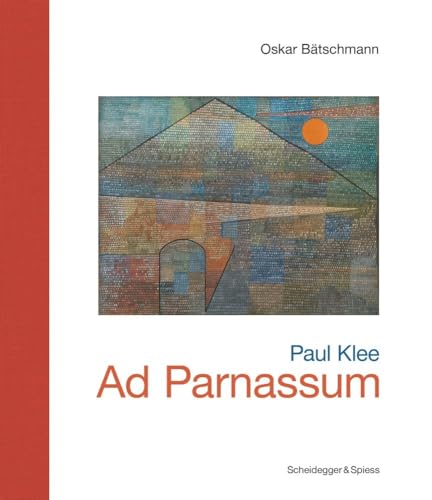
Paul Klee Ad Parnassum (Hardcover)
Lingua: Inglese
Editore: Scheidegger und Spiess AG, Verlag, Zurich, 2022
ISBN 10: 3039420119 ISBN 13: 9783039420117
Da: Grand Eagle Retail, Bensenville, IL, U.S.A.
Valutazione del venditore 5 su 5 stelle
Hardcover. Condizione: new. Hardcover. In the 1920s, German-Swiss artist Paul Klee (18791940) began his long-lasting engagement with polyphonic art - multi-voiced way of painting analogous to music. A relentless experimenter, Klee began these studies while teaching at the Bauhaus in Dessau, developed them further during his tenure at the art academy in Duesseldorf, and brought them to conclusion after his return to Switzerland in 1933. In this book, distinguished art historian Oskar Baetschmann explores Klee's seminal painting Ad Parnassum (1932). Painted shortly after the artist's departure from the Bauhaus, it symbolises a new era, also one of Klee's own self-discovery. Baetschmann documents how the artist strove for a connection of music and painting in his colour hues and in the rhythmic movement of coloured dots. Richly illustrated, this book places Klee's polyphonic understanding of art in an art-historical context by using this key work and offers insight into the synesthetic thinking that emerged in the art world during that time. Text in English and German. AUTHOR: Oskar Baetschmann is professor emeritus of early modern art history at University of Bern. He was a member of the Paul Klee Foundation and co-initiator of the Catologue raisonne of the artist published from 1998 to 2004. SELLING POINTS: . A profound study of Paul Klee's painting Ad Parnassum, a key work in the painter's oeuvre . Examines the origins of Klee's search for polyphonic painting analogous to polyphonic music 40 colour illustrations A profound study of Paul Klees painting Ad Parnassum, a key work in the painters oeuvre, examining the origins of Klees search for polyphonic painting analogous to polyphonic music. Text in English and German. Shipping may be from multiple locations in the US or from the UK, depending on stock availability.
-
Paul Klee ? Ad Parnassum: Landmarks of Swiss Art
Lingua: Inglese
Editore: Scheidegger und Spiess AG, Verlag, 2022
ISBN 10: 3039420119 ISBN 13: 9783039420117
Da: Kennys Bookstore, Olney, MD, U.S.A.
Valutazione del venditore 5 su 5 stelle
Condizione: New. 2022. Hardcover. . . . . . Books ship from the US and Ireland.
-

Paul Klee Ad Parnassum (Hardcover)
Lingua: Inglese
Editore: Scheidegger und Spiess AG, Verlag, Zurich, 2022
ISBN 10: 3039420119 ISBN 13: 9783039420117
Da: AussieBookSeller, Truganina, VIC, Australia
Valutazione del venditore 5 su 5 stelle
EUR 48,04
Spedizione EUR 31,92
Spedito da Australia a U.S.A.Quantità: 1 disponibili
Aggiungi al carrelloHardcover. Condizione: new. Hardcover. In the 1920s, German-Swiss artist Paul Klee (18791940) began his long-lasting engagement with polyphonic art - multi-voiced way of painting analogous to music. A relentless experimenter, Klee began these studies while teaching at the Bauhaus in Dessau, developed them further during his tenure at the art academy in Duesseldorf, and brought them to conclusion after his return to Switzerland in 1933. In this book, distinguished art historian Oskar Baetschmann explores Klee's seminal painting Ad Parnassum (1932). Painted shortly after the artist's departure from the Bauhaus, it symbolises a new era, also one of Klee's own self-discovery. Baetschmann documents how the artist strove for a connection of music and painting in his colour hues and in the rhythmic movement of coloured dots. Richly illustrated, this book places Klee's polyphonic understanding of art in an art-historical context by using this key work and offers insight into the synesthetic thinking that emerged in the art world during that time. Text in English and German. AUTHOR: Oskar Baetschmann is professor emeritus of early modern art history at University of Bern. He was a member of the Paul Klee Foundation and co-initiator of the Catologue raisonne of the artist published from 1998 to 2004. SELLING POINTS: . A profound study of Paul Klee's painting Ad Parnassum, a key work in the painter's oeuvre . Examines the origins of Klee's search for polyphonic painting analogous to polyphonic music 40 colour illustrations A profound study of Paul Klees painting Ad Parnassum, a key work in the painters oeuvre, examining the origins of Klees search for polyphonic painting analogous to polyphonic music. Text in English and German. Shipping may be from our Sydney, NSW warehouse or from our UK or US warehouse, depending on stock availability.
-

Paul Klee - Ad Parnassum
Lingua: Inglese
Editore: Scheidegger und Spiess AG, Verlag, CH, 2022
ISBN 10: 3039420119 ISBN 13: 9783039420117
Da: Rarewaves.com UK, London, Regno Unito
Valutazione del venditore 5 su 5 stelle
EUR 25,42
Spedizione EUR 74,79
Spedito da Regno Unito a U.S.A.Quantità: 11 disponibili
Aggiungi al carrelloHardback. Condizione: New. In the 1920s, German-Swiss artist Paul Klee (1879-1940) began his long-lasting engagement with polyphonic art-multi-voiced way of painting analogous to music. A relentless experimenter, Klee began these studies while teaching at the Bauhaus in Dessau, developed them further during his tenure at the art academy in Düsseldorf, and brought them to conclusion after his return to Switzerland in 1933. In this book, distinguished art historian Oskar Bätschmann explores Klee's seminal painting Ad Parnassum (1932). Painted shortly after the artist's departure from the Bauhaus, it symbolises a new era, also one of Klee's own self-discovery. Bätschmann documents how the artist strove for a connection of music and painting in his colour hues and in the rhythmic movement of coloured dots.Richly illustrated, this book places Klee's polyphonic understanding of art in an art-historical context by using this key work and offers insight into the synesthetic thinking that emerged in the art world during that time.Text in English and German.
