

Importo totale (1 articolo articoli):
Destinazione ordine:

paul michael stronski (9 risultati)
Vai alla pagina principale dei risultati di ricerca
Filtri di ricerca
Tipo di articolo
- Tutti i tipi di prodotto
- Libri (9)
- Riviste e Giornali (Nessun altro risultato corrispondente a questo perfezionamento)
- Fumetti (Nessun altro risultato corrispondente a questo perfezionamento)
- Spartiti (Nessun altro risultato corrispondente a questo perfezionamento)
- Arte, Stampe e Poster (Nessun altro risultato corrispondente a questo perfezionamento)
- Fotografie (Nessun altro risultato corrispondente a questo perfezionamento)
- Mappe (Nessun altro risultato corrispondente a questo perfezionamento)
- Manoscritti e Collezionismo cartaceo (Nessun altro risultato corrispondente a questo perfezionamento)
Condizioni Maggiori informazioni
- Nuovo (5)
- Come nuovo, Ottimo o Quasi ottimo (Nessun altro risultato corrispondente a questo perfezionamento)
- Molto buono o Buono (4)
- Discreto o Mediocre (Nessun altro risultato corrispondente a questo perfezionamento)
- Come descritto (Nessun altro risultato corrispondente a questo perfezionamento)
Legatura
- Tutte
- Rilegato (Nessun altro risultato corrispondente a questo perfezionamento)
- Brossura (9)
Ulteriori caratteristiche
- Prima ed. (Nessun altro risultato corrispondente a questo perfezionamento)
- Copia autograf. (Nessun altro risultato corrispondente a questo perfezionamento)
- Sovracoperta (Nessun altro risultato corrispondente a questo perfezionamento)
- Con foto (2)
- Non Print on Demand (9)
Lingua (1)
Prezzo
- Qualsiasi prezzo
- Inferiore a EUR 20 (Nessun altro risultato corrispondente a questo perfezionamento)
- EUR 20 a EUR 45
- Superiore a EUR 45
Spedizione gratuita
- Spedizione gratuita in U.S.A. (Nessun altro risultato corrispondente a questo perfezionamento)
Paese del venditore
Valutazione venditore
-
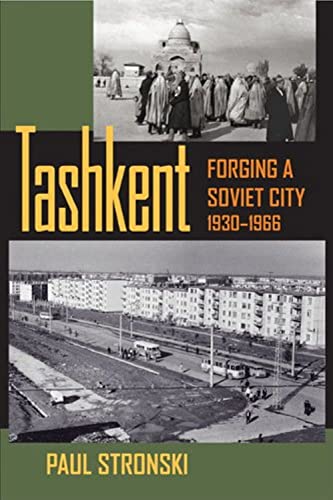
Tashkent: Forging a Soviet City, 1930-1966
Libro 1 di 19: Central Eurasia in ContextLingua: Inglese
Editore: University of Pittsburgh Press September 2010, 2010
ISBN 10: 082296113X ISBN 13: 9780822961130
Da: Books End Bookshop, Syracuse, NY, U.S.A.
Valutazione del venditore 4 su 5 stelle

Trade Paperback. Condizione: Very Good.
-
Tashkent: Forging a Soviet City, 1930â"1966: 24 (Central Eurasia in Context)
Libro 1 di 19: Central Eurasia in ContextLingua: Inglese
Editore: University of Pittsburgh Press, 2010
ISBN 10: 082296113X ISBN 13: 9780822961130
Da: WorldofBooks, Goring-By-Sea, WS, Regno Unito
Valutazione del venditore 5 su 5 stelle

EUR 22,66
Spedizione EUR 6,42
Spedito da Regno Unito a U.S.A.Quantità: 1 disponibili
Aggiungi al carrelloPaperback. Condizione: Very Good. The book has been read, but is in excellent condition. Pages are intact and not marred by notes or highlighting. The spine remains undamaged.
-
Tashkent - Forging a Soviet City, 1930-1966
Libro 1 di 19: Central Eurasia in ContextDa: PBShop.store UK, Fairford, GLOS, Regno Unito
Valutazione del venditore 4 su 5 stelle
EUR 57,20
Spedizione EUR 5,76
Spedito da Regno Unito a U.S.A.Quantità: 15 disponibili
Aggiungi al carrelloPAP. Condizione: New. New Book. Shipped from UK. Established seller since 2000.
-
Tashkent: Forging a Soviet City, 1930?1966 (Central Eurasia in Context, 24)
Libro 1 di 19: Central Eurasia in ContextLingua: Inglese
Editore: University of Pittsburgh Press, 2010
ISBN 10: 082296113X ISBN 13: 9780822961130
Condizione: new.
-
Tashkent: Forging a Soviet City, 1930?1966 (eng)
Libro 1 di 19: Central Eurasia in ContextLingua: Inglese
Editore: University of Pittsburgh Press, 2010
ISBN 10: 082296113X ISBN 13: 9780822961130
Da: Brook Bookstore On Demand, Napoli, NA, Italia
Valutazione del venditore 4 su 5 stelle
EUR 59,06
Spedizione EUR 6,80
Spedito da Italia a U.S.A.Quantità: Più di 20 disponibili
Aggiungi al carrelloCondizione: new.
-
Tashkent: Forging a Soviet City, 19301966
Libro 1 di 19: Central Eurasia in ContextLingua: Inglese
Editore: University of Pittsburgh Press, 2010
ISBN 10: 082296113X ISBN 13: 9780822961130
EUR 53,10
Spedizione EUR 15,37
Spedito da Regno Unito a U.S.A.Quantità: 1 disponibili
Aggiungi al carrelloCondizione: Good. This is an ex-library book and may have the usual library/used-book markings inside.This book has soft covers. In good all round condition. Please note the Image in this listing is a stock photo and may not match the covers of the actual item,600grams, ISBN:9780822961130.
-
Tashkent: Forging a Soviet City, 19301966 (Central Eurasia in Context)
Libro 1 di 19: Central Eurasia in ContextLingua: Inglese
Editore: University of Pittsburgh Press, 2010
ISBN 10: 082296113X ISBN 13: 9780822961130
EUR 55,72
Spedizione EUR 15,37
Spedito da Regno Unito a U.S.A.Quantità: 1 disponibili
Aggiungi al carrelloCondizione: Good. This is an ex-library book and may have the usual library/used-book markings inside.This book has soft covers. In good all round condition. Library sticker on front cover. Please note the Image in this listing is a stock photo and may not match the covers of the actual item,600grams, ISBN:9780822961130.
-

EUR 67,49
Spedizione EUR 48,99
Spedito da Germania a U.S.A.Quantità: Più di 20 disponibili
Aggiungi al carrelloCondizione: New. Paul Stronski tells the fascinating story of Tashkent, an ethnically diverse, primarily Muslim city that became the prototype for the Soviet-era reimagining of urban centers in Central Asia.Über den AutorPaul Stronski is an i.
-

Tashkent : Forging a Soviet City, 1930-1966
Libro 1 di 19: Central Eurasia in ContextLingua: Inglese
Editore: University Of Pittsburgh Press Sep 2010, 2010
ISBN 10: 082296113X ISBN 13: 9780822961130
EUR 90,07
Spedizione EUR 62,47
Spedito da Germania a U.S.A.Quantità: 2 disponibili
Aggiungi al carrelloTaschenbuch. Condizione: Neu. Neuware - Paul Stronski tells the fascinating story of Tashkent, an ethnically diverse, primarily Muslim city that became the prototype for the Soviet-era reimagining of urban centers in Central Asia. Based on extensive research in Russian and Uzbek archives, Stronski shows us how Soviet officials, planners, and architects strived to integrate local ethnic traditions and socialist ideology into a newly constructed urban space and propaganda showcase. The Soviets planned to transform Tashkent from a u201cfeudal cityu201d of the tsarist era into a u201cflourishing garden, u201d replete with fountains, a lakeside resort, modern roadways, schools, hospitals, apartment buildings, and of course, factories. The city was intended to be a shining example to the world of the successful assimilation of a distinctly non-Russian city and its citizens through the catalyst of socialism. As Stronski reveals, the physical building of this Soviet city was not an end in itself, but rather a means to change the people and their society. Stronski analyzes how the local population of Tashkent reacted to, resisted, and eventually acquiesced to the cityÆs socialist transformation. He records their experiences of the Great Terror, World War II, StalinÆs death, and the developments of the Krushchev and Brezhnev eras up until the earthquake of 1966, which leveled large parts of the city. Stronski finds that the Soviets established a legitimacy that transformed Tashkent and its people into one of the more stalwart supporters of the regime through years of political and cultural changes and finally during the upheavals of glasnost.

