

Importo totale (1 articolo articoli):
Destinazione ordine:

roosmalen marc g m (44 risultati)
Vai alla pagina principale dei risultati di ricerca
Filtri di ricerca
Tipo di articolo
- Tutti i tipi di prodotto
- Libri (44)
- Riviste e Giornali (Nessun altro risultato corrispondente a questo perfezionamento)
- Fumetti (Nessun altro risultato corrispondente a questo perfezionamento)
- Spartiti (Nessun altro risultato corrispondente a questo perfezionamento)
- Arte, Stampe e Poster (Nessun altro risultato corrispondente a questo perfezionamento)
- Fotografie (Nessun altro risultato corrispondente a questo perfezionamento)
- Mappe (Nessun altro risultato corrispondente a questo perfezionamento)
- Manoscritti e Collezionismo cartaceo (Nessun altro risultato corrispondente a questo perfezionamento)
Condizioni Maggiori informazioni
- Nuovo (29)
- Come nuovo, Ottimo o Quasi ottimo (6)
- Molto buono o Buono (5)
- Discreto o Mediocre (Nessun altro risultato corrispondente a questo perfezionamento)
- Come descritto (4)
Legatura
Ulteriori caratteristiche
- Prima ed. (Nessun altro risultato corrispondente a questo perfezionamento)
- Copia autograf. (Nessun altro risultato corrispondente a questo perfezionamento)
- Sovracoperta (1)
- Con foto (12)
- Non Print on Demand (29)
Lingua (3)
Spedizione gratuita
Paese del venditore
Valutazione venditore
-

Tropenkolder. Belevenissen in de jungle van een Held van de Planeet.
Editore: Amsterdam, Uitgeverij Bert Bakker 2010, 2010
ISBN 10: 9035135555 ISBN 13: 9789035135550
Da: Antiquariaat Schot, Hendrik-Ido-Ambacht, Paesi Bassi
Valutazione del venditore 5 su 5 stelle

EUR 6,90
Spedizione EUR 25,00
Spedito da Paesi Bassi a U.S.A.Quantità: 2 disponibili
Aggiungi al carrelloOriginal publisher's paperback, pictorial frontcover, thick 8vo: 312pp., epilogue, afterword. Very fine copy - as new.
-

On the Origin of Allopatric Primate Species and the Principle of Metachromic Bleaching : Discrimination of Deviant Adolescent Males Driving Allopatric Speciation in Territorial Social Primates
Lingua: Inglese
Editore: CreateSpace Independent Publishing Platform, 2013
ISBN 10: 1494330342 ISBN 13: 9781494330347
Da: GreatBookPrices, Columbia, MD, U.S.A.
Valutazione del venditore 5 su 5 stelle
EUR 47,81
Spedizione EUR 2,29
Spedito in U.S.A.Quantità: Più di 20 disponibili
Aggiungi al carrelloCondizione: As New. Unread book in perfect condition.
-

Blootsvoets door de Amazone. De evolutie op het spoor
Da: Antiquariaat Schot, Hendrik-Ido-Ambacht, Paesi Bassi
Valutazione del venditore 5 su 5 stelle
EUR 9,20
Spedizione EUR 25,00
Spedito da Paesi Bassi a U.S.A.Quantità: 1 disponibili
Aggiungi al carrelloPaperback, nette staat, 408 pagina's. + fotopagina's.
-
Blootsvoets door de Amazone. De evolutie op het spoor.
Lingua: Olandese
Editore: Amsterdam, Uitgeverij Bert Bakker 2008, 2008
ISBN 10: 9035133102 ISBN 13: 9789035133105
Da: Antiquariaat Schot, Hendrik-Ido-Ambacht, Paesi Bassi
Valutazione del venditore 5 su 5 stelle
EUR 9,20
Spedizione EUR 25,00
Spedito da Paesi Bassi a U.S.A.Quantità: 1 disponibili
Aggiungi al carrelloOriginal publisher's sewn paperback, pictorial frontcover, thick large 8vo: 408pp., illustrations, epilogue, notes & references, afterword. Very fine copy - as new.
-
Tropenkolder: belevenissen in de jungle van een Held van de Planeet
Editore: Bert Bakker, 2010
ISBN 10: 9035135555 ISBN 13: 9789035135550
Da: Mooney's bookstore, Den Helder, Paesi Bassi
Valutazione del venditore 4 su 5 stelle

EUR 20,13
Spedizione EUR 14,95
Spedito da Paesi Bassi a U.S.A.Quantità: 1 disponibili
Aggiungi al carrelloCondizione: Very good.
-

Blootsvoets door de Amazone. De evolutie op het spoor.
Editore: Amsterdam: Uitgeverij Bert Bakker, 2008
Da: Aquila Antiquariaat, Lochem, GLD, Paesi Bassi
Valutazione del venditore 4 su 5 stelle
EUR 15,00
Spedizione EUR 21,00
Spedito da Paesi Bassi a U.S.A.Quantità: 1 disponibili
Aggiungi al carrelloOctavo, 23cm. 408 blz., talr. zwart/wit foto's in tekst en kelurenfoto's op 32 platem. Paperback, geìllustr. omslag. Ongelezen exemplaar in nieuwstaat.
-

Wild Fruits from the Amazon VI
Da: GreatBookPrices, Columbia, MD, U.S.A.
Valutazione del venditore 5 su 5 stelle
EUR 54,90
Spedizione EUR 2,29
Spedito in U.S.A.Quantità: Più di 20 disponibili
Aggiungi al carrelloCondizione: As New. Unread book in perfect condition.
-
Tropenkolder: belevenissen in de jungle van een Held van de Planeet
Editore: Bert Bakker, 2010
ISBN 10: 9035135555 ISBN 13: 9789035135550
Da: Mooney's bookstore, Den Helder, Paesi Bassi
Valutazione del venditore 4 su 5 stelle
EUR 22,96
Spedizione EUR 14,95
Spedito da Paesi Bassi a U.S.A.Quantità: 1 disponibili
Aggiungi al carrelloCondizione: Very good.
-

On the Origin of Allopatric Primate Species and the Principle of Metachromic Bleaching : Discrimination of Deviant Adolescent Males Driving Allopatric Speciation in Territorial Social Primates
Lingua: Inglese
Editore: CreateSpace Independent Publishing Platform, 2013
ISBN 10: 1494330342 ISBN 13: 9781494330347
Da: GreatBookPricesUK, Woodford Green, Regno Unito
Valutazione del venditore 5 su 5 stelle
EUR 53,65
Spedizione EUR 17,34
Spedito da Regno Unito a U.S.A.Quantità: Più di 20 disponibili
Aggiungi al carrelloCondizione: As New. Unread book in perfect condition.
-

On the Origin of Allopatric Primate Species and the Principle of Metachromic Bleaching : Discrimination of Deviant Adolescent Males Driving Allopatric Speciation in Territorial Social Primates
Lingua: Inglese
Editore: CreateSpace Independent Publishing Platform, 2013
ISBN 10: 1494330342 ISBN 13: 9781494330347
Da: GreatBookPricesUK, Woodford Green, Regno Unito
Valutazione del venditore 5 su 5 stelle
EUR 56,39
Spedizione EUR 17,34
Spedito da Regno Unito a U.S.A.Quantità: Più di 20 disponibili
Aggiungi al carrelloCondizione: New.
-

On the Origin of Allopatric Primate Species and the Principle of Metachromic Bleaching : Discrimination of Deviant Adolescent Males Driving Allopatric Speciation in Territorial Social Primates
Lingua: Inglese
Editore: CreateSpace Independent Publishing Platform, 2013
ISBN 10: 1494330342 ISBN 13: 9781494330347
Da: GreatBookPrices, Columbia, MD, U.S.A.
Valutazione del venditore 5 su 5 stelle
EUR 73,54
Spedizione EUR 2,29
Spedito in U.S.A.Quantità: Più di 20 disponibili
Aggiungi al carrelloCondizione: New.
-

Wild Fruits from the Amazon VI
Da: GreatBookPricesUK, Woodford Green, Regno Unito
Valutazione del venditore 5 su 5 stelle
EUR 62,35
Spedizione EUR 17,34
Spedito da Regno Unito a U.S.A.Quantità: Più di 20 disponibili
Aggiungi al carrelloCondizione: As New. Unread book in perfect condition.
-

Wild Fruits from the Amazon VI
Da: GreatBookPricesUK, Woodford Green, Regno Unito
Valutazione del venditore 5 su 5 stelle
EUR 64,59
Spedizione EUR 17,34
Spedito da Regno Unito a U.S.A.Quantità: Più di 20 disponibili
Aggiungi al carrelloCondizione: New.
-
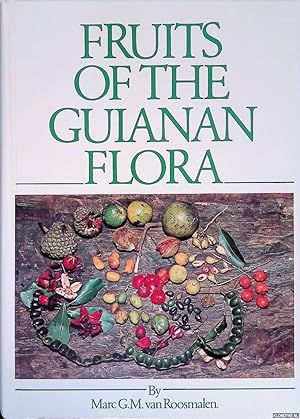
Fruits of the Guianan Flora
Lingua: Inglese
Editore: Utrecht/Wageningen : Institute of Systematic Botany Utrecht University/Silvicultural Department of Wageningen Agricultural University, 1985
ISBN 10: 9090009876 ISBN 13: 9789090009872
EUR 71,50
Spedizione EUR 20,00
Spedito da Paesi Bassi a U.S.A.Quantità: 1 disponibili
Aggiungi al carrelloCondizione: Good. Original pictorial boards, illustrated with photographs in colour and numerous drawings in b/w, index, 8vo.; Bottom cut slightly stained/discoloured.
-

Fruits of the Guianan Flora
Lingua: Inglese
Editore: Utrecht/Wageningen : Institute of Systematic Botany Utrecht University/Silvicultural Department of Wageningen Agricultural University, 1985
ISBN 10: 9090009876 ISBN 13: 9789090009872
EUR 71,50
Spedizione EUR 20,00
Spedito da Paesi Bassi a U.S.A.Quantità: 1 disponibili
Aggiungi al carrelloCondizione: Good. Original pictorial boards, illustrated with photographs in colour and numerous drawings in b/w, index, 8vo.
-

Human's Male-Territorial Primate Factor
Lingua: Inglese
Editore: LAP LAMBERT Academic Publishing, 2025
ISBN 10: 6208454883 ISBN 13: 9786208454883
Da: PBShop.store US, Wood Dale, IL, U.S.A.
Valutazione del venditore 5 su 5 stelle
EUR 108,48
Spedizione gratuita
Spedito in U.S.A.Quantità: Più di 20 disponibili
Aggiungi al carrelloPAP. Condizione: New. New Book. Shipped from UK. Established seller since 2000.
-
Human's Male-Territorial Primate Factor
Lingua: Inglese
Editore: LAP LAMBERT Academic Publishing, 2025
ISBN 10: 6208454883 ISBN 13: 9786208454883
Da: PBShop.store UK, Fairford, GLOS, Regno Unito
Valutazione del venditore 4 su 5 stelle
EUR 104,13
Spedizione EUR 4,81
Spedito da Regno Unito a U.S.A.Quantità: Più di 20 disponibili
Aggiungi al carrelloPAP. Condizione: New. New Book. Shipped from UK. Established seller since 2000.
-

EUR 57,63
Spedizione EUR 48,99
Spedito da Germania a U.S.A.Quantità: Più di 20 disponibili
Aggiungi al carrelloKartoniert / Broschiert. Condizione: New.
-

Wild Fruits from the Amazon VI
Da: GreatBookPrices, Columbia, MD, U.S.A.
Valutazione del venditore 5 su 5 stelle
EUR 108,61
Spedizione EUR 2,29
Spedito in U.S.A.Quantità: Più di 20 disponibili
Aggiungi al carrelloCondizione: New.
-

Wild Fruits from the Amazon
Da: Revaluation Books, Exeter, Regno Unito
Valutazione del venditore 5 su 5 stelle
EUR 103,11
Spedizione EUR 11,56
Spedito da Regno Unito a U.S.A.Quantità: 1 disponibili
Aggiungi al carrelloPaperback. Condizione: Brand New. 137 pages. 11.00x8.50x0.33 inches. In Stock.
-

Wild fruits from the Amazon
Da: Revaluation Books, Exeter, Regno Unito
Valutazione del venditore 5 su 5 stelle
EUR 103,91
Spedizione EUR 14,45
Spedito da Regno Unito a U.S.A.Quantità: 1 disponibili
Aggiungi al carrelloPaperback. Condizione: Brand New. 243 pages. 11.00x8.50x0.58 inches. In Stock.
-

Wild Fruits from the Amazon (Paperback)
Lingua: Inglese
Editore: Createspace Independent Publishing Platform, 2013
ISBN 10: 1493776169 ISBN 13: 9781493776160
Da: CitiRetail, Stevenage, Regno Unito
Valutazione del venditore 5 su 5 stelle
EUR 75,60
Spedizione EUR 42,77
Spedito da Regno Unito a U.S.A.Quantità: 1 disponibili
Aggiungi al carrelloPaperback. Condizione: new. Paperback. Volume I of "An Illustrated Guide to the Wild Fruits from the Amazon" depicts the fruits of all known Guianan plants covering 109 families, 546 genera, and over 2,000 species. Moreover, the fruits of important edible-fruit producing families that occur in the larger Brazilian Amazon are included. Furthermore, besides the fruits of all Amazonian trees of the families Lecythidaceae and Myristicaceae, all fruits that have been cultivated for food and/or spread across the Amazon over the past 11,000 years by now extinct Neolithic Amerindian hunter-gatherers and/or "terra preta" anthrosol farming peoples, are depicted in color. The catalogue is restricted to woody plants, i.e. trees and shrubs reaching over 1.5 m in height when full grown, lianas, vines, (hemi)-epiphytic climbing shrubs, and (sub)-ligneous epiphytes. Among the Chlamydospermae, only the family Gnetaceae is treated. The remaining 98 families belong to the Angiospermae. Among the Monocotyledoneae, the families Araceae, Musaceae/Strelitziaceae, Liliaceae, and Arecaceae are included. The remaining 94 families belong to the Dicotyledoneae.Volumes II - VIII will treat over 109 plant families in alphabetical order. Each family is headed by a short family description based mainly on the more practicable field characters of leaves, inflorescences, flowers, and fruits. The section Notes includes remarks on habit, secretory systems, and seed dispersal - only when one may generalize on family level. Following a family description, each genus within the family is numbered and mentioned together with the author's name. A genus description is given when more than one species within the genus are described. Each genus is followed by the species in alphabetical order and sub-numbered. This facilitates a quick determination of both the number of genera treated within a certain family and the number of species treated within a certain genus. The species name is followed by the author's name according to up-to-date taxonomic literature. When known to the author, vernacular names used by the most prominent sections of the population, such as Aruak-Amerindian (A), Caraib-Amerindian (C), Surinamese Dutch (SD), Spanish (Sp.), English (E), Brazilian Portuguese (B), Sranan-tongo or Surinamese (S), and Bushland-Creole, Quilombola or Paramaccan (P), have been included.When a fruit species is depicted in Volume I, plate and figure numbers are given. Plates are numbered 1-208; figures are numbered within each plate. The species descriptions as presented in Volumes II - VIII usually include four sections, the first word of each section being printed in italics. The first section gives simple leaf characters as far as they are practicable in the field. The second section describes main characters of inflorescence, infructescence, (fruiting) calyx, and/or pedicel. The third section describes external and internal characters of fruit and seed(s). The fourth section, "Notes", gives various remarks that may be useful in the field, such as plant habit, presence of secretory systems, bark features, seed dispersal strategy, phenology, occurrence, habitat and soil type, and geographical distribution within the Guianas and the larger Amazonian region. In Vol. I, I tried to include drawings of as many fruits as possible. In case of great interspecific resemblance, only one of the fruits has been depicted. Depending on the available material, fruits and seeds are drawn from different angles, cross and/or longitudinal sections, showing the morphological properties that are most important for visual identification. This Amazonian fruit catalogue includes too many species to make a usable key down to genus or species level. However, here I have included a synoptical key to the one-hundred plant families treated. In order to facilitate direct identification of the fruits, figures are drawn on Shipping may be from our UK warehouse or from our Australian or US warehouses, depending on stock availability.
-
Black Gold: Pre-Columbian Farming on Terra Preta Anthrosol in the Amazon
Lingua: Inglese
Editore: CreateSpace Independent Publishing Platform, 2016
ISBN 10: 1534790144 ISBN 13: 9781534790148
AffareEUR 26,09
Spedizione EUR 105,00
Spedito da Germania a U.S.A.Quantità: 1 disponibili
Aggiungi al carrelloCondizione: Sehr gut. Zustand: Sehr gut | Sprache: Englisch | Produktart: Bücher | Keine Beschreibung verfügbar.
-

Live from the Amazon (Paperback)
Lingua: Inglese
Editore: Createspace Independent Publishing Platform, 2015
ISBN 10: 1517514630 ISBN 13: 9781517514631
Da: CitiRetail, Stevenage, Regno Unito
Valutazione del venditore 5 su 5 stelle
EUR 99,41
Spedizione EUR 42,77
Spedito da Regno Unito a U.S.A.Quantità: 1 disponibili
Aggiungi al carrelloPaperback. Condizione: new. Paperback. Not many biologists can claim to know the Amazon as well as Marc van Roosmalen, or to be more concerned about its future, so it's an important addition to Amazon biology and conservation to have Van Roosmalen's uniquely personal account of his decades of Amazon research. "Live from the Amazon" successfully blends personal narrative and scientific data. Chapter 1 sets the tone of the book - describing as he does being "humbled by nature". This includes a self-deprecating account of one of his earliest sorties into the rainforest with the realization and rising sense of panic that he was lost - in the Amazon. Or later, almost literally bumping into a jaguar and recognizing that if you don't behave like prey you probably won't be treated like prey. Early on, to become a primatologist Van Roosmalen took a two-year hiatus to become a botanist, publishing the "Illustrated Guide to the Fruits of the Flora of Suriname" - the first guide of its kind to the area. Just so that he could identify what his monkeys were eating. With this new expertise he was able to gather ground-breaking information on the ecology of a species of spider monkey. Even with some lengthy narrative detailing a day in the life of a group spider monkeys in chapter 2, for example, it's difficult not to be swept up in his accounts and imagining for instance what it must be like to track one of these groups through miles and miles of rainforest and to survive on the fruits that monkeys themselves survived. These accounts, and others like them, are great examples of how demanding field work is actually done - describing the nuts and bolts of a process that eventually leads to polished publications. The development of the details of his "fruit syndromes" in chapter 3 - classifying the all-important seed dispersal strategies of rainforest trees - could only come about from a wealth of first-hand experience in the field, and indeed a rounded knowledge of how the rainforest works. But the knowledge was a hard one. In the same self-deprecating manner and with hubris biting back, Van Roosmalen describes a near fatal mistake in eating a fruit based on a misjudged observation of exactly how his spider monkeys were eating the fruit. Chapter 4 covers the fascinating geological and hydrological history of the Amazon Basin (it used to drain mostly to the west, not to the east) and the resulting aquatic species that adapted from marine to freshwater conditions - and the famous contrasting Amazon water types and the differing ecologies they give rise to in the Basin's vast flood plains. Van Roosmalen is perhaps best well known for his discovery of new species of Amazon monkeys (as well as many other Amazon animal and plant species new to science; the list isn't short - you should also visit his website . In chapter 5 there is the absolutely remarkable detective story of finding the black-crowned dwarf marmoset, a new primate genus and the second-smallest species of monkey in the world. And in finding the dwarf marmoset he finds at least as great a prize: a biologically "lost world" that not only houses the dwarf marmoset but other remarkable new species, many of them not dwarf at all. It's alarming to learn that this irreplaceable area is currently under threat. And there's a lot more. Wherever he focuses his attention among the wide range of topics he covers, Van Roosmalen is great at seeing both small and large-scale patterns in the workings of the Amazon Basin, and generating explanations for them. He has done the work himself all alone - in true fashion of the 19th century naturalists that he frequently nods in the direction of. With many examples of Amazon biology for the first time in print, "Live from the Amazon" is a rich resource for graduate students looking for a project and an important addition to the library of anyone who cares about the ecology, a Shipping may be from our UK warehouse or from our Australian or US warehouses, depending on stock availability.
-

Barefoot through the Amazon (Paperback)
Lingua: Inglese
Editore: Createspace Independent Publishing Platform, 2013
ISBN 10: 1482578247 ISBN 13: 9781482578249
Da: CitiRetail, Stevenage, Regno Unito
Valutazione del venditore 5 su 5 stelle
EUR 114,89
Spedizione EUR 42,77
Spedito da Regno Unito a U.S.A.Quantità: 1 disponibili
Aggiungi al carrelloPaperback. Condizione: new. Paperback. In 1996 a baby dwarf marmoset, later baptized Callibella humilis, was delivered to the author's doorstep. He could not have guessed that this moment would trigger a series of discoveries of unique, not yet identified animals and plants from the Brazilian Amazon. The indisputable existence of the second smallest monkey in the world somewhere out there in the vast Amazon Basin took the scepsis away from the scientist, convinced as Van Roosmalen was that discovering new primates at the turn of the 20th century would be really impossible. Describing mammals new to science is widely considered a privilege reserved to the great naturalists of the 18th and 19th centuries. Van Roosmalen's odyssey in search of the land of the Callibella revealed a river basin never visited before by naturalists, which was teeming with not yet described living things. A biological "terra incognita" that turned into a naturalist's el dorado. This book includes, among other amazing Amazonian stories, an account of Van Roosmalen's encounters with large-bodied, apparently overlooked creatures new to science that live up in the canopy, on the forest floor, as well as in the water of this Lost World the Rio Aripuana Basin. Here, we mention at least ten more big monkeys, giant peccary, fair brocket deer, dwarf tapir, dwarf manatee, a third freshwater dolphin cf. Pontoporia, giant paca, fair tree squirrel, pair-living red coati, red-coated tayra, Van Roosmalen's dwarf porcupine and hundreds of unknown trees and vines. In his account "Monkeys of the Amazon" (1854), Alfred Wallace based his evolutionary ideas on observations made during his long stay in the Amazon. In his river-barrier hypothesis he considered the Amazon Basin a huge freshwater archipelago in which the main rivers act as barriers to genetic drift. Through genetic isolation they provoke speciation. On his travels through the Amazon to study its biodiversity, Van Roosmalen noticed how right Wallace was 150 years ago and how well his hypothesis applies to the evolution and phylo-geography of living beings in the Amazon. He explains why it represents by far the highest biodiversity on Earth. Island bio-geography as defined for oceanic archipelagos can be perfectly applied to the interfluves of major rivers in the Amazon. Flying for hours over the never-ending sea of tree tops, people may think that the Amazon rain forest is just one 'sea of broccoli', all the same. But the over 100,000 plant species and millions of animal species (incl. insects) are not at all evenly spread across the Amazon. If so, this ecosystem would not contain the highest biodiversity on the planet. In this book it is explained for by a combination of factors: the tropical climate, the overall poor-nutrient soils on which the rain forest grows and has evolved over more than 70 million years, its unique geophysical history, its utterly complex mosaic of vegetation types, and the insulation caused by hundreds of rivers of three different water types together with their extensive floodplains. The latter do act as strong geographical barriers that prevent animals and plants to cross over from one interfluve to the other. Van Roosmalen's research confronted him with difficulties to lay one's hand on biological material without having to kill specimens to put in a museum. Political obstacles lay on his path, such as to collect and transport holotype material of new plants and animals for DNA analysis in a lab abroad. Unfortunately, time runs out. All these creatures are found at the verge of extinction. They all need their living space -the ancient Amazon rain forest- rigidly protected by law. Van Roosmalen 's popular-scientific book "Barefoot through the Amazon", a textbook on Amazon Rainforest Ecology and Biodiversity, will hopefully attract national and international public awareness. And draw attention to some Shipping may be from our UK warehouse or from our Australian or US warehouses, depending on stock availability.
-

Waarom de Buren Nooit Deugen: Soortvorming bij alle territoriale sociale primaten
Da: Revaluation Books, Exeter, Regno Unito
Valutazione del venditore 5 su 5 stelle
EUR 66,46
Spedizione EUR 11,56
Spedito da Regno Unito a U.S.A.Quantità: 1 disponibili
Aggiungi al carrelloPaperback. Condizione: Brand New. 275 pages. 9.00x6.00x0.65 inches. In Stock.
-

Tropenkolder - Belevenissen in de jungle van een "Held van de Planeet"
Editore: Bert Bakker, 2010
ISBN 10: 9035135555 ISBN 13: 9789035135550
EUR 5,59
Spedizione EUR 72,00
Spedito da Belgio a U.S.A.Quantità: 1 disponibili
Aggiungi al carrelloPaperback. Condizione: Fine. Dutch.
-
Waarom de Buren Nooit Deugen: Soortvorming bij alle territoriale sociale primaten
Da: Revaluation Books, Exeter, Regno Unito
Valutazione del venditore 5 su 5 stelle
EUR 80,32
Spedizione EUR 11,56
Spedito da Regno Unito a U.S.A.Quantità: 1 disponibili
Aggiungi al carrelloPaperback. Condizione: Brand New. 275 pages. 9.00x6.00x0.65 inches. In Stock.
-
Tropenkolder: belevenissen in de jungle van een Held van de Planeet
Editore: Bert Bakker, 2010
ISBN 10: 9035135555 ISBN 13: 9789035135550
Da: Mispah books, Redhill, SURRE, Regno Unito
Valutazione del venditore 4 su 5 stelle
EUR 135,75
Spedizione EUR 28,90
Spedito da Regno Unito a U.S.A.Quantità: 1 disponibili
Aggiungi al carrellopaperback. Condizione: Very Good. Very Good. Dust Jacket may NOT BE INCLUDED.CDs may be missing. SHIPS FROM MULTIPLE LOCATIONS. book.
-

A Shaman's Apprentice: Traditional Healing in the Brazilian Amazon
Lingua: Inglese
Editore: CreateSpace Independent Publishing Platform, 2013
ISBN 10: 1484034414 ISBN 13: 9781484034415
Da: Revaluation Books, Exeter, Regno Unito
Valutazione del venditore 5 su 5 stelle
EUR 55,98
Spedizione EUR 11,56
Spedito da Regno Unito a U.S.A.Quantità: 1 disponibili
Aggiungi al carrelloPaperback. Condizione: Brand New. 156 pages. 9.00x6.00x0.37 inches. This item is printed on demand.


